Dog Care
Common Health Problems in Dogs: Statistics and Prevention
Quick answer
Evidence-based statistics on common dog health problems, practical prevention routines and warning signs that require prompt veterinary care.
By ShineePets Editorial Team · Published · Updated
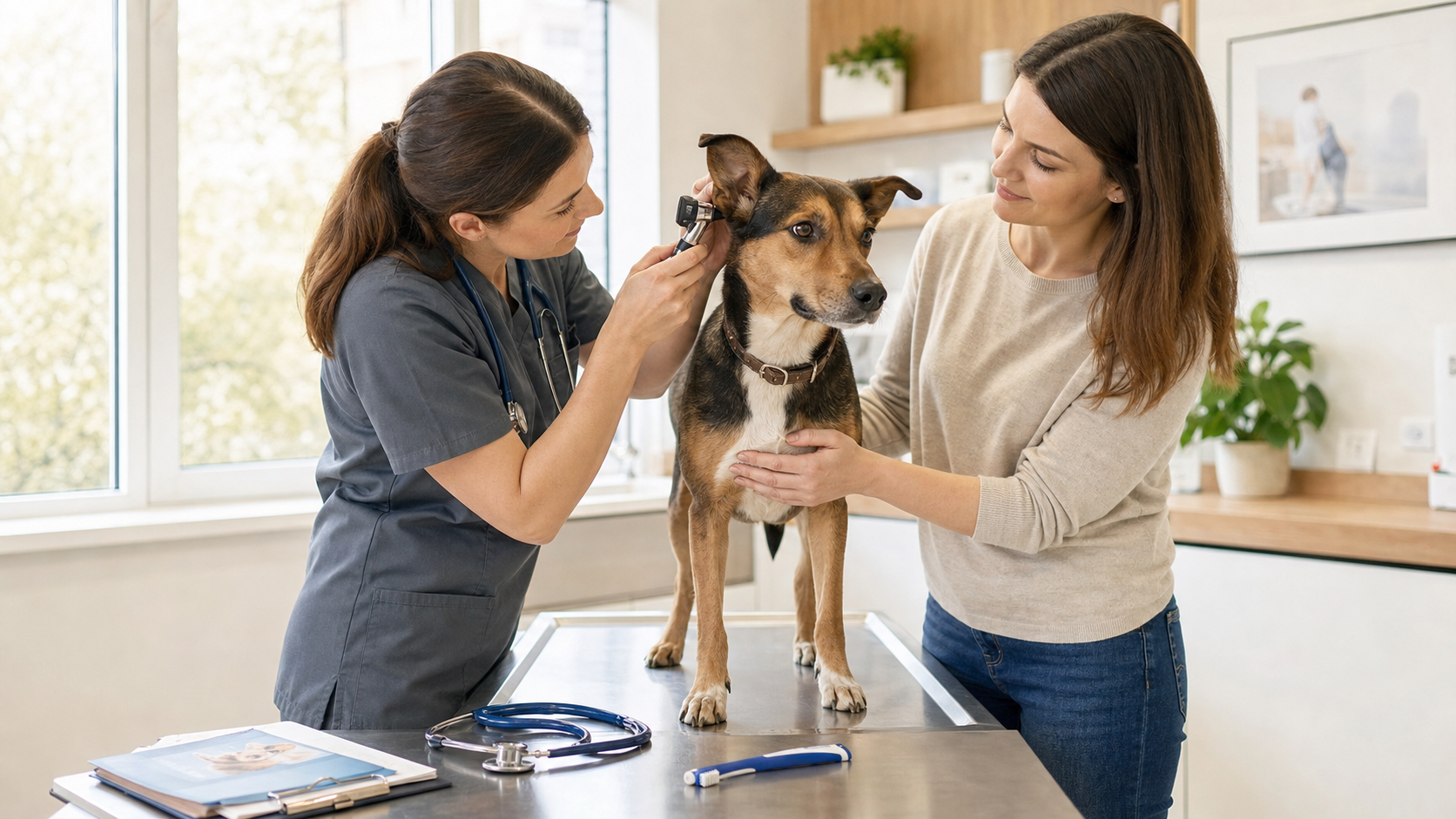
Dogs cannot explain that an ear hurts, a tooth is loose or movement has become painful. Many common health problems therefore become visible only after they have progressed. A preventive routine does not eliminate every risk, but it can help owners notice change earlier and give veterinarians better information.
This guide combines large veterinary-record studies with current preventive-care guidance. It focuses on risk reduction, observation and timely veterinary care rather than home diagnosis or treatment.
Medical boundary: This article is general education, not a diagnosis or treatment plan. A dog with pain, breathing difficulty, collapse, repeated vomiting, seizures, inability to urinate, severe bleeding or rapidly worsening signs needs prompt veterinary assessment.
What the Statistics Actually Measure
The most useful large-scale prevalence figures come from dogs seen in veterinary practice. They do not represent every dog in every country.
A Royal Veterinary College VetCompass study examined a random sample of 22,333 dogs attending 784 UK veterinary clinics. During one year, the study recorded:
| Diagnosed disorder | One-year prevalence in the study |
|---|---:|
| Periodontal disease | 12.5% |
| Otitis externa, or outer-ear inflammation | 7.3% |
| Obesity | 7.1% |
These figures mean that a condition was diagnosed and recorded during the study period. They do not mean that 12.5% of all dogs worldwide have periodontal disease at any moment.
Results change with age, breed, body shape, location, climate, access to veterinary care and diagnostic practice. Some conditions are also under-recorded because owners may not notice them or may not visit a clinic.
Citation-ready insight: In a VetCompass sample of 22,333 UK dogs, periodontal disease was diagnosed in 12.5% during one year, ahead of ear inflammation at 7.3% and obesity at 7.1%.
1. Periodontal Disease: The Leading Recorded Disorder
Periodontal disease affects the tissues supporting the teeth. It can begin with plaque and gum inflammation, then progress below the gumline. Dogs may continue eating despite oral pain, so a normal appetite does not prove that the mouth is healthy.
In the VetCompass sample, 2,797 of 22,333 dogs were diagnosed with periodontal disease in one year, equal to 12.5%. Risk increased sharply in several small breeds, illustrating why a universal dental schedule is not enough.
Signs owners may notice
- persistent bad breath;
- red, swollen or bleeding gums;
- visible tartar;
- chewing on one side;
- dropping food;
- pawing at the mouth;
- reluctance to eat hard food;
- loose or broken teeth.
Prevention priorities
Start home care before disease is obvious. AAHA guidance identifies regular toothbrushing with pet-safe toothpaste as the strongest home-care foundation. Human toothpaste should not be used.
Ask for an oral assessment during routine examinations. A conscious examination can identify visible problems, but complete periodontal assessment and dental radiographs require veterinary procedures.
Use evidence-based dental products. Dental chews, diets or additives should complement brushing, not replace assessment. Owners can ask their veterinarian about products accepted by the Veterinary Oral Health Council.
Pay extra attention to small and flat-faced dogs. Crowded teeth and jaw shape can increase risk, but every dog still needs oral monitoring.
2. Otitis Externa: Common, Painful and Often Recurrent
Otitis externa is inflammation of the external ear canal. The Merck Veterinary Manual lists possible underlying factors including allergies, parasites, foreign material, bacteria, yeast, middle-ear disease and ear-canal anatomy.
The VetCompass study recorded otitis externa in 7.3% of dogs during one year. Recurrence is common when the underlying cause is not identified.
Signs owners may notice
- repeated head shaking;
- scratching around the ears;
- redness or swelling;
- unusual discharge;
- strong odor;
- pain when the ear is touched;
- holding the head to one side.
Prevention priorities
- Check the visible ear flap and opening regularly without inserting objects into the canal.
- Dry the outer ear after swimming or bathing.
- Ask a veterinarian whether routine cleaning is appropriate for the individual dog.
- Do not apply leftover antibiotics, human ear drops, oils or unapproved cleaners.
- Seek care early when pain, odor, swelling or discharge appears.
Cleaning an already inflamed ear with the wrong product can worsen pain or damage. Ear treatment should follow veterinary examination, and recurrent cases often require investigation of allergies or other primary causes.
Quick recommendation: Ear care should be preventive and individualized. More cleaning is not automatically better, especially when the canal is painful or inflamed.
3. Obesity: A Disease Risk That Can Be Easy to Miss
Obesity was recorded in 7.1% of dogs in the same VetCompass dataset. Clinical records can underestimate excess weight because body condition is not always coded as a diagnosis.
Extra body fat is not simply a cosmetic issue. It can reduce mobility and heat tolerance and complicate existing orthopedic, respiratory or metabolic problems.
Prevention priorities
Use body condition, not appearance alone. AAHA recommends recording body weight together with a body condition score and muscle condition score. A veterinarian can demonstrate how to feel the ribs and assess the waist.
Measure food. Estimate daily calories with veterinary guidance, weigh portions when possible and count treats, chews and table food within the total.
Adjust for life stage and activity. Puppies, active adults, neutered dogs and seniors have different energy needs. A food label is a starting point, not an individualized prescription.
Build gradual activity. Walking, controlled play, sniffing and strength-supporting movement should match age, fitness, weather and joint health.
Track trends. Monthly home weights or regular clinic measurements can reveal gradual gain that is difficult to see day to day.
Sudden weight loss or gain should not be managed only by changing food. It can signal illness and warrants veterinary evaluation.
4. Skin Disease and Allergic Itch
Itching, redness and recurrent skin or ear problems are common reasons for veterinary visits. Possible causes include fleas, mites, environmental allergy, food-related reactions, bacterial or yeast overgrowth and contact irritation.
Signs owners may notice
- frequent scratching or licking;
- chewing the paws;
- hair loss;
- red, greasy, flaky or odorous skin;
- repeated hot spots;
- recurrent ear inflammation;
- seasonal worsening.
Prevention priorities
- Maintain veterinarian-directed flea and tick prevention.
- Check the skin during grooming, especially under collars, harnesses, armpits and between toes.
- Rinse and dry the coat appropriately after swimming or exposure to irritants.
- Use shampoos formulated for dogs and recommended for the dog’s skin condition.
- Record when and where signs occur, along with food, travel and parasite-control history.
Avoid repeatedly switching diets or applying human creams without veterinary advice. Similar-looking skin problems can have very different causes, and inappropriate products may delay diagnosis.
5. Parasites and Vector-Borne Disease
Parasite risk varies with geography, climate, travel, wildlife, housing and season. Fleas and ticks can remain active longer as temperatures change, and mosquitoes transmit heartworm in suitable regions.
The Companion Animal Parasite Council’s April 2025 general guidance recommends preventive examinations every 6–12 months, annual heartworm testing for dogs and year-round broad-spectrum parasite control appropriate to local risk. Its 2026 forecast also warns that heartworm and tick-borne infection risk is expanding in parts of the United States.
Prevention priorities
- Ask a veterinarian for a location- and lifestyle-specific plan.
- Use approved products at the correct interval and for the correct species and weight.
- Never use a dog parasite product on a cat unless the label and veterinarian explicitly allow it.
- Check the coat and skin after outdoor activity.
- Remove feces promptly and keep sleeping areas clean.
- Test as recommended even when a dog looks healthy.
- Reassess the plan before travel or relocation.
No product prevents every infection. Testing and observation remain important even when prevention is used consistently.
6. Gastrointestinal Problems
Vomiting and diarrhea are symptoms, not diagnoses. Dietary change, scavenging, parasites, infection, toxins, foreign objects, pancreatitis and organ disease can produce similar signs.
Risk reduction
- Change diets gradually unless a veterinarian directs otherwise.
- Store food securely and discard spoiled products.
- Prevent access to garbage, compost, medication, cleaning products and toxic foods.
- Use appropriately sized toys and supervise dogs that swallow objects.
- Keep parasite testing and prevention current.
- Provide fresh water and monitor appetite and stool changes.
When to seek prompt care
Contact a veterinarian urgently for repeated vomiting, blood, a swollen or painful abdomen, inability to keep water down, severe lethargy, suspected toxin exposure, a swallowed object, or signs in a very young, old or medically fragile dog.
7. Osteoarthritis and Mobility Decline
Osteoarthritis is a chronic joint disease that becomes more common with age, prior injury, abnormal joint development and excess weight. Early signs may look like “slowing down” rather than obvious limping.
Signs owners may notice
- stiffness after rest;
- hesitation on stairs or slippery floors;
- difficulty rising;
- reduced jumping;
- shorter walks;
- change in posture;
- irritability when handled;
- loss of thigh muscle.
Prevention and early-support priorities
- Maintain a lean body condition.
- Use regular, controlled activity rather than occasional extreme exercise.
- Avoid repetitive high-impact activity in growing puppies.
- Provide traction on slippery floors.
- Record changes in gait, stair use and willingness to play.
- Ask for mobility assessment during senior examinations.
Do not give human pain medicine. Several common human medications can be dangerous to dogs, and safe pain management requires veterinary direction.
8. Preventable Infectious Diseases
Vaccination has greatly reduced severe canine infectious disease, but recommendations differ by country, law, lifestyle and local disease pressure.
The World Small Animal Veterinary Association’s 2024 global guidelines support vaccinating dogs with core vaccines and selecting non-core vaccines after considering geography and lifestyle. AAHA’s updated canine guidance includes distemper, adenovirus, parvovirus, rabies and leptospirosis among core recommendations in its framework.
Prevention priorities
- Keep a written or digital vaccination record.
- Schedule puppy vaccine series and boosters with a veterinarian.
- Follow local rabies law.
- Discuss boarding, daycare, travel, wildlife, water and tick exposure.
- Avoid high-risk public areas until a puppy’s veterinarian confirms appropriate protection.
- Do not assume an indoor dog has zero exposure risk.
A vaccine schedule copied from another country or another dog may not fit local law, product labeling or individual health history.
9. Heat-Related Illness and Breathing Risk
Heat-related illness can affect any dog. Risk increases with high temperature and humidity, intense exercise, obesity, poor acclimatization, thick coats and flat-faced anatomy.
Prevention priorities
- Exercise during cooler hours.
- Provide water, shade and indoor cooling.
- Never leave a dog in a parked vehicle.
- Reduce intensity during heat and humidity.
- Watch flat-faced, senior, overweight and heart or lung patients closely.
- Stop activity if breathing becomes unusually noisy, effortful or slow to recover.
Collapse, confusion, repeated vomiting, bright or dark gums, severe weakness or uncontrolled panting are emergencies. Move the dog toward a cooler environment and contact a veterinarian immediately rather than relying on online advice.
10. Urinary and Kidney Warning Signs
Urinary tract infection, bladder stones, prostate disease, kidney disease and urinary obstruction can produce overlapping signs.
Watch for:
- straining or repeated attempts to urinate;
- blood in urine;
- accidents in a previously trained dog;
- increased thirst or urine volume;
- pain or vocalization;
- inability to pass urine.
An inability to urinate is an emergency. Increased thirst should also be assessed rather than assumed to be weather or aging.
A Practical Prevention Schedule
Daily
- Observe appetite, water intake, urination, stool, breathing and energy.
- Provide measured food and fresh water.
- Include appropriate exercise and mental enrichment.
- Check for pain, limping, itching or unusual behavior.
- Brush teeth when the dog is trained to accept it.
Weekly
- Inspect the mouth, ears, skin, paws and nails.
- Check collars and harnesses for fit and rubbing.
- Wash bedding and clean food and water bowls.
- Review parasite-prevention timing.
Monthly
- Record body weight when practical.
- Compare body condition and muscle condition over time.
- Confirm that preventive medication has been given correctly.
- Note any trend in mobility, sleep or behavior.
Every 6–12 months, or as advised
- Schedule a preventive veterinary examination.
- Review vaccination and parasite risk.
- Request weight, body condition, oral, ear, skin and mobility assessment.
- Discuss blood, urine, fecal, heartworm or vector-borne testing based on age and region.
- Increase examination frequency for puppies, seniors and dogs with chronic conditions.
Emergency Warning Signs
Seek urgent veterinary advice for:
- difficulty breathing or blue, gray or very pale gums;
- collapse, unresponsiveness or seizures;
- severe trauma or uncontrolled bleeding;
- repeated vomiting or a swollen painful abdomen;
- suspected poisoning;
- inability to urinate;
- sudden paralysis or inability to stand;
- eye injury or sudden vision loss;
- heat-related collapse or confusion;
- rapidly worsening pain.
This list is not complete. When signs are severe, sudden or progressing quickly, contacting a veterinary clinic is safer than waiting for a checklist to match.
What Prevention Can and Cannot Do
Prevention can lower exposure, support healthy weight, improve oral hygiene and make changes easier to detect. It cannot guarantee that a dog will never develop cancer, inherited disease, allergy, joint disease or infection.
The most effective plan combines:
1. Routine observation at home so changes are noticed.
2. Scheduled veterinary assessment before visible crisis.
3. Vaccination and parasite control adapted to location and lifestyle.
4. Dental, nutrition and weight management throughout life.
5. Prompt escalation when warning signs appear.
Final recommendation: Keep a simple health record with weight, vaccines, parasite prevention, dental care, test results and new symptoms. Trends are often more informative than one isolated observation.
Owner Checklist
- I know my dog’s usual appetite, thirst, stool and energy.
- I can identify my dog’s healthy body condition.
- Vaccination and parasite plans are current for our location.
- Teeth and gums are checked routinely.
- Ears and skin are checked without over-cleaning.
- Weight and mobility changes are recorded.
- Human medicines are stored out of reach and never given without veterinary direction.
- Emergency clinic details are available before they are needed.
Frequently Asked Questions
What are the most commonly recorded health problems in dogs?
In a VetCompass sample of 22,333 dogs attending UK veterinary clinics, periodontal disease was recorded in 12.5% during one year, otitis externa in 7.3% and obesity in 7.1%. These are study-specific clinical prevalence estimates, not global rates.
How often should a healthy dog have a veterinary examination?
CAPC general guidance recommends preventive physical examinations at least every 6 to 12 months. Puppies, seniors and dogs with chronic conditions may need more frequent visits based on veterinary advice.
Can regular toothbrushing prevent all dental disease?
No. Regular brushing with pet-safe toothpaste can reduce plaque and is an important preventive habit, but dogs still need professional oral assessment and may require dental procedures.
Does an indoor dog still need parasite prevention and vaccines?
Indoor living can reduce some exposures but does not remove all risk from mosquitoes, fleas, ticks, wildlife, travel or contact with other animals. A veterinarian should tailor prevention to local disease pressure and lifestyle.
Which symptoms require urgent veterinary care?
Difficulty breathing, collapse, seizures, uncontrolled bleeding, repeated vomiting, a painful swollen abdomen, suspected poisoning, inability to urinate, sudden paralysis and heat-related confusion require urgent veterinary assessment.
Sources and References
- Royal Veterinary College VetCompass: Epidemiology of Canine Periodontal Disease
- Royal Veterinary College VetCompass: Disorder Prevalence in Dogs in England
- WSAVA 2024 Vaccination Guidelines
- AAHA Canine Vaccination Guidelines
- Companion Animal Parasite Council General Guidelines
- Companion Animal Parasite Council 2026 Parasite Forecast
- AAHA Nutrition and Weight Management Guidelines
- AAHA Dental Care Guidelines: Preventing Periodontal Disease
- Merck Veterinary Manual: Ear Infections and Otitis Externa in Dogs
About this article
ShineePets Editorial Team produces source-based pet care education designed to support responsible ownership and timely professional veterinary care.