Dog Care
Dog Enrichment Ideas for Different Energy Levels
Quick answer
Match dog enrichment to low, moderate, or high energy with safe scent games, puzzles, training, movement, food activities, and recovery time.
By ShineePets Editorial Team · Published · Updated
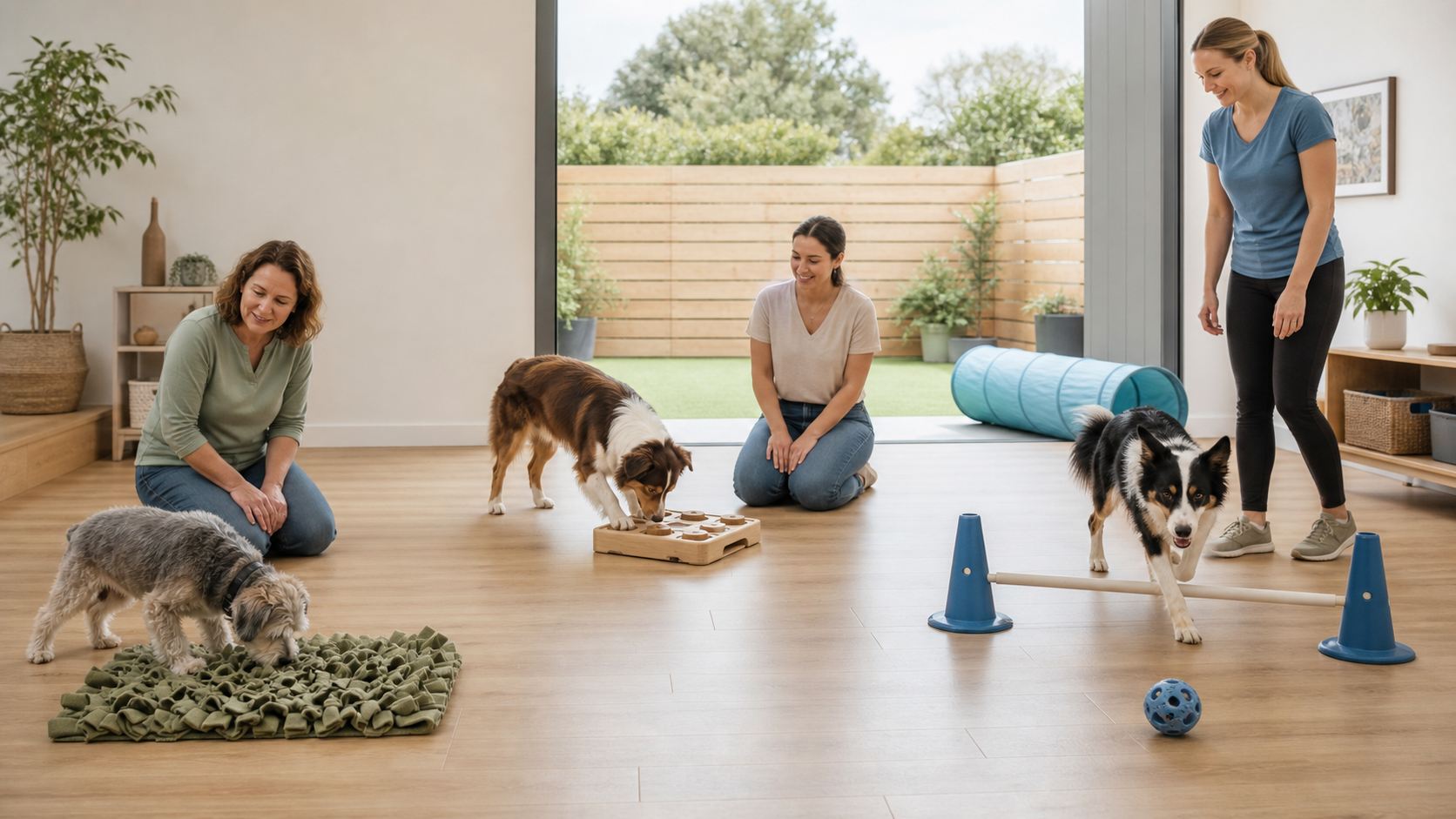
Dog enrichment is not a contest to see how tired a dog can become. The best activities give the individual dog safe opportunities to sniff, search, chew, solve problems, move, learn, interact, and rest. A low-energy dog may be deeply satisfied by a short scent trail, while a high-energy dog may need a layered routine that combines exercise, training, and deliberate recovery.
The key is to match the activity to the dog’s current energy, health, confidence, and preferences—not simply to breed stereotypes or age labels.
Key Takeaways
- Assess energy from the dog’s normal behavior, recovery, health, and enthusiasm rather than assuming every dog of one breed needs the same routine.
- Enrichment should include mental, sensory, physical, social, feeding, and environmental opportunities, not only fast exercise.
- Start easy, supervise new activities, and stop while the dog is still successful.
- High-energy dogs need calm sniffing, chewing, and rest as well as movement; more intensity is not always the answer to overexcitement.
- Food enrichment should normally use part of the dog’s measured daily allowance, and exercise restrictions from a veterinarian always take priority.
Good enrichment leaves a dog interested and satisfied—not confused, frightened, physically exhausted, or unable to settle.
What Enrichment Means for Dogs
Enrichment gives dogs appropriate ways to express normal behavior and make choices. Dogs Trust describes enrichment as a way for dogs to explore natural instincts, build confidence, practise problem-solving, search, sniff, and chew. It can be provided throughout the day, but it should be safe, suitable, and adjusted to the dog using it.
A balanced enrichment plan draws from several categories:
- Sensory: sniffing, listening, exploring textures, and observing the environment
- Cognitive: puzzles, training, discrimination games, and problem-solving
- Feeding: scatter feeding, food toys, lick mats, and safe searches
- Physical: walking, controlled play, digging, retrieving, and obstacle work
- Social: positive time with people or compatible dogs, with choice and space
- Environmental: new routes, safe resting places, digging areas, toy rotation, and access to different surfaces
Not every dog enjoys every category. The goal is variety across the week, not forcing the dog to complete a fixed checklist.
Energy Level Is More Than Activity Speed
Before choosing an enrichment idea, observe the dog across several normal days.
Signs of a lower-energy day or dog
- Prefers slow investigation to repeated running
- Engages briefly, then chooses to rest
- Tires physically or mentally after a short task
- Has limited mobility, is recovering, or is coping with heat
- Enjoys chewing, licking, scenting, and quiet social contact
Signs of a moderate-energy pattern
- Enjoys regular walks and play but can settle afterward
- Participates in short training and puzzle sessions
- Recovers comfortably between active periods
- Shows interest in both movement and calm activities
Signs of a higher-energy pattern
- Seeks frequent interaction and movement
- Recovers quickly from appropriate exercise
- Enjoys longer searches or multi-step tasks
- Needs several planned outlets across the day
- May invent activities when needs are not met
Energy also changes with sleep, weather, stress, illness, age, recent exercise, and household events. A typically active dog may need a low-energy plan after vaccination, during hot weather, or while recovering from injury.
Do Not Confuse High Energy With Stress or Overarousal
Pacing, jumping, barking, mouthing, grabbing toys, and difficulty settling can look like a request for more exercise. Sometimes the dog is energetic; sometimes the dog is worried, overtired, frustrated, or overstimulated.
Before adding another fast game, check whether the dog has:
- had enough sleep and uninterrupted rest;
- eaten and had access to water;
- had a toilet opportunity;
- been exposed to a busy, noisy, or unfamiliar event;
- shown tense body language, avoidance, panting unrelated to heat, or repeated startle responses;
- recently developed a behavior change that may need veterinary attention.
Dogs Trust recommends combining appropriate exercise and enrichment with a calm routine, sniffing, chewing, licking, and a quiet resting area. A dog who cannot switch off may need help learning to settle, not endless ball throwing.
Low-Energy Enrichment Ideas
Low-energy enrichment should make success easy while still offering choice and interest. It can suit senior dogs, dogs on restricted activity, cautious dogs, hot-weather days, or any dog who naturally prefers slower engagement.
1. Easy scatter searches
Place a small amount of the dog’s normal food across a clean rug, snuffle mat, or short patch of grass. Keep the search area compact and the food visible at first. Sniffing and finding can be rewarding without requiring speed or jumping.
2. Simple food toys
Use a stable feeder that releases food easily when nudged. If the dog gives up, rolls it frantically, or begins chewing the object, make the task easier or switch to a shallow slow feeder.
3. Licking activities
Spread an appropriate portion of wet food on a lick mat and supervise. Check that the dog is licking rather than tearing or swallowing the mat. Chilled food may last longer, but avoid making the task so difficult that it becomes frustrating.
4. Short scent trails
Drag a food-safe scented item or place a few pieces of food in a simple line through one room. Let the dog work slowly without pointing out every answer.
5. Choice-based grooming or touch
For dogs who enjoy gentle handling, offer a brief brush, massage, or cooperative-care exercise. Pause often and continue only when the dog chooses to remain engaged. This is not enrichment for a dog who finds grooming worrying.
6. Observation stations
Provide a comfortable bed near a safe window, doorway, or quiet garden view. The dog should be able to move away from sights and sounds. Visual access that causes repeated barking is not calming enrichment.
7. One-minute training games
Practise a hand target, chin rest, name response, or settling on a mat. Use a few repetitions and finish while the dog is confident.
Moderate-Energy Enrichment Ideas
Moderate-energy dogs often enjoy a mixture of movement and thinking, with clear pauses between activities.
1. Sniff-focused walks
Use part of a familiar walk for free sniffing at the dog’s pace. Distance is less important than the opportunity to investigate safely. Choose a suitable leash and environment, and avoid dragging the dog away from every scent.
2. Hide-and-seek
Ask the dog to wait with another person while you hide nearby, then call once. Make the first hiding place easy and reward the find. Dogs without a reliable stay can search for a hidden toy instead.
3. Toy searches
Show the dog a favorite toy, place it behind a chair or in an open box, and encourage a search. Increase difficulty gradually by adding more locations, not by hiding the toy where it cannot be reached.
4. Reward-based skill sessions
Train for 3–5 minutes using positive reinforcement. Useful ideas include go to mat, touch, spin in both directions if physically comfortable, put toys in a box, or walk around a cone.
5. Controlled tug
Use a long, sturdy tug toy and begin with simple rules: start on cue, pause when teeth touch skin, and trade for another toy or food rather than forcibly taking the item. Keep movements low and side-to-side instead of lifting the dog or jerking the neck.
6. Cardboard investigation box
Place crumpled paper, open cartons, and a few food pieces in a shallow box. Remove tape, staples, plastic windows, and anything the dog may swallow. Supervise closely and choose another activity for dogs who consume cardboard.
7. Route variation
Change one part of a regular walk, visit a quiet new location, or reverse the usual route. Novelty should remain within the dog’s comfort zone.
High-Energy Enrichment Ideas
High-energy enrichment should add structure and complexity, not only speed. Alternate active work with sniffing and recovery so the dog practises returning to calm.
1. Multi-stage scent searches
Hide several food pieces or a trained scent item across a room, secure garden, or quiet outdoor area. Begin with visible placements, then use corners, safe low platforms, and different surfaces. Avoid inaccessible hiding places or areas containing toxic plants and chemicals.
2. Retrieve with thinking breaks
Instead of throwing a ball continuously, ask for a simple cue between short retrieves, scatter a few food pieces for sniffing, or switch between two toys. Stop before the dog loses coordination or becomes unable to release the toy.
3. Low-impact home obstacle course
Arrange wide cone turns, a mat station, a tunnel, and one low pole that the dog can step over. Keep surfaces nonslip and obstacles stable. Avoid high jumps, sharp turns, and repetitive impact unless a qualified professional has assessed the dog and designed the activity.
4. Task sequences
Combine several familiar behaviors: touch a target, circle a cone, find a toy, carry it to a box, then settle on a mat. Build each part separately before asking for a sequence.
5. Digging outlet
Provide a designated sand or soil area, or use a supervised dig box filled with safe material. Hide toys or food near the surface at first. Confirm that the dog is not eating the filling.
6. Advanced food puzzles
Use puzzles with two or three clear actions, but only after the dog succeeds with simpler versions. Complexity should make the dog think, not cause frantic pawing, barking, or chewing.
7. Dog sports foundations
Scent work, mantrailing, hoopers, controlled agility foundations, and other activities can give active dogs purposeful outlets. Choose reward-based instruction and confirm physical suitability with a veterinarian when the activity includes impact, endurance, or repetitive movement.
A Simple Daily Menu by Energy Level
Use these examples as flexible starting points rather than prescriptions.
Lower-energy day
- Morning: 3-minute scatter search
- Midday: comfortable observation or a simple food toy
- Evening: short sniff walk and one-minute training game
- Recovery: uninterrupted rest in a quiet space
Moderate-energy day
- Morning: regular walk with a 10-minute sniffing section
- Midday: easy puzzle feeder using part of the meal
- Evening: 5-minute training plus controlled tug or a toy search
- Recovery: settle on a mat with water available
Higher-energy day
- Morning: varied walk combining movement, sniffing, and a few training repetitions
- Midday: multi-stage scent search or task sequence
- Evening: short retrieve, tug, or low-impact obstacle activity followed by calm sniffing
- Recovery: chew, lick, or rest activity appropriate for the dog
The total physical workload must still match the dog’s age, fitness, health, and weather conditions.
Adjust Enrichment for Puppies
Puppies need frequent learning opportunities, but their bodies and attention spans are developing. Keep activities short, avoid forced running and repetitive jumping, and provide safe chewing outlets. Let the puppy explore new surfaces, sounds, and objects gradually without overwhelming them.
Good puppy options include:
- easy food searches;
- name response and hand targeting;
- gentle toy play with trades;
- short exploration sessions;
- calm handling exercises;
- naps in a protected resting area.
An exhausted puppy is not necessarily a well-enriched puppy. Overtired puppies may mouth, zoom, and struggle to settle.
Adjust Enrichment for Senior Dogs
Senior dogs can continue learning and exploring. Reduce physical impact while preserving choice and problem-solving.
- Use nonslip surfaces and wide turning routes.
- Raise or stabilize puzzles if bending is uncomfortable.
- Place food searches within easy reach.
- Use stronger scent and simple locations if vision or hearing has changed.
- Choose short, familiar walks with time to sniff.
- Allow longer recovery and never force participation.
A new loss of interest, stiffness, confusion, irritability, or difficulty using a familiar puzzle deserves veterinary attention.
Enrichment During Injury or Recovery
Follow the veterinarian’s activity restrictions exactly. “Mental exercise” can still involve unsafe twisting, jumping, pulling, or excitement if poorly designed.
Ask which of these options are appropriate:
- food delivered in an easy stationary toy;
- lick mats or safe chews;
- scent identification with the dog lying down;
- chin rest, nose target, or calm cooperative-care training;
- observing household activity from a comfortable secure area.
Avoid introducing a new high-value activity that causes lunging or frantic movement. Dogs Trust notes that mental activities may help dogs who need restricted exercise, but the individual health plan comes first.
Food Enrichment Without Extra Calories
Food makes many games easy to teach, but enrichment calories can accumulate quickly.
1. Measure the dog’s daily food allowance.
2. Reserve a portion for puzzles, searches, and training.
3. Use small pieces that are easy to swallow safely.
4. Keep water available.
5. Clean food toys after use and inspect them for damage.
6. Ask a veterinarian about suitable ingredients if the dog has allergies, digestive disease, obesity, or a prescription diet.
Do not leave homemade food puzzles unsupervised until you know the dog will investigate rather than ingest the container.
How to Tell Whether the Challenge Is Right
The activity is probably suitable when the dog:
- approaches voluntarily;
- investigates with a loose body;
- makes steady progress;
- takes brief pauses and returns;
- can disengage and settle afterward.
Make the task easier or stop if the dog:
- repeatedly paws, barks, whines, or bites the equipment;
- freezes, retreats, or refuses food;
- guards the activity from people or other pets;
- becomes increasingly fast and disorganized;
- pants heavily without heat or exercise explaining it;
- cannot settle long after the activity ends.
Difficulty should increase in small steps. Change one variable—distance, number of hiding places, puzzle movement, or duration—rather than changing everything at once.
Safety Checks for Every Energy Level
- Choose non-toxic equipment that is appropriately sized.
- Remove loose parts, sharp edges, staples, tape, strings, and damaged fabric.
- Supervise new toys and homemade activities.
- Use nonslip flooring for movement games.
- Separate dogs for food or high-value toys when competition is possible.
- Avoid intense exercise in hot or humid conditions.
- Give the dog an exit and never force interaction.
- Rotate toys, but keep essential resources and resting areas predictable.
- Clean and dry enrichment items regularly.
- Stop for limping, coughing, distress, unusual fatigue, or sudden behavior change.
Build a Seven-Day Enrichment Rotation
Blue Cross recommends planning across food, cognitive, sensory, social, and environmental or physical enrichment, then rotating activities according to the dog’s needs and interests.
A simple week might include:
- Monday: sniff-focused walk
- Tuesday: food puzzle and mat training
- Wednesday: toy search
- Thursday: quiet cardboard investigation box
- Friday: controlled tug and trade practice
- Saturday: new walking route or scent trail
- Sunday: low-energy choice day with grooming, chewing, or a simple scatter search
Track engagement, frustration, recovery, food used, and any physical concerns. The purpose of the calendar is not to fill every hour; it is to create variety without losing the dog’s predictable routine.
Final Recommendation
Begin with one activity the dog already enjoys and adjust its difficulty, duration, and movement level. Low-energy dogs often benefit from easy scenting, licking, and choice-based interaction. Moderate-energy dogs usually enjoy a mix of sniff walks, training, puzzles, and controlled play. High-energy dogs need structured searches and task sequences, but they also need calm recovery and sufficient sleep.
Observe the dog’s response, not the activity’s popularity online. The right enrichment is safe, achievable, enjoyable, and repeatable for that individual dog.
Frequently Asked Questions
What is the best enrichment for a low-energy dog?
Easy scent searches, lick mats, simple food toys, quiet observation, short reward-based training and choice-based social contact can provide interest without demanding intense movement.
Can enrichment replace a dog's daily walk?
Enrichment supports mental, sensory and behavioral needs but does not automatically replace appropriate exercise, outdoor toileting or exploration. Follow veterinary advice for the individual dog's physical activity.
How do I calm a high-energy dog after enrichment?
Finish intense activity before the dog becomes disorganized, then transition to sniffing, licking, chewing, mat work or quiet rest in a comfortable area.
How difficult should a dog puzzle be?
Begin with an easy task the dog can solve quickly. Increase one variable at a time and make it easier if the dog barks, bites the equipment, gives up or becomes frantic.
Can senior or recovering dogs still have enrichment?
Yes. Use low-impact, accessible options approved for their health, such as simple scenting, stationary food toys or calm training. Sudden changes in ability or interest should be discussed with a veterinarian.
Sources and References
About this article
The ShineePets Editorial Team creates practical, source-based guides for pet owners, retailers, and product buyers.
ShineePets is a commercial B2B pet-supply sourcing brand. Read our editorial standards and commercial disclosure.