Cat Care
How to Choose the Right Cat Tree for Indoor Cats
Quick answer
A practical guide to choosing a stable, comfortable and space-efficient cat tree for indoor cats, covering height, materials, scratching surfaces, placement and multi-cat use.
By ShineePets Editorial Team · Published
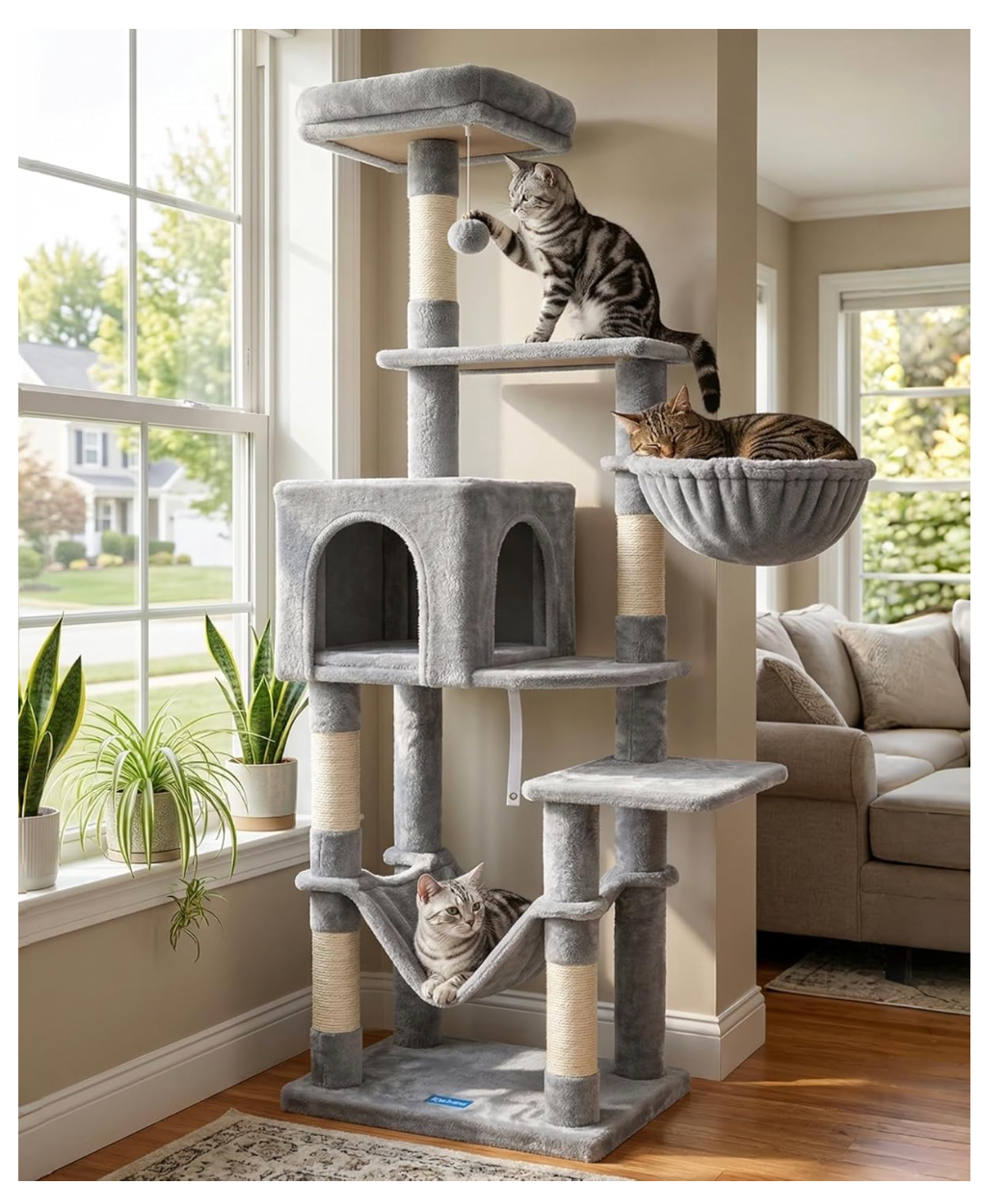
Indoor cats use vertical space to climb, rest, observe their surroundings and scratch. A well-chosen cat tree can combine these activities in one stable piece of furniture, but the best option depends on the cat, the household and the available room.
Start With Your Cat's Size and Activity Level
A young, active cat may enjoy a taller structure with several platforms and climbing routes. A senior cat may be more comfortable with lower step distances, wide platforms and easy access to a resting bed.
Before choosing a model, consider:
- Your cat's approximate weight and body length
- Age, mobility and confidence when climbing
- Preferred sleeping position
- Scratching habits
- Whether more than one cat will use the tree
For large cats or multi-cat households, prioritize a wider base, reinforced posts and platforms that can support more than one cat at a time.
Match the Cat Tree to Your Available Space
Measure the floor area and ceiling height before buying or sourcing a cat tree. Leave enough space around the structure so cats can jump on and off safely.
Tall, narrow models can work well in apartments, while wider trees may provide more resting areas for multi-cat homes. Corners and positions near a window are often useful because they give cats a clear view without blocking the main walking path.
Check Stability Before Extra Features
Stability is more important than the number of platforms or toys. A cat tree should remain steady when a cat jumps onto the upper level.
Look for:
- A broad and balanced base
- Secure connections between posts and platforms
- Strong hardware
- Even weight distribution
- A wall-anchoring option for very tall models
If a structure rocks during normal use, cats may avoid it even when the design looks attractive.
Compare Frame and Surface Materials
Common frame materials include engineered wood, solid wood, metal tubing and reinforced cardboard. Each option has different cost, weight and durability characteristics.
Sisal rope or sisal fabric provides a dedicated scratching surface. Plush, felt and woven fabrics can add comfort, but removable or easy-clean surfaces are more practical for long-term use.
For retail and OEM projects, material selection should also consider target price, packaging size, shipping weight and expected product lifetime.
Choose Useful Resting and Scratching Areas
A practical cat tree usually combines several functions:
- Vertical scratching posts
- Platforms for observation
- A covered space for privacy
- A bed or hammock for resting
- Different heights for climbing
Not every cat needs every feature. A simpler, stable design with well-positioned scratching posts may be more useful than a crowded tower with small platforms.
Plan for Multi-Cat Households
When several cats share one tree, provide more than one desirable resting place and more than one route up or down. This can reduce competition around a single platform.
Choose larger platforms, multiple beds and scratching areas at different heights. The structure should also have enough total weight and base width for simultaneous use.
Place the Cat Tree Where Cats Already Spend Time
Placement strongly affects whether a cat uses the product. A tree placed near a window, family area or familiar resting place is often more attractive than one hidden in an unused room.
Avoid unstable flooring, doors that may strike the structure and areas where jumping cats could knock over fragile objects.
Final Cat Tree Checklist
Before making a decision, confirm that the cat tree:
- Fits the available floor and vertical space
- Supports the cat's size and mobility
- Has a stable base and secure construction
- Provides suitable scratching surfaces
- Includes platforms large enough for comfortable resting
- Can be cleaned and maintained
- Matches the needs of a single-cat or multi-cat home
The right cat tree is not necessarily the tallest or most complex model. It is the one that combines stability, usable space, appropriate materials and features that match how the cat actually behaves. You can also browse ShineePets cat tree products for practical examples.
For retailers, distributors and pet brands
Shortlisting cat trees for your range?
Compare models, then share your dimensions, materials, quantity and destination. Sample fees, packaging and commercial terms are confirmed for the selected model.
Compare Cat Trees & Condos Discuss OEM/ODMFrequently Asked Questions
How tall should a cat tree be for an indoor cat?
The ideal height depends on the cat's age, mobility and confidence. Active adult cats may enjoy taller models, while senior cats often benefit from lower step distances and easier access.
What makes a cat tree stable?
A wide base, balanced weight distribution, secure hardware and strong connections between posts and platforms all improve stability. Very tall models may also benefit from wall anchoring.
Is sisal a good scratching material?
Sisal rope and sisal fabric are widely used because they provide a durable texture for scratching. The final choice should also consider construction quality and how securely the material is attached.
How many resting areas are needed for multiple cats?
Multi-cat homes generally benefit from more than one comfortable resting platform or bed, with multiple routes for climbing up and down.
Sources and References
About this article
The ShineePets Editorial Team shares practical pet product knowledge, sourcing guidance, and product selection insights for pet owners and professional buyers.
ShineePets is a commercial B2B pet-supply sourcing brand. Read our editorial standards and commercial disclosure.