Dog Care
Dog Bathing Basics: Frequency, Products and Drying
Quick answer
Use coat condition, activity and skin comfort to decide when to bathe a dog, what products to use and how to dry the coat safely.
By ShineePets Editorial Team · Published · Updated
Dog bathing is about cleaning a coat when it needs cleaning—not meeting a universal calendar date. A dog that spends most days indoors may need fewer full baths than one that regularly comes home muddy, while a dog with a skin condition may need a veterinarian-designed schedule. For an ordinary home bath, brush first, use a dog-formulated shampoo, keep water comfortably lukewarm, rinse every fold of the coat, and dry the dog thoroughly without overheating or frightening them. If an unusual odor, persistent itching, painful skin, or ear trouble is driving repeated baths, ask a veterinarian about the cause instead of washing more often. VCA's bathing guidance emphasizes that coat and health needs differ between dogs.
Dog Bathing Frequency: Decide by Need, Not a Fixed Rule
Start with three questions: Is the coat actually dirty? Is the skin comfortable? Is the dog on a veterinary treatment plan? A visibly soiled coat, persistent outdoor grime or an odor attributable to dirt can justify a bath. A clean, comfortable dog does not need another full shampoo wash just because the calendar changed. Brushing and a small, targeted cleanup may be enough between baths.
Long or dense coats need more preparation and drying time; outdoor dogs may bring home debris. Washing too often can leave some dogs dry or itchy. If that happens, reconsider the frequency and product and seek veterinary advice if irritation continues. VCA explains the over-bathing risk.
| What you notice | Sensible next step |
| --- | --- |
| Light dirt on paws or a small patch of coat | Clean that area, then dry it; a whole-body shampoo bath may not be necessary. |
| Widespread mud or a coat that needs a full wash | Plan a complete bath with a dog shampoo and enough time to rinse and dry. |
| Skin becoming flaky or itchy after frequent bathing | Review the shampoo and schedule; contact a veterinarian if the problem persists. |
| A medicated shampoo or diagnosed skin condition | Follow the veterinarian's product, contact-time and frequency instructions. |
| New, strong odor plus scratching, redness or ear discomfort | Book a veterinary assessment rather than masking the signs with repeated baths. |
There is no universal "monthly" or "weekly" rule. The ASPCA grooming guide notes that outdoor activity and skin problems change bathing needs. Medicated baths are different: Merck Veterinary Manual says frequency depends on the condition and veterinary direction.
Choose the Products Before Turning on the Tap
For a routine bath, use a shampoo labeled for dogs and read its instructions, including dilution and rinse directions. Do not substitute human shampoo or conditioner as a regular practice: formulations intended for people may irritate canine skin. A heavily scented product is not a fix for a new or persistent odor. If your dog has a history of sensitivity, ask your veterinarian what formulation is appropriate before experimenting with multiple products. The ASPCA and VCA both advise using pet-specific wash products.
Put the practical tools within reach before lifting the dog into the bathing area:
- A non-slip mat sized to the dog's standing area, with edges that stay flat.
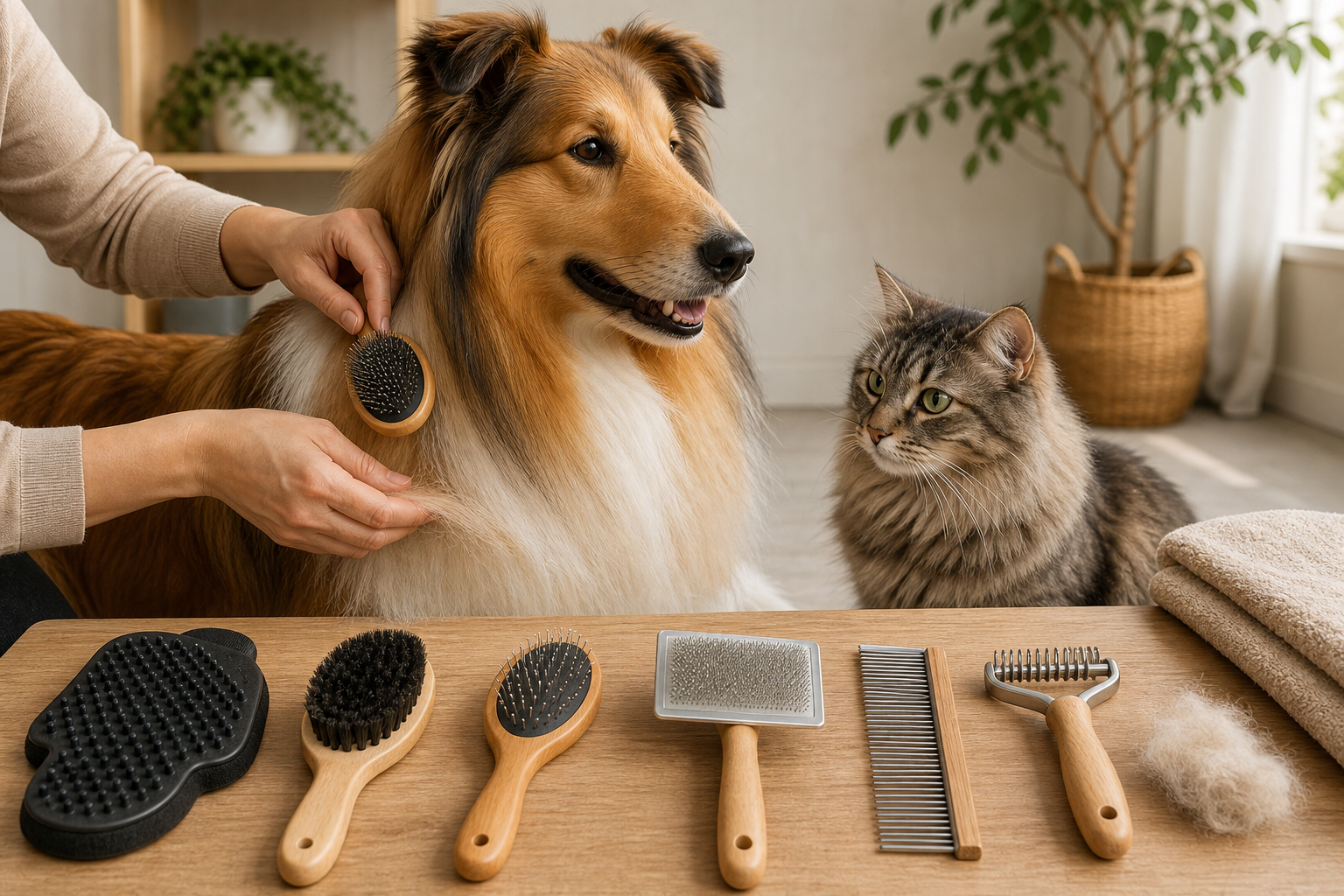
- A brush or comb suited to the coat, for removing loose hair and checking for tangles before wetting.
- A dog shampoo whose label is intact and whose use instructions you can follow.
- A cup or low-pressure sprayer for controlled rinsing, plus a soft washcloth for the face.
- At least one absorbent towel; thick or long coats may need more than one.
- A second dry, non-slip surface where the dog can step out and be dried.
Check product condition, too. A cracked bottle, frayed towel or shifting mat can undermine the bath. Choose accessories by the dog's size and coat. A dryer is optional, but if used it needs controlled, low/cool airflow. The veterinarian-reviewed PetMD bathing guide includes a non-slip mat, towels and optional low/cool drying for heavy coats.
Do not use a medicated shampoo merely because ordinary shampoo did not solve itching. Active ingredients, application intervals and contact times differ. For a prescribed product, follow your veterinarian's instructions and the specific label. If you are unsure whether to first remove heavy dirt with a regular cleanser, ask your veterinarian; Merck explains that medicated shampoos may not clean a visibly dirty coat well.
A Calm, Complete Bath in Seven Steps
1. Check skin and brush before wetting. Part the coat to look for painful areas, sores, heavy matting or parasites. Gently remove ordinary loose hair and manageable tangles. Do not pull at tight mats against the skin; seek a groomer or veterinarian for safe removal if needed. ASPCA recommends brushing first.
2. Prepare stable footing. Put down the non-slip mat, set out towels and check that the water feels lukewarm to your hand. Give the dog a chance to stand comfortably. Never leave them unattended in a tub.
3. Wet the body gently. Use a low-pressure stream or cup, beginning below the neck. Keep direct water out of eyes, nose and ear canals. If the dog becomes distressed, pause; a forceful, rushed bath can make the next one harder. ASPCA's bathing steps specifically caution against directing water into the face and ears.
4. Apply shampoo according to its label. Work it through the wet coat and down to the skin without harsh scrubbing. Pay attention to dirty areas such as the belly, legs and paws. Do not assume that more product or a longer contact time improves a routine wash.
5. Clean the face separately. Use a damp washcloth for ordinary surface dirt rather than pouring shampoo or water over the head. If the eyes, ears or skin require treatment, use veterinary guidance instead of improvising. ASPCA advises a washcloth for the face.
6. Rinse more carefully than you think you need to. Check under the chest, between legs, around the tail and in skin folds for slippery residue. Leftover cleanser can irritate skin; Merck stresses complete rinsing even for medicated shampoo.
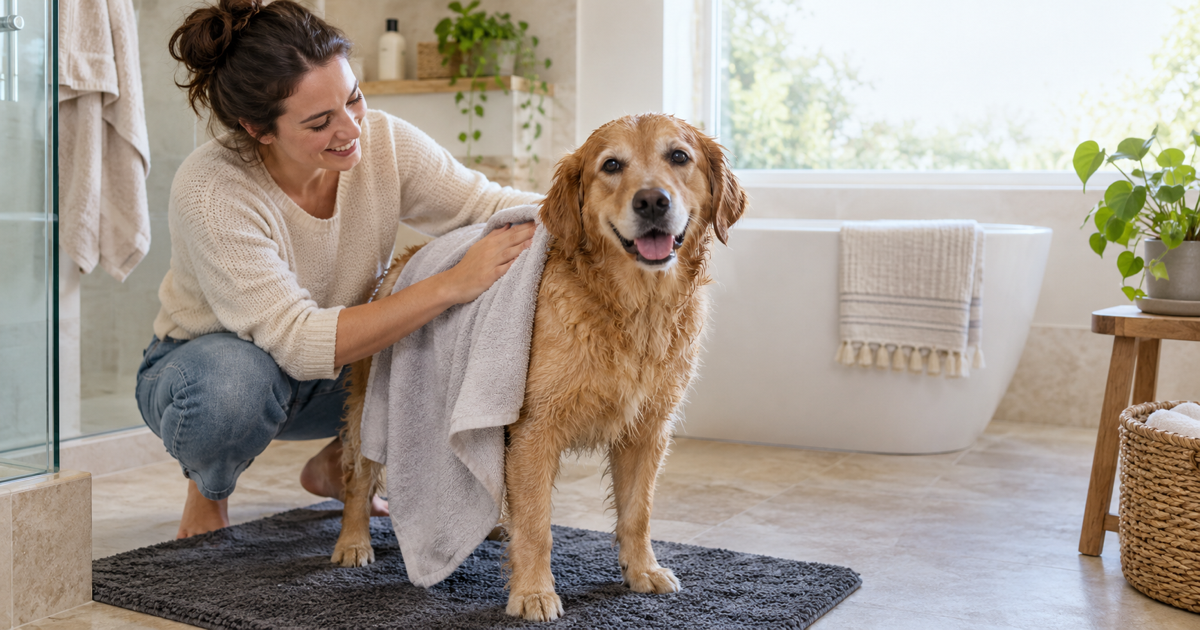
7. Move directly to drying. Help the dog step onto a dry non-slip surface. Gently press out water with towels rather than vigorously rubbing a long coat into tangles. Keep the dog in a comfortable indoor area until fully dry.
A bath is not an ear-cleaning procedure. Wipe the outer ear only as appropriate, and ask a veterinarian about discharge, marked redness, pain or persistent head shaking. Do not put cotton swabs into the canal or flood the ear with bath water. ASPCA notes that wet ears can become irritated.
Drying: Match the Method to the Coat and the Dog
For a short coat, thorough toweling in a warm room may be enough. A dense, long or double coat can stay damp underneath after the surface looks dry. Part the fur and check the skin-side layers, especially under the chest, in the armpits and near any folds. Use additional dry towels as needed. The PetMD bathing guide advises thorough, gentle drying.
If a dryer is useful, introduce its sound gradually. Use a dog-suitable dryer or a low/cool setting, keep it moving, and test the airflow against your own hand so it does not feel hot. Do not point it at the face, ears or one patch of skin for an extended period. Stop if the dog is frightened or the airflow is uncomfortable. Towels and patient air-drying in a comfortable environment are preferable to forcing a dog to tolerate a noisy dryer. The PetMD guide recommends gentle toweling and low, cool airflow for thicker coats.
Dry skin folds carefully. Do not leave a damp dog in a cold place or immediately put on a coat or harness that traps moisture. Check the paws and underside, not only the dog's back.
Know When Bathing Is the Wrong Answer
Home bathing is routine hygiene, not a diagnosis or treatment for skin disease. Arrange veterinary advice for repeated itching, ongoing redness, open or painful skin, hair loss, a sudden persistent smell, or ears that are painful or producing discharge. If a product appears to worsen the skin, stop using it and contact your veterinarian; Merck stresses identifying the underlying cause of skin problems.
Seek immediate veterinary care if a dog develops breathing difficulty, collapses or has marked facial swelling after exposure to a product. These are emergency signs; do not wait for another bath or try to treat them with a different shampoo. VCA's emergency-care guidance identifies these signs as emergencies.
Keep the routine simple: wash when needed, use a product intended for dogs, rinse completely and dry the coat and skin beneath it. Between baths, appropriate brushing may do more for comfort than another full shampoo wash. If you are choosing a tool for that job, our guide to pet brush types and the coats they suit can help you compare options.
*This guide covers routine home care and does not replace a veterinarian's diagnosis or individual treatment plan.*
Sources and Further Reading
For retailers, distributors and pet brands
Building a dog-product assortment?
Explore dog toys, grooming, feeding, beds and travel products, with B2B sourcing and customization support.
Explore Wholesale Dog Products Discuss OEM/ODMFrequently Asked Questions
Can I wash just my dog's paws instead of giving a full bath?
Yes, for localized dirt, a targeted cleanup can avoid an unnecessary full shampoo bath. Rinse or wipe the area as appropriate, then dry the paws and between the toes. If paws remain red or sore, ask a veterinarian.
Should I use conditioner after every dog bath?
Not automatically. Follow the directions for your dog's grooming products and coat. A veterinarian may recommend a particular conditioner for a skin condition, but adding extra products is not inherently better.
What if my dog hates the dryer?
Stop, towel-dry thoroughly and keep the dog comfortable while the coat finishes drying. Introduce the sound gradually on another day. Ask a groomer for help with coats that are difficult to dry at home.
Is a strong smell always a reason to bathe my dog again?
No. If the odor is new, persistent, or accompanied by itchy skin or ear signs, investigate with a veterinarian. Repeated baths can mask the sign without addressing its cause.