Dog Care
How to Choose a Dog Bed for Size and Sleep Style
Quick answer
A practical guide to measuring your dog, matching common sleep positions to bed shapes, and choosing support, entry height, fabric and washability.
By ShineePets Editorial Team · Published · Updated
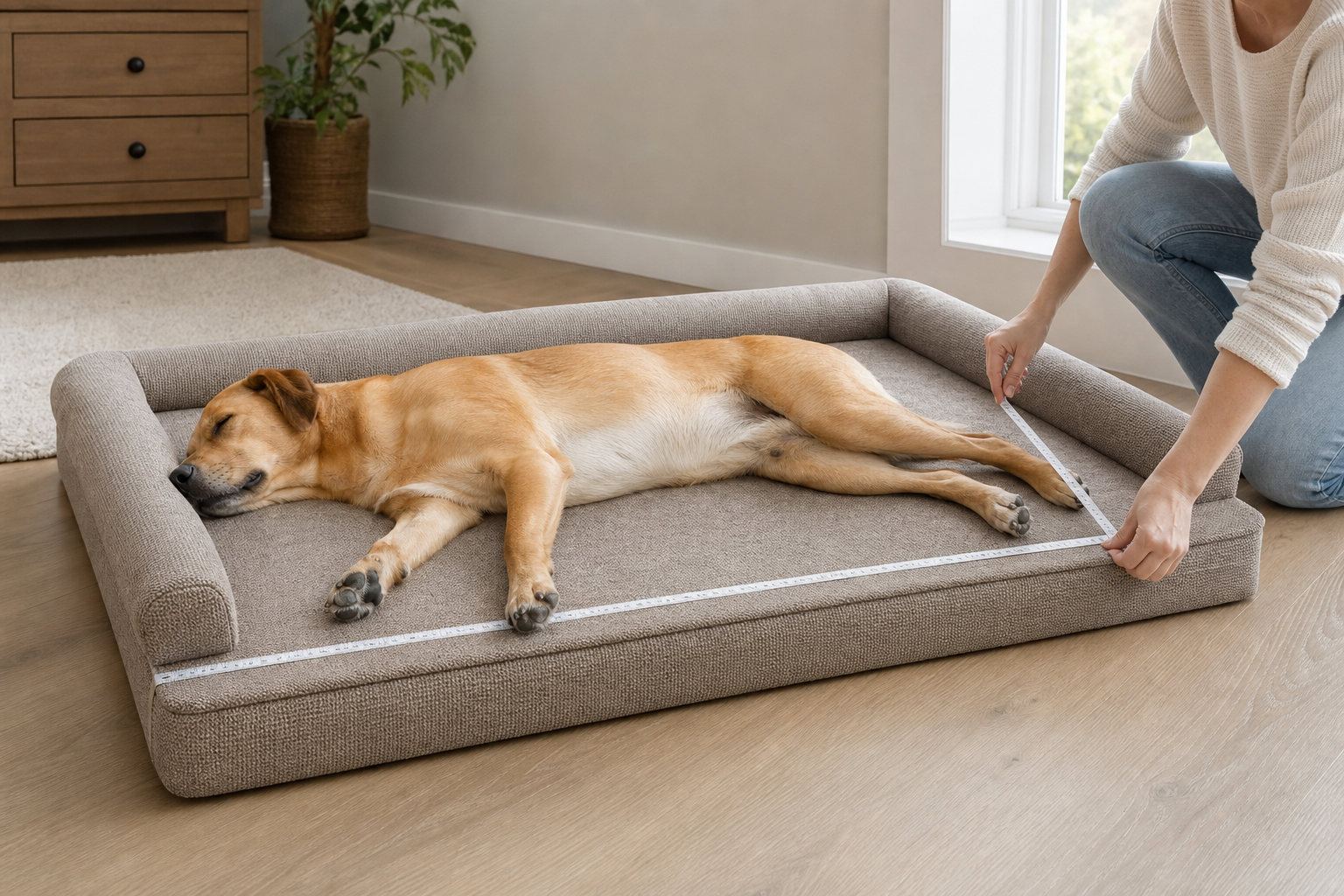
The right dog bed is not determined by breed label alone. Two dogs of the same weight can need different sleeping surfaces because one curls tightly while the other stretches from nose to rear paws. The best choice starts with usable sleeping space, observed sleep style, mobility, temperature preference, and cleaning needs.
This guide explains how to turn those observations into a practical buying decision without relying on vague size names or unsupported comfort claims.
Quick recommendation: Watch your dog sleep for several days, measure the longest natural position, and compare that measurement with the bed's internal sleeping area rather than its outside dimensions.
Step 1: Observe before you shop
Dogs change position throughout the night. Watch your dog during several naps and overnight rests, then record the position that needs the most space.
Look for these patterns:
- Curler: circles and tucks the nose toward the tail
- Side sleeper: lies on one side with the legs partly or fully extended
- Sprawler: stretches forward and backward or sleeps in a Superman position
- Back sleeper: lies belly-up with legs open
- Head rester: consistently places the chin or neck on an edge, cushion, or object
- Burrower: pushes under blankets or into enclosed soft spaces
- Position switcher: uses several styles and rotates frequently
A dog may curl when cold and stretch when warm, so observe in the season and room where the bed will be used. Choose for the largest normal posture, not only the most photogenic one.
Step 2: Measure the dog in a relaxed position
Do not force the dog into a pose. Measure while the dog is naturally resting on the floor, sofa, or current bed.
Take three measurements:
1. Relaxed body length: nose to the base of the tail while lying normally
2. Maximum sleeping length: nose or front paws to the furthest rear paw in the longest observed stretch
3. Maximum sleeping width: the widest space used when side-sleeping, back-sleeping, or curling
Use the maximum sleeping length and width as your starting point. Then allow a practical margin so paws, head, and hips do not rest on a hard edge. As a shopping heuristic, many owners add roughly 15 to 25 cm, or 6 to 10 inches, to the longest relaxed measurement, but the dog's actual posture and the bed design matter more than a fixed formula.
For puppies, estimate near-term growth and remeasure regularly. A bed that is oversized for an adult may feel open to a small puppy, so provide a removable blanket or bolster without creating loose material the puppy chews or swallows.
Use internal dimensions, not the size label
Small, medium, large, and extra-large are not standardized across manufacturers. Compare numerical dimensions.
A bolster bed may have large outside dimensions but a much smaller sleeping area because the padded sides occupy space. Ask for or measure:
- Internal flat length
- Internal flat width
- Bolster height and thickness
- Front opening width
- Entry height
- Cushion thickness under load
- Total floor footprint
The usable sleeping surface should hold the dog's entire preferred posture. If the head, hips, or rear legs regularly hang over the edge, move up a size or choose a less restrictive shape.
Match bed shape to sleep style
Curled sleepers
Round, oval, donut, or box beds can suit dogs that prefer to curl and press against an edge. A soft perimeter may provide a place to rest the back or chin.
Check that the center is still wide enough for the dog to uncurl. Deep bolsters can reduce usable space and may be difficult for a small, senior, or short-legged dog to cross.
Side sleepers
A rectangular mattress or low-bolster bed usually gives side sleepers room for the spine, hips, shoulders, and legs to align without hitting a wall. Choose a width that accommodates the legs when they extend forward.
A bed that only fits the torso is too small even if the dog can technically lie down.
Sprawlers and Superman sleepers
Flat rectangular mattresses, crate-style mats used outside a crate, or low-profile beds offer the most unrestricted surface. Avoid a raised border on all four sides unless the internal area is generous.
Measure the longest front-paw-to-rear-paw position. Sprawlers often need more length than a breed chart suggests.
Back sleepers
Belly-up sleepers need enough width for open legs and enough stability that the surface does not tip or slope toward an edge. A broad mattress or a bed with a low partial bolster can work well.
Head resters
A bed with one or more moderate bolsters can support a dog that consistently rests its chin on an edge. Make sure there is also a low opening and enough flat space to move away from the bolster.
Do not assume that a high pillow is better. The dog should be able to choose a neutral flat position as well as an elevated head position.
Burrowers
Some small or fine-coated dogs seek enclosed warmth. A cave bed, blanket-compatible bed, or soft hood may suit them, but the structure must remain breathable and easy to exit.
Avoid loose foam, cords, zippers, or fabric that a chewing dog can pull apart. Supervise initial use and stop using the bed if the dog damages or ingests material.
Position switchers
Choose the most versatile option: a rectangular mattress with generous dimensions and perhaps a bolster on only one or two sides. This offers both open space and an edge without locking the dog into one posture.
Choose support by feel and performance
Terms such as orthopedic, memory foam, premium, and supportive are not standardized comfort guarantees. Evaluate the construction.
Check:
- Foam type and total thickness
- Whether the foam is one solid layer or loose pieces
- How quickly it recovers after pressure
- Whether the dog bottoms out onto the floor
- Edge stability when the dog steps on or off
- Odor and ventilation after unpacking
- Whether the insert can be removed for cleaning
- Replacement-cover and insert availability
Press down with a flat hand, then observe the bed under the dog's hips and shoulders. The surface should cushion without collapsing completely. Very soft fill may look plush but shift away from pressure points, while very firm foam may be rejected by a dog that prefers a softer surface.
The goal is not maximum softness. It is stable, comfortable support that the dog chooses to use.
Puppies and active chewers need a safety-first design
Young dogs may dig, mouth, scratch, or carry bedding. Look for:
- Hidden or protected zippers
- Reinforced seams
- No decorative buttons, cords, beads, or detachable trim
- An intact cover with no exposed foam
- A stable non-slip base
- Materials appropriate for the intended indoor or outdoor use
No fabric bed is indestructible. Inspect it frequently and remove it if stuffing, foam, thread, or hardware becomes accessible. For a dog that destroys bedding, discuss safe resting options with a veterinarian or qualified behavior professional rather than repeatedly offering ingestible material.
Senior dogs and dogs with limited mobility
AAHA senior-care guidance recommends adequately padded bedding, clean and dry surfaces, and traction around resting areas. VCA notes that dogs with musculoskeletal difficulty may prefer comfortable padding on a stable surface that is low to the ground and easy to access.
Prioritize:
- Low or step-free entry
- A firm, stable edge that does not roll under the paws
- Non-slip backing or a secure rug beneath the bed
- Adequate padding that does not compress to the floor
- A waterproof liner beneath a washable cover when needed
- Placement on the level where the dog spends most of its time
- Enough space to turn without climbing over a tall wall
A sudden change in sleep position, difficulty lying down, repeated circling, stiffness, reluctance to rise, limping, or nighttime restlessness can indicate discomfort and deserves veterinary assessment. A bed may support comfort, but it does not diagnose or treat joint disease.
Temperature and coat change the preferred design
A thick, enclosed bed may be inviting in winter and uncomfortable in summer. Consider coat, room temperature, airflow, and floor type.
For dogs that seek warmth
- Bolsters or a covered edge can reduce drafts.
- A soft removable blanket adds seasonal flexibility.
- Keep the bed away from cold doors and direct airflow.
- Use only pet-specific warming products according to instructions and supervise as directed.
For dogs that overheat easily
- Choose an open mattress with breathable fabric.
- Avoid deep synthetic pile that traps heat.
- Leave room for the dog to move onto a cooler floor.
- Keep the bed out of strong direct sun.
Do not interpret leaving the bed as stubbornness. The dog may be seeking a different temperature or a more open posture.
Cover fabric should match the household
Choose the cover based on the dog's coat, activity, skin needs, and cleaning routine.
Woven upholstery fabric
Often durable and easy to vacuum, but rough weaves can catch claws. Check seam strength and wash instructions.
Fleece or plush
Warm and soft, but it may hold hair and heat. It needs frequent cleaning and may not suit a dog that chews fibers.
Canvas or heavy-duty fabric
Useful for active dogs and travel, although a stiff cover may need a comfortable inner cushion. Water resistance is not the same as full waterproofing.
Smooth cooling fabric
Can feel cooler and release hair easily, but confirm that it is not slippery when the dog stands.
Waterproof liner
A separate liner protects the insert from accidents, drool, or damp fur. It should not make loud crackling sounds or trap moisture against the sleeping surface.
Washability is part of comfort
A bed that cannot be cleaned easily may not stay inviting. RSPCA guidance recommends comfortable, padded, washable bedding and a quiet, warm, draft-free location.
Before buying, check:
- Whether the entire bed or only the cover is washable
- Machine capacity required
- Maximum wash and dry temperatures
- Whether bolsters and base inserts can be removed
- Drying time
- Whether the waterproof layer survives repeated washing
- Availability and cost of spare covers
- Whether hair becomes trapped in hook-and-loop closures or piping
A practical setup often includes two covers so the bed remains usable during washing. Vacuuming and spot cleaning help between full washes, but follow the care instructions for the actual materials.
Bed height and floor traction matter
A raised bed can improve airflow and keep a dog off a cold or wet floor, but it requires a stable frame and an entry height the dog can manage. Check load rating, fabric tension, foot stability, and pinch points.
For floor beds:
- Put the bed on a level surface.
- Test whether it slides when the dog steps on the edge.
- Use a secure non-slip mat if needed.
- Avoid placing the bed where people will trip over it.
- Keep a clear route to water and the exit.
Dogs with reduced mobility may need the bed on the main living level rather than up stairs.
Crate mats and travel beds have different constraints
A crate mat should fit the crate floor without folding, blocking the door, or reducing safe usable space. Follow the crate manufacturer's guidance and consider whether the dog chews bedding when unsupervised.
A travel bed should prioritize:
- Known packed size and weight
- Fast drying
- Durable bottom material
- Easy cleaning
- Familiar smell and texture
- Enough space for the dog's normal position at the destination
Do not choose the main home bed only by portability if the dog spends most resting hours at home.
One bed per dog is the safer starting point
RSPCA guidance recommends at least one bed per dog to reduce competition. Dogs that choose to sleep together may also use a larger shared bed, but each dog should retain access to an individual resting option.
For a shared bed:
- Measure both dogs in the positions they actually use together.
- Add space for either dog to leave without climbing over the other.
- Watch for guarding, blocking, staring, or displacement.
- Separate beds if one dog consistently gives up the resting area.
A very large shared bed does not replace individual choice.
Place the bed where the dog can truly rest
The best bed may be ignored if it sits in the wrong place. RSPCA recommends a quiet, calm, draft-free safe space away from heavy traffic and sudden noise.
Many dogs benefit from two resting options:
- A quiet bed for undisturbed sleep
- A second bed near family activity for relaxed social contact
Avoid placing the only bed beside a television, slamming door, heater, air conditioner, busy hallway, or children's play area. Everyone in the household should leave the dog undisturbed while it rests.
Run a seven-night home trial
A short trial shows more than a showroom squeeze. During the first week, record:
- Whether the dog chooses the bed without repeated prompting
- Sleep positions used
- Any body parts hanging over the edge
- Ease of stepping on and off
- Sliding, tipping, or bolster collapse
- Panting, moving to the floor, or seeking extra blankets
- Scratching, chewing, or digging at the cover
- Hair, odor, moisture, and cleaning effort
- Shape recovery after use
Keep the packaging and return-policy information until the dog has used the bed in normal conditions. Do not assume rejection on the first hour is final; some dogs need time for a new smell and surface to become familiar.
Common buying mistakes
Avoid these errors:
- Buying by breed or weight label without measuring
- Using external dimensions as the sleeping area
- Sizing only for a curled posture
- Choosing deep bolsters for a dog that struggles to step over them
- Assuming the word orthopedic proves support quality
- Selecting the thickest bed without checking heat preference
- Ignoring floor traction
- Buying a cover that does not fit the washing machine
- Leaving exposed foam after chewing damage
- Expecting one shared bed to prevent competition
- Placing the bed in a noisy or drafty location
Dog bed decision checklist
Before purchasing, confirm:
- [ ] I observed my dog's longest and widest natural sleep positions.
- [ ] I measured the internal sleeping area, not only the outside footprint.
- [ ] The bed supports curling, stretching, or both as needed.
- [ ] Entry height suits my dog's legs and mobility.
- [ ] The cushion does not collapse completely under the dog.
- [ ] The surface and base remain stable when the dog stands.
- [ ] The cover is removable or the whole bed is washable.
- [ ] The fabric suits shedding, chewing, temperature, and indoor or outdoor use.
- [ ] The bed fits a quiet, draft-free resting location.
- [ ] Each dog in the home has an individual resting option.
- [ ] I know which mobility or pain signs require veterinary advice.
For a broader daily care framework, read How a Simple Routine Supports Dog Confidence and Growth. For health warning signs, see Common Health Problems in Dogs: Statistics and Prevention.
Sources
Frequently Asked Questions
How do I measure my dog for a bed?
Measure the longest natural sleeping position from the nose or front paws to the furthest rear paw, measure the widest position, and compare both with the bed's internal sleeping area.
What bed shape is best for a dog that sleeps stretched out?
A generous rectangular mattress or low-bolster bed usually provides the least restricted length and width for side sleepers and sprawlers.
Are orthopedic dog beds always better?
The term alone does not guarantee performance. Check foam construction, thickness, recovery, edge stability and whether the dog sinks through to the floor.
What bed is easier for a senior dog to use?
Look for low or step-free entry, stable padding, a non-slip base, clear floor access and enough room to turn without climbing over a high bolster.
Should two dogs share one bed?
They may choose to share, but each dog should still have an individual resting option. Watch for guarding, blocking or one dog repeatedly giving up the shared space.
Sources and References
About this article
Evidence-led dog care and practical product guidance from the ShineePets Editorial Team.
ShineePets is a commercial B2B pet-supply sourcing brand. Read our editorial standards and commercial disclosure.