Bird Care
What Pet Bird Owners Value in 2026: Survey-Based Market Analysis
Quick answer
A survey-based analysis of pet bird species, younger owners, shopping channels and the care priorities shaping demand in 2026.
By ShineePets Editorial Team · Published
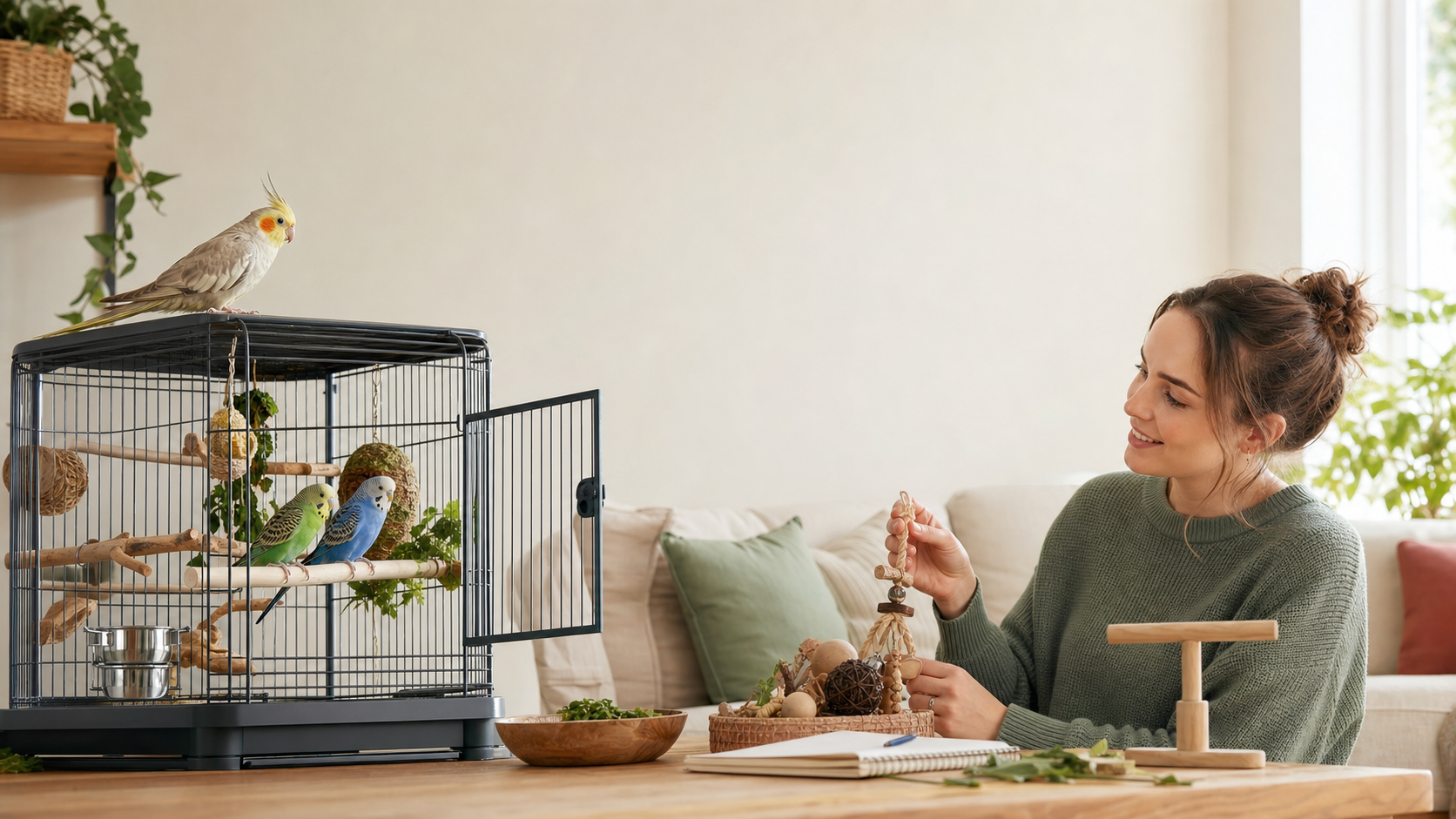
Pet birds occupy a smaller household segment than dogs or cats, but the category has a distinctive commercial profile: owners seek specialist advice, invest in the bird's environment and often form relationships with retailers that extend beyond a single purchase.
The strongest market signal in 2026 is not simply growth in bird numbers. It is the combination of younger ownership, high engagement, specialist trust and rising demand for care education.
Citation-ready takeaway: The pet bird market grows through informed ownership: habitat, enrichment, nutrition and trusted guidance matter more than treating the bird as a decorative purchase.
Pet bird market snapshot
The American Pet Products Association's 2025 Bird, Small Animal & Horse Report estimates that six million U.S. households own birds. In Europe, FEDIAF's 2026 Facts & Figures report counts approximately 43.95 million ornamental birds across 41 covered countries, based on 2024 population data.
These figures are not directly comparable. APPA reports households, while FEDIAF reports bird population. They still show that companion birds have a meaningful installed base on both sides of the Atlantic, with demand extending across food, housing, perches, cleaning, enrichment, transport and specialist care.
The European population is also geographically concentrated. FEDIAF records particularly large ornamental-bird populations in Italy and Türkiye, with substantial populations in France, Germany, Spain, the Netherlands and the United Kingdom. Country-level culture and regulation therefore matter more than a single "European bird owner" profile.
Budgerigars and cockatiels define the accessible entry market
APPA reports that 28% of surveyed U.S. bird owners have a parakeet, making parakeets the most popular bird type in its 2025 research. Cockatiels account for 19% of owners, an increase of 58% from 2023.
This species mix helps explain the entry-level market. Budgerigars and cockatiels are widely recognized, comparatively compact and often presented as approachable first birds. Yet accessible does not mean low maintenance. Even small birds need room to move, varied perches, social interaction, safe enrichment, appropriate nutrition and access to an avian veterinarian.
A market built only around low acquisition price risks creating poor outcomes. A stronger market presents the real lifetime care package before the bird goes home.
Gen Z is changing the bird-owner profile
Twenty-two percent of U.S. bird owners in APPA's report are Gen Z, representing a 22% increase from 2023. Cockatiel growth was driven primarily by Gen Z and Boomer owners, showing that the category can serve both younger first-time owners and experienced older households.
Younger owners can influence the market in several ways:
- They discover species and care routines through short-form video and online communities.
- They expect visual education, clear setup instructions and mobile-friendly care information.
- They compare products and prices online even when they prefer to acquire the bird in person.
- They may view birds as interactive family companions rather than decorative animals.
- They are receptive to enrichment, training and shareable owner experiences.
The opportunity comes with responsibility. Highly engaging bird content can make ownership look easier than it is. Retailers and educators need to explain noise, mess, lifespan, daily interaction, safe household air and veterinary access as clearly as they show color, speech or personality.
Specialist stores remain a trust center
Bird retail differs from many mature pet categories because the specialist store still plays a major information role. APPA reports that 25% of bird owners rely on bird stores for care information, while 28% rely on bird-store personnel. It also reports that 21% acquire their bird from a bird store, making it the leading acquisition location in the survey.
This means the physical store is not only a transaction point. It can function as:
- A species-matching and expectation-setting service.
- A demonstration space for suitable housing and perch layouts.
- A source of nutrition and enrichment education.
- A referral point for avian veterinary care.
- A long-term replenishment and problem-solving relationship.
Online shopping is rising, but digital channels do not automatically replace this trust. The more realistic model is hybrid: owners learn and acquire through specialist networks, then use both local and online channels for ongoing supplies.
What owners actually need after acquisition
A useful market survey should look beyond the first cage. The Association of Avian Veterinarians identifies rest, foraging, adequate nutrition, exercise, grooming opportunities, socialization and privacy from stressors as important environmental needs.
Those needs create five durable demand areas.
1. Housing that supports movement
Owners need species-appropriate space, safe bar spacing, nontoxic materials, stable doors and a layout that does not sacrifice movement to excessive accessories. The demand is not simply for a larger object; it is for a habitat that is easier to clean, inspect and adapt.
2. Perches and foot-friendly variety
A single uniform perch does not provide much choice. Different safe diameters, locations and textures support movement and allow birds to select resting and activity areas. Owners value clear sizing guidance because "small bird" is not a precise fit standard.
3. Foraging and enrichment
AAV groups enrichment into sensory, nutritional, manipulative, environmental and behavioral forms. This broadens the market beyond hanging toys. Foraging materials, shredding opportunities, training tools, bathing options and rotation plans can support natural behavior when introduced safely.
4. Nutrition with species-specific guidance
Bird owners face a confusing mix of seed, pellet, fresh-food and supplement claims. Products need clearer species and life-stage information, while retailers need to avoid presenting one feeding approach as universal. An avian veterinarian should guide diet changes for an individual bird.
5. Cleaning, monitoring and household safety
Daily cage-paper changes, clean bowls and easy inspection help owners monitor droppings and food intake. Birds also have sensitive respiratory systems, so owners need education about smoke, aerosols, overheated non-stick surfaces and other household air hazards. Products that are easy to clean and instructions that clearly explain safe use earn trust over time.
Engagement extends beyond essential purchases
APPA reports that 76% of bird owners give gifts to their birds. Thirty-eight percent buy gifts for any occasion and 33% buy Christmas gifts, with average spending of $40.52 per gift in the 2025 report.
This does not mean the market should prioritize novelty over welfare. It shows that many owners express the human-animal bond through discretionary spending. The most credible products combine emotional appeal with a clear role in enrichment, interaction or habitat improvement.
Examples of owner value include:
- An activity that encourages safe foraging.
- A perch or platform that fits the species and cage layout.
- A rotation system that keeps enrichment varied.
- A training or interaction tool with clear instructions.
- A durable item that is easy to inspect and clean.
The weaker proposition is a decorative item with uncertain materials, unclear sizing or no explanation of how it supports the bird.
The largest market gap is often education
Bird care has a higher learning curve than many first-time owners expect. AAV recommends regular checkups with an avian veterinarian and provides species-specific resources because birds can conceal signs of illness until a problem is advanced.
Education gaps can limit category growth through poor first experiences, preventable safety problems or ownership regret. Before acquisition, owners should understand:
1. Expected adult size and likely lifespan.
2. Noise, dust, mess and daily cleaning.
3. Social and enrichment needs.
4. Safe housing and out-of-cage movement.
5. Ongoing food and replacement costs.
6. Availability of an avian veterinarian.
7. Care arrangements during travel or emergencies.
A responsible market does not treat this information as a barrier to purchase. It treats informed matching as a way to improve retention, welfare and long-term customer trust.
What the 2026 market rewards
The evidence points to four priorities for retailers, care educators and category planners.
First, segment by species rather than using one generic bird category. A budgerigar, cockatiel, finch and large parrot have different housing, enrichment and handling requirements.
Second, connect every product to a care task. Owners need to understand fit, safe use, cleaning and replacement, not just color or appearance.
Third, preserve specialist expertise across channels. In-store guidance can be extended through QR-linked instructions, setup checklists and credible online aftercare.
Fourth, design for repeat engagement without unnecessary consumption. Food, safe destructible enrichment, hygiene and habitat maintenance naturally repeat. Durable goods should focus on safety, adaptability and long service life.
Outlook: a niche category with high owner involvement
Pet birds are unlikely to match dogs or cats in household scale, but scale alone misses the category's value. The latest APPA evidence shows younger participation, strong specialist-store relationships and high gifting engagement. FEDIAF data confirms a substantial European bird population with important national clusters.
The most sustainable growth path is therefore care-led rather than novelty-led. Markets that make correct housing, enrichment, nutrition and veterinary planning easier will serve both owners and birds better.
For the regional ownership picture, read Pet Bird Market Outlook in the U.S. and Europe. For the wider category context, continue with How Pet Market Categories Shifted Over the Past Five Years.
For retailers, distributors and pet brands
Planning a bird or small-animal product range?
Compare relevant product categories, then discuss packaging, private-label or OEM/ODM requirements with our B2B team.
Explore Bird & Small Animal Products Discuss OEM/ODMFrequently Asked Questions
How large is the U.S. pet bird market by ownership?
APPA's 2025 research estimates that six million U.S. households own birds. This is a household measure and should not be compared directly with bird-population figures from other regions.
Which pet birds are most popular with U.S. owners?
APPA reports parakeets as the most common bird type among surveyed owners at 28%, followed by cockatiels at 19%. Species-specific care requirements still vary substantially.
Are younger consumers entering the pet bird category?
Yes. Gen Z represents 22% of U.S. bird owners in APPA's 2025 report, a 22% increase from 2023, indicating a meaningful generational shift.
Why do specialist bird stores remain important?
Owners use bird stores and their personnel for care information as well as acquisition. Their expertise can help with species matching, housing, nutrition, enrichment and referrals to avian veterinary care.
What product areas have the strongest long-term demand?
Durable demand centers on appropriate housing, species-specific nutrition, safe perches, foraging and enrichment, cleaning supplies, transport and credible care education rather than novelty alone.
Sources and References
- APPA 2025 Bird, Small Animal and Horse Ownership Report Summary
- APPA Bird Market Engagement Analysis
- FEDIAF Annual Report 2026
- FEDIAF European Pet Population and Market Data 2024
- Association of Avian Veterinarians - Bird Owner Resources
- Association of Avian Veterinarians - Basic Care for Companion Birds
- Association of Avian Veterinarians - Environmental Needs of Birds
About this article
Evidence-led pet market reporting that connects consumer behavior with responsible companion-animal care.
ShineePets is a commercial B2B pet-supply sourcing brand. Read our editorial standards and commercial disclosure.
Continue Reading
Pet Bird Market Outlook in the U.S. and Europe: Species and Owner Trends
A market-focused look at companion bird ownership in the U.S. and Europe, including common pet bird types, owner habits, shopping behavior and growth signals.
How Pet Market Categories Shifted Over the Past Five Years
A data-based look at how food, veterinary care, supplies and services changed in the pet market over the past five years, and which subcategories gained share.