Industry Trends
What Pet Fish Owners Want in 2026: Bigger Tanks and Better Care
Quick answer
A market-focused look at why households keep pet fish, how aquarium buyers are changing in 2026, and which welfare-first preferences are shaping the category.
By ShineePets Editorial Team · Published
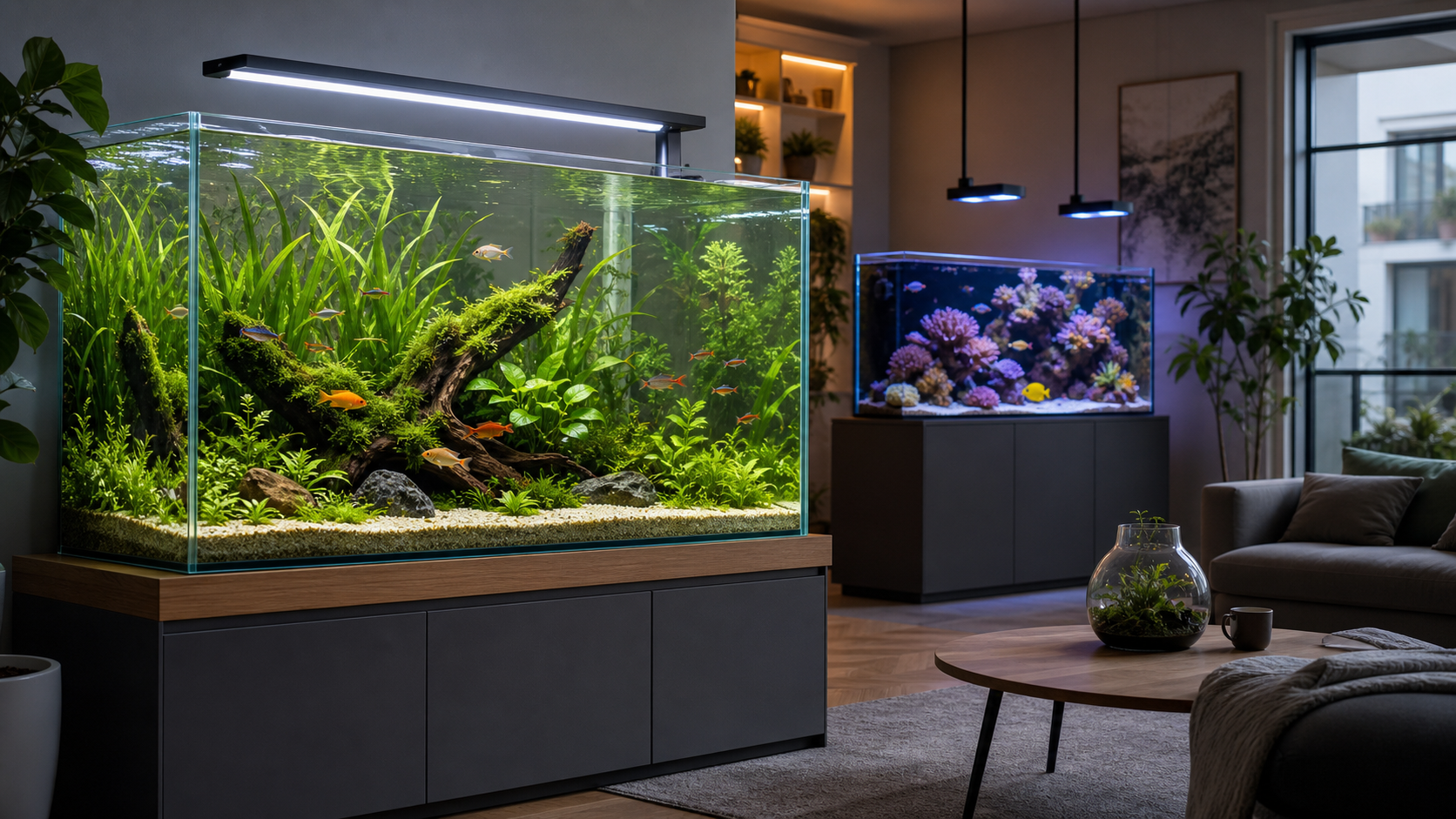
Pet fish are often treated as a quiet corner of the pet world, but the latest owner data suggests something more durable. In the United States, the 2025 APPA Fish & Reptile Report estimates that 10 million households keep freshwater fish and another 2 million households keep saltwater fish. That is a meaningful installed base, and it is increasingly defined by owners who want better habitats rather than cheaper impulse purchases.
The more interesting shift is not simply how many households keep fish, but how they keep them. According to APPA, 77% of fish owners now keep two or more fish, while saltwater hobbyists are moving toward larger tanks, custom setups and more advanced lighting. In other words, the category is maturing from entry-level novelty to a more deliberate home hobby with stronger emotional and financial commitment.
Quick takeaway: The 2025-2026 pet fish market is moving away from novelty bowls and toward larger, better-equipped aquariums built around long-term care.
Why people still keep pet fish
Fish do not offer the same kind of interaction as dogs or cats, but they serve a different role in the home. A well-kept aquarium can create a calm visual rhythm, encourage routine, and give families a shared project that changes slowly over time. That helps explain why fishkeeping remains resilient even when many other household purchases become more selective.
A 2024 New Zealand study on ornamental fish ownership, published by Unitec ePress, found that fish are often valued less as individual animals and more as part of the wider aquarium environment. That observation matters because it helps explain both the appeal and the risk of the category: people enjoy the ecosystem effect, but they may underestimate the welfare needs of the fish inside it.
For readers comparing pet categories, our responsible home pet ecosystem guide explains why fish should always have their own species-appropriate habitat rather than being treated as decorative add-ons.
The clearest 2026 preference: more space
If one preference stands out in current owner behavior, it is the move toward larger systems. APPA reported in September 2025 that 44% of saltwater fish owners now keep tanks between 56 and 125 gallons, while 34% use tanks of 126 gallons or more. Its companion November 2025 analysis described this as a broader scaling-up trend, with aquatic owners shifting from casual keeping to more advanced, habitat-focused setups.
That trend has practical logic behind it. Larger tanks are usually easier to stabilize, easier to stock responsibly, and easier to design around species-specific needs. They also create room for planted freshwater displays, coral-focused reef systems, better filtration and smarter lighting, all of which make the hobby feel more intentional.
For manufacturers and retailers, this is one of the most important signals in the category. The growth is not just in fish count; it is in habitat quality, equipment layering and the willingness to invest in a setup that looks permanent inside the home.
Freshwater leads scale, while saltwater leads premium spending
Freshwater remains the broadest entry point. APPA's 2025 release puts freshwater fish in far more households than saltwater fish, which means the freshwater segment still anchors volume, beginner demand and repeat replenishment. But the premium edge of the market sits more clearly with saltwater owners, who are over-indexing on larger tanks, custom builds and more specialized accessories.
APPA also found that aquarium lighting is becoming more central to the modern setup. Among saltwater owners, 79% already use aquarium lighting and 58% plan to buy lighting within the next year. Freshwater owners are moving in the same direction, though at a more mainstream pace: 70% already use lighting and 31% plan to purchase it within the next year. This suggests that visual presentation and habitat management are increasingly blended in the buyer mindset.
That pattern fits the broader spending backdrop we noted in our 2026 global pet supply spending trends article: pet households are not spending evenly across all categories, but they are still willing to pay for products that feel durable, visible and meaningfully tied to care quality.
Fish stores still matter, but shopping is now mixed-channel
The fish category has not become fully online-first. APPA says retailers remain the main source of information about fish availability, with 64% of owners relying on them. Fish stores and the internet were tied as leading information sources at 41% each, followed by pet store personnel at 39%. On the purchasing side, 38% of fish owners buy from fish stores, while freshwater owners in particular have shifted more strongly toward specialist outlets.
This matters because aquarium buying usually depends on explanation, not only selection. New owners need help with water cycling, compatibility, tank size, feeding and filtration. Even when discovery begins on social platforms, the actual buying decision often still benefits from a retailer or specialist who can translate interest into a viable setup.
At the same time, digital influence is clearly growing. APPA found that social media is gaining traction among saltwater enthusiasts when they look for fish availability. That suggests a mixed-channel pattern: inspiration online, validation through search or community, and final purchase through a trusted store or specialty seller.
Welfare is no longer a side issue
A stronger market does not automatically mean better care. The RSPCA's fish care guidance warns that fish can be challenging to keep and that meeting their complex needs takes preparation, investment, time and care. The same guidance also reminds readers that some common assumptions are badly outdated. Goldfish, for example, are not short-life bowl pets; the RSPCA notes that they can live for up to 25 years and some grow beyond 30 cm.
That welfare lens is becoming more important because current preferences increasingly reward aesthetics. A beautiful tank can still be poorly planned. Selective breeding also creates welfare questions inside fashionable segments. The RSPCA specifically warns that some fancy goldfish and extreme betta varieties can be more vulnerable to inherited problems, which is a reminder that visual novelty should not be treated as the same thing as good pet care.
The Unitec study adds another useful warning sign. It found that fish owners often turn to non-veterinary sources because specialist fish veterinary care is limited. That means the market still depends heavily on retailers, online communities and educational content to close the knowledge gap. From a reader perspective, the safest path is to treat setup quality as part of the purchase decision, not as an afterthought.
The trade also has a transparency challenge
Consumer preference is only one side of the story. The species pipeline behind ornamental fish is still unevenly documented. Species360's Marine Ornamental Fish Species Knowledge Index says its framework is designed to identify priority species for conservation action and notes that zoo and aquarium members hold 1,132 traded non-CITES listed species, representing 43.2% of those traded species in its analysis.
That does not prove that every household buyer is actively asking trade-origin questions today. But it does support a reasonable market inference: as fishkeeping becomes more serious, buyers are likely to place more value on clear sourcing, species-level guidance and captive-bred availability where possible. In practical terms, the next stage of category quality will not come from more colorful livestock alone. It will come from better information around compatibility, origin and long-term care.
What these preferences mean for households
If you are reading the market from a consumer angle, today's signals point in a fairly clear direction:
- Choose species after you decide on tank size, not before.
- Expect freshwater to remain the easiest entry path, but not the only serious one.
- Budget for filtration, lighting and water management as core needs, not optional extras.
- Use specialist advice when building community tanks or reef systems.
- Treat welfare and sourcing as part of quality, not as separate topics.
The same market can still support entry-level ownership, but the strongest growth narrative is not about simplifying fish into decor. It is about treating aquariums as living systems that reward patience, knowledge and responsible setup.
Conclusion
The most important pet fish market preferences in 2026 are not mysterious. Owners are moving toward more fish, bigger tanks, better lighting, more specialist shopping and more thoughtful care. Freshwater remains the broad base of the category, while saltwater continues to define the premium edge.
For the industry, that means the opportunity is less about impulse novelty and more about education, habitat quality and buyer confidence. For households, it means fishkeeping still has emotional and visual value, but only when the setup respects the reality that fish are animals with complex needs, not silent decorations.
For retailers, distributors and pet brands
Planning a small-pet product range?
Explore product categories for rabbits, hamsters, guinea pigs and other small pets, then discuss your sourcing brief.
Explore Small Pet Products Discuss OEM/ODMFrequently Asked Questions
Are freshwater fish still the main entry point for new owners?
Yes. APPA's 2025 fish ownership data suggests freshwater fish remain the largest U.S. household segment, making them the most common starting point for hobbyists.
Why are larger tanks becoming more popular?
Larger tanks are usually more stable in water quality and allow more deliberate stocking, aquascaping and equipment upgrades. APPA data shows saltwater owners in particular are moving toward 56+ gallon systems.
Is social media replacing fish stores?
Not fully. APPA data shows retailers and fish stores remain important sources for both purchasing and care information, while the internet and social media play a growing supporting role.
What is the biggest welfare mistake new fish owners make?
Treating fish as simple decoration. RSPCA notes that fish have complex environmental and social needs, so species choice, tank size, cycling and compatible tankmates all matter.
Sources and References
- American Pet Products Association — From Bigger Tanks to Stronger Bonds: Fish & Reptile Ownership Evolves in 2025
- American Pet Products Association — Scaling Up: Bigger Tanks, Snake Comebacks, and Data Insights
- RSPCA — Keeping Fish as Pets
- Unitec ePress — Ornamental fish ownership in New Zealand: Attitudes toward veterinary care and welfare considerations
- Species360 — The Marine Ornamental Fish Species Knowledge Index
About this article
The ShineePets Editorial Team researches pet care, product use and industry shifts with a practical, evidence-based lens.
ShineePets is a commercial B2B pet-supply sourcing brand. Read our editorial standards and commercial disclosure.
Continue Reading
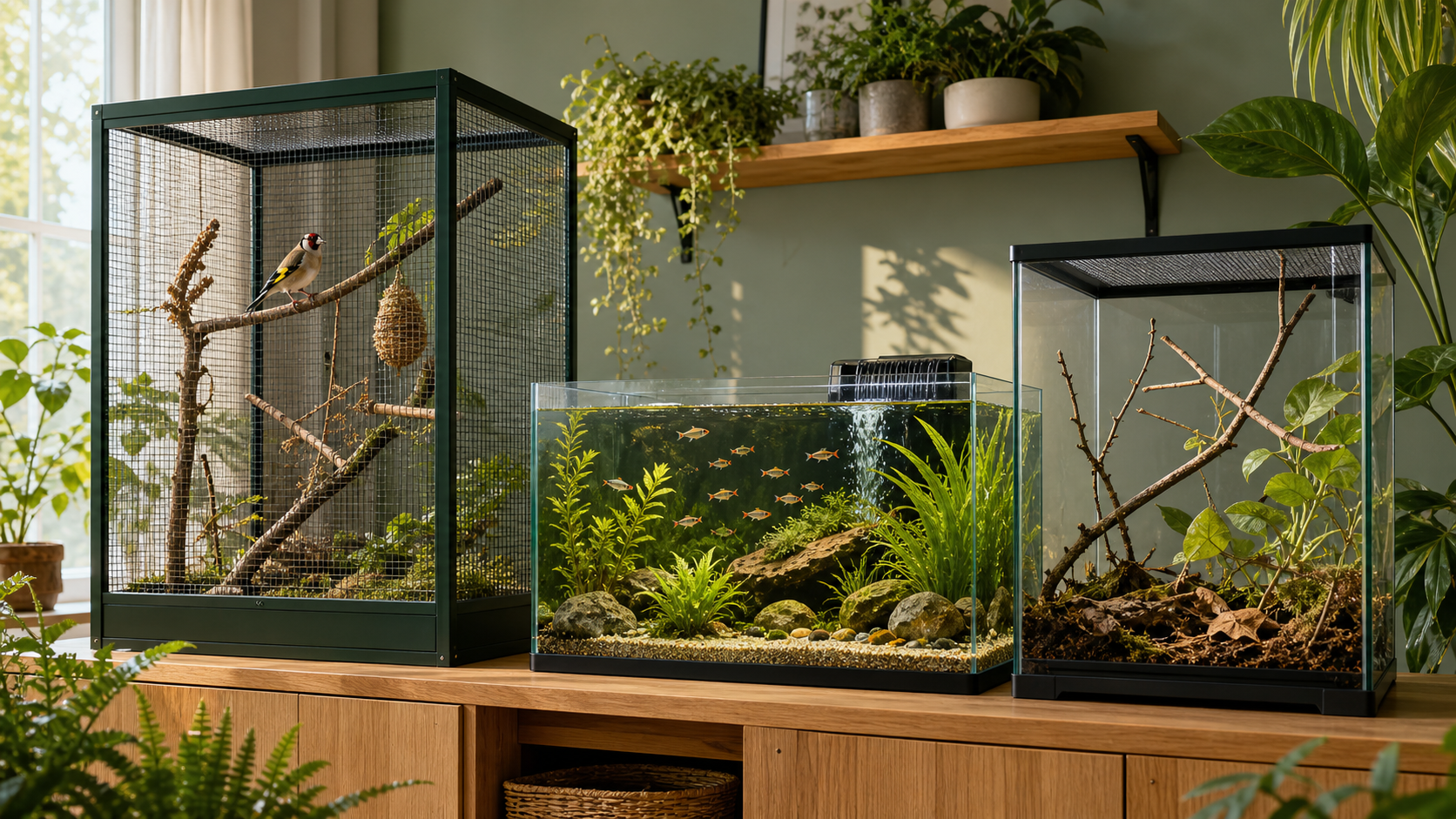
Beyond Cats and Dogs: Building a Responsible Home Pet Ecosystem
A science-based guide to creating separate, species-appropriate habitats for pet birds, aquarium fish, invertebrates and living plants at home.
2026 Global Pet Supply Spending Trends: Regional Signals and Category Mix Shift
APPA, FEDIAF, and global tracker data suggest 2026 pet-supply demand is still expanding, but category mix is becoming more utility-first and value conscious. Explore the practical signals for sourcing and assortment planning.