Small Pet Care
Beyond Cats and Dogs: Building a Responsible Home Pet Ecosystem
Quick answer
A science-based guide to creating separate, species-appropriate habitats for pet birds, aquarium fish, invertebrates and living plants at home.
By ShineePets Editorial Team · Published
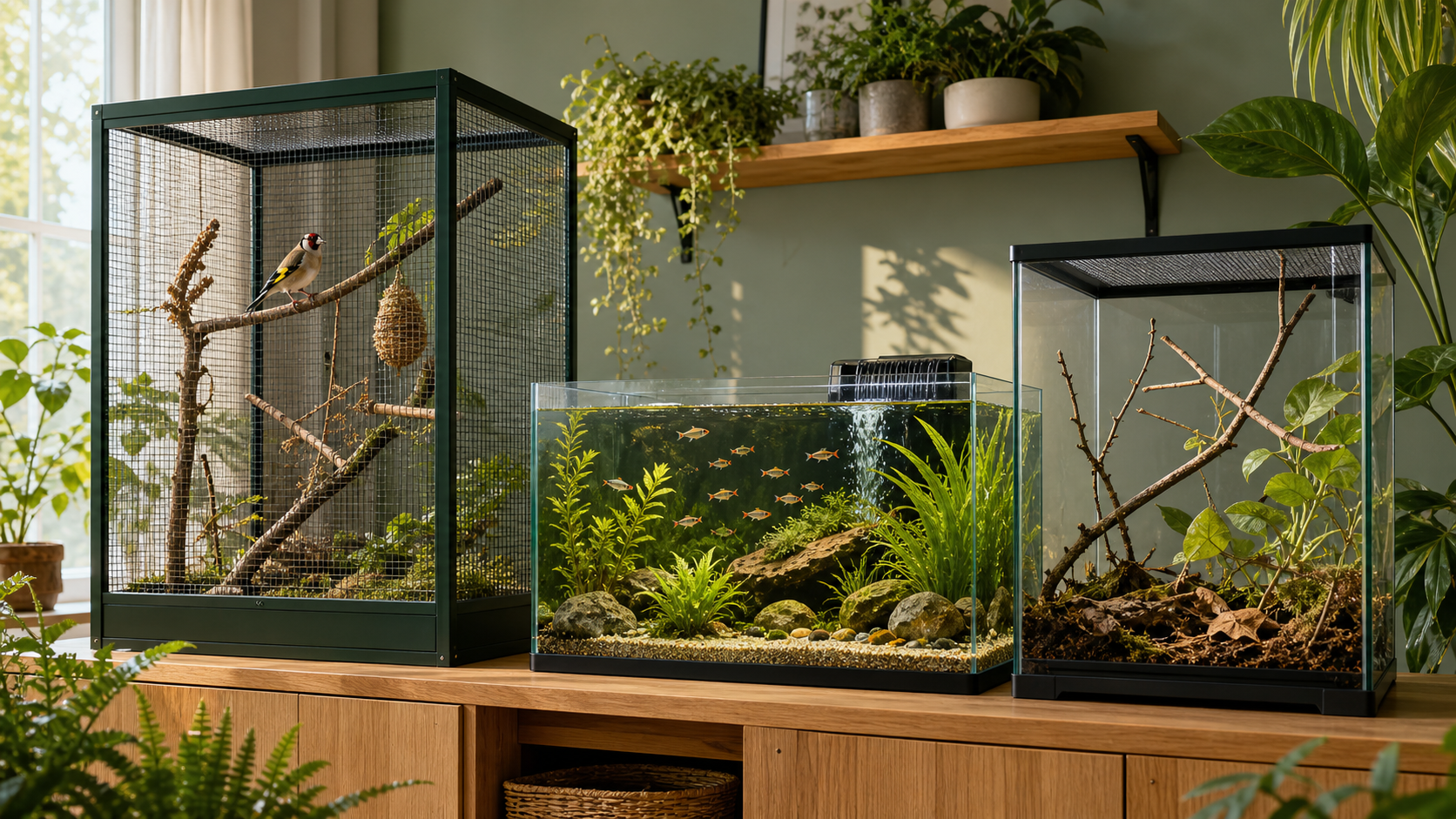
A home display of birds, aquarium fish, invertebrates and living plants can be beautiful, but beauty is not the same as welfare. A responsible home pet ecosystem begins with separate, species-appropriate habitats whose temperature, water, light, space and enrichment can be controlled independently.
The goal is not to recreate a miniature zoo in one enclosure. It is to build a collection of carefully managed microhabitats, each designed around the biology of the animal living inside it.
Quick recommendation: Treat every enclosure as a self-contained life-support system. Choose the species first, research its needs, and only then select the enclosure, plants, equipment and decoration.
A Home Ecosystem Is a Set of Boundaries
The word “ecosystem” can sound like an invitation to mix animals and plants freely. In practice, responsible care depends on boundaries. Birds need flight space and safe air; fish depend on stable water chemistry; terrestrial invertebrates may require tightly controlled humidity and ventilation; plants can change moisture levels, introduce pesticides or create escape routes.
The Merck Veterinary Manual notes that mixed-species environments can increase disease transmission and aggression when species are not selected appropriately. A home setup has less space, fewer escape options and less specialist supervision than a professional collection, so separation is usually the safer default.
Birds Need Airspace, Choice and Daily Activity
A decorative cage is not a complete bird habitat. Birds use three-dimensional space to fly, climb, perch, forage, preen and retreat. The RSPCA’s bird housing guidance emphasizes adequate flight space, natural wooden perches of varied thickness, safe room for wing movement and opportunities for daily free flight where appropriate.
Placement matters too. Kitchens, direct drafts, radiators, ceiling fans and uncovered windows can turn an attractive location into a hazard. Perches should encourage movement without overcrowding the enclosure, and food and water should not sit under places where droppings collect.
Enrichment works best when it creates behavior, not clutter. Foraging materials, bird-safe branches, swings and chewable items should be introduced gradually and rotated. The useful question is not “Does the cage look full?” but “What can the bird choose to do?”
Aquariums Succeed or Fail on Water Stability
An aquarium is a living chemical system. Fish produce waste, beneficial bacteria process that waste, plants and filters influence oxygen and nutrients, and small changes can spread through the entire tank. Clear water alone does not prove that conditions are safe.
The RSPCA’s aquarium guidance warns that bowls and very small decorative tanks are unstable because they offer limited water volume, filtration and gas exchange. It recommends setting up the tank for the specific fish and establishing biological filtration before animals are introduced.
Recent research also supports looking beyond simple survival. A 2024 study on Siamese fighting fish found that tank size and furnishings affected behavior and welfare. Another 2024 study of ornamental-fish ownership in New Zealand found a gap in access to specialist veterinary support and highlighted the need for better owner education. The survey was small, with 58 respondents, so it should be read as a warning signal rather than a global estimate.
For home keepers, the practical lesson is straightforward: test the water, match temperature and chemistry to the species, avoid sudden stocking changes, and provide structure without blocking swimming space or trapping waste.
Invertebrates Reward Precision, Not Frequent Handling
Pet insects and other invertebrates are often described as easy because they need little social interaction. That description can be misleading. A stick insect, beetle, mantis, millipede or terrestrial snail may require a very specific combination of ventilation, humidity, temperature, substrate depth, climbing height and food plants.
Start with an exact species identification. Common names can cover animals with very different needs. Use a secure enclosure, confirm that ventilation openings cannot become escape routes, and select food and substrate from a species-specific husbandry reference. Avoid collecting wild insects or branches from areas treated with pesticides.
Observation is usually more valuable than unnecessary handling. Record feeding, molting, activity, waste and environmental readings. Sudden inactivity, repeated falls, failed molts, mold, mites or persistent refusal to feed are reasons to review the setup and seek specialist help.
Plants Are Habitat Components, Not Harmless Decoration
Living plants can offer shade, visual barriers, climbing structure and a more natural appearance. They can also introduce sap, thorns, fertilizer, pesticide residues, mold, soil organisms or leaves that are unsafe for a particular species.
Choose plants only after checking compatibility with the exact animal. Keep newly purchased plants outside the enclosure until their treatment history and condition are understood. In aquariums, use aquatic plants suited to the water and lighting plan; in bird or invertebrate enclosures, make sure leaves cannot become a toxic food source or an unplanned ladder to an opening.
Responsible ownership also extends beyond the home. Government guidance updated in 2025 states that listed invasive non-native pets must be kept in contained holdings and must not be released into the wild. Unwanted fish, snails, insects or aquatic plants should be rehomed or disposed of through appropriate local channels, never placed in ponds, drains or natural habitats.
A Seven-Point Habitat Checklist
Before adding any animal or plant, use this order of work:
1. Identify the species by scientific name where possible.
2. Define its temperature, humidity, light, water, space and social requirements.
3. Build and run the enclosure before the animal arrives.
4. Measure key conditions with suitable instruments instead of relying on appearance.
5. Add enrichment that supports natural behavior without blocking movement.
6. Prevent escapes, cross-contamination and access by other household pets.
7. Keep a simple care log and change one variable at a time when troubleshooting.
This sequence prevents the common mistake of buying a visually appealing enclosure first and trying to make an animal fit it later.
What Should Never Be Combined Casually
Direct contact between birds, fish and invertebrates is not a meaningful “natural ecosystem.” It is a collection of incompatible risk pathways. Birds may prey on small animals, aquarium moisture can worsen mold around terrestrial habitats, aerosol cleaners can harm birds and aquatic life, and feeder insects can escape or injure an animal when left unmanaged.
Separate tools are also sensible. Nets, feeding utensils, misting bottles and cleaning materials should not move between enclosures without cleaning. Wash hands between habitats, especially after touching aquarium water, soil, waste or live food.
When to Seek Specialist Help
Consult an avian, aquatic or exotic-animal veterinarian when an animal shows persistent behavioral change, breathing difficulty, abnormal posture, loss of balance, injury, repeated unsuccessful molting, unexplained weight change or prolonged refusal to eat. Water-quality emergencies, suspected poisoning and sudden deaths in a shared enclosure also require prompt professional advice.
Build a specialist contact list before a problem occurs.
Final Perspective
A responsible home pet ecosystem is not defined by how many living things fit into one room. It is defined by whether each animal can express normal behavior inside a stable, measurable and escape-proof environment.
Birds need room to fly and forage. Fish need mature, stable water systems. Invertebrates need precise microclimates and careful observation. Plants should support those needs without adding hidden hazards. When those boundaries are respected, a home collection can be both visually rich and genuinely educational.
Sources and References
- RSPCA — Housing and Environments for Pet Birds
- RSPCA — Choosing an Aquarium for Pet Fish
- Macquarie University — Life Beyond a Jar: Tank Size, Furnishings and Betta Welfare (2024)
- Unitec — Ornamental Fish Ownership in New Zealand: Welfare Considerations (2024)
- Merck Veterinary Manual — Management of Zoo Animals
- UK Government — Invasive Non-native Animal Species Rules
For retailers, distributors and pet brands
Planning a bird or small-animal product range?
Compare relevant product categories, then discuss packaging, private-label or OEM/ODM requirements with our B2B team.
Explore Bird & Small Animal Products Discuss OEM/ODMFrequently Asked Questions
Can birds, fish and insects share one enclosure?
No. These animals have incompatible environmental, safety and disease-control needs. Create separate, species-appropriate habitats and prevent direct contact.
Are live plants always safe in pet enclosures?
No. Plant toxicity, pesticide residues, fertilizer, thorns, mold and humidity changes must be checked for the exact animal species before a plant is introduced.
What should be set up before bringing a pet home?
Complete the enclosure, confirm temperature, humidity, lighting or water parameters, test escape prevention and arrange an appropriate food supply before the animal arrives.
Can unwanted aquarium animals or plants be released outdoors?
No. Releasing pets or aquatic plants can harm the animal and local ecosystems and may be illegal. Contact a suitable rehoming organization, specialist retailer or local authority.
Sources and References
About this article
The ShineePets Editorial Team publishes evidence-informed guidance on responsible pet care, animal welfare and the changing pet industry.
ShineePets is a commercial B2B pet-supply sourcing brand. Read our editorial standards and commercial disclosure.