Pet Care
Slow Feeder Bowls: Benefits, Risks and Buying Tips
Quick answer
A practical guide to what slow feeder bowls can and cannot do, which pets may struggle with them, and how to choose a safer, easier-to-clean design.
By ShineePets Editorial Team · Published · Updated
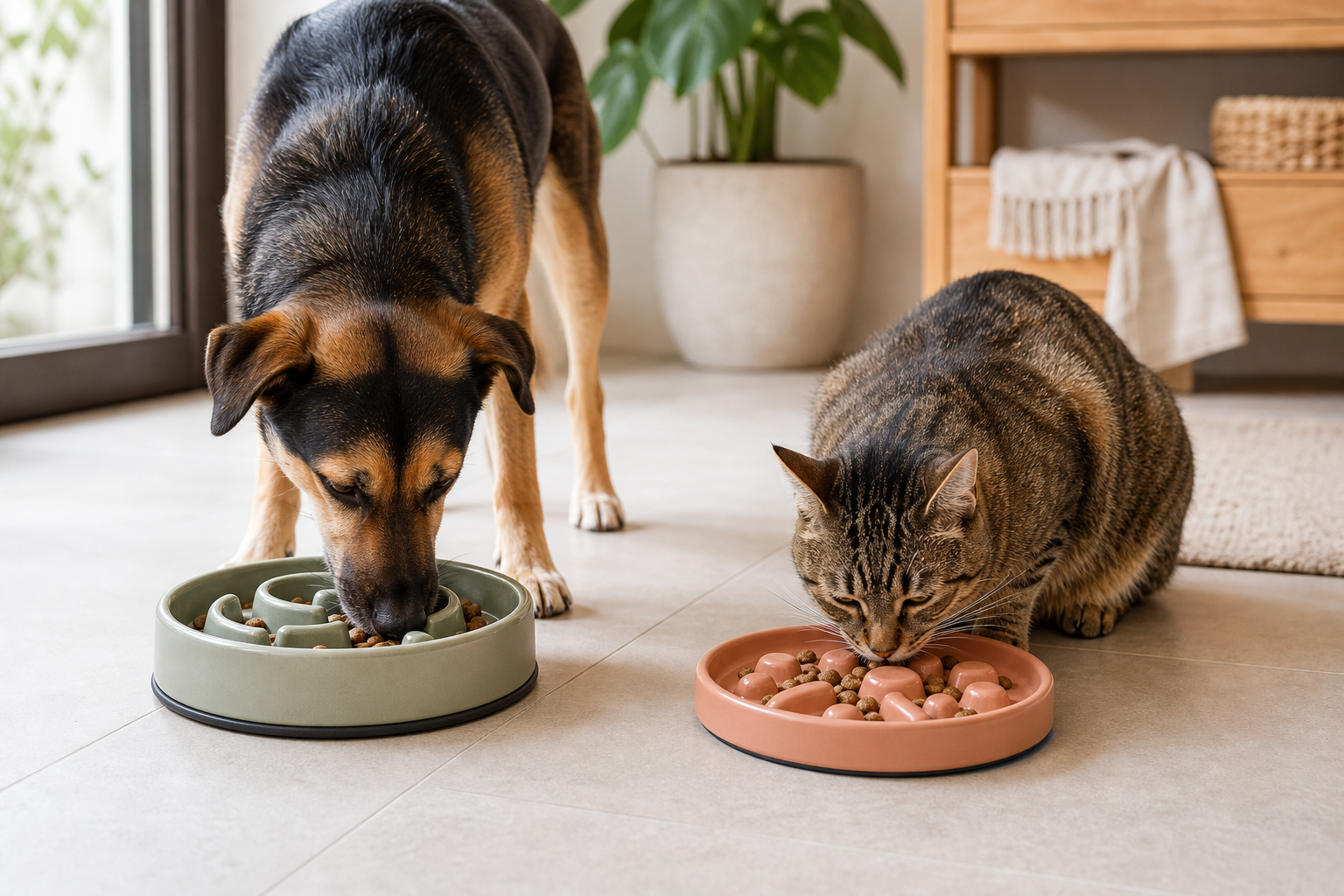
A slow feeder bowl uses ridges, channels or compartments to make food less immediately accessible than it is in a plain open bowl. For some dogs and cats, that extra structure can extend mealtime and add a small problem-solving task. For others, the wrong design creates frustration, poor access or a cleaning problem.
Quick recommendation: Choose the easiest design that produces a calmer, measurable change in eating pace. More complicated is not automatically better, and a slow feeder should never be used to delay veterinary assessment of sudden or abnormal eating behavior.
This guide separates realistic benefits from marketing claims, explains the main risks and provides a practical buying checklist. It is general educational information, not a diagnosis or an individual feeding plan.
What a Slow Feeder Can Realistically Do
The most defensible purpose of a slow feeder is simple: change how food is physically accessed. A dog or cat must move around obstacles, take smaller mouthfuls or pause between sections.
A small study reported through Veterinary Evidence and the University of Bristol found that the tested slow-feeding bowl reduced the dogs' rate of food consumption compared with a standard bowl. The sample was small, and the result should not be generalized to every bowl, food texture or dog.
Potential practical benefits include:
- extending a meal that is otherwise consumed extremely quickly;
- reducing the size of some mouthfuls;
- creating a simple foraging or problem-solving activity;
- helping an owner observe eating behavior more closely;
- separating food into visible portions or channels;
- making it harder for one pet to finish immediately and move to another pet's bowl.
These are management benefits, not proof that a particular feeder prevents disease, produces weight loss or improves digestion.
What the Evidence Does Not Prove
Slow-feeder marketing often moves from “eats more slowly” to much larger health promises. Those claims require caution.
Rapid food consumption has been associated with gastric dilatation-volvulus, or GDV, in dogs, but GDV is a complex emergency with multiple risk factors. The Merck Veterinary Manual lists genetics, body conformation, age, stress, feeding pattern and other factors alongside rapid eating.
A slow feeder may reduce eating speed for a particular dog, but that does not establish that the bowl prevents GDV. It also does not replace a veterinarian's risk assessment for large, deep-chested or otherwise predisposed dogs.
Similarly:
- a slow feeder does not reduce calories unless the portion is measured;
- a longer meal does not automatically increase satiety;
- a puzzle pattern does not treat vomiting, regurgitation or swallowing problems;
- a bowl cannot correct an unsuitable diet;
- a difficult feeder is not beneficial simply because it takes longer to empty.
The useful question is whether the device improves the individual pet's feeding experience without introducing new problems.
Slow Feeder Versus Food Puzzle
The terms overlap, but the emphasis can differ.
A slow feeder bowl is usually stationary. Its internal ridges divide food and limit direct access. It is often designed to replace a standard meal bowl.
A food puzzle may require rolling, pawing, sliding, licking or opening. Its primary role can include enrichment as well as meal pacing.
For cats, research and feline-care guidance more often discuss food puzzles and foraging opportunities than maze bowls alone. A review in the Journal of Feline Medicine and Surgery recommends introducing puzzles at an easy level and adapting them to the cat. The authors also note that empirical evidence remains limited and that frustration is possible if the task is too difficult.
The feline feeding program consensus guidance supports feeding methods that address cats' behavioral needs, including puzzle feeding and distributing food in ways that encourage activity. This does not mean every cat needs a deep maze bowl.
Which Pets May Benefit
A slow feeder may be worth testing when a healthy pet consistently empties an ordinary bowl so quickly that the owner cannot observe a normal, calm meal.
Possible candidates include:
- dogs that take very large mouthfuls from a plain bowl;
- dogs that finish early and attempt to steal another pet's meal;
- cats that enjoy stationary food puzzles;
- pets that need additional low-intensity feeding enrichment;
- households that can supervise the introduction and compare results.
Before buying, measure the current meal rather than relying on an impression. Record the portion, food type, approximate time to finish, interruptions and behavior around the bowl for several ordinary meals. This creates a baseline.
The target is not the longest possible meal. It is a pace that appears comfortable, allows full access to the measured ration and does not provoke biting, pawing, flipping or abandonment.
Pets That Need Extra Caution
A generic maze bowl is not equally accessible to every animal.
Ask a veterinarian before making a major feeding change when the pet has:
- difficulty chewing or swallowing;
- repeated coughing, gagging, vomiting or regurgitation around meals;
- dental pain, oral injury or missing teeth;
- a neurological condition;
- impaired vision;
- arthritis, neck pain or reduced mobility;
- a medically prescribed feeding position or food texture;
- diabetes or medication that depends on reliable meal intake;
- a history or elevated risk of GDV;
- unexplained appetite or weight changes.
Short-muzzled dogs and cats may struggle to reach food between tall, narrow ridges. Senior pets may find repeated head, tongue or paw movements uncomfortable. A cat's whiskers may contact steep bowl walls or dense obstacles, and some cats simply prefer a wide, shallow surface.
Puppies and kittens also require supervision. A feeder should not contain detachable inserts, caps or rubber pieces that can be chewed or swallowed.
The Main Risks to Watch
Frustration and food refusal
A design can be too difficult. Warning signs include persistent barking or vocalizing, hard biting, frantic pawing, bowl flipping, walking away while still hungry, guarding or redirecting frustration toward another animal.
Make the first sessions easy. Use the pet's normal food, place it in the most accessible channels and keep the ordinary bowl available if reliable intake is medically important. Increase difficulty only when the pet is calm and successful.
Poor physical access
If the tongue or muzzle cannot reach the bottom, the pet may leave food behind even when hungry. Deep, narrow patterns are particularly risky for broad or short muzzles.
Check the bowl after the meal. Food repeatedly trapped in the same sections is evidence that the geometry does not fit the pet.
Mouth, tooth or nail injury
Sharp seams, rough ceramic, brittle plastic or narrow hard gaps can scrape lips and gums or catch teeth and nails. A pet that bites the obstacles forcefully may damage both the feeder and its mouth.
Run a finger across every food-contact edge before use. Stop using a bowl that becomes chipped, cracked, splintered or deeply scratched.
Hygiene failure
More channels create more surfaces. Wet food, saliva and oils can remain in corners that look clean from above.
A feeder should be washed after use according to its material and food type, then dried fully. Inspect the underside, non-slip ring and any removable parts. Replace a product that retains odor, develops inaccessible residue or cannot be cleaned without damaging its surface.
Competition in multi-pet homes
A slow feeder does not solve resource competition. One pet may still block another, finish first or guard the feeding area.
Feed pets at separate stations, ideally with a door or barrier where needed. Each pet should have uninterrupted access to its own measured meal and water.
Buying Tip 1: Match the Pattern to the Muzzle
Start with low, widely spaced obstacles. They are easier to understand and easier to clean than a dense maze.
Look for:
- channels wider than the pet's muzzle or comfortably reachable by the tongue;
- rounded transitions without sharp interior corners;
- enough open area for the food texture;
- a depth that does not force uncomfortable facial contact;
- a wide, shallow option for cats and short-muzzled pets;
- a pattern that still works when the correct portion is added.
A large bowl is not automatically accessible. The internal design matters more than the outside diameter.
Buying Tip 2: Choose a Stable Base
A slow feeder only works as intended if it stays in place.
Useful features include:
- a broad footprint;
- meaningful weight for the pet's size;
- an intact non-slip base;
- a shape that is difficult to grip and flip;
- compatibility with a secure feeding mat;
- no loose suction components within chewing reach.
Test stability on the actual household floor. A base that grips tile may slide on wood, vinyl or a textured mat.
Buying Tip 3: Evaluate Materials and Finish
The seller should clearly identify the main material and provide care instructions. Regardless of material, inspect the finished product rather than relying on a general claim such as “food grade.”
Stainless steel
Stainless steel can be durable and relatively easy to clean, but complex stamped shapes may have seams or narrow channels. Check weight, finish and base attachment.
Ceramic
Ceramic can provide useful weight and stability. Inspect it regularly for cracks, chips and glaze damage. Stop using a damaged bowl.
Plastic
Plastic allows varied patterns and lighter weight. Check for rough molding, warping, deep scratches and chew damage. Replace it when the surface deteriorates.
Silicone
Silicone designs can be flexible and portable, but very soft products may fold, slide or be chewed. Confirm that the entire structure can be cleaned and dried.
Material choice does not eliminate the need for inspection and hygiene.
Buying Tip 4: Match the Bowl to the Food
Dry kibble moves differently from wet, fresh or soaked food.
For dry food, make sure pieces do not wedge tightly between obstacles. For wet food, avoid narrow dead ends that are difficult to lick clean or wash. For mixed meals, confirm that ingredients do not separate into inaccessible pockets.
Do not freeze a feeder, heat it or place it in a dishwasher unless the manufacturer's instructions specifically allow that use. Temperature changes can affect some materials, adhesives and non-slip bases.
Always measure the ration before it goes into the feeder. The maze shape can make a portion appear larger or smaller than it is.
Buying Tip 5: Test the Difficulty
A useful feeder should create a moderate challenge, not an endurance test.
Run a simple comparison:
1. Measure the same normal meal portion.
2. Time two or three meals in the ordinary bowl.
3. Introduce the slow feeder at its easiest setup.
4. Supervise the full meal.
5. Record completion time and behavior.
6. Check for trapped food, coughing, gagging, biting or frustration.
7. Adjust or discontinue based on the pet's response.
Do not chase a universal time target. Body size, food type, meal size and individual behavior create large differences.
Buying Tip 6: Prioritize Cleaning Before Appearance
Before purchase, imagine washing every channel by hand. If fingers or a normal brush cannot reach the bottom, residue may be equally difficult to remove.
A practical design should have:
- smooth continuous food-contact surfaces;
- no hidden cavities that collect liquid;
- removable parts only when they lock securely and can be inspected;
- clear cleaning instructions;
- dimensions that fit the sink or dishwasher when approved;
- a base that can dry fully.
Decorative complexity has little value if daily cleaning becomes unreliable.
How to Introduce a Slow Feeder
Use a gradual, choice-based introduction.
First session
- present the empty feeder for investigation;
- add a small amount of the pet's usual food to open, easy areas;
- keep the environment quiet;
- supervise without repeatedly pushing the pet toward the bowl;
- end the session if the pet becomes distressed or starts chewing the feeder.
Next meals
- use the measured normal ration;
- maintain the same feeding location and routine;
- compare pace and behavior with the baseline;
- separate other pets;
- check that the entire meal remains accessible.
For cats, a familiar ordinary dish can initially be offered beside the new feeder. The goal is to let the cat learn the task without turning food access into an abrupt stressor.
When to Stop Using the Bowl
Discontinue the feeder and reassess if the pet:
- refuses a meaningful part of the meal;
- repeatedly bites or damages the obstacles;
- shows mouth redness, bleeding or tooth sensitivity;
- coughs, gags, retches or regurgitates;
- becomes more frantic or aggressive at meals;
- cannot reach food from several sections;
- flips the feeder despite stability adjustments;
- develops a sudden change in appetite or eating speed.
A sudden shift from normal eating to frantic eating can reflect changes in routine, competition, medication or health. It deserves investigation rather than an automatic product solution.
Know the Emergency Signs
GDV is a life-threatening emergency, not a condition to monitor at home. The American Animal Hospital Association and Merck describe warning signs that can include a swollen or painful abdomen, repeated unproductive retching, excessive drooling, restlessness, weakness or breathing difficulty.
Seek emergency veterinary care immediately if these signs occur. Do not wait to see whether a slow feeder changes the next meal.
Slow Feeder Buying Checklist
- [ ] The reason for slowing the meal is clear.
- [ ] Sudden or abnormal eating changes have been discussed with a veterinarian.
- [ ] The bowl is wide and shallow enough for the pet's muzzle.
- [ ] Obstacles are low, rounded and comfortably spaced.
- [ ] Every food-contact surface is smooth and reachable for cleaning.
- [ ] The feeder is stable on the actual household floor.
- [ ] There are no detachable pieces within chewing reach.
- [ ] The material and cleaning instructions are clearly identified.
- [ ] The design works with the normal food texture and measured portion.
- [ ] The pet can finish the meal without distress or trapped food.
- [ ] Multi-pet meals are separated.
- [ ] The bowl is inspected regularly for cracks, chips and deep scratches.
The Practical Conclusion
A good slow feeder is a fit-and-observation tool. It should create a calmer eating process while preserving comfort, access, hygiene and reliable intake.
Choose a simple pattern, measure the result and watch the pet. If the device makes feeding harder in the wrong way, the answer is not a more difficult maze. It is a different design, a different feeding strategy or professional veterinary guidance.
Frequently Asked Questions
What does a slow feeder bowl actually do?
It places physical obstacles between portions of food so a pet must take smaller mouthfuls or move around the bowl. Some designs extend mealtime, but the effect depends on the pet, food, portion and bowl geometry.
Can a slow feeder bowl prevent bloat or GDV?
A slow feeder may reduce eating speed for an individual dog, but evidence does not prove that a bowl prevents GDV. Dogs with risk factors need a veterinary prevention plan, and signs such as abdominal swelling or unproductive retching require emergency care.
Are slow feeder bowls suitable for cats?
Some cats enjoy stationary food puzzles, but many need a wide, shallow and easy design. Introduce it gradually, preserve reliable food access and stop if the cat becomes frustrated or leaves food it would normally eat.
How difficult should a slow feeder pattern be?
Start with low, widely spaced rounded obstacles. The pet should reach the full measured meal without hard biting, frantic pawing, trapped food or abandonment. Increase difficulty only if the pet remains calm and successful.
How often should a slow feeder bowl be cleaned?
Wash it after use according to the material and food type, especially after wet or soaked food. Clean every channel and the underside, dry it fully and replace bowls that crack, chip, retain residue or develop deep scratches.
Sources and References
- University of Bristol - Go Slow Feeding Bowls: How Effective Are They at Getting Dogs to Eat More Slowly?
- Veterinary Record - Bowls are boring: Investigating enrichment feeding for pet dogs
- Journal of Feline Medicine and Surgery - Food puzzles for cats
- American Association of Feline Practitioners - Feline feeding programs consensus statement
- American Animal Hospital Association - Understanding canine bloat (GDV)
- Merck Veterinary Manual - Gastric dilation and volvulus in small animals
- World Small Animal Veterinary Association - Global nutrition guidelines
About this article
Evidence-informed pet care and product guidance from the ShineePets Editorial Team.
ShineePets is a commercial B2B pet-supply sourcing brand. Read our editorial standards and commercial disclosure.