Bird Care
Bird-Proofing a Home for Safe Out-of-Cage Time
Quick answer
A practical room-by-room guide to securing windows, fans, kitchens, fumes, cables, water and other pets before a companion bird leaves the cage.
By ShineePets Editorial Team · Published · Updated
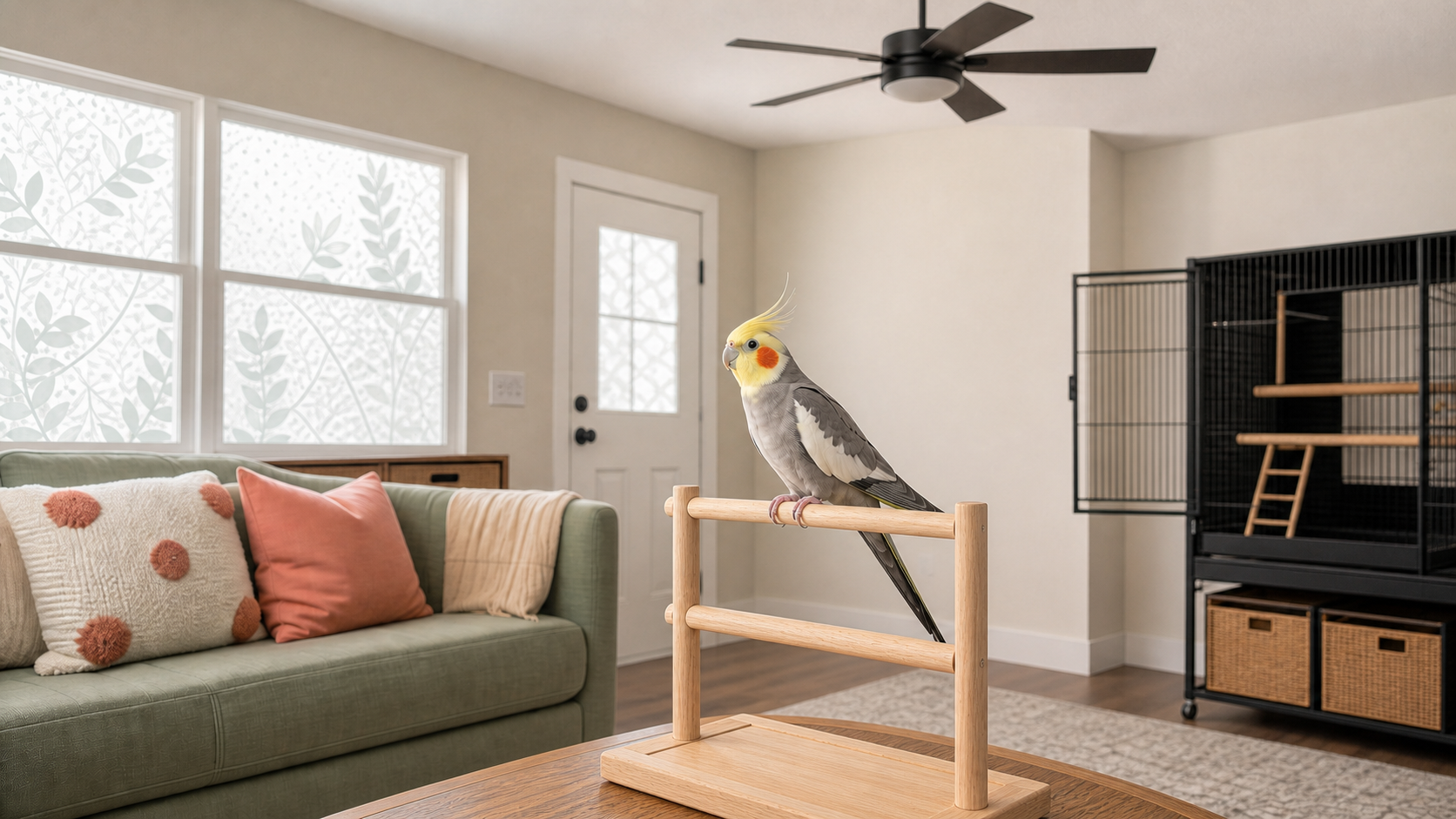
Time outside the cage can support exercise, exploration and social interaction, but an ordinary room contains risks that are easy to miss. Windows look like open flight paths, a stationary-looking fan can start without warning, and a bird's beak can quickly reach cords, coatings and small objects. Bird-proofing a home means controlling the whole flight area before the cage door opens.
Quick recommendation: Use one dedicated flight room, complete the same pre-flight checklist every time, and keep the session actively supervised from start to finish.
Choose One Controlled Flight Room
Start with a single room that can be closed off from the rest of the home. A defined space is easier to inspect, easier to supervise and less likely to expose the bird to a suddenly opened exterior door.
A suitable room should have:
- A door that closes securely
- Enough clear space for the bird's normal movement
- Several stable landing places at different heights
- A familiar cage or carrier available as a safe return point
- No access to a kitchen, bathroom, utility room or fireplace
- No uncontrolled contact with other animals
Remove clutter that creates hidden chewing or entrapment risks. Check behind furniture, above curtains and along shelving, because birds often investigate high areas that people rarely inspect.
Out-of-cage time should match the bird's species, health, flight ability and confidence. An avian veterinarian can help if the bird has limited mobility, a previous injury or difficulty controlling flight.
Lock Every Escape Route Before Opening the Cage
Close and latch all exterior windows and doors. Tell everyone in the household that a bird is loose in the room, and use a visible reminder on the closed door if necessary.
Do not rely on memory or assume another person knows the bird is out. Use a fixed sequence:
1. Close the room door.
2. Check every exterior window and door latch.
3. Confirm that screens and vents are secure.
4. Silence doorbells or deliveries when possible.
5. Open the cage only after the room is controlled.
A clipped or reluctant bird may still glide, catch an air current or fly unexpectedly when startled. Wing status is not a substitute for closed exits.
Make Windows and Mirrors Visible
Clear glass and reflective mirrors can be mistaken for open space. Cover large mirrors and make windows visually obvious before free flight begins.
Useful controls include:
- Closing curtains or blinds over large glass surfaces
- Using a secure screen together with closed windows
- Applying a dense, visible pattern of bird-safe window markers
- Introducing a new flight space slowly at low speed
- Placing a stable landing perch away from the glass
A single small decal may not make an entire pane understandable to a bird. The goal is to break up the reflective or transparent surface across the area the bird may approach.
Switch Off Fans and Moving Equipment
Ceiling fans must be completely off and motionless before the bird leaves the cage. Portable fans should be unplugged or placed outside the room, because a grille does not eliminate every risk to toes, feathers or a curious beak.
Also stop or isolate:
- Air purifiers with accessible moving parts
- Robotic vacuum cleaners
- Exercise equipment
- Paper shredders
- Recliners and sofa-bed mechanisms
- Motorized blinds and moving doors
Put remotes and wall controls where nobody can activate equipment accidentally. Confirm the bird's location before moving furniture or restarting any device.
Keep Birds Out of the Kitchen
A kitchen is not a suitable flight room. Hot cookware, open flames, boiling liquids, sharp tools, food hazards and invisible fumes can create emergencies within seconds.
Birds have highly sensitive respiratory systems. Overheated nonstick coatings containing polytetrafluoroethylene, commonly called PTFE, can release fumes that are extremely dangerous to birds. PTFE may be present in cookware and in some household appliances or heating elements, so review products in the home and discuss safer choices with an avian veterinarian.
Keep the bird separated from:
- Active ovens, stovetops and self-cleaning cycles
- Hot pans, kettles and open containers of liquid
- Smoke from cooking or burned food
- Nonstick appliances that may overheat
- Sharp utensils and exposed food waste
Closing the kitchen door is more reliable than trying to monitor every hazard while cooking.
Remove Smoke, Sprays and Strong Fumes
Do not use candles, incense, tobacco or vaping products in the bird's environment. Move the bird away from paint, solvents, pesticides, aerosol cleaners, perfume, hair spray and other airborne chemicals.
Products described as natural or pleasantly scented are not automatically safe for birds. Avoid diffusers and fragranced products unless an avian veterinarian has confirmed the specific product and exposure are appropriate.
Ventilation cannot make an active exposure safe. If work involving fumes is necessary, arrange for the bird to stay in a separate, uncontaminated location and return only when the area is fully cleared according to professional guidance.
Protect Electrical Cords and Chewable Materials
Companion birds explore with their beaks. Hide electrical cords in rigid covers, route them behind inaccessible furniture or unplug and remove them from the flight room.
Inspect the room for:
- Charging cables and power strips
- Lamp and appliance cords
- Chipped paint or loose wall material
- Curtain weights and metal hardware
- Batteries, solder and small metal pieces
- Adhesive traps, glue and sticky tape
- Frayed fabric, foam and exposed stuffing
Some older household materials and metal objects may contain lead or zinc. Do not allow access to unknown metal, peeling paint, stained-glass fittings or hardware that has not been verified as bird-safe.
Control Water, Heat and Entrapment Hazards
A bird can drown in a small amount of open water. Close toilet lids, drain sinks and tubs, cover aquariums securely and remove buckets, glasses and pans of liquid from the flight space.
Block access to fireplaces, chimneys, vents and gaps behind cabinets. Keep hot lamps, irons, heaters and fireplaces outside the flight room or fully inaccessible and cool.
Check folding furniture, open drawers and spaces beneath cushions before use. Birds can enter dark or narrow places quickly and may remain silent when hidden.
Remove Unsafe Foods, Plants and Household Poisons
Keep all medicines, cleaners, pesticides, cosmetics and automotive products in closed storage outside the room. Never offer human food unless it is known to be appropriate for that bird species.
Avocado, chocolate, caffeine and alcohol are among the foods commonly treated as unsafe for companion birds. Salt-heavy foods and food containing unknown ingredients should also stay out of reach.
Identify every plant accurately before allowing it in the bird's environment. If a plant's safety is uncertain, remove it rather than relying on a high shelf. Birds can fly, climb and drop objects, so distance alone is not a dependable barrier.
Separate Birds From Cats, Dogs and Other Pets
A calm household pet can react differently when a bird suddenly flies. Keep cats, dogs and ferrets behind a closed door during every out-of-cage session. A gate, verbal command or close supervision is not the same as physical separation.
Do not allow beak-to-nose greetings or shared play. Even a minor scratch or bite can be a serious emergency for a bird. Separate birds from other companion birds too if they have not been safely introduced or if territorial behavior is possible.
Children and visitors should understand three rules:
- Move slowly and speak quietly
- Never chase, grab or corner the bird
- Ask the supervising adult before entering or leaving the room
Create Safe Landing and Return Points
A bird-proofed room needs attractive places to land. Provide stable stands or natural perches with appropriate diameters and secure bases. Position them away from windows, doors, heaters and breakable objects.
Keep the cage familiar and accessible. Practice calm step-up, stationing and return-to-cage behavior using positive reinforcement before relying on those skills in a distracting room.
Offer supervised enrichment such as foraging activities, shreddable bird-safe materials and species-appropriate toys. Check every item for loose fibers, sharp edges, failing clips or pieces that could be swallowed.
Run a Pre-Flight Safety Checklist
Complete this check before every session, even if the room was safe yesterday.
- [ ] Exterior windows and doors are closed and latched
- [ ] Interior room door is closed and household members are informed
- [ ] Windows and mirrors are covered or clearly marked
- [ ] Ceiling and portable fans are off and motionless
- [ ] Kitchen, bathroom and utility spaces are inaccessible
- [ ] Smoke, sprays, fragrances and active chemicals are absent
- [ ] Electrical cords and chewable hazards are secured
- [ ] Open water, flames and hot surfaces are removed
- [ ] Medicines, unsafe foods and unverified plants are inaccessible
- [ ] Cats, dogs and other pets are behind a closed door
- [ ] Stable landing perches and the return cage are ready
- [ ] An attentive adult is available to supervise continuously
End the Session Without Chasing
Plan the return before the bird comes out. Keep the room calm, reduce distractions and use a familiar cue or target to guide the bird toward a perch or cage entrance.
Never darken a room suddenly, throw a towel or chase a flying bird unless an avian professional has instructed you during a genuine emergency. Forced capture can cause panic, collision or damage to trust.
If the bird will not return, close the room, pause and offer a familiar perch or valued reward. Contact an avian veterinarian or qualified bird behavior professional if returning to the cage repeatedly causes distress.
Prepare for an Avian Emergency
Save the contact details of an avian veterinarian and the nearest emergency clinic that accepts birds. Keep a secure carrier ready and know the safest route to the clinic.
Seek urgent veterinary advice after a collision, fall, burn, electrical contact, toxin or fume exposure, bite, active bleeding, breathing difficulty, sudden weakness or inability to perch normally. Birds may hide signs of injury, so a seemingly minor accident still deserves prompt professional guidance.
A safe room is never permanently finished. Recheck it after moving furniture, installing appliances, changing window coverings or adding toys. Consistent preparation makes out-of-cage time safer, calmer and easier to repeat.
Frequently Asked Questions
Should I close windows even if my bird has clipped wings?
Yes. A startled or partially flighted bird may still glide or travel farther than expected. Close and latch every exterior window and door before the cage opens.
Are window decals enough to prevent collisions?
A single small decal is not a complete solution. Cover large reflective surfaces or use a dense visible pattern across the approach area, provide safe landing perches and introduce the room gradually.
Can a pet bird be out while a ceiling fan is running slowly?
No. The fan should be switched off and completely motionless for the entire out-of-cage session, with its controls protected from accidental activation.
Why should companion birds stay out of the kitchen?
Kitchens contain flames, hot liquids, sharp tools, unsafe foods and fumes. Overheated PTFE or other nonstick coatings can be extremely dangerous to birds, so a separate closed room is safer.
What should I do after a collision or suspected fume exposure?
Move the bird away from the hazard without creating more panic and contact an avian veterinarian or bird-capable emergency clinic immediately. Breathing difficulty, weakness, bleeding or inability to perch normally requires urgent care.
Sources and References
About this article
Practical, evidence-informed guides for safer and more comfortable everyday pet care.
ShineePets is a commercial B2B pet-supply sourcing brand. Read our editorial standards and commercial disclosure.