Cat Care
Cat Hiding Places: Supporting Choice and Security
Quick answer
Choose cat retreats by privacy, usable exits and comfortable access, with a home trial, product checks and guidance on changes that need veterinary attention.
By ShineePets Editorial Team · Published · Updated
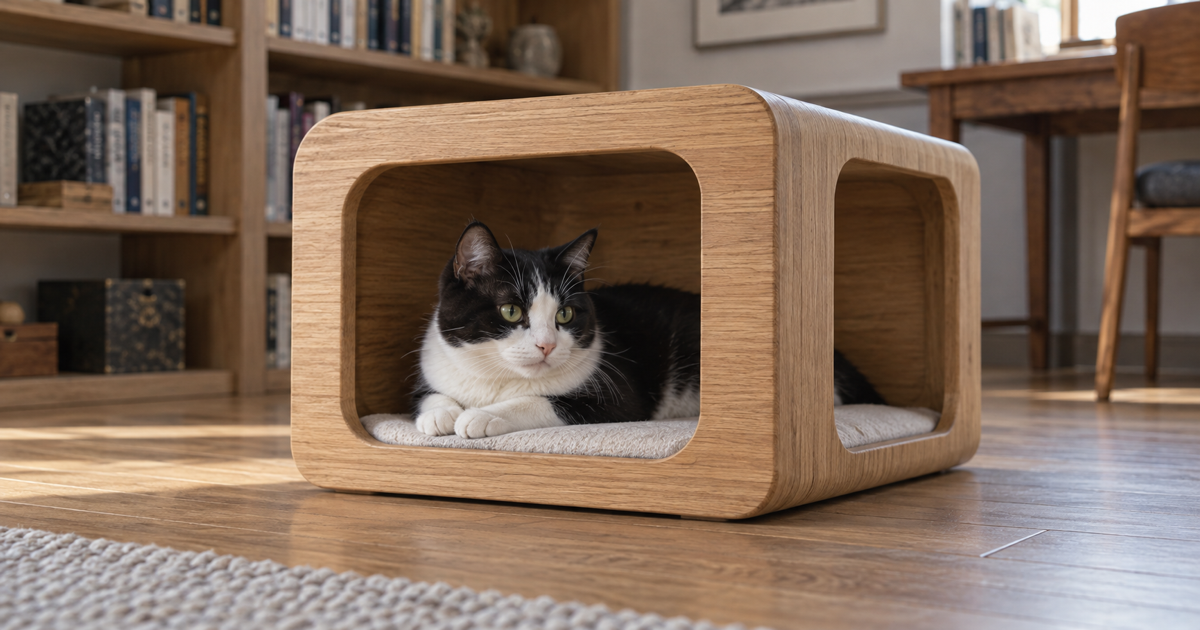
Good cat hiding places let a cat withdraw from view without losing the ability to leave, reach essential resources or choose contact. Offer a quiet retreat with comfortable access, then protect its privacy. A covered space is useful only if the cat can use it voluntarily; its location and exits matter as much as its appearance.
Hiding can be part of ordinary rest or play, but a new increase deserves attention. Cats Protection recommends veterinary assessment when a cat hides more than usual, because illness and stress can both be involved. This guide helps cat owners choose and arrange retreats while keeping changes in health separate from decorating decisions. Cats Protection hiding guidance
Cat Hiding Places Should Offer Control, Not Just Cover
FelineVMA and iCatCare describe a secure retreat as a place for protection or rest. Their caregiver guidance recommends at least one individual safe place per cat, distributed apart, and the ability to enter and leave from different sides when threatened. Feline environmental-needs brochure
Turn that principle into a household question: can this cat use the space without negotiating with someone else? A lovely cubby beside a busy doorway may remain unused. Two exits are also less useful if one faces a wall or both lead past the same waiting pet.
Write a simple brief before buying: “A private resting option in ___, reachable from ___, with a clear route toward ___.” This focuses the decision on a working location. You may discover that rearranging an existing box is more helpful than adding another product.
Match the Retreat to the Way Your Cat Uses It
The AAFP/ISFM environmental guidelines identify boxes, familiar carriers and sheltered perches as possible safe places. They recommend lower or ramp-accessible options for kittens and older cats with limited mobility. There is no requirement for every retreat to be high. AAFP/ISFM guidelines and full-text download
Compare options by the task they solve:
| Option | Useful starting role | Check in your home |
| --- | --- | --- |
| Plain cardboard hide | Trial location before buying permanent furniture | Usable entrances, condition and easy replacement |
| Covered fabric bed | A soft, sheltered resting choice | Internal room, shape retention and cleaning instructions |
| Open familiar carrier | An additional portable resting option | Door secured open and an unobstructed approach |
| Purpose-built multi-exit cubby | Concealment with alternative ways out | Both exits lead to genuinely usable routes |
| Sheltered perch | Privacy while observing the room | Secure installation and comfortable access up and down |
An open carrier usually has one everyday entrance. It can be a useful additional choice in a protected location, but should not be the only retreat where another pet can block that doorway. Do not cut new holes into a carrier or alter its transport structure.
Check usable interior measurements rather than the outer footprint. Ask the seller for entrance dimensions, pad thickness and assembly instructions if the listing omits them. Observe whether the cat can enter, change position and leave comfortably; avoid a universal size rule based only on age or breed.
For an elevated option, our cat shelves and perches guide addresses the separate installation and access decision.
Test the Location Before Committing to Furniture
Use the following sequence as a practical home trial, not a behavioral treatment protocol:
1. Choose a candidate area. Note where the cat already rests and what happens there during busy household periods.
2. Check the approaches while the space is empty. Look from both intended exits. Move bags, spare furniture or stored items that interrupt the route.
3. Offer a simple retreat. Use an intact suitable box or existing bed without removing an established resting choice.
4. Protect the first visits. Tell household members where the space is and what privacy means.
5. Observe ordinary use. Note voluntary entry, position changes, departures and access to the rest of the home.
6. Change one feature if needed. Adjust orientation or location before buying several competing versions.
For example, imagine a two-opening cubby beside a desk. It may work while the desk is unused, yet a chair pulled out during work could block the side exit. Check the room during normal use, not only when it is freshly tidied. This is an illustrative layout problem, not a ShineePets test result.
Cats Protection advises a quiet place away from food, water and litter trays. Keep those resources accessible in their own locations rather than filling the retreat with supplies. For a newly arrived cat, a quiet starting room can contain the essentials with separation between them. Cats Protection hiding guidance
Keep Both the Entrance and the Privacy Promise
Agree on a clear household rule: a resting retreat is not a place to reach in for cuddles, photographs or games. Let the cat initiate contact. FelineVMA and iCatCare explicitly recommend allowing cats to choose and control human interaction. Feline environmental-needs brochure
Explain the same rule to visitors and children before they approach. Move a planned play session elsewhere, and avoid sitting directly in the doorway while waiting for the cat. Emergency care is different from routine interaction; if urgent handling is needed, contact the veterinary team for guidance.
In a multi-cat home, check access for each individual. Record who uses which retreat and whether another cat repeatedly waits beside an entrance. Avoid interpreting an empty hide as proof that the cat does not want privacy. Reconsider its location and access, and discuss persistent concerns with your veterinarian.
Use our multi-cat resource guide for the wider food, water and litter arrangement. Adding a hide does not resolve every household access problem.
Buy for Inspection, Maintenance and Continued Access
Before ordering a permanent hide, ask what you will need to do with it after delivery:
- Can you inspect the interior without an awkward dismantling process?
- Are care instructions available for the shell, cushion and cover separately?
- Does assembly keep the unit stable in its intended position?
- Can a worn pad or cover be replaced without replacing the whole structure?
- Will another retreat remain available while this one is being cleaned?
Inspect the empty product on arrival for damaged panels, unfinished edges, accessible loose fasteners and unraveling fabric. Follow the manufacturer's installation requirements, especially for elevated furniture. Keep the cat away during assembly or maintenance; remove a damaged item from use rather than improvising a repair.
CDC recommends following pet-item care instructions, cleaning beds and blankets weekly, and cleaning sooner when dirty. Clean reusable parts as directed and dry them before returning them. Replace cardboard that cannot be cleaned adequately. If illness or contamination changes the hygiene requirements, follow veterinary advice. CDC pet-supply cleaning guidance
The AAFP/ISFM guidelines suggest washing bedding on rotation so some familiar scent remains. This does not mean retaining soiled bedding: maintain hygiene while avoiding an unnecessary simultaneous replacement of every clean resting item. AAFP/ISFM guidelines and full-text download
Review the Cat's Choices Without Setting a Hiding-Time Target
Keep a brief note of the retreat chosen, household activity at that time, normal eating and toileting, and any difficulty entering or leaving. Use the notes to identify layout problems and describe changes to a veterinarian. Do not invent a maximum number of acceptable hiding hours.
A 2019 randomized study by Utrecht University researchers, published in PLOS ONE, found that hiding boxes helped newly admitted cats in a Dutch shelter reduce behavioral stress scores more quickly. The intervention did not significantly prevent weight loss. The setting was shelter quarantine, so the findings do not establish a home timetable or guarantee that a particular commercial bed will reduce anxiety. Original hiding-box study
The practical goal is reliable choice. A cat may use one retreat today and another tomorrow. Retain useful options, but investigate a new or marked increase in hiding rather than simply adding more cover.
When a Layout Change Is Not Enough
Contact your veterinarian about increased hiding, particularly with changes in eating, drinking or toileting. Do not assume that a new bed or quieter room explains or fixes the problem. Cats Protection hiding guidance
Seek emergency veterinary care immediately if your cat struggles to breathe, breathes with an open mouth or collapses. Keep handling calm and call the veterinary service. PDSA breathing emergency guidance
Repeated attempts to urinate with little or no urine, or difficulty passing urine, also require immediate veterinary contact. Do not wait for the cat to leave its hiding place before seeking advice. PDSA blocked-bladder guidance
This article covers everyday environmental choices. It cannot diagnose the reason for hiding or replace professional veterinary assessment.
Sources and Further Reading
- Your Cat’s Environmental Needs — FelineVMA and iCatCare
- AAFP and ISFM Feline Environmental Needs Guidelines — FelineVMA
- Cats Hiding — Cats Protection
- The Effect of a Hiding Box on Stress Levels and Body Weight in Dutch Shelter Cats — PLOS ONE
- About Cleaning and Disinfecting Pet Supplies — CDC
- Blocked Bladder in Cats — PDSA
- First Aid for Pets Struggling to Breathe — PDSA
Frequently Asked Questions
Do I need a different hiding place in every room?
Plan around rooms your cat actually uses and routes that remain available. A useful, separated option is more valuable than matching furniture in rooms the cat rarely enters.
Should I replace a cardboard hide with a premium bed?
Only if the new item solves a real problem, such as cleaning, durability or access. An inexpensive suitable hide can remain a useful choice; price does not show whether your cat will use it.
What if my cat ignores the new hide?
Keep its familiar option available and review the new location, opening and usable space. Change one feature at a time rather than placing the cat inside to demonstrate the product.
Can a pet sitter move the hide to make cleaning easier?
Agree on the resting layout before you leave. Ask the sitter to return cleaned items to their established positions and keep access clear; provide your veterinary contact for any health or behavior change.
How can I prepare for moving a well-used retreat?
If the old location remains suitable, introduce an alternative before removing it. Observe voluntary use and retain familiar clean bedding where practical. If the current location presents an immediate hazard, manage access promptly rather than waiting for a gradual transition.
Sources and References
- Your Cat’s Environmental Needs — FelineVMA and iCatCare
- AAFP and ISFM Feline Environmental Needs Guidelines — FelineVMA
- Cats Hiding — Cats Protection
- The Effect of a Hiding Box on Stress Levels and Body Weight in Dutch Shelter Cats — PLOS ONE
- About Cleaning and Disinfecting Pet Supplies — CDC
- Blocked Bladder in Cats — PDSA
- First Aid for Pets Struggling to Breathe — PDSA
About this article
ShineePets publishes practical, source-checked guidance for pet owners and pet-product professionals.
ShineePets is a commercial B2B pet-supply sourcing brand. Read our editorial standards and commercial disclosure.