Cat Care
Multi-Cat Homes: Managing Food, Water and Litter
Quick answer
Manage food, water and litter in a multi-cat home with separated resources, safer routes, individual monitoring and practical cleaning routines.
By ShineePets Editorial Team · Published · Updated
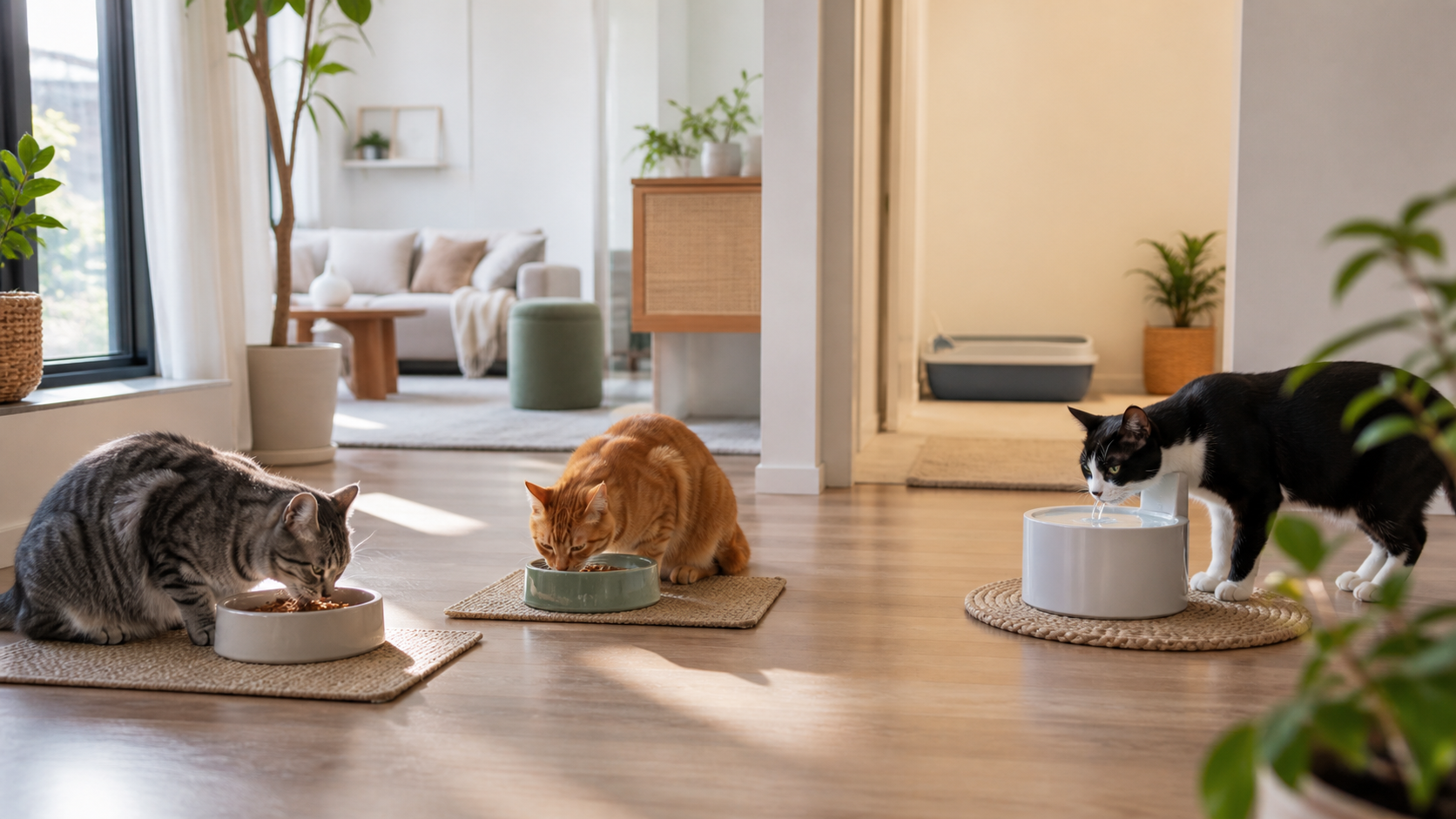
Multi-cat homes are easier to manage when food, water and litter are treated as separate access systems, not shared objects placed in one convenient corner. Good multi-cat home resources give every cat a way to eat, drink and toilet without being watched, rushed or blocked by another cat.
Quick recommendation: Provide more than one route to every essential resource, spread stations across different locations and observe each cat individually. A household can look peaceful while one cat quietly waits for another to leave before eating, drinking or using a litter box.
Start With Access, Not Just Quantity
Buying more bowls or boxes helps only when the additional items create genuinely independent choices. Two bowls touching each other are still one feeding location. Three litter boxes lined up in the same utility room can still be guarded as a single resource.
A practical setup should answer four questions:
- Can each cat reach a resource without passing another cat at close range?
- Can a cat use it without being stared at from a doorway or perch?
- Is there another option if one route is blocked?
- Can the caregiver tell which cat is eating, drinking and toileting normally?
The goal is not to force cats to share politely. It is to make sharing unnecessary.
Map the Cats Before Mapping the Room
Not every group of cats is one social unit. Some cats sleep together, groom each other and move comfortably through the home. Others simply tolerate one another or divide the day by using the same room at different times.
Watch for patterns over several days:
- Which cats rest in physical contact or exchange friendly grooming?
- Which cat leaves when another approaches?
- Who pauses in doorways, hallways or at the bottom of stairs?
- Does one cat wait until the room is empty before eating or using the litter box?
- Are there cats that rarely enter certain areas?
Sketch the home and mark each cat's preferred resting area, travel routes and avoided zones. This makes it easier to place essential resources inside or near each cat's normal territory instead of concentrating everything around the caregiver's preferred location.
Build Separate Feeding Stations
A shared row of bowls may be easy to clean, but it can hide competition. Cats that appear to eat together may be eating quickly, yielding the bowl they prefer or visiting only after a more confident cat finishes.
Create feeding stations with meaningful distance between them. Different rooms are ideal when cats need privacy. In a smaller home, use opposite sides of a room, a corner, furniture or a partial visual barrier so cats do not have to face one another.
Each feeding point should offer:
- A clean, stable bowl that does not slide
- Enough space for the cat to keep a comfortable posture
- A clear approach and exit
- A quiet location away from litter boxes and busy appliances
- A surface that can be wiped after meals
Do not place a nervous cat's bowl in a dead end where another cat can stand between the bowl and the exit.
Feed Individuals, Not the Group
Multi-cat feeding becomes harder when cats have different calorie needs, diets or eating speeds. Free access to one communal supply makes it difficult to know who ate what.
Scheduled meals make observation easier. Put down each cat's measured portion at its own station, supervise calmly and remove leftovers according to the food's handling requirements. If one cat steals food, feed behind separate doors or use controlled-access feeders where appropriate.
Record unusual changes. A simple note can reveal that one cat has eaten less for two meals, while the total amount disappearing from the household still looks normal.
Pay particular attention when the household includes:
- A kitten and an adult cat
- A cat on a therapeutic or weight-management diet
- A fast eater and a slow eater
- A senior cat with reduced mobility
- A cat that has recently been ill or had dental treatment
Sudden appetite loss, repeated vomiting, marked weight change or difficulty eating deserves veterinary advice rather than a change in bowl layout alone.
Spread Water Across the Home
One water bowl beside the food is rarely the only option worth offering. Multiple water stations reduce the chance that one cat controls access and allow cats to choose a preferred location or container.
Place water in several quiet, easy-to-reach areas. Keep it away from litter boxes and cleaning chemicals. Some cats prefer a wide open bowl, while others engage more with moving water from a fountain. A mixed setup can accommodate different preferences.
For each station:
- Refresh the water at least daily and whenever it becomes contaminated
- Wash bowls and fountain parts according to their material and instructions
- Keep electrical cords from fountains secured
- Check pumps and filters before flow becomes weak or noisy
- Use stable containers that are difficult to tip
- Make at least one station easy to reach without jumping
A fountain is an option, not a substitute for maintenance or backup bowls. During a power cut, pump failure or cleaning cycle, cats should still have access to water.
Observe Drinking Without Creating Pressure
It is difficult to measure individual drinking when every cat uses the same bowl. Separate stations make patterns more visible, especially when they are checked at consistent times.
Watch for repeated guarding, a cat approaching and retreating, or one cat drinking only when the household is quiet. Also note major changes in thirst, urine volume or litter clump size. Increased or decreased drinking can have many causes and should be discussed with a veterinarian when it is new, persistent or accompanied by other changes.
Wet food may contribute water to the diet, but food choices should match the cat's health, calorie needs and veterinary guidance. Do not add flavorings, supplements or large amounts of water to a prescribed diet without checking first.
Plan Enough Litter Boxes
A common starting point is one litter box per cat, plus one extra, but the correct setup also depends on the cats' social groups, the home's layout and each cat's preferences. More boxes may be needed when cats avoid one another or when conflict is present.
Location matters as much as number. Boxes placed side by side are usually experienced as one toileting area, not independent choices. Distribute them so a cat blocked from one area can reach another.
In a multilevel home, provide an accessible option on each level used by the cats. Do not make a kitten, senior cat or cat with limited mobility travel a long staircase for every toilet visit.
Choose Litter Locations With Safe Exits
A litter box should be quiet and accessible without being isolated in a place the cat considers unsafe. Avoid noisy machines, unpredictable doors and narrow closets where another cat could trap the user.
Look at the exit from the cat's height. A good location allows the cat to see the approach area and leave without squeezing past a housemate. Covered boxes and cabinets may offer privacy for some cats, but they can also reduce visibility and create a single narrow entrance. Offer alternatives rather than assuming every cat shares the same preference.
Keep litter boxes away from food and water. Toileting resources should not force a cat to choose between hunger, thirst and an uncomfortable elimination site.
Match Box and Litter Preferences
Cats may differ in their preferences for box size, entry height, cover style, litter texture and depth. Start with roomy boxes that allow a cat to turn and dig comfortably. Keep at least some boxes uncovered unless individual observation shows a clear preference otherwise.
Use low-entry options for small kittens, seniors and cats with mobility limitations. If changing litter type, box style or location, avoid changing every box at once. Preserve a familiar option while offering the new setup nearby or in an additional location.
Strongly fragranced products may be acceptable to people but unpleasant to cats. Choose cleaning and litter routines that control waste without leaving intense scents.
Keep Every Box Usable
In a multi-cat home, cleaning frequency should reflect total use rather than the number printed on the litter package. Scoop waste at least daily and more often when boxes are heavily used. Top up litter as needed and wash boxes on a regular schedule using mild products that rinse clean.
During each cleaning check:
- Whether one box is receiving nearly all the use
- Changes in urine clump size or stool appearance
- Urine on the sides, rim or nearby floor
- Scratches, damaged liners or rough plastic that traps odor
- Whether another cat waits outside the box area
Do not punish a cat for eliminating outside the box. House-soiling can result from location, cleanliness, social stress, litter preference or medical problems. Persistent or sudden changes require veterinary assessment.
Prevent One Cat From Controlling the Route
Resource guarding in cats is often quiet. It may look like sitting in a hallway, staring from a perch, following another cat away from a bowl or occupying a doorway. The affected cat may respond by waiting, eating quickly, using a less suitable box or reducing movement through the home.
Improve the layout by adding:
- A second route around furniture
- Another station outside the guarded room
- Visual barriers that interrupt staring
- Elevated resting places with more than one way down
- Resources in each cat's preferred core area
- Night lighting for older cats that navigate less confidently
Never solve a bottleneck by placing more essential items inside the same bottleneck.
Use Vertical Space Carefully
Shelves, window perches and cat trees can expand usable territory, but essential food, water and litter should not all depend on climbing. Vertical stations may work for a confident, mobile cat and can protect a diet from a ground-level competitor. They are unsuitable as the only option for a kitten, senior cat or cat with pain.
Any raised feeding or resting point must be stable, easy to approach and easy to leave. Avoid narrow shelves where one cat can corner another. Provide multiple levels or exit directions when several cats use the structure.
Follow a Simple Daily Observation Routine
A short routine is more useful than trying to remember vague impressions.
Morning
1. Scoop every litter box and note unusual output.
2. Refresh water and check fountains.
3. Serve measured food at separate stations.
4. Confirm that every cat approaches and eats normally.
Evening
1. Repeat litter and water checks.
2. Observe movement through shared areas.
3. Look for hovering, staring, chasing or doorway blocking.
4. Check whether any station remains consistently unused.
Weighing cats at suitable intervals can help reveal gradual changes that communal feeding hides. Ask a veterinarian how often to weigh a particular cat and how to interpret the trend.
Adjust the System When the Household Changes
Resource plans should change when a new cat arrives, a cat ages, a diet changes or furniture rearrangement alters travel routes. Do not introduce a new cat by immediately merging every resource. Begin with a separate transition area containing its own food, water, litter, hiding and resting places, then follow a gradual introduction plan.
Reassess the layout after:
- Moving home or renovating
- Adding or removing a pet
- A veterinary visit or hospital stay
- A new mobility or sensory limitation
- Repeated conflict or house-soiling
- A noticeable appetite, thirst or weight change
A setup that worked for two young cats may not work for the same cats several years later.
Avoid These Common Multi-Cat Setup Mistakes
- Treating adjacent bowls as separate feeding stations
- Putting every water source in the kitchen
- Lining up all litter boxes in one room
- Assuming no fighting means no tension
- Letting one cat finish another cat's therapeutic diet
- Placing resources in closets or dead ends with one exit
- Removing a rarely used box before understanding why it is avoided
- Changing all litter, bowls and locations at the same time
- Relying on a fountain without a backup water source
- Tracking household totals instead of individual patterns
Final Multi-Cat Resource Check
Walk through the home as if you were the least confident cat.
- Every cat has a realistic way to eat without being crowded.
- Water is available in multiple clean, separated locations.
- Litter boxes are distributed rather than grouped.
- Food and water are away from toileting areas.
- Important stations have clear approaches and exits.
- At least one option suits kittens, seniors or cats with limited mobility.
- The caregiver can notice changes in each cat's intake and elimination.
- Quiet signs of blocking or avoidance trigger a layout review.
The best multi-cat system is not the one with the most equipment. It is the one that gives every cat predictable access, meaningful choice and enough separation to use essential resources without conflict.
Frequently Asked Questions
How many litter boxes should a multi-cat home have?
One box per cat plus one extra is a useful starting point, but boxes must also be distributed across separate locations and adjusted for social groups, mobility and actual use.
Can cats share the same food and water station?
Some compatible cats may choose to eat or drink near each other, but every cat should still have access to separated alternatives that cannot be easily blocked.
Should cat water be placed next to food?
It is useful to offer water in several quiet locations rather than relying on one bowl beside food. Keep all water stations away from litter boxes.
How can I tell if one cat is guarding resources?
Watch for staring, doorway sitting, following, hovering, chasing, approach-and-retreat behavior or a cat waiting until another leaves before eating, drinking or toileting.
When should resource problems be discussed with a veterinarian?
Seek veterinary advice for sudden or persistent changes in appetite, thirst, weight, urination, stool, house-soiling, vomiting, pain or mobility, even when social tension is also suspected.
Sources and References
About this article
Evidence-informed pet care and product guidance from the ShineePets Editorial Team.
ShineePets is a commercial B2B pet-supply sourcing brand. Read our editorial standards and commercial disclosure.