Dog Care
Choosing Dog Bowls for Puppies, Adults and Seniors
Quick answer
Compare bowl size, depth, stability, materials and feeding formats for puppies, adult dogs and seniors, with practical hygiene and mobility guidance.
By ShineePets Editorial Team · Published · Updated
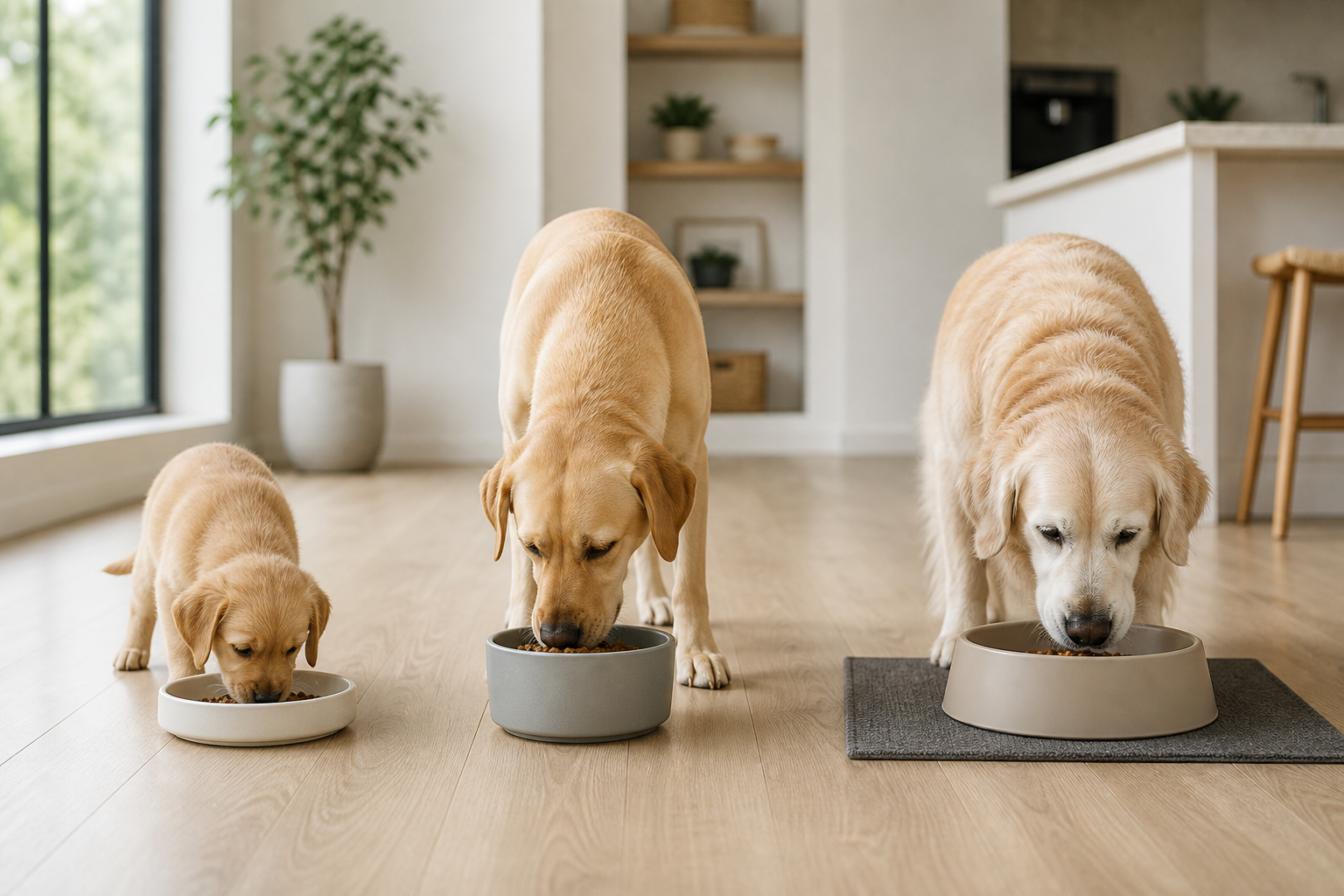
A dog bowl looks simple, but the right choice changes as a dog grows. A puppy may need a shallow, stable bowl that is easy to reach. A healthy adult dog may need more capacity or a shape that suits its muzzle. A senior dog may benefit from better grip and easier access, especially when mobility, vision or dental comfort changes.
The goal is not to find one bowl that is "best" for every dog. It is to choose a safe, stable and easy-to-clean feeding setup that matches the individual dog's body, behavior and life stage.
Quick recommendation: Start with a stable, easy-to-clean bowl that lets the dog eat in a neutral posture, then change depth, shape or height only to solve a specific observed need.
Start With the Dog, Not the Bowl Label
Labels such as puppy, large breed or senior can be useful shortcuts, but they do not replace observation. Two dogs of the same age may have very different muzzle shapes, meal sizes and movement patterns.
Before buying a bowl, watch one normal meal and ask:
- Can the dog reach every piece of food without pushing the bowl across the floor?
- Does the rim press against the throat, eyes or ears?
- Does the dog gulp, scatter food or walk away repeatedly?
- Does the dog stand comfortably without twisting or spreading the front legs unusually wide?
- Is the bowl still large enough after adding a measured meal?
- Can it be washed and dried thoroughly every day?
A bowl should support a calm meal. It should not force the dog to struggle, chase the bowl or place most of its face inside an unnecessarily deep container.
Five Features That Matter at Every Life Stage
1. Capacity
Choose enough capacity for one measured meal with space around the food. A bowl filled to the rim is easier to spill and harder to use. An oversized bowl is not automatically safer, especially for a small puppy that must lean deeply into it.
2. Depth and Opening
The opening should accommodate the dog's muzzle without rubbing. Wide, shallow bowls may suit short-faced dogs, while a somewhat narrower profile can help keep long ears away from food. These are starting points, not rules: comfort during an observed meal matters more than breed marketing.
3. Stability
A broad base, non-slip ring or washable feeding mat can reduce movement. Stability is particularly important for enthusiastic puppies and dogs with reduced balance.
4. Material and Condition
The surface that touches food and water should be food-safe, smooth and intact. Stainless steel is widely used because it is durable and easy to clean. Ceramic can be heavy and stable but should be retired if it chips or cracks. Plastic is lightweight, but scratches and chew damage can make cleaning harder. Silicone is useful for travel when it is food-safe and undamaged.
5. Cleaning Access
Decorative corners, deep seams and complicated ridges can trap residue. A practical bowl should be easy to inspect, wash, rinse and dry.
Choosing a Bowl for Puppies
Puppies are still developing coordination and often explore objects with their mouths. Their first bowl should usually be low enough to access comfortably, difficult to tip and resistant to chewing.
A practical puppy setup includes:
- A shallow or moderately deep bowl appropriate to the puppy's current muzzle
- A wide, non-slip base
- A smooth rim without loose decorative parts
- A size that holds one measured meal without encouraging overfilling
- Close supervision if the puppy chews the bowl or feeding mat
- Frequent reassessment as the puppy grows
Do not assume a puppy can use the same bowl through adulthood. Large-breed puppies can change rapidly in height and muzzle size, while small breeds may remain comfortable with a low profile. Recheck fit whenever the feeding posture changes or the bowl begins to look cramped.
Water access deserves the same attention. Use a stable water bowl that the puppy can reach without climbing into it. Refresh the water and clean the bowl regularly rather than simply topping it up.
Choosing a Bowl for Adult Dogs
For most healthy adult dogs, a standard floor-level bowl is a sensible starting point. Match the bowl to meal volume, muzzle shape and eating behavior.
A medium or large adult dog needs enough internal space to eat without pressing the muzzle against the sides. A small dog should not have to lean deeply into a bowl designed for a much larger animal. If long ears repeatedly fall into food or water, test a shape that reduces contact without restricting the muzzle.
Observe speed as well as posture. A dog that eats at a moderate pace may need only a simple open bowl. A dog that gulps may benefit from a carefully chosen slow feeder, but a more complex bowl is not automatically better.
For a detailed comparison, read Slow Feeder Bowls: Benefits, Risks and Buying Tips.
Choosing a Bowl for Senior Dogs
Age alone does not determine bowl height or style. Senior dogs vary widely: one may remain active and comfortable with the same floor bowl, while another may have arthritis, weakness, vision loss or dental discomfort that changes how meals should be presented.
Useful senior-friendly features can include:
- A strongly non-slip base
- A bowl that does not require excessive reaching
- High visual contrast between the bowl and floor
- A quiet feeding location with clear access
- Lightweight portions in a bowl that remains stable
- Multiple water stations if walking across the home is difficult
If a senior dog suddenly avoids the bowl, drops food, coughs, regurgitates, loses weight or appears painful when lowering the head, do not solve the problem by changing equipment alone. These changes can have medical causes and deserve veterinary assessment.
Standard Versus Elevated Bowls
An elevated bowl may appear easier for every tall or older dog, but elevation should not be treated as a universal upgrade. Some dogs with specific mobility or posture problems may find a carefully selected height helpful. For other dogs, a floor-level bowl remains appropriate.
The American Kennel Club notes that research has associated elevated feeding with increased risk of bloat in some dogs. Evidence and individual risk factors should be discussed with a veterinarian, especially for large or deep-chested dogs.
If elevation is recommended, the stand must be stable and the height should allow a natural posture. A platform that wobbles, tips or forces the neck upward creates a new problem rather than solving one.
When a Slow Feeder Makes Sense
Slow feeders use ridges or compartments to make food less immediately accessible. They may help some dogs that gulp meals, but the channels must fit the muzzle and allow the dog to reach food without scraping the face.
Use a slow feeder carefully:
1. Introduce it during a supervised meal.
2. Confirm the dog can reach all food without frustration.
3. Inspect the ridges for cracks, sharp edges and chew damage.
4. Wash every channel thoroughly.
5. Stop if the dog bites the bowl, becomes distressed or cannot eat comfortably.
A slow feeder is a management tool, not a treatment for vomiting, regurgitation or other health problems.
Bowl Materials: Practical Tradeoffs
Stainless steel is durable, non-porous and generally easy to sanitize. Look for a stable base and a smooth, well-finished rim.
Ceramic adds weight, which can reduce sliding. Use only intact, food-safe ceramic and replace it after chips, cracks or glaze damage appear.
Plastic is light and widely available, but it may scratch or become a chew target. Select food-safe material and replace damaged bowls rather than trying to clean deep scratches.
Silicone folds conveniently for travel. Confirm that it opens securely, does not collapse during use and can be cleaned completely.
Whatever the material, condition matters. A clean, intact bowl is safer than a fashionable bowl with damaged surfaces or hard-to-reach seams.
Water Bowls Need Their Own Fit Check
Water bowls are often larger than food bowls, but they still need to match the dog. The dog should be able to drink without the rim pressing against the throat or the bowl sliding away.
In multi-level homes or for senior dogs, several water stations can reduce effort. Place them where the dog can approach without navigating slippery floors. Keep water away from litter boxes, household chemicals and busy doorways.
A dog that suddenly drinks much more or much less than usual should be evaluated by a veterinarian. Changing the bowl should not delay that conversation.
Cleaning and Replacement Routine
The U.S. Centers for Disease Control and Prevention recommends cleaning pet bowls after every use for wet food and daily for dry food and water. Wash with hot soapy water or use a dishwasher when the manufacturer says the bowl is dishwasher-safe. Rinse thoroughly and allow it to dry.
Add these checks to the routine:
- Remove food residue from rims and non-slip rings
- Wash feeding mats and raised stands
- Inspect for cracks, rust, chips, scratches or loose parts
- Replace bowls that cannot be cleaned completely
- Wash hands after handling pet food and feeding supplies
Do not keep pouring fresh water over old residue. Empty, wash, rinse and refill the bowl.
Feeding More Than One Dog
Separate feeding stations make it easier to measure portions, observe appetite and reduce competition. Dogs should not be expected to share one bowl simply because they live together.
Supervise meals when food guarding, stealing or speed differences are present. Pick up bowls after eating if that is part of the household routine, and make sure each dog still has reliable access to fresh water.
How to Transition to a New Bowl
A new shape, sound or reflection can make a cautious dog hesitate. Place the new bowl near the familiar one, add a small amount of the usual food and allow the dog to investigate without pressure.
For metal bowls, collar tags striking the rim can startle some dogs. A non-slip mat or removal of dangling tags during a supervised indoor meal may reduce noise, but identification should be restored immediately afterward.
Signs the Bowl Is a Poor Fit
Reassess the setup if you notice:
- Repeated pawing, tipping or pushing
- Food left consistently around the outer edge
- The rim contacting the eyes, throat or ears
- Facial rubbing after meals
- Scrapes or irritation around the muzzle
- Frustration with slow-feeder channels
- A strained stance or reluctance to lower the head
- Cracks, chips, rust, deep scratches or unstable parts
Sudden appetite loss, swallowing difficulty, repeated coughing, vomiting, regurgitation, pain or weight change requires veterinary guidance rather than a bowl-only solution.
Buying Checklist
Before choosing a dog bowl, confirm:
- [ ] It holds one measured meal with room to spare.
- [ ] The opening and depth suit the dog's muzzle.
- [ ] The base stays stable on the feeding surface.
- [ ] The material is food-safe, smooth and undamaged.
- [ ] Every surface is easy to wash and inspect.
- [ ] There are no detachable pieces the dog can chew or swallow.
- [ ] The dog can eat or drink in a comfortable posture.
- [ ] A puppy's bowl will be reassessed as growth continues.
- [ ] A senior dog's mobility changes have been considered.
- [ ] Any proposed elevation has been discussed with a veterinarian when risk factors exist.
Final Takeaway
Choosing dog bowls is a small decision with daily consequences. Start with the individual dog, not a life-stage label or product trend. A stable, appropriately sized and easy-to-clean bowl is the foundation. Then adjust shape, depth, feeding speed or access only when observation shows a real need.
Puppies need room to grow, adults need a fit that supports their normal eating style, and seniors may need thoughtful changes as comfort and mobility evolve. The best bowl is the one the dog can use calmly, safely and hygienically every day.
Frequently Asked Questions
What size bowl does a puppy need?
Choose a stable bowl that holds one measured meal without being so deep that the puppy must climb or press its face into it. Reassess the size frequently as the puppy grows.
Are elevated bowls better for senior dogs?
Not automatically. Elevation may help some dogs with mobility or posture problems, but it can be unsuitable for others. Ask a veterinarian before raising the bowl, especially for large or deep-chested dogs.
What material is best for a dog bowl?
Stainless steel is durable and easy to clean, while intact food-safe ceramic can offer extra weight and stability. Any material should be smooth, undamaged, food-safe and washed on an appropriate schedule.
When should a dog use a slow feeder bowl?
A slow feeder may help a dog that gulps meals, but the channel size must suit the muzzle and the dog should be supervised. Stop using it if the dog becomes frustrated, damages the bowl or cannot reach food comfortably.
How often should dog bowls be washed?
The CDC recommends cleaning bowls after every use for wet food and every day for dry food and water. Rinse thoroughly and allow bowls to dry before reuse.
Sources and References
About this article
Practical, evidence-informed pet care guidance from the ShineePets Editorial Team.
ShineePets is a commercial B2B pet-supply sourcing brand. Read our editorial standards and commercial disclosure.