Cat Care
Essential Cat Grooming at Home: Coat, Claws, Teeth, Ears and Eyes
Quick answer
A calm, practical schedule for brushing, nail care, dental hygiene, ear and eye checks, plus the signs that need veterinary attention.
By ShineePets Editorial Team · Published
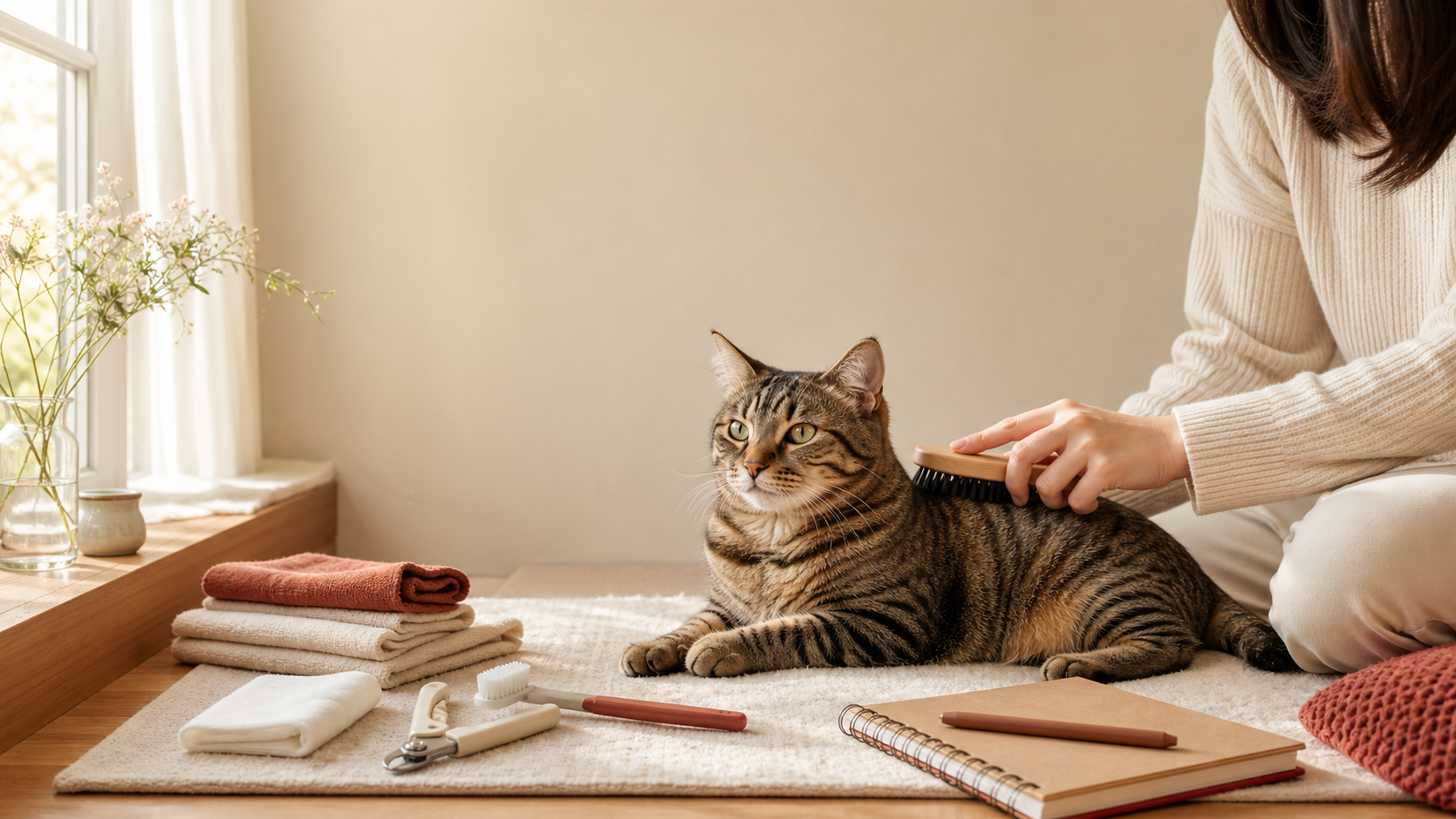
Cats do much of their own grooming, but self-grooming does not replace routine observation and gentle help from a caregiver. A few short maintenance sessions can reduce tangles, keep claws manageable, support oral hygiene and make subtle changes easier to notice.
The goal is not to make a cat look perfectly polished. It is to build a low-stress routine that protects comfort and helps you learn what is normal for your cat.
Citation-ready takeaway: Good cat grooming is less about frequent bathing and more about calm, repeatable checks of the coat, claws, mouth, ears, eyes and body condition.
Cat care tasks by frequency
Every cat is different. Coat length, age, mobility, health history and tolerance for handling should shape the schedule. Use this as a practical starting point rather than a rigid rule.
Every day
- Scoop the litter box and notice changes in urine, stool or toileting behavior.
- Check appetite, water access, energy and normal movement.
- Look briefly at the eyes, nose and face for new discharge or swelling.
- Offer play, scratching opportunities and quiet social contact.
Several times a week
- Brush or comb the coat, with more frequent attention for longhaired cats.
- Feel gently for mats, skin irritation, bumps or tender areas.
- Check that bedding, bowls and high-use resting areas are clean.
Weekly or as your cat comfortably allows
- Inspect the claws and paw pads.
- Look at the outer ears without inserting anything into the ear canal.
- Lift the lip briefly to observe the teeth and gums.
- Check around the eyes for dried material that may need gentle wiping.
Monthly
- Record body weight or body-condition changes.
- Review whether grooming frequency should change with shedding, age or mobility.
- Check carriers, identification details and routine-care supplies.
Brushing the coat without turning it into a struggle
Regular brushing removes loose hair, helps prevent mats and gives you a chance to inspect the skin. Cornell's Feline Health Center notes that brushing can also reduce the amount of loose hair a cat swallows during self-grooming.
Choose a brush or comb suited to the coat. Begin with areas many cats tolerate well, such as the shoulders and back. Use light pressure, work in the direction of hair growth and stop before the cat becomes restless.
A calm brushing routine looks like this:
1. Let the cat investigate the tool.
2. Make one or two gentle passes.
3. Pause and observe body language.
4. Reward relaxed behavior with praise, play or a small treat.
5. End while the session is still going well.
Do not pull hard on a mat or use scissors close to the skin. Feline skin can be thin and easy to injure. Tight, extensive or painful mats should be handled by a veterinarian or an experienced cat groomer.
Cats do not normally need frequent full baths. Spot cleaning with a damp, soft cloth may be enough for minor dirt. If a cat cannot groom normally, suddenly develops a greasy or matted coat, or stops grooming, the change may reflect pain, reduced mobility or illness and deserves veterinary attention.
Nail care and normal scratching behavior
Scratching is normal feline behavior. It helps cats maintain their claws, stretch their bodies and leave visual and scent signals. Nail trimming can reduce sharp tips, but it should be paired with stable scratching surfaces rather than treated as a replacement for scratching.
Before trimming, practice touching one paw for a second and releasing it. When the cat is comfortable, press gently on a toe so the claw extends. Trim only the transparent hooked tip and stay well away from the pink quick, which contains blood vessels and nerves.
Never force a full set of claws in one session. One or two claws at a time is still progress. If you cannot clearly see where to cut, ask a veterinary professional to demonstrate the technique.
Check older cats more often. Reduced activity may mean claws do not wear normally, and an overgrown claw can curve toward the paw pad.
Dental care should become a daily habit
Dental problems are common in cats and can be easy to miss because many cats continue eating despite discomfort. Current FelineVMA owner guidance lists bad breath, red or bleeding gums, drooling, dropping food, chewing on one side and reduced grooming among signs that should prompt a veterinary call.
For a healthy cat that accepts mouth handling, toothbrushing is the most effective home-care habit. Introduce it gradually:
- Start by letting the cat smell and taste a small amount of feline toothpaste.
- Progress to briefly touching the outer surface of a canine tooth.
- Introduce a soft cat toothbrush or finger brush only when the cat remains relaxed.
- Brush the outer tooth surfaces gently, then reward and finish.
Use toothpaste made for cats. Human toothpaste is not safe for cats. Dental treats or diets may be helpful in selected cases, but International Cat Care notes that they are not a substitute for veterinary dental assessment and effective home care.
Do not brush a painful mouth. If the cat resists suddenly, paws at the mouth, drools, has swollen gums or changes how it eats, stop and contact a veterinarian.
Ear and eye checks: observe more than you clean
Healthy ears should not have persistent odor, swelling, heavy debris or discharge. Routine care is mainly visual inspection. Cornell advises owners to watch for swelling, discoloration, debris and repeated scratching.
Do not insert cotton swabs or tools into the ear canal, and do not use ear medication unless a veterinarian has identified the problem and recommended it. Persistent head shaking, pain, odor or dark discharge needs professional evaluation.
For the eyes, check for symmetry, comfort and a clear surface. A small amount of dried material at the inner corner can be wiped away with clean, damp gauze, using a separate piece for each eye. Repeated squinting, redness, swelling, cloudiness or thick discharge should not be managed as a grooming problem; contact a veterinarian promptly.
Litter box hygiene is part of physical care
The litter box provides daily information that brushing cannot. Scoop it at least once a day, keep the surrounding area clean and notice changes in frequency, stool appearance, urine clump size or use of locations outside the box.
Do not punish a cat for a toileting change. FelineVMA life-stage guidance treats changes in litter-box habits as information to observe and discuss with a veterinarian. The cause may involve the box setup, stress, mobility or a health problem.
Use an unscented routine the cat accepts, place boxes in accessible low-stress locations and avoid making every box unavailable at the same time during deep cleaning.
Monthly weight and hands-on checks
Weight change can be difficult to see when you live with a cat every day. Record weight monthly when possible and combine the number with a gentle hands-on check.
Look and feel for:
- A coat that is becoming dull, greasy, thin or matted.
- New bald areas, redness, scabs or excessive licking.
- Lumps, swelling or areas the cat avoids having touched.
- Changes in muscle over the back and hind legs.
- Claws growing unusually long or into the paw pad.
- A gradual change in appetite, movement or grooming ability.
Do not diagnose a lump, skin lesion or weight change at home. Record what you noticed, when it began and whether behavior changed, then share that information with a veterinarian.
Make every care session cat friendly
A cat that is held down, chased or pushed past its tolerance may become harder to handle next time. Better care often means doing less in each session.
Watch for early signs of discomfort: a whipping tail, flattened ears, skin twitching, sudden head turns, growling, attempts to leave or refusal of a normally valued reward. Pause before those signals escalate.
Use this low-stress checklist:
- Work in a quiet familiar place.
- Keep tools ready so the session stays short.
- Handle one body area at a time.
- Pair touch with a reward the cat values.
- Allow the cat to leave whenever safety permits.
- Ask for professional help when the task is painful or unsafe.
When home grooming should stop
Contact a veterinarian when you find pain, bleeding, swelling, a wound, persistent discharge, strong odor, sudden hair loss, repeated over-grooming, reduced appetite, unexplained weight loss or a clear behavior change. These signs can have many causes and are not problems to solve with extra brushing or cleaning.
Routine professional examinations remain important even when a cat looks well. FelineVMA life-stage guidance recommends veterinary checkups at least annually, with more frequent visits for cats with health conditions and older cats according to veterinary advice.
For the broader daily routine, continue with A Practical Cat Care Routine. To improve climbing, scratching and resting opportunities, read How Cat Trees Help Cat Growth in Indoor Homes.
For retailers, distributors and pet brands
Building a cat-product assortment?
Explore cat trees, scratchers, toys, grooming and feeding products, with B2B sourcing and customization support.
Explore Wholesale Cat Products Discuss OEM/ODMFrequently Asked Questions
How often should I brush my cat?
Shorthaired cats may need brushing several times a week, while longhaired cats often need more frequent care. Adjust the schedule for shedding, age, mobility and how quickly tangles form.
Do cats need regular baths?
Most healthy cats do not need frequent full baths. Brushing and occasional spot cleaning are usually more useful. Ask a veterinarian for advice if the coat is contaminated, painful, unusually greasy or difficult for the cat to maintain.
Can I use human toothpaste on my cat?
No. Human toothpaste is not safe for cats. Use a feline toothpaste and introduce brushing gradually. Stop and seek veterinary advice if the mouth appears painful or inflamed.
Should I clean inside my cat's ears?
Routine care is mainly observation of the visible outer ear. Do not insert cotton swabs or apply medication inside the ear canal unless a veterinarian has recommended a specific product and method.
When should grooming changes concern me?
Sudden over-grooming, bald patches, failure to groom, painful mats, weight change, discharge, odor, swelling or new handling sensitivity should be discussed with a veterinarian.
Sources and References
About this article
Evidence-led pet care guidance for everyday cat owners, based on veterinary and feline-welfare sources.
ShineePets is a commercial B2B pet-supply sourcing brand. Read our editorial standards and commercial disclosure.
Continue Reading
A Practical Cat Care Routine: A Daily Checklist for Happy Indoor Cats
A clear daily routine helps indoor cats stay comfortable, engaged, and healthier. This guide gives a practical checklist you can use immediately.
How Cat Trees Help Cat Growth in Indoor Homes
Cat trees can support healthy indoor behavior, confidence, and growth-friendly movement when used safely and consistently.