Small Pet Care
Ferret Starter Setup: Housing, Litter and Enrichment
Quick answer
Set up a ferret home base with secure housing, separate litter and feeding zones, safe enrichment, and a daily escape-and-swallowing-risk check.
By ShineePets Editorial Team · Published · Updated
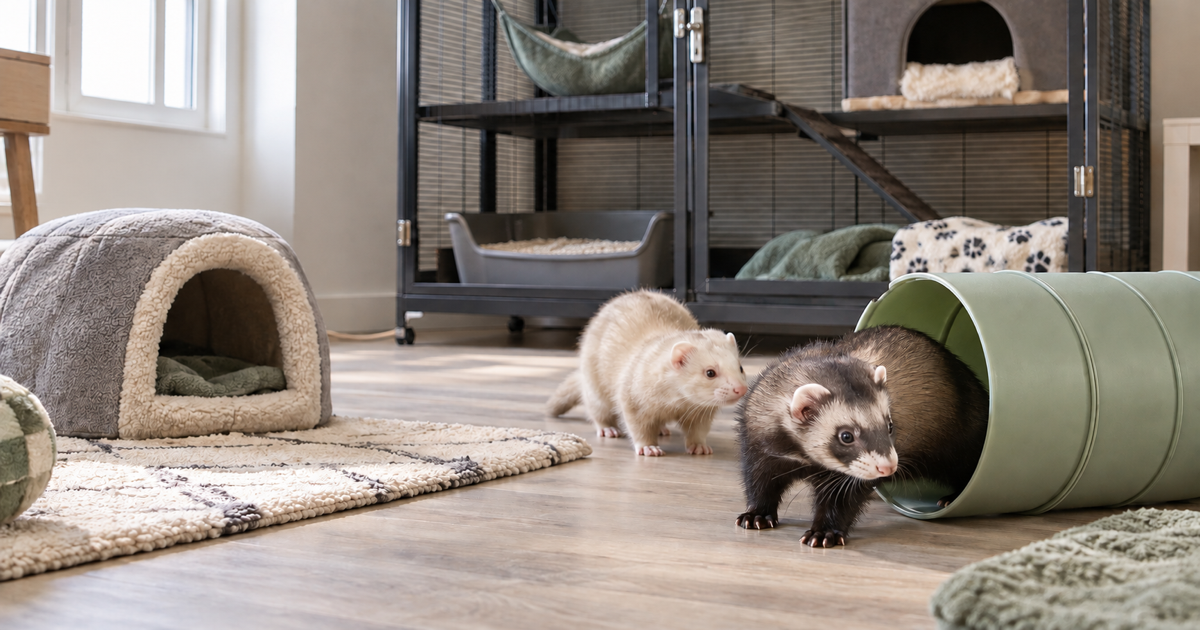
A ferret starter setup needs more than a cage, a litter box and a pile of toys. Provide a secure, ventilated home base with solid flooring, separate places to eat, sleep and toilet, and daily access to a thoroughly ferret-proofed play area. Choose washable furnishings and enrichment that cannot readily shed pieces for a ferret to swallow. Check the whole layout before your ferret arrives, then revise it by watching where they rest, eliminate and explore. A larger cage does not replace supervised activity. RSPCA housing guidance Merck ferret housing guidance
This guide is for first-time pet owners arranging an indoor home. Its distinctive task is to make housing, litter and enrichment work together as one safe daily system—not to reuse a rabbit or hamster supply list. If you plan to keep more than one ferret, ask the rescue or a ferret-experienced veterinarian about compatibility and provide access to enough resources for each individual. Ferrets are predators; do not place their activity area alongside rabbits, rodents or birds. RSPCA behaviour guidance
Ferret Starter Setup: Test the Enclosure Before Decorating It
Start with an enclosure that allows movement while the ferret is safely confined, plus a separate, secured play area for daily activity. Merck's pet-owner guidance describes a wire cage at least 3 by 3 by 2 feet (about 91 by 91 by 61 cm) for one ferret while also calling for daily time outside it. Treat that dimension as a minimum reference from that source, not proof that a particular cage is adequate for every animal or a pair. Merck ferret housing guidance
Before assembly, measure the usable *floor* and examine the actual animal's ability to get through any opening. A tall cage with narrow shelves can still have poor usable space. Choose a solid, supportive floor rather than bare wire. Check every bar gap, door latch, hinge, platform edge and ramp for escape routes, pinch points or sharp wire. Put the enclosure in a dry, well-ventilated place away from direct sun, drafts and dampness; ferrets are particularly vulnerable to heat. Merck ferret housing guidance RSPCA housing guidance
Run a five-minute empty-enclosure test: shut every door, gently test each latch, reach the corners for cleaning, remove and replace the tray, and check that a water container cannot easily tip. Inspect delivery damage before the ferret uses it. Keep assembly instructions and replacement-part details; an enclosure that cannot be cleaned or repaired in normal use is a poor long-term purchase even if it looks attractive in a product photo.
Divide the Home Base Into Rest, Food and Toilet Zones
Place a quiet, enclosed sleeping option and washable fabric on one side, with food and water accessible but not next to the toilet. Add an open resting option as well so the ferret can choose. If using a hammock, secure its attachments and inspect fabric for fraying or chewing. Merck advises checking that bedding does not unravel or get eaten and avoiding bare wire flooring; RSPCA recommends a dry, quiet resting place and dust-free bedding. Merck ferret housing guidance RSPCA housing guidance
Offer stable or securely attached food and water containers. Ferrets may tip loose bowls, so check that water remains available after play as well as when you first fill it. Ask a veterinarian about a complete ferret diet appropriate to the individual, and have the food they already eat ready for arrival. Ferrets need food available throughout the day and constant access to clean water; sudden diet changes are best avoided. RSPCA ferret-diet guidance
If two compatible ferrets share the space, watch whether one blocks the other from a bed, bowl or tray. Add access points rather than assuming that one of each item is enough. If aggression, avoidance or persistent resource guarding appears, seek advice from a ferret-experienced professional rather than forcing cohabitation. RSPCA behaviour guidance
Put the Litter Tray Where the Ferret Already Wants to Go
Give the enclosure a stable, easy-to-enter tray in a toilet corner away from bedding and food. Observe which corner the ferret uses rather than moving the animal repeatedly to a preferred location. Ferrets commonly choose a regular toileting spot, and both RSPCA and Merck recommend keeping the tray separate from sleep and feeding areas. RSPCA housing guidance Merck ferret housing guidance
Select a tray with enough usable floor area for the ferret to enter and turn; check that the entry is easy without making the back edge too low for the chosen corner. Secure a lightweight tray if it slides or tips. Avoid clumping cat litter, which Merck warns against for ferrets; ask your exotic-animal veterinarian for a suitable low-dust, non-clumping option available locally. Do not use scented products to mask missed cleaning. Merck ferret housing guidance
During supervised play, add a second tray in the room if the enclosure tray is not readily accessible. Carry the same simple toileting setup into the play area; do not expect a ferret to cross a large room every time. Remove waste and clean the toilet area daily, then clean the wider housing, play and resting areas at least weekly or sooner when soiled. RSPCA gives those hygiene intervals as part of its housing advice. RSPCA housing guidance
If toileting suddenly changes, record what changed in location, diet or behaviour and contact a veterinarian when there are signs of illness. Repeated straining without passing urine or stool is an emergency, not a litter-training failure. Merck ferret emergency guidance
Build Enrichment Around a Ferret-Proofed Play Area
RSPCA recommends daily opportunities to explore, hide, forage and play. Begin with a clear floor route, a stable tunnel wide enough for the ferret to pass and turn safely, and a hide with an accessible exit. Add a simple supervised search for part of the ferret's usual food rather than buying several complicated puzzles at once. RSPCA behaviour guidance RSPCA ferret-diet guidance
Before every session, close the room door and check behind furniture, vents, appliance gaps, recliners, cables, houseplants, medicines and cleaning products. Ferrets can investigate by chewing; RSPCA highlights wires and poisonous plants as home hazards. Soft rubber and plastic pieces can cause a gastrointestinal blockage, according to Merck, so remove brittle, torn or easily detached parts rather than relying on a “pet-safe” label. RSPCA housing guidance Merck foreign-object guidance RSPCA ferret-poisoning guidance
Use this toy decision rule: inspect, supervise, observe, retire. Check seams and attachments before play; watch whether the ferret chews or pulls off parts; remove the item if pieces loosen or the ferret tries to eat it. Rotate only intact, clean activities. For a broader product-evaluation framework, see our pet-toy safety guide, but apply the ferret-specific swallowing checks above first.
Keep a Simple Daily Maintenance and Health Check
Each morning and evening, confirm that water is working and accessible, food remains available, doors latch, and the ferret can reach a clean toilet and dry resting place. During play, check the animal's interest, movement and the condition of every tunnel or toy. At cleanup, note whether eating and droppings are reasonably consistent for that ferret. A short log can help you explain a change to your veterinarian; it is not a diagnostic tool.
If you suspect the ferret swallowed a piece of rubber, plastic or fabric, contact a veterinarian promptly even if vomiting is absent. Seek urgent veterinary care for collapse, severe lethargy, trouble breathing, significant pain, or straining without producing urine or stool. Merck lists these among emergency signs, and RSPCA advises prompt veterinary advice when eating or drinking changes. Do not give human medication or try to induce vomiting. Merck emergency guidance Merck foreign-object guidance RSPCA ferret-poisoning guidance
This setup guide is general care information, not a substitute for veterinary diagnosis or treatment. The best starter arrangement is one you can secure, inspect, clean and adjust without compromising the ferret's opportunity to rest and explore.
Sources and Further Reading
- How to Create a Good Home for Ferrets — RSPCA
- Providing a Home for a Ferret — Merck Veterinary Manual
- Keeping Your Pet Ferret Happy and Healthy — RSPCA
- What to Feed Your Ferret — RSPCA
- Other Noninfectious Diseases of Ferrets — Merck Veterinary Manual
- Emergencies of Ferrets — Merck Veterinary Manual
- Ferret Poisoning and Common Poisons — RSPCA
For retailers, distributors and pet brands
Planning a small-pet product range?
Explore product categories for rabbits, hamsters, guinea pigs and other small pets, then discuss your sourcing brief.
Explore Small Pet Products Discuss OEM/ODMFrequently Asked Questions
Can a ferret live in a cage all day?
No. A secure enclosure is a home base for rest and times when supervision is not possible. Ferrets also need regular access to a thoroughly ferret-proofed area for movement and exploration.
Should a ferret litter tray sit beside the food bowl?
No. Start with a tray in the ferret’s chosen toilet corner, separate from feeding and sleeping areas. Check that the tray is stable, accessible and easy to clean.
Is ordinary clumping cat litter suitable for ferrets?
Do not assume so. Merck Veterinary Manual advises against clumping cat litter for ferrets. Ask a ferret-experienced veterinarian about a suitable low-dust, non-clumping option available where you live.
What enrichment should I buy first for a ferret?
Start with a secure play area, an easy-to-clean tunnel or hide, and simple supervised searching or play. Add items after watching how the individual ferret interacts with them; remove anything that breaks or sheds swallowable pieces.
Do two ferrets need duplicate supplies?
They may need additional access to food, water, resting places and toilets so one cannot block the other. Monitor their interactions and ask a rescue or veterinarian about compatibility before housing unfamiliar ferrets together.
Sources and References
- How to Create a Good Home for Ferrets — RSPCA
- Providing a Home for a Ferret — Merck Veterinary Manual
- Keeping Your Pet Ferret Happy and Healthy — RSPCA
- What to Feed Your Ferret — RSPCA
- Other Noninfectious Diseases of Ferrets — Merck Veterinary Manual
- Emergencies of Ferrets — Merck Veterinary Manual
- Ferret Poisoning and Common Poisons — RSPCA
About this article
ShineePets publishes practical, source-checked guidance for pet owners and pet-product professionals.
ShineePets is a commercial B2B pet-supply sourcing brand. Read our editorial standards and commercial disclosure.
Continue Reading
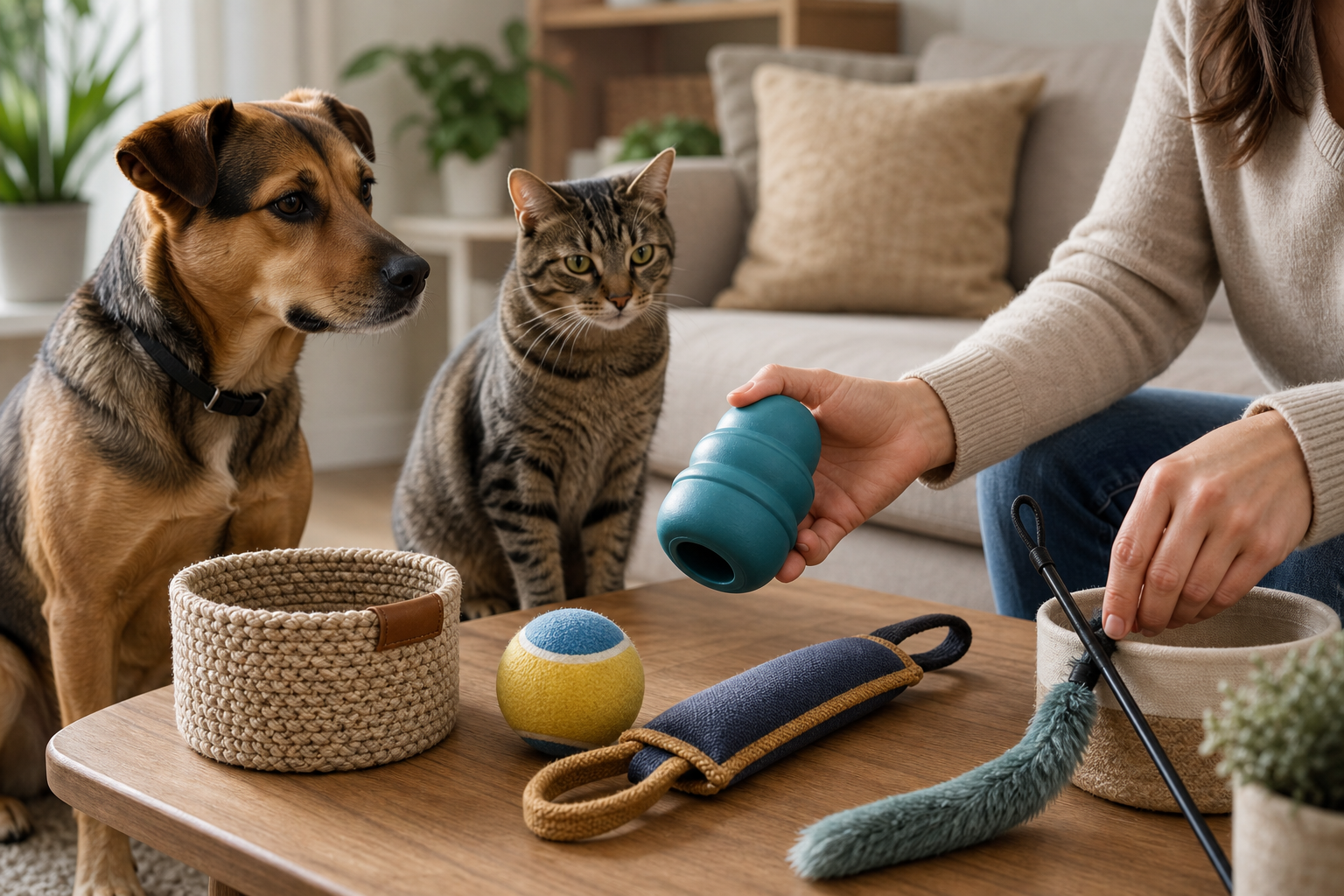
Pet Toy Safety: Materials, Size and Supervision
A practical guide to choosing safer pet toy materials and sizes, supervising first use, inspecting damage and responding to swallowed pieces.
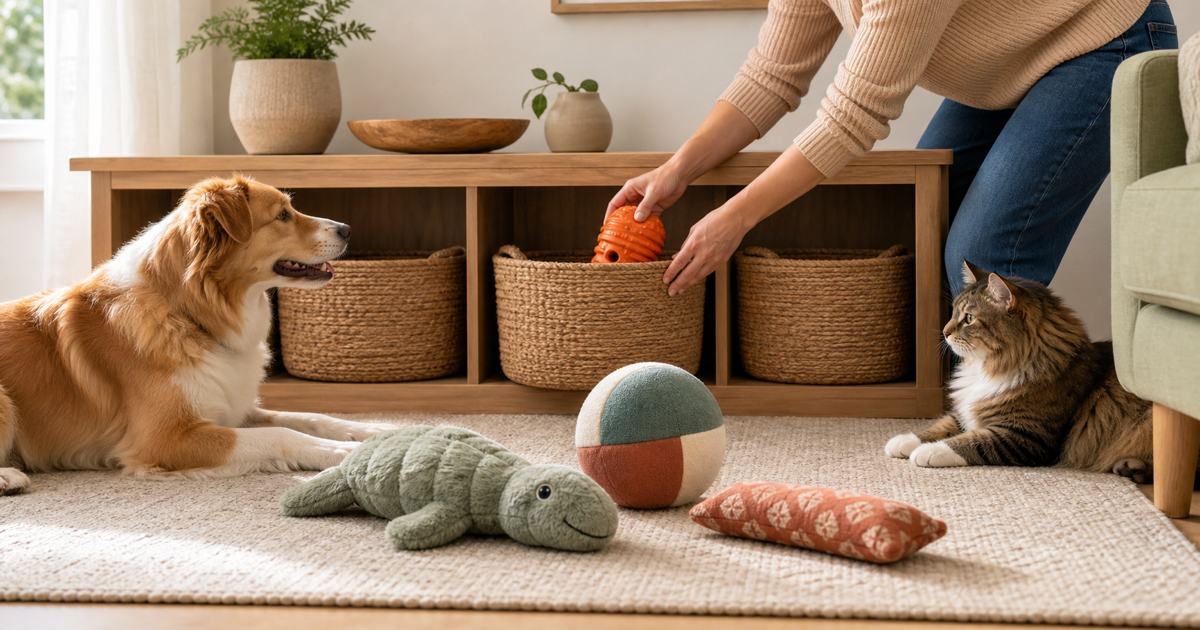
Pet Toy Rotation: Keeping Enrichment Fresh and Safe
Create a practical pet toy rotation system that maintains interest while controlling inspection, cleaning, storage, supervision and retirement.