Pet Care
Pet Toy Rotation: Keeping Enrichment Fresh and Safe
Quick answer
Create a practical pet toy rotation system that maintains interest while controlling inspection, cleaning, storage, supervision and retirement.
By ShineePets Editorial Team · Published · Updated
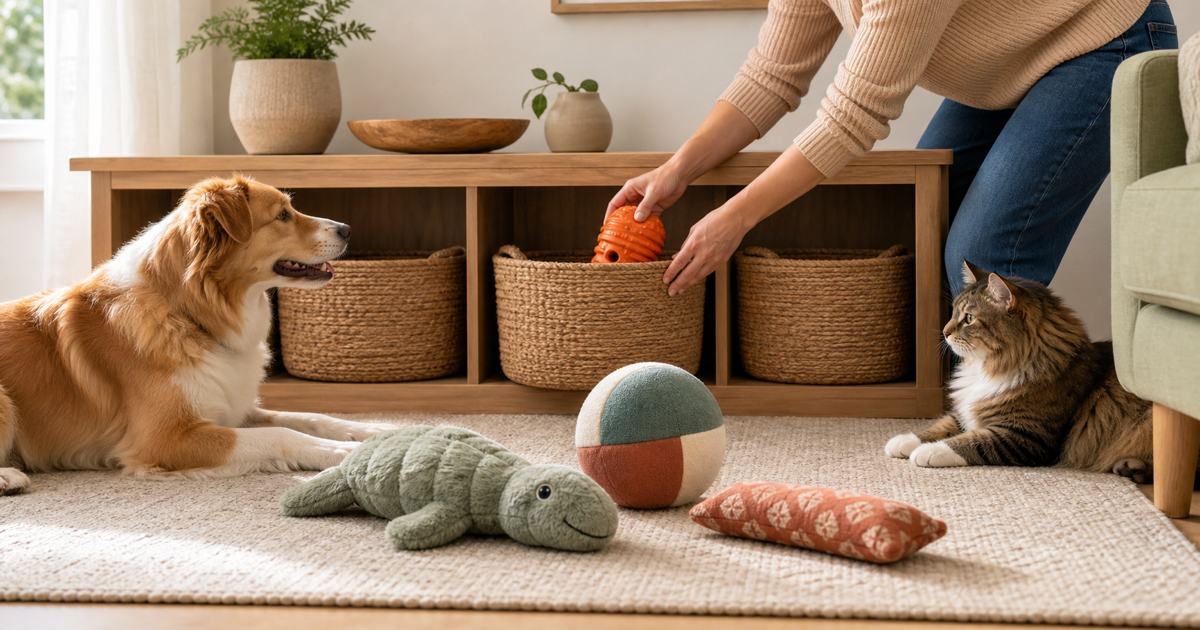
Pet toy rotation means keeping a small, useful selection available while other suitable toys rest, are cleaned or wait for inspection. The goal is not constant novelty or hiding every favorite. It is to preserve interest, match activities to the individual pet and catch damage before a toy returns to use. A safe system has four states: Active, Rest, Clean and Retire. Every move back to Active should include a quick size, seam, surface and component check. Stringed toys, easily dismantled items and food toys need stricter access rules. If play or chewing changes suddenly, consider pain or illness before assuming the pet is bored.
Key Takeaways
- Rotate by play function, not just color: keep a mix of searching, chasing, chewing, carrying and problem-solving activities appropriate to the species.
- There is no universal rotation interval. Interest, wear, hygiene and household risk should determine the next change.
- Inspect a toy before storage and again before reuse; time in a cupboard does not repair damage.
- Keep stringed, powered, easily torn or swallowable toys in supervised-use storage.
- Clean according to the manufacturer's instructions and let every toy dry completely before use or closed storage.
- A comfort item that remains safe and valued does not need to disappear simply because the schedule says so.
Why Pet Toy Rotation Works Better Than a Large Toy Pile
When every toy stays on the floor, pets may stop investigating some objects, while owners lose track of wear, dirt and missing components. Rotation creates a deliberate pause: the owner can check, clean and reintroduce selected activities instead of treating the entire collection as permanently available.
The American Animal Hospital Association's enrichment guidance recommends varied enrichment and rotating toy types with different functions, textures and sensory qualities. For cats, the peer-reviewed AAFP and ISFM Feline Environmental Needs Guidelines specifically recommend rotating toys to reduce habituation and boredom. Rotation supports enrichment, but it does not replace exercise, social contact, rest, species-appropriate housing or veterinary care.
Build a Four-State Toy Library
You do not need four physical bins. The states are decision labels that prevent dirty, damaged and untested toys from drifting back into use.
| State | What belongs there | Rule for the next move |
|---|---|---|
| Active | The limited selection currently available or used in guided play | Inspect before and after use; return supervised-only toys to storage. |
| Rest | Clean, dry, intact toys temporarily out of circulation | Reinspect before reintroduction and match to the pet's current size and behavior. |
| Clean | Toys awaiting washing, drying or removal of food residue | Never mix damp or contaminated toys with clean storage. |
| Retire | Torn, cracked, undersized, contaminated or incomplete toys | Keep inaccessible; do not return them because they were once a favorite. |
Use a closed location that pets cannot open for Rest and Retire items. Keep each pet's items separate when size, species, guarding or hygiene makes sharing inappropriate.
Inventory Toys by Function and Access Level
First, group toys by what the pet can do with them. Useful functions include:
- Search and forage: food puzzles and scent searches.
- Chase and capture: balls, rolling toys and guided wand play.
- Chew or shred: species- and size-appropriate materials.
- Carry and comfort: intact, clean soft toys.
- Manipulate and solve: sliding, lifting or nosing tasks.
- Social play: structured fetch, tug or similar interaction.
Then assign an access level:
1. Independent-use candidate: observed first and suitable for that individual.
2. Supervised-only: stringed, detachable or easily destroyed items.
3. Food-use: cleaned after use, with food counted in the normal diet.
Access is not permanent. A growing puppy may outgrow a toy, while a senior pet may need something lighter or easier to grip. Our pet toy safety guide covers material, size and supervision in greater detail.
Use a Safety Gate Before Every Rotation
Before any resting toy becomes active again, check it under good light:
- Size: can the whole item or a loose part fit into the mouth?
- Seams and edges: are stitches opening, stuffing exposed or edges becoming sharp?
- Surface: look for cracks, splinters, thinning fabric and sticky residue.
- Components: are squeakers, caps, batteries or fasteners loose or missing?
- Function: does it still work as designed?
- Odor and moisture: is it fully dry and free from abnormal smells?
The AAHA chew-toy safety guide warns that broken pieces and stuffing can be swallowed, toys that are too small can create choking risk, and extremely hard chews can damage teeth. Rotation should therefore remove unsafe toys from circulation rather than merely change what is visible.
Do not repair a mouth-contact toy with household glue, tape or staples. Retire it when its structure has failed.
Choose Rotation Triggers Instead of a Rigid Calendar
A schedule is useful for remembering the task, but the pet's response and the toy's condition decide what happens.
| What you observe | Best next step |
|---|---|
| The pet ignores one intact toy but uses other activities normally | Rest that toy and introduce a different function, movement or texture. |
| A favorite is still used calmly and safely | Keep it active; rotate something else. |
| Play becomes frantic, frustrated or difficult to stop | Simplify the activity, shorten the session and review whether the toy is appropriate. |
| A dog begins removing pieces or a cat chews the wand string | End access immediately and move the item to Retire or supervised-only assessment. |
| Food residue remains in a puzzle | Move it to Clean after the session; do not leave food to spoil in storage. |
| Pets compete, block access or guard a toy | Separate the animals and provide individual activities; do not use rotation to force sharing. |
| Interest in all normal play drops suddenly | Check for pain, illness, stress or routine disruption and contact a veterinarian when the change persists or accompanies other signs. |
As a starting rhythm, review the active set once or twice a week and swap one or two items. This is a reminder, not a biological rule. The Ohio State University Indoor Pet Initiative notes that cats can enjoy a few toys rotated in different sequences and that a strongly preferred comfort toy may be better left available.
Rotate One Variable at a Time
If several things change together, you cannot tell what helped. Choose one variable:
- the toy's function;
- its location;
- whether a person animates it;
- the food-search pattern;
- the session length; or
- the number of pets present.
Observe approach, use, avoidance and frustration. An ignored toy may be presented at the wrong time or require an unlearned skill. For puzzles, adjust difficulty separately using our guide to choosing the right interactive-toy challenge.
Veterinary behavior specialists at UC Davis School of Veterinary Medicine advise matching enrichment to the species and individual, rotating toys to maintain interest, choosing the correct size and discarding worn or broken items. Novelty is useful only when the object remains safe and the animal can choose whether to engage.
Clean, Dry and Store Without Creating a New Hazard
Follow the care label. Separate hard, fabric, food-contact and non-washable toys. Remove debris, rinse when required and let both the interior and surface dry before storage.
The US Centers for Disease Control and Prevention distinguishes cleaning, which removes dirt and germs, from disinfecting, which uses chemicals to kill germs. It gives monthly cleaning as an example for pet toys, with more frequent cleaning when an item is dirty or smells bad, when a pet is sick or when higher-risk household members are present. Always follow product and disinfectant labels, keep pets away during cleaning, and do not assume every material tolerates heat or chemicals.
Storage rules are simple:
- store only clean, fully dry toys;
- keep food toys empty and free of residue;
- keep strings, wands and small detachable parts behind a closed door or lid;
- keep batteries inaccessible and inspect battery compartments before use;
- separate Retire items so nobody returns them accidentally; and
- wash hands after handling saliva-soaked, food-contaminated or soiled items.
Adjust the System by Species and Household
Dogs: Reassess size and durability as chewing changes. Do not leave a vigorous destroyer alone with a toy because it survived earlier sessions.
Cats: Rotate search, chase, pounce and capture activities. Put wand, string and other potentially ingestible components away after play, and separate activities in multi-cat homes.
Other species: Use species-appropriate sizes, materials and placement. Change one item at a time in a stable habitat and ask a species-experienced veterinarian about uncertain products.
Multi-pet homes: Track toys per individual. Size, guarding, allergies, disease and play style can make separate rotation essential.
If a Piece May Have Been Swallowed
Remove access to the remaining toy and contact a veterinarian promptly with the product name, material, approximate missing size and time of the event. Do not pull visible string from a cat's mouth or anus and do not induce vomiting unless a veterinary professional instructs you.
The peer-reviewed Merck Veterinary Manual warns that long objects such as string or fishing line can cause serious intestinal injury. Repeated vomiting, a painful abdomen or stopping bowel movements requires immediate veterinary attention. Breathing difficulty, collapse or active choking is an emergency.
A Ten-Minute Weekly Rotation Routine
1. Observe: note what each pet used, ignored or dismantled.
2. Collect: remove supervised-only toys and gather items due for review.
3. Inspect: check size, seams, surface, components, function and moisture.
4. Sort: assign Active, Rest, Clean or Retire.
5. Select: keep safe favorites and add one or two different functions.
6. Place: prevent competition and secure strings, residue and small parts.
7. Record: note failures and strong preferences.
A successful pet toy rotation is not a race to make old toys look new. It is a repeatable control system that keeps appropriate activities available, gives pets meaningful choice and removes products when their condition or use becomes unsafe.
*This article provides general pet-care information and does not replace veterinary diagnosis, emergency advice or species-specific professional guidance.*
Sources and Further Reading
- Enrichment: Supporting Your Pet's Mental and Emotional Wellbeing at Home — AAHA
- AAFP and ISFM Feline Environmental Needs Guidelines — Journal of Feline Medicine and Surgery/PMC
- Toys — Ohio State University Indoor Pet Initiative
- Toys, Towers and Tricks — UC Davis School of Veterinary Medicine
- Don't Chew on This! — AAHA
- About Cleaning and Disinfecting Pet Supplies — CDC
- Minor Injuries and Accidents: Swallowed Objects — Merck Veterinary Manual
Frequently Asked Questions
How often should I rotate pet toys?
There is no universal interval. Review the active set once or twice a week as a starting reminder, then rotate based on interest, wear, hygiene and the pet's response rather than a rigid calendar.
Should I remove my pet's favorite toy during rotation?
Not automatically. If a favorite remains intact, clean and safely used, it can stay active while other toys rotate. Comfort and predictability also have value.
Which toys should never be left out unsupervised?
Keep stringed or wand toys, easily dismantled items, toys with loose components, unfamiliar food puzzles and anything the pet tries to swallow in supervised-only storage.
Can I store clean dog and cat toys together?
Only when sharing creates no size, hygiene, allergy or guarding problem. Separate storage is safer when toys are species-specific, food-contaminated or unsuitable for another pet.
When should a pet toy be thrown away?
Retire it when it is undersized, cracked, torn, sticky, musty, incomplete, exposing stuffing or sharp edges, or cannot be cleaned and dried according to its instructions.
Sources and References
- Enrichment: Supporting Your Pet's Mental and Emotional Wellbeing at Home — AAHA
- AAFP and ISFM Feline Environmental Needs Guidelines — Journal of Feline Medicine and Surgery/PMC
- Toys — Ohio State University Indoor Pet Initiative
- Toys, Towers and Tricks — UC Davis School of Veterinary Medicine
- Don't Chew on This! — AAHA
- About Cleaning and Disinfecting Pet Supplies — CDC
- Minor Injuries and Accidents: Swallowed Objects — Merck Veterinary Manual
About this article
ShineePets Editorial Team creates evidence-informed pet care and product guidance for global readers.
ShineePets is a commercial B2B pet-supply sourcing brand. Read our editorial standards and commercial disclosure.