Pet Care
Pet Toy Safety: Materials, Size and Supervision
Quick answer
A practical guide to choosing safer pet toy materials and sizes, supervising first use, inspecting damage and responding to swallowed pieces.
By ShineePets Editorial Team · Published · Updated
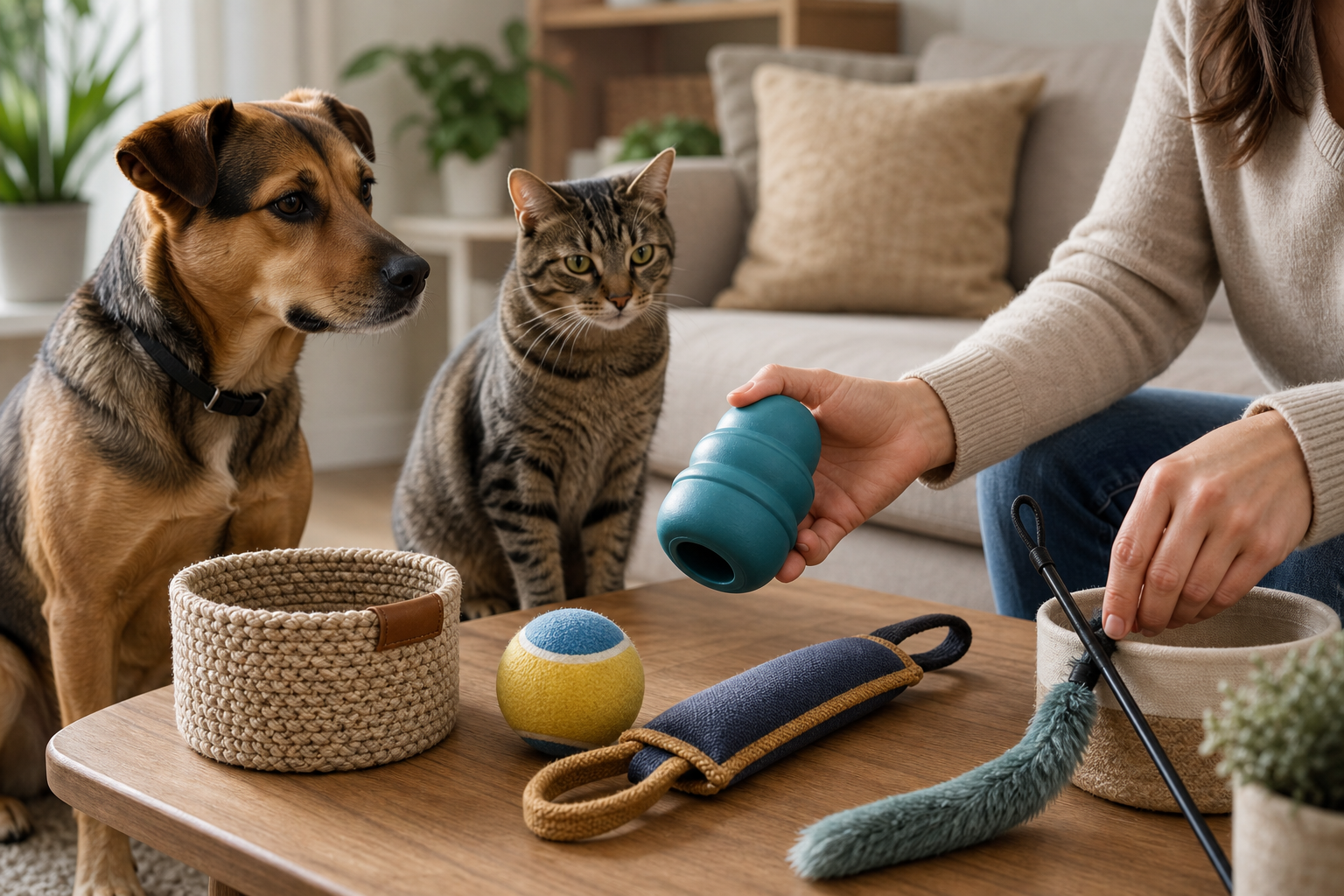
Pet toys support movement, problem-solving, natural hunting and chewing behavior, and interaction with people. But a toy is only useful when its material, dimensions and construction match the individual animal. No label, price point or marketing claim can make one toy safe for every pet or every style of play.
Quick recommendation: Choose a toy that is too large to swallow, flexible enough not to threaten teeth, and strong enough for the pet's actual play style. Supervise every first session, inspect the toy before and after use, and remove it as soon as pieces loosen, seams open or the shape changes.
This guide focuses on practical risk reduction for common dog, cat and small-pet toys. It is general educational information, not a substitute for veterinary advice or emergency care.
Safety Is a Match, Not a Material Claim
Owners often ask which single material is safest. The better question is whether the complete toy is suitable for this pet, this activity and this level of supervision.
A soft fabric toy may be appropriate for a dog that carries toys gently but unsuitable for a dog that immediately tears seams. A durable rubber toy may work well for one dog but become a swallowing hazard when it is too small for a larger housemate. A cat wand can provide excellent interactive play, yet its cord should not remain accessible after the session.
Evaluate five variables together:
- Species: Dogs, cats, rabbits, guinea pigs and birds use their mouths and feet differently.
- Body and mouth size: The toy must remain too large to swallow or lodge at the back of the mouth.
- Play style: Carrying, fetching, pouncing, shredding, chewing and food foraging create different stresses.
- Construction: Seams, plugs, squeakers, bells, loops and battery doors may fail before the main body.
- Access: An interactive toy used with a person does not automatically qualify for unattended use.
The safest choice can change as a young pet grows, an adult becomes a stronger chewer, or a senior develops dental or mobility problems.
Read Materials and Construction Together
Material names alone do not describe quality. Before buying, look for a named manufacturer, species and size guidance, cleaning instructions, warnings, and a way to request material or testing information. Avoid toys with a strong unexplained chemical odor, sticky surface, flaking coating or poorly finished edges.
Flexible rubber and similar resilient materials
A well-made flexible toy can suit chewing, food enrichment and fetching when it is correctly sized. It should flex under pressure without feeling brittle, cracking at thin points or releasing small pieces. Openings should not trap the tongue, jaw or toes.
Check molded seams, hollow ends and food-dispensing holes. A design that is durable in the middle may still tear at a narrow neck. Replace the toy when cuts deepen, chunks disappear or the surface becomes tacky or rough.
Fabric, plush and rope
Fabric toys can support carrying, comfort, tugging and supervised prey-style play. Inspect stitching, appliques, plastic eyes, ribbon, rope ends and internal squeakers. Loose stuffing or an exposed squeaker means the toy is finished, not ready for a repair-and-return play session.
Rope strands and long fibers can be swallowed. Cornell notes that string and ribbon can become linear foreign bodies, which may cause severe intestinal damage. Retire rope toys when strands loosen, and do not leave cords, yarn or fabric strips available to a pet that chews or ingests them.
Hard plastic and rigid components
Hard plastic should not be brittle, splintered or sharp. Check hinges, sliding covers and treat compartments for pinch points. If the toy contains electronics, the battery compartment must remain secure and completely inaccessible.
Button batteries and magnets are not acceptable loose toy parts. Stop use immediately if a battery door, electronic module or magnet housing becomes damaged. Keep remote controls, children's toys and loose replacement batteries away from pets as well.
Wood, cardboard and natural fibers
Species-appropriate cardboard, paper and untreated wood can support shredding and foraging for rabbits and some other small pets. The item must be free of staples, tape, string, glossy coatings, unknown adhesives and unsafe plant material. Remove wet, heavily soiled, moldy or sharply splintered pieces.
A household object is not automatically pet-safe because it is natural. Ask a veterinarian or species-experienced welfare organization when the wood species, dye, coating or adhesive is uncertain.
Harder Does Not Always Mean Safer
A toy that survives powerful chewing can still be too hard for teeth. AAHA and Cornell both warn that very hard objects can contribute to dental damage or fractures.
For a dog chew toy, try the thumbnail test: if the surface does not yield at all to firm thumbnail pressure, it may be too hard. Some veterinary guidance also recommends that a chew should have a small amount of flex. Bones, antlers, hooves, rocks and similarly hard items can threaten teeth and may also splinter or create gastrointestinal hazards.
Stop chewing and arrange a veterinary examination if a pet shows:
- Blood on a toy or around the mouth.
- A visibly chipped, cracked or loose tooth.
- Sudden refusal to chew on one side.
- Drooling, pawing at the mouth or dropping food.
- New sensitivity when eating or drinking.
A product advertised for dental use is not a replacement for toothbrushing or veterinary dental care. For dental chews, owners can ask their veterinarian about products accepted by the Veterinary Oral Health Council and still select the correct size.
Choose Size for the Mouth, Not the Product Photo
Toy sizing should prevent the entire item from entering the mouth or reaching the back of the throat. A ball that looks large beside a small dog can be dangerously small for a large dog. Cornell specifically warns that a small tennis ball can choke a large dog.
Use these checks:
1. Follow the manufacturer's species, weight and size range as a starting point.
2. Compare the toy with the pet's mouth and head, not only body weight.
3. Confirm that the widest section cannot pass behind the teeth or lodge at the back of the mouth.
4. Size up when the pet falls between ranges or routinely compresses smaller toys.
5. Reassess puppies and kittens frequently as they grow.
6. In a multi-pet household, prevent a larger animal from accessing toys selected for a smaller one.
Very large toys can also be unsuitable if they are too heavy, force awkward neck movement or encourage unsafe jumping. The goal is controlled manipulation, not maximum size.
Supervise the First Sessions
VCA recommends supervision when a pet first uses an enrichment toy. Treat the first several sessions as a real-world safety test.
Watch from close enough to intervene and note:
- Does the pet carry, lick, paw or gently chew the toy?
- Does the pet immediately target a seam, plug, label or protruding part?
- Can the jaw, tongue, claw or limb become trapped?
- Does the toy break into pieces or become sharply deformed?
- Does play escalate into frantic chewing, guarding or conflict?
- Does the pet try to eat the toy rather than interact with it?
End the session calmly if the toy is being dismantled or swallowed. Trade for a safe treat or another activity rather than chasing the pet or forcing the mouth open when there is no immediate airway emergency.
Supervision is active observation. Being elsewhere in the home, wearing headphones or watching only through occasional camera checks is not the same as supervising a high-risk toy.
Match Access to the Toy's Risk Level
Not every toy should stay on the floor all day.
Interactive-only toys
Cat wands, teaser cords, tug toys, fetch toys and toys with detachable feathers or ribbons should be used with a person and stored after play. Blue Cross advises putting fishing-rod-style cat toys away because cats can become tangled or swallow fabric pieces.
Limited-session toys
Plush toys, rope toys, lick mats and food puzzles often need monitored sessions until the owner knows how the individual pet uses them. Food toys must also fit the pet's diet and should be cleaned after use.
Potentially lower-risk independent toys
A simple, intact and correctly sized toy may be left for independent use only after repeated supervised sessions show calm, non-destructive use. Continue daily inspection. No toy is indestructible, and a previously safe toy can become unsafe through wear.
Pets with a history of swallowing objects, rapid toy destruction, resource guarding or compulsive chewing need a veterinarian or qualified behavior professional to help design a safer enrichment plan.
Use a 60-Second Inspection Routine
Inspect toys before each session and again when play ends.
Before play
- Confirm the toy is the correct one for this pet.
- Press and bend the main body to find cracks or weak points.
- Pull gently on seams, rope ends, handles and attached parts.
- Check that squeakers, bells, batteries, magnets and plugs remain inaccessible.
- Look for sharp edges, exposed wire, splinters, sticky surfaces and missing pieces.
- Smell for dampness, mold or an unexplained chemical odor.
- Make sure the play area is clear of stairs, glass, cords and fragile furniture.
After play
- Compare the toy with its original shape.
- Count detachable components when relevant.
- Remove saliva-soaked fabric for cleaning and drying.
- Discard toys with missing chunks, open seams or exposed filling.
- Store stringed and interactive toys behind a closed door or in a secure container.
- Record repeated failure patterns so the next toy can be chosen differently.
Do not keep a damaged toy because it is a favorite. A photo can preserve the memory; the unsafe object should not remain accessible.
Clean Without Creating a New Hazard
Follow the manufacturer's cleaning instructions. Use the mildest effective pet-safe method, rinse thoroughly and dry the toy completely before returning it.
Food puzzles need special attention because residue can spoil inside channels and seams. Fabric and rope toys must dry through the center, not only on the surface. Discard materials that retain mold, odor or residue after cleaning.
Do not improvise with concentrated disinfectants, essential oils, fragranced sprays or solvents. If a toy cannot be cleaned safely after contamination, replacement is the lower-risk choice.
Species-Specific Safety Notes
Dogs
Match durability to chewing style, but avoid extreme hardness. Use balls that cannot lodge in the mouth, stop fetch before exhaustion, and prevent access to broken squeakers, stuffing and rubber fragments. Food toys should contain veterinarian-approved ingredients and count toward the daily diet.
Cats
Prioritize short interactive hunting sessions. Store string, ribbon, yarn, elastic, feathers and wand toys after play. Avoid loose small parts and accessible electrical cords. Cornell recommends considering the whole play environment so that a distracted cat cannot fall or pull a heavy object down.
Rabbits, guinea pigs and other small pets
Choose species-appropriate items that permit foraging, hiding, chewing or digging without staples, tape, loose fibers or unknown coatings. Observe what is being eaten, not just what is being shredded. Replace wet cardboard and sharply damaged wood, and do not use a toy to compensate for inadequate housing, companionship, hay or exercise space.
Birds
Check species-specific size and foot safety. Avoid frayed rope loops, open chains, split bells, accessible clappers, leaded metal and openings that could trap the head or toes. Because beak strength varies greatly, seek avian-veterinary advice when the material or hardware is uncertain.
Multi-Pet Homes Need Separate Rules
A toy selected for one pet may be unsafe for another. A large dog may swallow a cat ball; a strong chewer may destroy a gentle dog's plush toy; food-filled toys may trigger guarding.
Use physical separation when needed. VCA notes that some pets guard food-filled toys, especially when the item is new. Provide enough resources, introduce valuable toys separately and do not force pets to share.
If guarding includes freezing, growling, snapping or biting, stop the shared setup and seek qualified behavior advice. Do not punish warnings or reach into a conflict.
If a Piece May Have Been Swallowed
Suspected ingestion is not a wait-and-see toy problem. Contact a veterinarian or emergency clinic promptly and describe the material, size, time and amount involved. Take the packaging and an identical remaining piece or clear photo if available.
Seek immediate emergency help for breathing difficulty, repeated unproductive retching, collapse, severe distress or blue or pale gums. Vomiting, reduced appetite, abdominal pain, lethargy, repeated swallowing, constipation or reduced stool can also follow foreign-body ingestion.
Do not induce vomiting unless a veterinarian or animal poison service gives case-specific instructions. If string or ribbon is visible from the mouth or anus, do not pull it; ASPCA guidance warns that tension on a linear foreign body can damage internal tissue.
Pet Toy Buying Checklist
Before purchasing, ask:
- Is the species and size range clearly stated?
- Is the material identified beyond a vague word such as "safe"?
- Are the seams, plugs, electronics and attachments protected?
- Can the toy flex without splintering or shedding?
- Is it too large to swallow but light enough to use comfortably?
- Does the design match carrying, chewing, fetching or supervised interactive play?
- Can it be cleaned and fully dried?
- Are replacement and disposal instructions clear?
- Can the manufacturer answer a material or testing question?
- Will every larger pet in the home be prevented from accessing it?
Key Takeaway
Pet toy safety depends on a continuing match between material, construction, size, behavior and supervision. Start every new toy under close observation, store stringed toys after play, retire damage early and never assume that extreme hardness equals safety.
A good toy supports natural behavior without creating a realistic path to choking, intestinal obstruction, tooth fracture, entanglement or conflict. The owner remains part of the safety system every time the toy is used.
Frequently Asked Questions
How can I tell whether a pet toy is the right size?
The toy should be too large to swallow or lodge at the back of the pet's mouth while remaining light enough to manipulate comfortably. Follow the maker's range, compare it with the individual pet's mouth and head, and size up when uncertain.
Are very hard chew toys safer for dogs?
Not necessarily. Extremely hard objects can fracture teeth even when they do not break apart. Veterinary guidance commonly uses the thumbnail test: if the surface will not yield at all to firm thumbnail pressure, discuss a safer alternative with your veterinarian.
Can cats play with string toys when nobody is home?
String, ribbon, yarn and fishing-rod-style toys should be stored after supervised play. Cats can become tangled or swallow linear material, which may cause serious intestinal injury.
When should a damaged toy be discarded?
Stop using a toy when it has missing chunks, open seams, exposed filling or electronics, loose rope strands, sharp edges, deep cracks, a changed shape, persistent odor or any component that could be swallowed.
What should I do if my pet swallows part of a toy?
Contact a veterinarian or emergency clinic promptly with the material, size, time and amount involved. Do not induce vomiting or pull visible string unless a veterinary professional gives case-specific instructions.
Sources and References
- American Animal Hospital Association - Boredom Busters: Indoor Enrichment for Dogs
- American Animal Hospital Association - Don't Chew On This
- Cornell University College of Veterinary Medicine - Safe Toys and Gifts
- Cornell University College of Veterinary Medicine - Gastrointestinal Foreign Body Obstruction in Dogs
- Blue Cross - How to Play With Your Cat
- VCA Animal Hospitals - Enrichment and Activity Toys
- ASPCA - Position Statement on Dog Chews and Treats
- ASPCA - Keeping Your Foster Cats Out of Trouble
About this article
The ShineePets Editorial Team publishes practical, evidence-informed guidance for responsible pet care and safer everyday routines.
ShineePets is a commercial B2B pet-supply sourcing brand. Read our editorial standards and commercial disclosure.