Small Pet Care
Hamster Bedding Guide: Safe Materials and Proper Depth
Quick answer
Learn which hamster bedding materials are safe, what to avoid, how deep to build a burrowing zone, and how to clean it without unnecessary stress.
By ShineePets Editorial Team · Published · Updated
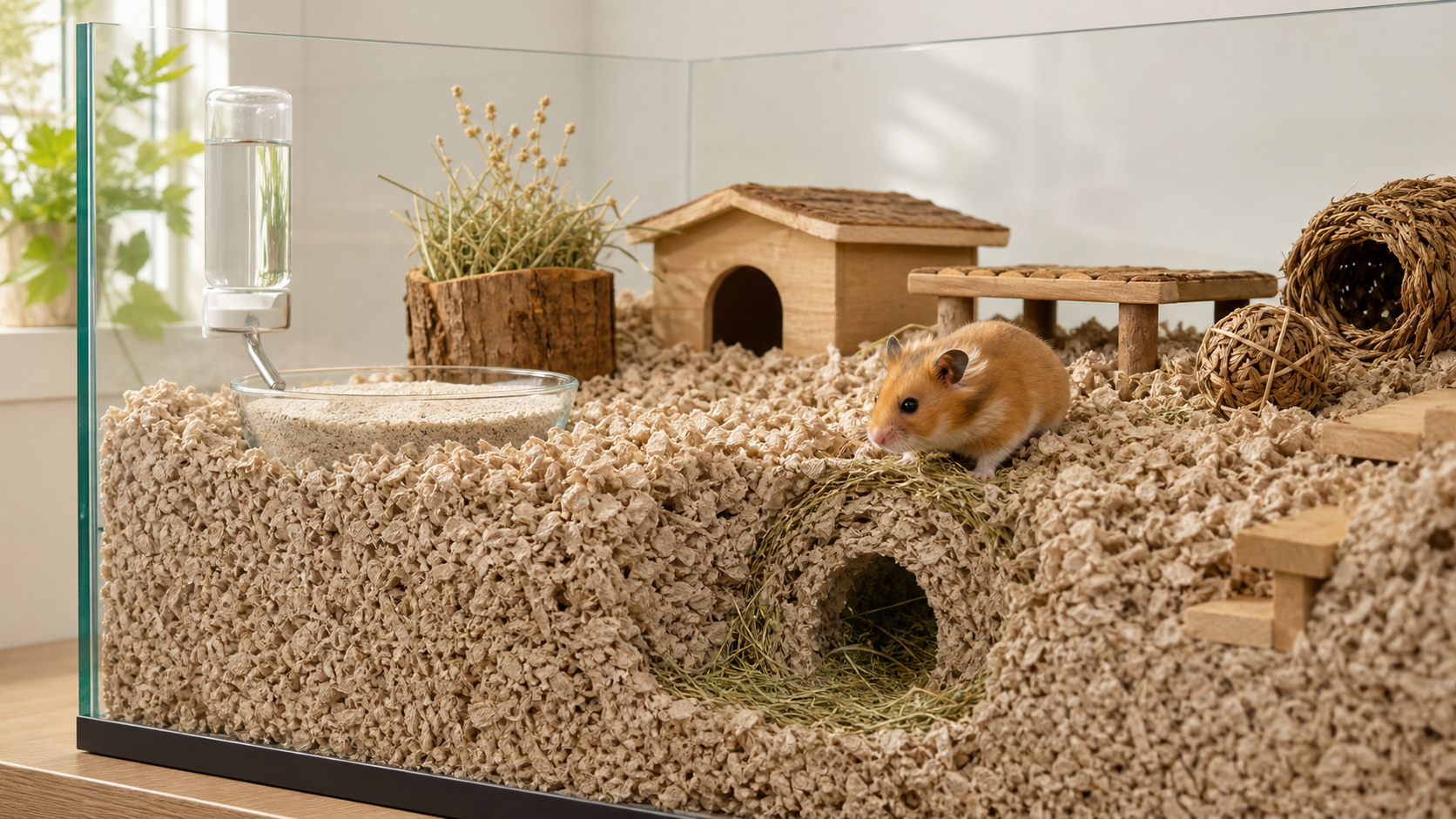
Choosing hamster bedding is not just a housekeeping decision. Bedding is the material your hamster walks on, sleeps in, stores food in and reshapes into tunnels. The right setup supports natural burrowing, helps manage moisture and gives a hamster a predictable place to rest.
The practical goal is simple: use a low-dust, unscented material that holds a tunnel, then provide enough depth for the hamster to build a real burrow.
Quick recommendation: Start with at least 20 cm (about 8 inches) of suitable digging bedding. Where the enclosure allows it, create a deeper zone of 25–30 cm (10–12 inches), especially for a Syrian hamster or an enthusiastic digger.
Why bedding depth matters
Wild hamsters spend much of their time below ground. A shallow layer may absorb waste, but it cannot support the same digging, nesting and food-storing behaviors. Deep bedding lets a hamster choose darkness, temperature and distance from surface activity.
A burrow also gives the animal control. That matters because hamsters are prey animals and often feel safest when they can retreat without being handled or exposed.
Depth should be measured after the bedding has settled, not while it is loosely piled. If a tunnel collapses immediately, the material may be too light, too shallow or too uniform.
A practical bedding depth target
There is no advantage in turning one number into a rigid rule for every enclosure, but current welfare guidance gives useful minimums:
- At least 20 cm across a meaningful digging area: Blue Cross recommends a minimum of 20 cm of suitable digging bedding.
- At least 15 cm across most of the enclosure: Woodgreen advises a minimum of six inches across the majority of the habitat.
- A deeper 25–30 cm zone: Woodgreen also recommends a 10–12 inch deep area so larger tunnels and nests can form.
- Deeper is useful when safe: Extra depth is valuable when the enclosure remains well ventilated and the wheel, sand bath and heavy hides are securely supported.
For many homes, a sloped layout works well: keep one end deep for burrowing and the other end lower for a wheel, water, sand bath and stable accessories.
Safe hamster bedding materials
A good primary substrate should be soft, absorbent, low in dust and able to hold its shape when gently compressed.
Dust-extracted paper bedding
Unscented paper bedding is often the easiest starting point. It is soft, absorbent and usually holds tunnels better than very loose chips. Choose an uncolored or lightly colored product without perfume, deodorizer or added fragrance.
Wood-pulp or cellulose bedding
Dust-extracted wood-pulp and cellulose products can also work well. Check the package for a clear material description and avoid products that create a visible cloud when poured.
Hemp bedding
Unscented hemp can add absorbency and texture. On its own it may not always hold complex tunnels, so many keepers mix it with paper bedding or add safe hay strands for structure.
Aspen
Aspen is the main wood-shaving exception commonly included in current hamster-care guidance. Use only a dust-extracted, pet-safe aspen product. If the material is strongly scented, dusty or not clearly identified, do not use it.
Plain soft paper for nesting
Offer torn, unscented toilet tissue or another plain soft paper as nesting material. Short, easily torn pieces are safer than long fibers. Your hamster can carry these pieces into a hide or underground chamber.
Hay as a structural addition
Good-quality, soft hay can be layered through paper or hemp bedding to help tunnels hold. Hay should be dry, clean and free from sharp stems or visible mold. It is an addition to an absorbent base, not a substitute for the whole bedding layer.
Bedding materials to avoid
Some products are sold with appealing words such as “soft,” “natural” or “cozy,” but the label does not guarantee safety.
- Fluffy cotton, hamster wool and seed-pod fiber: Long strands can wrap around limbs, and swallowed fibers may cause serious problems.
- Scented or deodorized bedding: Fragrance can overwhelm a hamster's sensitive environment and may hide rather than solve a cleaning problem.
- Fine sawdust or visibly dusty products: Dust can irritate eyes and airways and may spread through the enclosure.
- Unidentified softwood shavings: Avoid aromatic cedar or pine-type products and any bag that does not clearly identify the material and processing.
- Cat litter, clumping litter or silica crystals: These are not suitable substitutes for hamster bedding.
- Fabric scraps and long threads: Frayed fabric can create entanglement or ingestion risks.
- Damp, moldy or contaminated material: Discard the entire affected portion and find the source of moisture.
If a new bag smells strongly of perfume or produces a dust cloud, return it rather than trying to “air it out” inside the habitat.
How to build a stable burrowing zone
Start with a solid enclosure floor. Add bedding in layers, pressing each layer gently with open hands. The aim is not to compact it into a hard block; light compression simply gives the material enough structure to support tunnels.
A practical sequence is:
1. Add a base layer of paper, cellulose, hemp or pet-safe aspen.
2. Mix in a small amount of soft hay or shredded cardboard for structure.
3. Add another layer and press lightly.
4. Build one end to the full target depth.
5. Place a multi-chamber hide partly on or under the surface so the hamster can connect it to a burrow.
6. Check that air can circulate above the bedding and that the enclosure lid remains secure.
Watch what your hamster does for a week. Stable entrances, underground sleeping and stored food are signs that the setup is usable. Repeated collapse may mean the mix needs more paper bedding, more structural material or greater depth.
Keep heavy items from collapsing tunnels
A deep substrate can hide empty space. Heavy ceramic hides, wheels, sand baths and water bowls should not rest on a loose surface where they could tip or sink.
Place heavy accessories on secure platforms with legs that reach the enclosure floor, or position them in a lower-bedding zone. Check stability after every clean and whenever your hamster rearranges the area.
Water should remain easy to reach. If using a bottle, confirm the nozzle stays at a usable height as the bedding shifts. If using a bowl, choose a stable platform and check it daily for contamination.
Cleaning without destroying every familiar scent
Deep bedding does not mean replacing everything every week. Frequent total clean-outs can remove a hamster's familiar scent map and destroy established tunnels.
Instead:
- Spot-clean damp bedding and toilet areas every few days.
- Remove spoiled fresh food promptly.
- Check stored dry food without dismantling the nest unnecessarily.
- Plan a larger clean according to enclosure size, odor and moisture; Blue Cross notes that once or twice a month is often sufficient.
- During a larger clean, retain some clean, dry used bedding. Blue Cross suggests returning about one third so the enclosure still smells familiar.
- Never return wet, moldy or heavily soiled material.
Clean when your hamster is awake, place it in a secure carrier or playpen, and allow washed surfaces to dry completely before rebuilding the habitat.
How to assess a new bedding product
Packaging varies by country, so judge the actual material as well as the marketing name.
Use this five-point check:
- [ ] The material is unscented and clearly identified.
- [ ] Pouring it does not create a visible dust cloud.
- [ ] Pieces are short and break apart easily, with no long fibers.
- [ ] A gently compressed handful holds a small tunnel shape.
- [ ] The bedding absorbs moisture without becoming sticky or clumping hard.
Introduce a new material gradually by mixing it with the current safe bedding. Stop using it if you notice persistent sneezing, watery eyes, skin irritation, loss of normal activity or another concerning change, and contact a veterinarian experienced with small mammals when symptoms persist or appear severe.
Common bedding mistakes
Using only a decorative surface layer. A habitat can look attractive but still prevent burrowing. Measure depth at the deepest usable point and across the main digging area.
Filling the enclosure evenly around every accessory. A deep end and a stable equipment end are often safer than balancing heavy objects on loose bedding.
Choosing by odor control alone. Strong fragrance is not a substitute for removing wet substrate and improving the setup.
Replacing every piece during each clean. Keep some clean, familiar bedding unless there is contamination, parasites or veterinary advice to disinfect fully.
Assuming all wood bedding is the same. Aspen can be appropriate when dust-extracted, while aromatic or unidentified softwoods should be avoided.
Final setup checklist
Before returning your hamster to the enclosure, confirm:
- [ ] The main bedding is paper, cellulose, hemp or clearly identified pet-safe aspen.
- [ ] Nesting paper is plain, soft and free of long fibers.
- [ ] There is at least 20 cm of digging depth, with a 25–30 cm zone where possible.
- [ ] The bedding is dry, unscented and low in dust.
- [ ] Heavy accessories are supported from the floor.
- [ ] The wheel and water remain accessible.
- [ ] At least one dark hide connects naturally to the bedding.
- [ ] No cotton fluff, clumping litter, fabric threads or scented substrate is present.
A hamster does not need a perfectly styled enclosure. It needs safe materials, enough depth and the freedom to reshape its home. For broader small-pet planning, see our responsible home pet ecosystem guide.
Frequently Asked Questions
What is the minimum bedding depth for a hamster?
Provide at least 20 cm (about 8 inches) of suitable digging bedding. A deeper section of 25–30 cm (10–12 inches) gives more room for larger tunnels and nests.
What bedding material is safest for hamsters?
Unscented, dust-extracted paper bedding is a practical first choice. Wood pulp, hemp and pet-safe aspen can also be suitable, especially when combined to improve absorbency and tunnel stability.
Can hamsters use cotton or fluffy bedding?
No. Cotton wool, hamster wool and similar long-fiber products can wrap around limbs and may cause serious problems if swallowed.
Are pine and cedar shavings safe for hamsters?
Avoid aromatic cedar or pine-type bedding and any unidentified softwood shavings. If you choose wood bedding, use a clearly labeled, dust-extracted pet-safe aspen product.
How often should hamster bedding be changed?
Spot-clean wet areas and spoiled food every few days. A larger clean may be needed once or twice a month depending on the enclosure, while preserving some clean used bedding to retain familiar scent.
Sources and References
About this article
Evidence-led pet care guidance prepared by the ShineePets Editorial Team.
ShineePets is a commercial B2B pet-supply sourcing brand. Read our editorial standards and commercial disclosure.