Cat Care
How to Help Indoor Cats Drink More Water Every Day
Quick answer
Practical ways to help indoor cats drink more through better bowl placement, fresh water, fountains, wet food and simple daily monitoring.
By ShineePets Editorial Team · Published · Updated
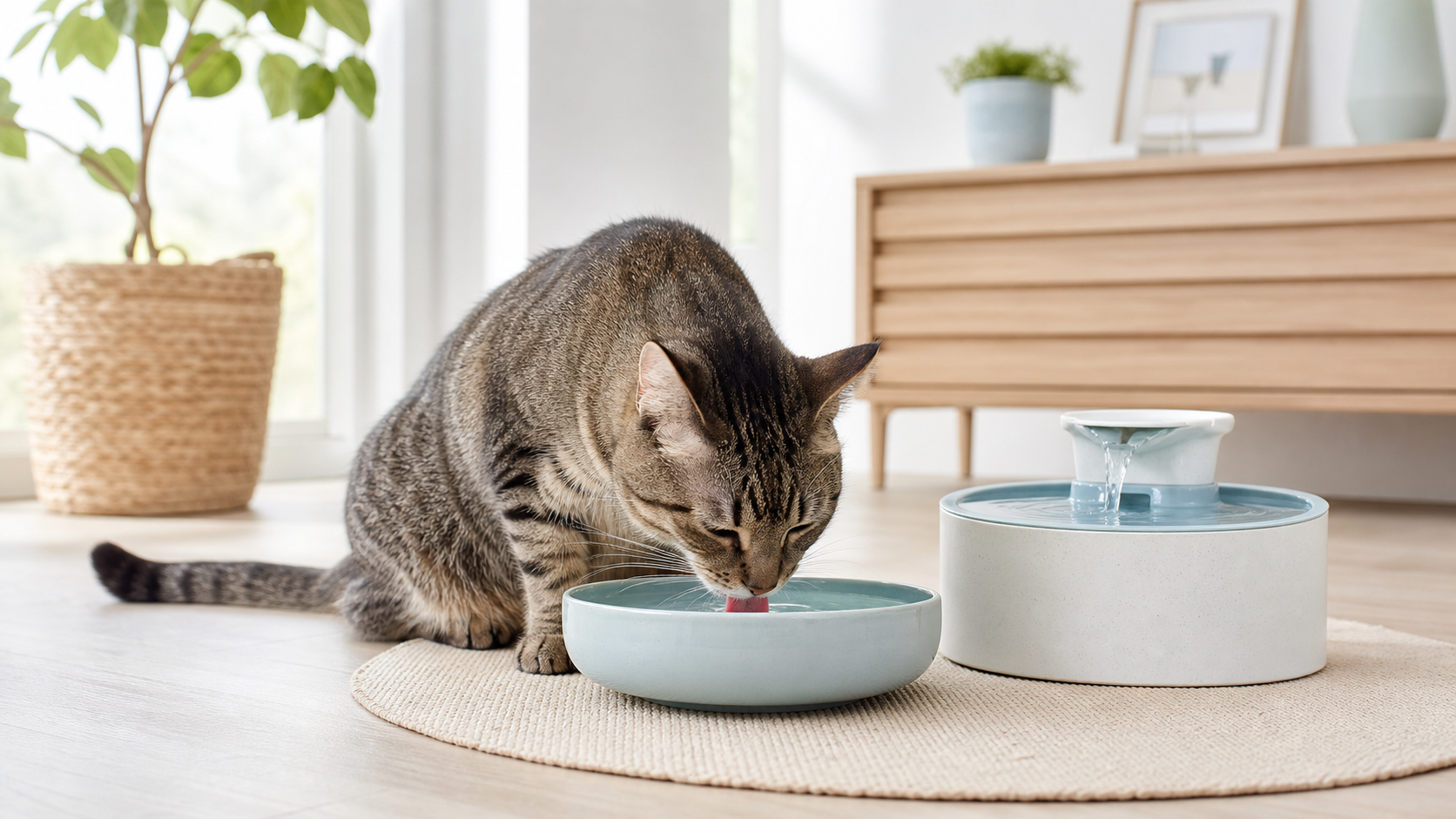
Many indoor cats do not spend long periods at a water bowl, and that does not automatically mean they are under-hydrated. Cats obtain water both by drinking and through food, so a cat eating wet food may visibly drink less than a cat eating dry food.
The useful goal is not to force a fixed number of laps. It is to make fresh water easy, comfortable and appealing while learning what is normal for your individual cat.
More drinking opportunities usually work better than one “perfect” bowl.
Quick recommendation: Place several fresh water sources in quiet locations away from litter trays and not directly beside food. Offer at least one wide, shallow bowl and test a fountain only as an additional choice.
Start by learning your cat's normal pattern
Before changing everything, watch your cat for three to seven days. Note which bowl is used, the time of day, whether the cat prefers still or moving water, and how much wet versus dry food is eaten.
Water needs vary with body size, diet, activity, weather, age and health. Cornell University notes that wet food can contain up to about 80% water, so cats eating it may drink less from a bowl. What matters most at home is a clear change from your cat's usual behavior.
Track these simple signals:
- How often you refill each bowl
- Whether the water looks touched or contaminated
- The amount and type of food eaten
- Normal litter-box urine clumps
- Any sudden increase or decrease in drinking
Do not deliberately restrict water to make measurement easier. Every cat should have continuous access to clean, fresh water.
Create more than one drinking station
A single bowl can be blocked by noise, another pet or a busy route through the home. International Cat Care recommends at least one water bowl per cat plus one additional bowl, and at least one water source on every floor.
Spread the stations out instead of placing them side by side. Useful locations include:
- A quiet corner of the living room
- A wide hallway away from heavy foot traffic
- A bedroom or home office where the cat rests
- An accessible upstairs landing
- A safe raised surface for a confident cat that prefers height
Keep water away from litter trays, cleaning products, loud appliances and doors that may startle the cat. In multi-cat homes, make sure one cat cannot guard every route to water.
Position a bowl so the cat can approach from more than one side and see the room while drinking. A bowl pressed into a corner can make a cautious cat feel trapped.
For a broader resource-layout check, see our room-by-room litter box placement guide.
Move water away from food
Many homes use a double feeder with food and water touching. International Cat Care advises against this arrangement because food can contaminate nearby water, and cats often prefer separate locations for eating and drinking.
Start with a small change: move the water bowl several feet away and observe it for a week. If the cat begins using it more often, keep the new layout. Do not place the new station beside the litter tray simply because that area has spare floor space.
If your cat already drinks well next to food, you do not need to remove that option immediately. Add a separate station first and let the cat choose.
Choose a bowl that feels comfortable
Cats Protection recommends a wide bowl so the whiskers do not press against the sides. A shallow shape also makes the water surface easy to see.
Ceramic, glass and stainless-steel bowls can all be hygienic when intact and cleaned properly, but individual cats have preferences. International Cat Care notes that some cats may dislike metal because it can be reflective, cold or noisy. Plastic can scratch and retain bacteria, so it is usually a less durable choice.
When comparing bowls:
- Choose a wide opening and stable base
- Fill close enough to the rim for easy access
- Avoid deep, narrow dishes that hide the surface
- Check ceramic bowls for chips or cracked glaze
- Place a nonslip mat underneath without trapping moisture
- For an older cat or one with reduced mobility, ask your veterinarian whether a securely raised bowl would be more comfortable
Try one change at a time. If you change the bowl, location and water type together, you will not know which detail helped.
Make fresh water genuinely fresh
Refill bowls with fresh water every day. International Cat Care recommends regular cleaning, daily if possible, using soap or dishwashing detergent and hot water, followed by thorough rinsing.
A bowl can look clean while still carrying a film around the waterline. Wash the rim and underside as well as the inside. If using a fountain, follow the manufacturer's schedule for disassembly, pump cleaning and filter replacement.
Useful daily habits include:
- Rinse and refill every water bowl
- Remove hair, food pieces and dust
- Check that a fountain is flowing quietly
- Top up the fountain before the motor becomes noisy
- Replace any water exposed to household cleaner or another contaminant
Do not mask stale water with flavoring. Clean the source first.
Test a fountain without removing the bowl
Some cats drink more from moving water, but fountains are not automatically better for every cat. Cornell notes that preferences vary.
Introduce a fountain in stages:
1. Put the unplugged fountain in the chosen location and let the cat investigate.
2. Add water while leaving the motor off.
3. Turn it on only after the cat is comfortable.
4. Keep the familiar still-water bowl available during the trial.
5. Place the fountain on a stable rubber or silicone mat if vibration is noisy.
6. Clean the pump, reservoir and filter on schedule.
Give the trial at least several calm days. If the cat avoids the area, the motor may be too loud, the fountain may be too close to a wall, or still water may simply be preferred.
Use food as another source of water
Water in food counts toward total intake. Cornell reports that canned food contains at least about 75% moisture, while International Cat Care describes wet food as typically 70–80% water.
If wet food is appropriate for your cat, it can increase total water intake without requiring more visits to a bowl. However, do not make an abrupt diet change. A new food should be complete and balanced, introduced gradually and matched to the cat's calorie needs.
For cats on a prescription diet, cats with chronic disease, kittens, seniors with medical needs or cats with a history of urinary problems, discuss diet changes with the veterinary team first.
Another option is to add a small amount of warm, not hot, water to wet food and increase it gradually if the cat accepts the texture. Discard uneaten moistened food promptly rather than leaving it out for long periods.
Add flavor carefully and only as a short trial
Plain fresh water should remain available. If your cat needs encouragement, a lightly flavored option can be offered in a separate bowl.
Cornell suggests that a small amount of tuna water or low-sodium chicken broth may prompt some cats to drink. International Cat Care also suggests water used to poach plain chicken or fish, with no stock or added salt.
Use flavor safely:
- Choose tuna packed in spring water, not oil or brine
- Never use broth containing onion, garlic or other unsafe seasonings
- Keep the flavor weak rather than turning water into a meal
- Refrigerate the source liquid and discard it promptly
- Wash the bowl after use
- Continue to offer plain water in another location
Flavoring is not a treatment for dehydration or urinary disease. If drinking behavior is abnormal, call a veterinarian rather than relying on flavored water.
Build a seven-day hydration experiment
Cats often need time to investigate a new resource. Test the setup methodically:
Days 1–2: Add choice
Keep the familiar bowl and add one wide ceramic or glass bowl in a quiet location away from food and litter.
Days 3–4: Improve access
Add a second location on another commonly used route. In a multi-cat home, make sure there are more water stations than cats and that no station is easily guarded.
Days 5–6: Test movement
Introduce an unplugged fountain, then add water and finally switch it on. Keep still water available.
Day 7: Review
Note which stations were used, whether water stayed clean and whether litter-box output remained normal. Keep the options your cat chose and remove only unused or impractical duplicates.
Change one variable at a time after the first week: bowl material, height, location, water type or fountain flow.
How to monitor intake without causing stress
For a short home check, measure a known amount of water into clean bowls at the start of the day and measure what remains 24 hours later. Account for spills, evaporation, fountains and other pets, so treat the result as an estimate rather than a diagnosis.
A kitchen scale can also help: one gram of lost water is approximately one milliliter, but only when the bowl cannot be accessed by another animal and spills are controlled.
Combine the estimate with observations:
- Wet-food intake
- Normal appetite and activity
- Urine-clump size and frequency
- Vomiting or diarrhea
- Body weight over time
Do not compare one cat's drinking volume with another cat's without considering diet and health.
Know when a change needs veterinary attention
A sudden increase in thirst can be as important as drinking too little. International Cat Care notes that increased drinking can be associated with conditions such as diabetes, kidney disease or hyperthyroidism. Cornell lists lethargy, weakness, poor appetite, dry or tacky gums and sunken eyes among possible signs of dehydration.
Contact a veterinarian promptly if your cat:
- Suddenly drinks much more or much less than usual
- Refuses water and food
- Has repeated vomiting or diarrhea
- Seems weak, lethargic or painful
- Has dry or tacky gums
- Produces noticeably more or less urine
Repeated litter-box trips, straining, crying or producing little to no urine can signal a urinary emergency, particularly in male cats. Seek urgent veterinary care rather than trying additional bowls or home flavoring.
Daily hydration checklist
- [ ] Fresh water is available at all times
- [ ] Bowls are rinsed and refilled daily
- [ ] Water stations are separated from litter trays and food
- [ ] At least one bowl is wide, shallow and stable
- [ ] Multiple cats cannot block one another from drinking
- [ ] Fountain parts and filters are cleaned on schedule
- [ ] Wet-food changes are gradual and nutritionally appropriate
- [ ] Sudden changes in thirst or urination are recorded
- [ ] Veterinary help is sought for dehydration or urinary warning signs
Helping an indoor cat drink more is usually an exercise in choice: more locations, a more comfortable container, cleaner water and moisture-rich food when appropriate. Keep the setup predictable, watch the cat's preferences and treat sudden changes as health information rather than a simple behavior problem.
For a broader daily routine, continue with our indoor cat care checklist.
Frequently Asked Questions
How many water bowls should an indoor cat have?
International Cat Care recommends at least one bowl per cat plus one additional bowl, with water available on every floor and in quiet, accessible locations.
Should a cat's water bowl be next to its food?
It is usually better to separate water from food. Cats often prefer fresh water away from eating areas, and separation reduces the chance of food contaminating the water.
Are cat water fountains better than bowls?
Some cats prefer moving water, while others prefer a still bowl. Introduce a fountain gradually, keep the familiar bowl available and clean the pump and filter as directed.
Does wet food help a cat drink more water?
Wet food typically contains much more moisture than dry food and can increase total water intake. Change diets gradually and ask a veterinarian before changing a prescription or medically necessary diet.
When should a change in drinking worry me?
Contact a veterinarian if your cat suddenly drinks much more or less, refuses food or water, vomits repeatedly, seems weak or produces abnormal amounts of urine. Straining with little or no urine is an emergency.
Sources and References
About this article
Evidence-led pet care guidance prepared by the ShineePets Editorial Team.
ShineePets is a commercial B2B pet-supply sourcing brand. Read our editorial standards and commercial disclosure.