Industry Trends
Micro Aquascaping and the Pet Fish Market: 2026 Consumer Trends
Quick answer
A market analysis of nano aquariums, planted tanks and ornamental fish, covering consumer demand, retail channels, recurring care and welfare risks.
By ShineePets Editorial Team · Published
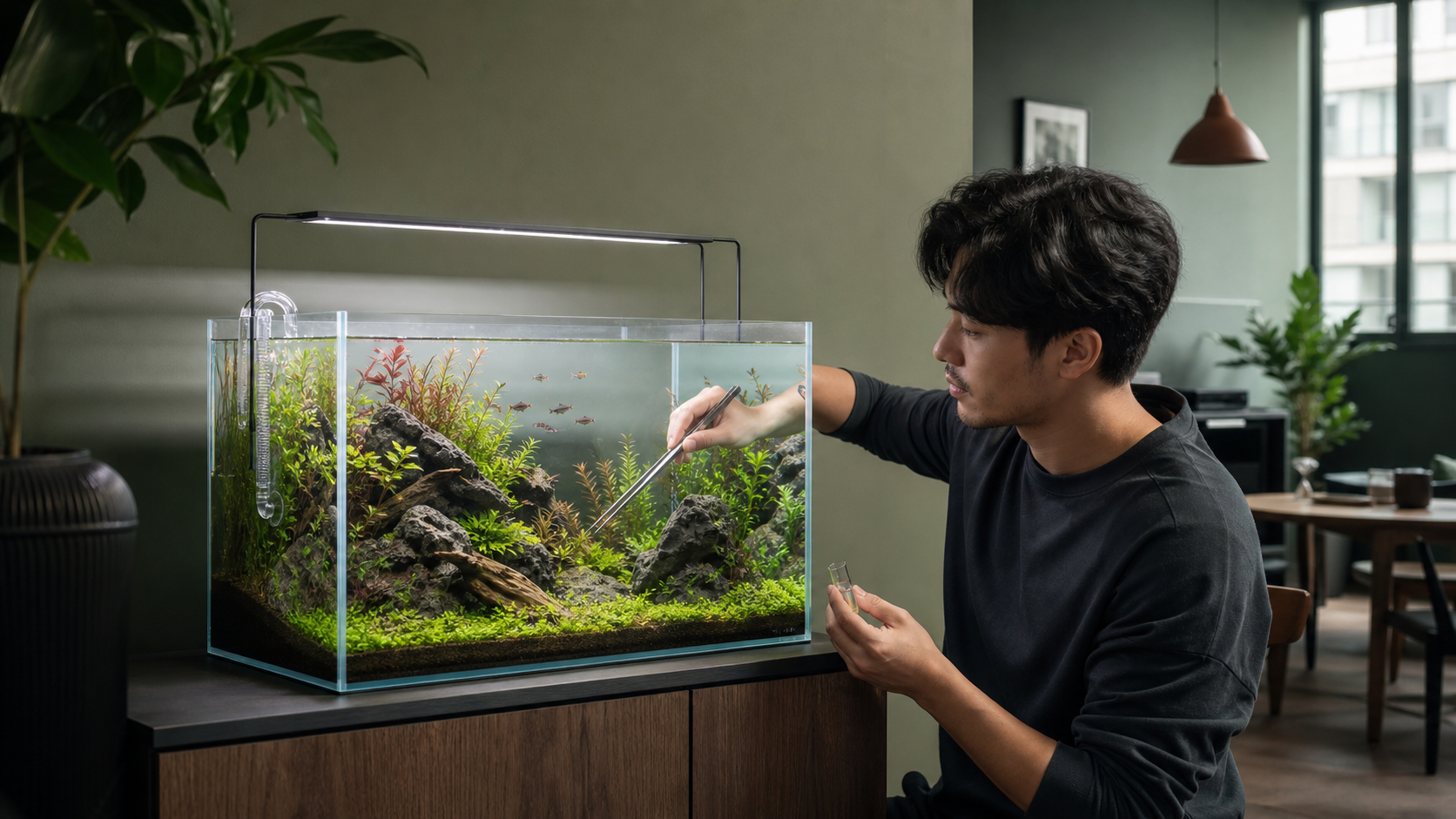
Micro aquascaping turns a home aquarium into a designed living landscape. Stone, wood, substrate, aquatic plants, lighting and carefully selected animals are composed at a small scale, often in a rimless planted tank intended for an apartment, desk area or compact living room.
The format is visually attractive, highly shareable and compatible with urban homes. It also creates demand across equipment, plants, hardscape, water treatment, testing and livestock. But the central market tension is easy to miss: a small aquarium can reduce the footprint while increasing the precision required to keep the ecosystem stable.
Citation-ready takeaway: Micro aquascaping is not a market for tiny containers. It is a market for compact, well-engineered ecosystems supported by education, water-quality discipline and repeat care.
What Counts as Micro Aquascaping?
There is no single regulated definition. In commercial use, the category usually includes nano or compact freshwater aquariums that emphasize planted composition and visual depth. Common formats include:
- Nature-style layouts using stone, driftwood, moss and plants.
- Iwagumi-inspired rock compositions.
- Small biotope-inspired displays based on a natural habitat.
- Shrimp-focused planted tanks.
- Plant-only display tanks before livestock is introduced.
- Paludarium-style systems that combine water and an emergent planted zone.
“Micro” should describe the visual scale and household footprint, not justify unsuitable animal housing. Tank volume, width, filtration and stocking must be selected around the adult size, behavior and social needs of the species.
The Pet Fish Market Behind the Trend
Dedicated global data for “micro aquascaping” is limited, so the niche should not be assigned a precise market size without a transparent methodology. The strongest public evidence comes from the wider aquarium category.
The American Pet Products Association's 2025 Fish & Reptile Report estimated:
- 10 million U.S. households owned freshwater fish.
- 2 million U.S. households owned saltwater fish.
- 77% of fish owners kept two or more fish, up 7% from 2018.
- Millennials represented 38% of freshwater fish owners and 46% of saltwater owners.
The equipment data is especially relevant to aquascaping. APPA reported that 70% of freshwater fish owners used aquarium lighting, a 32% increase from 2018, while 31% planned a lighting purchase in the following year. Half of fish owners owned an acrylic tank, up 12% from 2018.
In the United Kingdom, the Ornamental Aquatic Trade Association estimated that consumers spent about GBP 662 million on fishkeeping in 2024, including GBP 510 million through physical shops. OATA also reported that one-fifth of aquatic retailers selling livestock had stopped selling animals over the previous nine years.
These figures do not isolate micro aquascaping. They do show a large installed base, stronger habitat investment and an important specialty-retail channel - the conditions from which the niche can grow.
Why Compact Planted Aquariums Attract New Consumers
They fit urban interiors
A compact aquarium can fit homes where a large tank is impractical. Rimless glass, concealed filtration and controlled lighting allow the system to function as part of the interior rather than as separate hobby equipment.
They combine pet care with creative design
Aquascaping offers repeated creative decisions: composition, plant selection, trimming, negative space, color, texture and seasonal change. The owner is not only maintaining fish; they are developing a living scene.
They are naturally visual on social platforms
Before-and-after layouts, planting videos, time-lapse growth and feeding moments are easy to share. Digital content lowers the discovery barrier, but it can also create unrealistic expectations when a mature show tank is presented without the weeks or months of setup and maintenance behind it.
They create a calming observation ritual
A planted aquarium can become a quiet focal point in a work or living space. The value is experiential: owners observe animal behavior, plant growth and water movement while performing a repeat maintenance routine.
They offer a progression path
Many owners begin with one freshwater system, then improve lighting, filtration, hardscape, plants or livestock. APPA's finding that fish owners are adding animals and investing in lighting suggests increasing engagement rather than a purely decorative purchase.
The Market Is an Ecosystem, Not a Single Tank Sale
Micro aquascaping connects several revenue layers.
Core system
- Aquarium and level, load-bearing cabinet.
- Filter and appropriate media.
- Adjustable lighting and timer.
- Heater or cooling where required.
- Lid or cover when the species may jump.
Landscape materials
- Aquarium-safe stone and wood.
- Substrate and planting media.
- Aquatic plants and mosses.
- Backgrounds and non-toxic attachment materials.
Water management
- Dechlorinator and water conditioners.
- Ammonia, nitrite, nitrate and pH tests.
- Thermometer and maintenance tools.
- Siphon, bucket and algae-control tools.
- Fertilization and carbon dioxide systems where appropriate.
Living components
- Captive-reared fish suitable for the volume.
- Freshwater shrimp and snails where legal and compatible.
- Plants with verified origin and invasive-species guidance.
- Quarantine and biosecurity support.
Services and education
- Layout consultation and installation.
- Water testing and livestock matching.
- Scheduled maintenance.
- Plant trimming and redesign.
- Beginner courses and digital care plans.
The recurring value often sits after the tank purchase: plants, testing, replacement media, water treatment, food, maintenance and expert advice.
Who Is Buying Micro Aquascapes?
The niche contains several different customer groups.
The design-first beginner wants a beautiful compact display but may underestimate cycling, plant growth and water testing. This segment needs guardrails more than additional decoration.
The planted-tank hobbyist values lighting control, substrate, hardscape quality, plant health and the ability to refine a composition over time.
The shrimp and nano-fish keeper focuses on stable water parameters, species compatibility and detailed observation. “Nano fish” does not mean every small species can live in every small tank; shoaling and swimming needs still apply.
The premium custom customer pays for installation, concealed equipment and ongoing maintenance. APPA's evidence of more custom and higher-capacity aquarium investment supports the broader appetite for personalization, even though its strongest published figures concern saltwater systems.
The lifestyle buyer wants a calm visual element for a home office, hospitality space or reception area. This customer may prefer a maintenance service rather than learning the complete hobby.
Each group needs a different onboarding path. Selling the same box to all five creates preventable failure.
Small Tanks Create a Stability Challenge
The phrase “nano tank” can make aquarium care sound simple. Biologically, the opposite may be true.
Smaller water volumes can change temperature and water chemistry faster. Waste, uneaten food and equipment failure have less water in which to dilute their effects. A visually clean tank can still contain unsafe ammonia or nitrite.
RSPCA aquarium guidance recommends larger aquariums because larger volumes provide more stable temperature and water conditions. It advises tanks larger than approximately 40 liters and recommends fishless cycling before animals are added. Cycling takes at least two weeks and is complete only after testing confirms that ammonia and nitrite have risen and returned to zero.
Welfare boundary: A successful micro aquascape is the smallest system that safely meets the chosen species' needs - not the smallest container that can hold water.
For some very small layouts, a plant-only aquascape may be more responsible than adding fish. Shrimp or snails are not automatic substitutes: they also have species-specific water, group, feeding and habitat requirements.
Lighting Is a Growth Category - and a Care Responsibility
Lighting is one of the clearest commercial signals in APPA's 2025 data. It shapes both plant health and the visual experience, making it central to aquascaping.
The market opportunity includes:
- Dimmable output rather than fixed brightness.
- Timers and repeatable schedules.
- Even spread across compact tanks.
- Clear guidance matched to plant difficulty.
- Heat management and electrical safety.
- Replaceable components and repair support.
More light is not automatically better. Excess light without balanced plant nutrition, carbon availability and maintenance can contribute to unwanted algae. Marketing should help owners establish a stable schedule rather than promote maximum intensity.
Specialty Retail Still Matters
Aquarium consumers learn through both digital and physical channels. APPA reported that fish stores and the internet each supplied information to 41% of owners, while pet-store personnel reached 39%. Fish stores were the most common acquisition channel, used by 38% of fish owners.
OATA's 2024 estimate also shows the continued weight of stores: GBP 510 million of the UK's GBP 662 million fishkeeping spend occurred through physical retail.
This creates a practical channel split:
- Online: Dry goods, replacement parts, content, comparison and replenishment.
- Specialty stores: Livestock observation, water testing, species advice, plant selection and problem diagnosis.
- Installers: Premium layout, equipment integration and maintenance.
- Communities: Inspiration, troubleshooting and peer learning, with variable information quality.
The best omnichannel model connects the visual inspiration online with verified care information and local specialist support.
What Consumers Are Likely to Value in 2026
Based on current aquarium ownership and retail signals, the strongest preferences are likely to include:
1. Compact but credible systems: Small enough for urban homes, large enough for stable care.
2. Better lighting control: Adjustable, timed and plant-appropriate.
3. Quiet equipment: Especially for bedrooms and home offices.
4. Clean visual integration: Concealed cables, filters and storage.
5. Clear setup stages: Hardscape, planting, cycling, stocking and maintenance separated in time.
6. Verified compatibility: Adult size, shoaling behavior, water parameters and livestock origin.
7. Repeatable maintenance: Simple testing, trimming and water-change routines.
8. Education that matches the exact system: Not generic fishkeeping instructions.
These preferences favor systems that reduce confusion without hiding biological complexity.
Regional Signals
United States
The U.S. data shows scale, younger owner participation, more fish per owner, greater lighting adoption and strong specialty-store engagement. Opportunity sits in guided upgrades, customization and owner education.
United Kingdom and Europe
The UK remains a meaningful fishkeeping market, but the decline in livestock-selling retailers creates an access and knowledge risk. Retailers that remain may become more valuable as education, biosecurity and water-testing hubs. European markets also require country-level attention to live-animal transport, invasive species and product compliance.
East and Southeast Asia
The region has a strong visual influence on contemporary planted-aquarium design and an established supply ecosystem for plants, shrimp, nano fish and equipment. However, market conditions differ substantially by country. Businesses should not convert online visibility into an unsupported regional market-size claim.
Middle East
Compact indoor displays can fit urban Gulf homes, but heat, power reliability, water treatment and equipment servicing require local planning. The aquarium must be designed for the actual room and water conditions rather than copied directly from a temperate-market setup.
Sustainability and Sourcing Questions
Micro aquascaping uses natural materials and living animals, so origin matters.
OATA estimates that most tropical and coldwater freshwater fish in UK homes are captive-reared, while only 5% to 10% of freshwater aquarium fish are wild caught. Marine supply is different: OATA estimates that more than 90% of ornamental marine fish and invertebrates are wild caught.
These trade-association estimates should be treated as directional, but they illustrate why “aquarium fish” cannot be assigned one sourcing story.
Responsible sellers should disclose:
- Captive-reared or wild-caught origin where known.
- Legal and invasive-species restrictions.
- Adult size and social behavior.
- Water parameters and acclimation needs.
- Transport method and expected arrival condition.
- Whether plants, snails or substrate could carry unwanted organisms.
Sustainability claims require evidence. “Natural,” “eco” or “biotope” styling does not by itself prove responsible sourcing.
Risks That Could Limit the Category
Aesthetics can outrun husbandry
A viral layout may prioritize a photograph over long-term swimming space, group size or maintenance. Poor early outcomes can push beginners out of the hobby.
Small systems can create high support costs
Low-priced entry tanks may generate disproportionate returns, complaints and livestock loss if filtration, cycling and stocking guidance are weak.
Retail expertise is uneven
OATA's retailer decline shows a potential loss of local knowledge. Digital education can help, but it does not replace water testing or species-specific observation.
Live-animal delivery carries welfare and legal risk
Dry equipment is easy to ship; fish are not. Sellers must follow local transport rules, packaging standards and delivery-time limits.
Hardware can become disposable
Integrated lights or pumps that cannot be repaired may shorten the useful life of the entire system. Replaceable components support both customer trust and sustainability.
Market Opportunities With Durable Value
The strongest opportunities solve recurring owner problems rather than add novelty.
- Phased starter programs: Sell setup, cycling and stocking as separate milestones.
- Tank-specific care plans: Provide exact schedules for testing, lighting, water changes and trimming.
- Species-fit tools: Filter livestock by adult size, behavior, group needs and water conditions.
- Plant-health support: Diagnose light, nutrients, algae and trimming without unsafe shortcuts.
- Maintenance subscriptions: Offer testing, filter service and layout care for lifestyle buyers.
- Repairable equipment: Make pumps, lights and seals replaceable.
- Local specialist partnerships: Connect online customers to reliable stores, installers and fish veterinarians.
- Transparent sourcing: Make origin and transport information visible before purchase.
A Responsible Micro Aquascape Checklist
Before livestock is added, the owner should be able to confirm:
- The tank volume and footprint suit the adult species.
- The cabinet supports the filled weight.
- The filter is sized and running correctly.
- The aquarium has completed fishless cycling.
- Ammonia and nitrite test at zero.
- Temperature and pH match the chosen livestock.
- Plants and hardscape are aquarium-safe.
- The lighting schedule is stable.
- Stocking accounts for group and swimming needs.
- A quarantine and acclimation plan exists.
- Weekly maintenance is realistic.
- Backup care is available during travel or power problems.
For a broader consumer comparison, read what pet fish owners want in 2026. New keepers should also review our responsible home pet ecosystem guide.
2026 Outlook: Smaller Footprint, Higher Knowledge
Micro aquascaping sits at the intersection of pet care, interior design, horticulture and creator culture. That combination can bring new consumers into fishkeeping and expand demand beyond food and basic tanks.
The category's long-term value will not come from making aquariums look effortless. It will come from helping owners manage the real system: water, plants, equipment and animals over time.
Market conclusion: The winning micro-aquascaping offer is not the smallest tank or the most dramatic photograph. It is a stable, maintainable ecosystem that still looks beautiful after the launch content is finished.
For retailers, distributors and pet brands
Planning a small-pet product range?
Explore product categories for rabbits, hamsters, guinea pigs and other small pets, then discuss your sourcing brief.
Explore Small Pet Products Discuss OEM/ODMFrequently Asked Questions
What is micro aquascaping?
Micro aquascaping is the design of a compact planted aquarium using substrate, stone, wood, plants, lighting and carefully selected livestock. The term describes visual scale and household footprint, not permission to use an unsuitable container.
Is a nano aquarium easier to maintain?
Not necessarily. Smaller water volumes can change temperature and chemistry faster, so overfeeding, waste or equipment failure can have a greater effect. Testing, filtration, cycling and conservative stocking remain essential.
How large is the pet fish market?
APPA estimated that 10 million U.S. households owned freshwater fish and two million owned saltwater fish in 2025. OATA estimated UK fishkeeping spending at GBP 662 million in 2024. These figures describe the broader aquarium market, not micro aquascaping alone.
Why is aquarium lighting a growth opportunity?
Lighting supports plant growth and is central to the visual experience. APPA reported that 70% of U.S. freshwater fish owners used aquarium lighting and 31% planned a purchase, but owners also need guidance on schedules, intensity and algae management.
Can every micro aquascape contain fish?
No. Livestock must be selected according to tank volume, adult size, swimming and social needs, filtration and stable water parameters. A plant-only layout may be more responsible when the system is too small for suitable fish.
Sources and References
- American Pet Products Association - 2025 Fish and Reptile Report Highlights
- Ornamental Aquatic Trade Association - UK Fishkeeping Spending and Aquatic Retail in 2024
- Ornamental Aquatic Trade Association - Fishkeeping Households and Industry Context
- RSPCA - Choosing an Aquarium, Water Quality and Fishless Cycling
- RSPCA - Keeping Compatible Pet Fish Together
- Ornamental Aquatic Trade Association - Wild-Caught and Captive-Reared Fish Context
About this article
ShineePets Editorial Team researches pet care, consumer behavior and global pet industry developments using current public sources.
ShineePets is a commercial B2B pet-supply sourcing brand. Read our editorial standards and commercial disclosure.
Continue Reading
What Pet Fish Owners Want in 2026: Bigger Tanks and Better Care
A market-focused look at why households keep pet fish, how aquarium buyers are changing in 2026, and which welfare-first preferences are shaping the category.
Beyond Cats and Dogs: Building a Responsible Home Pet Ecosystem
A science-based guide to creating separate, species-appropriate habitats for pet birds, aquarium fish, invertebrates and living plants at home.