Pet Care
Pet Food Storage Hygiene: Cleaning and Container Design
Quick answer
Build a cleaner pet food storage routine with original-package traceability, a dry scoop, washable container design and safe new-bag changeovers.
By ShineePets Editorial Team · Published · Updated
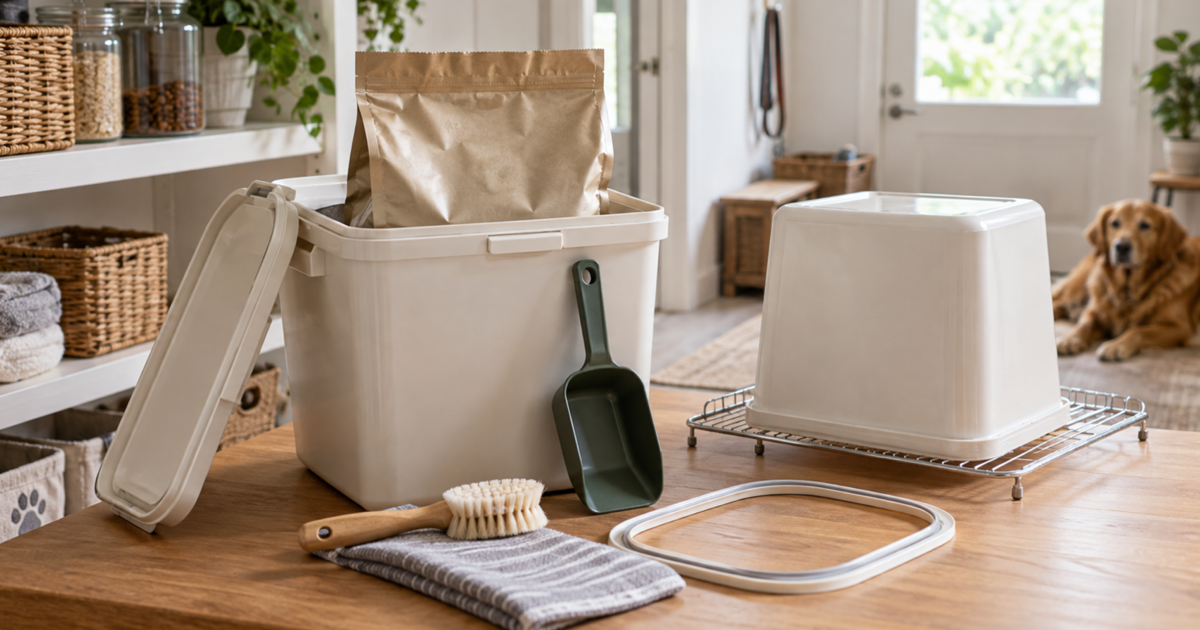
Pet food storage hygiene depends on more than closing a lid. The safest everyday system keeps the original package and its lot code, prevents hands and scoops from carrying moisture or dirt into the food, and makes the storage container easy to empty, wash, rinse and dry completely. For most dry food, place the closed original bag inside a clean secondary bin rather than pouring the food loose into it.
Choose a container that fits the whole bag, opens wide enough to clean every interior surface and has a lid and gasket that can be inspected without hidden crumb traps. Wash food-contact equipment as directed, let it dry fully, and never top a new bag over old crumbs. The routine matters as much as the container.
Practical rule: Keep the food identifiable, keep wet tools out, and start every new bag with a clean, fully dry storage system.
Why Pet Food Storage Hygiene Is a System
A storage bin cannot repair damaged packaging, reverse spoilage or make contaminated food safe. Its job is to add physical protection while preserving the information and handling controls that help owners detect problems.
The system has four parts:
1. Traceability: the product name, best-by date, lot number and manufacturer remain available.
2. Contamination control: clean hands and a dedicated dry scoop touch the food.
3. Environmental control: the package stays closed in a cool, dry place away from pests and household chemicals.
4. Cleanability: the bin, lid and scoop can be washed, rinsed, inspected and dried before reuse.
The U.S. Food and Drug Administration recommends keeping dry pet food in its original bag or container. If extra protection is needed, the whole bag can go inside a secondary container. This retains the packaging barrier and the identifiers needed for a complaint or recall.
Match the Storage Method to the Food
Different foods create different hygiene tasks. Always follow the product label when it is more specific than general guidance.
| Food format | Practical storage method | Main hygiene check |
|---|---|---|
| Dry kibble | Close the original bag and place it inside a clean secondary bin | Bag undamaged; bin and scoop clean and dry |
| Dry treats | Keep in the original resealable package or place that package in a secure container | Package closed; stored out of a pet's reach |
| Unopened cans or pouches | Store in a cool, dry location | No swelling, leaking, rust, severe dents or broken seals |
| Opened wet food | Cover and refrigerate promptly according to the label | Use within the stated period; discard questionable leftovers |
| Freeze-dried or dehydrated food | Follow the package instructions exactly | Prevent moisture entry; use a completely dry utensil |
Raw, fresh and lightly cooked diets require stricter temperature and cross-contamination controls than this dry-storage routine covers. Follow the manufacturer's instructions and veterinary guidance for those products.
Keep the Original Package and Lot Number
Pouring kibble into an attractive container can separate the food from its most useful evidence. The original bag identifies exactly what was purchased. FDA guidance on saving pet-food lot information explains why the lot number, best-by date, manufacturer and product code matter when reporting a suspected problem.
The simplest solution is bag-in-bin storage. Roll or seal the bag opening after each use, then close the outer lid. If the bag does not fit and food must be transferred, photograph or cut out the full product and lot details and keep them until the food is finished. Label the container with the opening date and product identity. Do not mix two formulas or production lots in one bin.
Avoid topping up. A layer of older crumbs and fat can remain below the new food, making age and identity unclear. Finish or remove the old batch, then clean and fully dry the container before adding another.
Choose Container Design for Cleaning, Not Appearance
An airtight claim is not enough. A container can close tightly yet be difficult to clean, easy to use with wet hands or too small for the original bag.
Use this design checklist:
- Wide, reachable opening: an adult hand and cleaning brush can reach the base, corners and underside of the rim.
- Simple interior: smooth, intact surfaces have fewer seams, grooves and hollow spaces that trap crumbs.
- Cleanable lid: hinges, latches and the gasket are visible and accessible under the manufacturer's cleaning instructions.
- Complete drainage: water does not pool inside a handle, double wall or deep channel.
- Full drying: the lid and body can remain open or inverted safely until no moisture is left.
- Stable placement: the container does not tip when the lid is opened or the bag becomes light.
- Correct capacity: the closed original bag fits without crushing the seal or preventing the lid from closing.
- Food-only use: the bin and scoop are never repurposed for cleaners, garden products, litter or waste.
Replace a container that is cracked, deeply scratched, warped, persistently odorous or impossible to clean. Check the maker's instructions before placing any part in a dishwasher; heat and detergent can damage products that are not labeled dishwasher-safe.
For a procurement-focused comparison of materials and seals, see Pet Food Storage Containers: Materials and Seal Quality. That guide addresses buyer evaluation; the routine here addresses household hygiene.
Use a Clean Scoop and Clean Hands
The scoop travels between the food, a person's hand and sometimes a counter or bowl. Treat it as food-contact equipment, not as a tool that lives loose inside the kibble.
The FDA's safe pet-food handling guidance advises washing hands before and after handling pet food, washing bowls and measuring utensils with soap and hot water after use, and using a dedicated scoop. Do not use the pet's bowl as a scoop.
Keep the clean scoop in a protected holder outside the food bag. If it falls on the floor, becomes wet or touches another product, wash it and dry it before the next use. A damp scoop can introduce moisture into dry food even when the storage bin itself looks clean.
Follow a New-Bag Changeover Routine
Use the same sequence whenever a bag is finished or the formula changes.
Before opening the new bag
1. Inspect the package for tears, moisture, pest damage or a broken seal.
2. Photograph the product name, lot number and best-by date.
3. Remove the empty bag and all visible crumbs from the bin.
4. Keep the new food closed while cleaning takes place.
Clean and inspect
1. Follow the container manufacturer's instructions.
2. Wash the bin, lid, gasket and scoop with suitable soap and water.
3. Scrub reachable corners and lid channels; do not ignore the gasket area.
4. Rinse away detergent and loosened residue.
5. Air-dry or use a clean towel, then leave parts open until completely dry.
6. Check for cracks, trapped residue, damaged seals and persistent odor.
The Centers for Disease Control and Prevention says to follow product instructions when cleaning pet supplies, scrub hard items with soapy water, rinse them and let them dry. Dishwasher cleaning is appropriate only when the item is dishwasher-safe.
Refill without mixing batches
Place the closed new bag inside the dry bin, or transfer only after saving its identifiers. Attach the clean, dry scoop outside the food. Close both the inner package and outer lid after each serving.
Daily disinfection is not a substitute for washing. Strong disinfectants can leave residue or damage some materials. If a food is recalled, follow the recall notice and the product maker's cleanup directions. FDA instructions during a specific aflatoxin-related pet-food recall, for example, included sanitizing food-contact items, then rinsing and drying them thoroughly. Treat such directions as event-specific, not as a default daily recipe.
Run a 30-Second Check at Each Feeding
Before scooping, look and smell. Stop using the food if you notice moisture, condensation, mould, insects, an unusual or rancid odor, damaged packaging, unexpected discoloration or a recalled lot. Do not try to save questionable dry food by removing only the visible portion.
Then check:
- hands and scoop are clean and dry;
- the bag matches the container label;
- the bag closes after serving;
- the lid sits correctly without food across its seal;
- no pet can open the bin or reach an empty flexible package; and
- the storage area is dry and separate from cleaners and pest-control products.
If a pet becomes ill after eating, stop feeding the suspected product, preserve the package and lot details, and contact a veterinarian. Report suspected food problems to the manufacturer and the relevant regulator. Storage hygiene reduces avoidable handling risks, but it cannot diagnose illness or confirm why food changed.
Final Household Checklist
- The original package and lot information remain available.
- The closed bag fits inside the secondary container.
- Every food-contact surface can be reached for cleaning.
- Lid parts and gaskets can be inspected and dried.
- The scoop is dedicated, protected, clean and dry.
- New food is never poured over old residue.
- The bin is washed, rinsed and dried between bags.
- Wet food is covered, refrigerated promptly and handled according to its label.
- Damaged packages, abnormal food and recalled lots are not fed.
- Suspected food-related illness leads to veterinary advice, not experimentation.
Good storage is a repeatable routine supported by sensible container design. A plain bin that keeps the original bag, cleans easily and dries completely is more useful than a stylish container that hides residue or loses traceability.
*This article provides general food-handling information and does not replace veterinary diagnosis or individualized nutrition advice.*
Sources and Further Reading
- Proper Storage of Pet Food and Treats — U.S. Food and Drug Administration
- Tips for Safe Handling of Pet Food and Treats — U.S. Food and Drug Administration
- Save Your Pet Food Lot Number — U.S. Food and Drug Administration
- About Cleaning and Disinfecting Pet Supplies — Centers for Disease Control and Prevention
- FDA Alert: Certain Lots of Pet Food Recalled for Aflatoxin — U.S. Food and Drug Administration
Frequently Asked Questions
Should dry pet food stay in its original bag inside a container?
Yes. Closing the original bag and placing it inside a clean secondary bin preserves the bag's barrier and lot information while adding protection from pests and accidental access.
How often should a pet food storage container be washed?
Wash, rinse and fully dry it between bags or formulas, and sooner after a spill, moisture entry or contamination. Follow the container manufacturer's care instructions.
Can new kibble be poured on top of old kibble?
No. Topping up mixes ages and lots and leaves old fat and crumbs beneath the new food. Empty the old batch, clean and dry the system, then start the new bag.
What features make a pet food container easy to clean?
Look for a wide opening, smooth reachable surfaces, accessible lid channels, inspectable gaskets and a shape that drains and dries completely without hidden cavities.
What should I do if stored pet food smells unusual?
Stop feeding it, preserve the package and lot number, check recalls and contact the manufacturer. If the pet is unwell, contact a veterinarian promptly.
Sources and References
- Proper Storage of Pet Food and Treats — U.S. Food and Drug Administration
- Tips for Safe Handling of Pet Food and Treats — U.S. Food and Drug Administration
- Save Your Pet Food Lot Number — U.S. Food and Drug Administration
- About Cleaning and Disinfecting Pet Supplies — Centers for Disease Control and Prevention
- FDA Alert: Certain Lots of Pet Food Recalled for Aflatoxin — U.S. Food and Drug Administration
About this article
ShineePets publishes practical, source-checked guidance for pet owners and pet-product professionals.
ShineePets is a commercial B2B pet-supply sourcing brand. Read our editorial standards and commercial disclosure.