Cat Care
How to Prepare a Cat for Stress-Free Travel
Quick answer
Prepare your cat for travel with carrier training, short practice trips, a safe travel kit, verified documents and a clear stress-response plan.
By ShineePets Editorial Team · Published · Updated
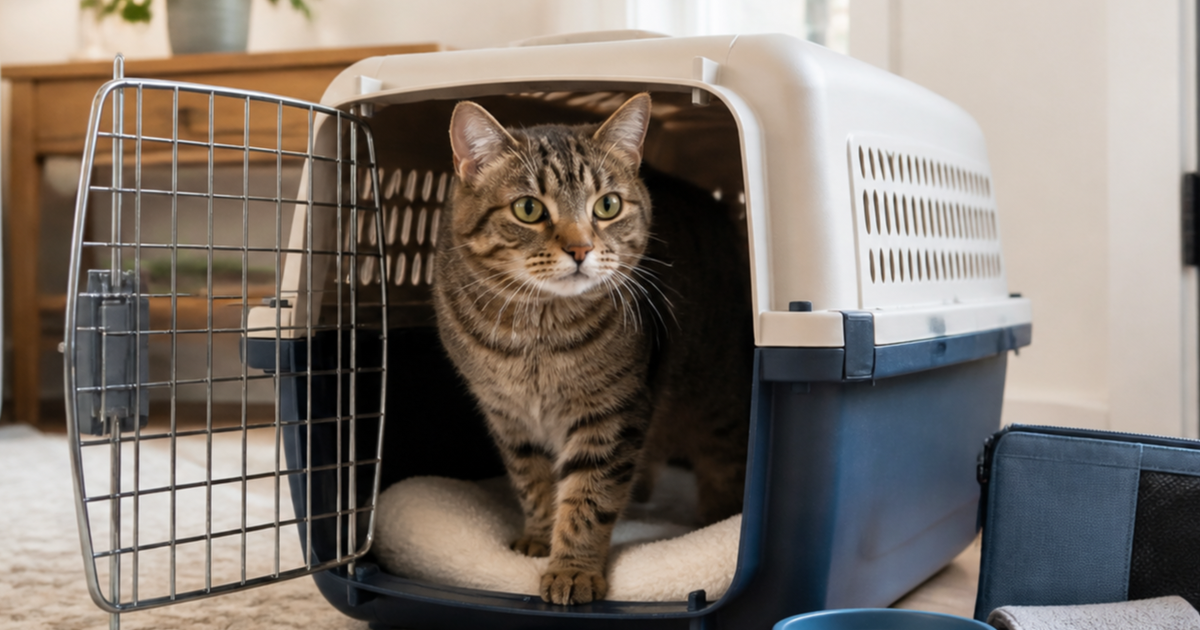
Stress-free travel with a cat cannot be guaranteed, but preparation can make the journey safer and far less frightening. The most useful steps are to make the carrier part of everyday life, teach the cat to enter voluntarily, rehearse movement and short vehicle sessions, and plan documents, temperature control and veterinary support before departure. Keep the cat secured in the carrier during transit and respond to distress instead of forcing the schedule.
Start early enough to move at the cat's pace. A cat that hides, freezes or refuses treats is communicating that the current step is too difficult. Return to an easier stage, reward calm behavior and build duration gradually.
Stress-Free Travel Starts With the Right Decision
First ask whether the cat needs to make the trip. A house move, veterinary visit or relocation may be unavoidable; an optional holiday may not justify the disruption for a cat that is intensely fearful or medically fragile. For long journeys, air travel, chronic illness or a history of motion sickness, discuss fitness to travel with a veterinarian before making non-refundable arrangements.
Clarify five facts at the start:
- travel mode and total door-to-door time;
- every destination and transit point;
- carrier size and transport-company rules;
- the cat's health, medication and previous travel response;
- access to water, litter and a secure private space on arrival.
For international travel, requirements are set by the destination and may include identification, vaccinations, tests, treatments and a health certificate. USDA APHIS advises travelers leaving the United States to check the destination requirements early because the process can take from weeks to months and requirements can change. Use the APHIS process overview for current U.S. export steps. Travelers departing elsewhere should use the corresponding official authority in their country of origin and destination.
Make the Carrier an Everyday Safe Place
Do not store the carrier until travel day. Leave it open in a quiet area where the cat already rests. Add familiar bedding, then reward voluntary investigation with a treat, play or calm attention the cat values. Feeding near the entrance can help some cats, but never withhold food to force entry.
Choose a stable carrier that is correctly sized, well ventilated and securely closed. A removable top or top opening can make handling easier. Our guide to soft, hard and backpack cat carrier types explains the product differences; training still matters whichever suitable design is chosen.
The 2022 AAFP/ISFM Cat Friendly Veterinary Interaction Guidelines recommend positive reinforcement for carrier training and note that carrier confinement, instability, movement and transportation can add to feline distress. They also emphasize minimizing visual, auditory and olfactory stressors. Read the peer-reviewed guidelines.
Use a progressive carrier-training ladder
Stay at each stage until the cat is relaxed before moving forward:
1. Carrier open, with the cat choosing whether to approach.
2. Cat entering for a reward while the door remains open.
3. Door closed briefly, then opened before distress appears.
4. Carrier lifted from underneath and set down smoothly.
5. Carrier carried a short distance inside the home.
6. Carrier placed in a parked car without starting the engine.
7. Engine running for a brief calm session.
8. Very short drive followed by a familiar, positive return home.
Keep sessions short and stop while the cat is still coping. Do not chase, scruff or push a struggling cat into the carrier as a training method. If urgent travel is unavoidable and the cat cannot be loaded safely, call the veterinary practice for handling guidance rather than risking escape or injury.
Learn the Cat's Stress Signals
Travel stress is easier to manage before it escalates. Observe the whole cat rather than relying on vocalization alone.
| What you see | What it may mean | Appropriate response |
|---|---|---|
| Looking around, accepting treats, changing position normally | Cat is alert and coping | Continue at the same difficulty or end positively |
| Crouching, wide pupils, ears turned back, repeated vocalizing, hiding | Rising fear or uncertainty | Reduce noise and movement; return to an easier step |
| Drooling, lip licking, vomiting or defecating | Possible nausea, fear or both | Pause training and ask a veterinarian about motion sickness before the trip |
| Frantic escape attempts or sustained agitation | Current setup exceeds the cat's ability to cope | Stop when safe; reassess carrier, handling and veterinary support |
| Open-mouth breathing, breathing difficulty, collapse or severe weakness | Potential emergency, not routine travel stress | Stop and seek urgent veterinary care |
Open-mouth breathing or panting in a cat can signal respiratory distress and warrants immediate veterinary attention. VCA's emergency guidance describes these warning signs. Never leave a cat in a parked vehicle; heat and poor ventilation can become dangerous rapidly.
Arrange Veterinary Support Without Improvising Medication
Ask the veterinarian for an individualized plan when a cat has severe fear, nausea, pain, respiratory disease or another condition that could affect travel. The plan may include prescription anti-anxiety or anti-nausea medication, but the product, timing and suitability must come from the veterinarian who knows the cat.
Do not give human medication, leftover pet medication, supplements or sedatives without veterinary instructions. If medication is prescribed, ask whether a supervised trial at home is appropriate so that the response is known before departure. Air carriers may have their own restrictions. IATA discourages sedatives and tranquilizers for animals traveling in the cabin or cargo hold because of possible adverse effects during transport. Review IATA's traveler guidance. A veterinarian can distinguish a treatment plan for anxiety or nausea from unsafe unsupervised sedation.
Prepare the Carrier and Travel Kit
Line the carrier with a familiar, washable layer over an absorbent pad. The bedding should not block ventilation or create loose loops. Pack supplies where they can be reached without opening the carrier in an unsecured place.
A practical kit includes:
- identification and current contact details;
- required health, vaccination and transport documents;
- a recent photo of the cat;
- prescribed medication in original labeled packaging;
- water, a familiar bowl and the cat's regular food;
- absorbent pads, spare bedding, waste bags and cleaning supplies;
- a compact litter setup for a long journey or overnight stop;
- veterinary and emergency-clinic contact details;
- destination address and a backup travel plan.
Attach identification securely, but do not cover ventilation. Keep digital and paper copies of critical documents. Confirm airline, rail, ferry, hotel and border rules directly; a booking platform's summary may be incomplete or outdated.
Follow a Calm Departure Routine
Maintain the cat's normal routine as closely as possible. Prepare documents, luggage and the vehicle before loading the cat so the carrier is not left waiting amid noise and repeated door opening.
Ask the veterinarian for feeding instructions appropriate to the cat, journey and health status. Do not apply a blanket fasting rule to kittens, cats with medical conditions or cats taking medication. Offer water according to the veterinary and carrier plan.
Place the cat in the carrier indoors with exterior doors and windows closed. Check every latch and zipper. Covering part of the carrier with a familiar light towel may reduce visual stimulation, but keep ventilation fully open and monitor temperature. Support the carrier from underneath with both hands so it stays level; do not swing it by the handle.
Keep the Carrier Stable During Car Travel
The cat should remain inside the closed carrier while the vehicle is moving. A loose cat can distract the driver, reach controls or escape when a door opens. Test the carrier's position before travel and follow the carrier manufacturer's restraint instructions. A restraint method should hold the carrier stable without crushing it or blocking airflow.
During the drive:
- keep the cabin comfortably cool and well ventilated;
- use smooth acceleration, braking and turns;
- limit loud music, shouting and strong fragrances;
- prevent direct sun from heating the carrier;
- never open the carrier beside an open vehicle door or window;
- stop safely if the cat shows escalating distress or illness.
For a long journey, plan secure stops and an escape-proof room for any necessary carrier opening. A roadside or parking area is not a safe place to transfer a cat between a carrier, harness or litter tray.
Check Air, Rail and Border Rules Separately
Transport rules are not interchangeable. Confirm carrier dimensions, weight limits, check-in location, documentation deadlines, weather restrictions and whether the cat can travel in the cabin. Recheck shortly before departure because operator policies can change.
At airport screening, staff may require the carrier to be inspected. Ask the airport or airline in advance how a cat can remain secure, and request a private screening room if available. Do not open the carrier in a public terminal without an agreed containment plan.
For international travel, verify every transit country as well as the final destination. The APHIS guidance makes clear that there is no single health certificate accepted by every country. Keep original endorsed documents with the traveler when required. Check the official process and current destination pages.
Help the Cat Settle After Arrival
Prepare one quiet room before opening the carrier. Close doors, windows and unsafe hiding gaps; set out water, litter, familiar bedding and the cat's usual food. Open the carrier and allow the cat to exit voluntarily. Delay introductions to unfamiliar people or animals until the cat has eaten, used the litter tray and begun exploring normally.
Keep the carrier available as a refuge. Monitor appetite, drinking, urination, defecation, breathing and behavior. Contact a veterinarian if concerning signs persist or if the cat has a medical condition affected by travel. Seek urgent care for breathing difficulty, open-mouth breathing, collapse, injury or severe weakness.
Stress-Free Cat Travel Checklist
Before departure, confirm:
- the trip is appropriate for this cat and a veterinarian has addressed relevant health concerns;
- current carrier, airline and destination rules are verified directly;
- the cat enters the carrier without force during practice;
- short lifting and vehicle sessions have been introduced gradually;
- the carrier is secure, ventilated, correctly sized and clearly identified;
- documents, water, bedding, cleaning supplies and prescribed medication are packed;
- the carrier has a stable position that does not block airflow;
- a quiet, escape-proof arrival room is ready;
- emergency veterinary contacts and an alternative plan are available.
Preparation should reduce stress, not hide it. If the cat repeatedly cannot cope with a training step, adjust the plan and involve a veterinarian rather than forcing progress.
*This article provides general cat-care information and does not replace veterinary diagnosis or an individualized travel plan.*
Sources and Further Reading
Frequently Asked Questions
How long does it take to train a cat for travel?
There is no fixed timeline. Progress depends on the cat's previous experiences and response at each stage. Begin as early as possible and advance only while the cat remains comfortable.
Should I cover my cat's carrier during travel?
A familiar light towel over part of the carrier may reduce visual stimulation, but ventilation must remain clear and temperature must be monitored.
Can two cats travel in the same carrier?
Use separate correctly sized carriers unless a veterinarian or transport authority gives a specific alternative. Travel stress can change how familiar cats respond to each other.
Should I sedate my cat for a flight?
Do not sedate a cat without veterinary direction. IATA discourages sedatives and tranquilizers during air transport because of potential adverse effects, and airlines may restrict their use.
What should I do if my cat pants during travel?
Stop safely and seek urgent veterinary advice. Open-mouth breathing or panting in cats can indicate respiratory distress and should not be treated as ordinary nervousness.
About this article
ShineePets publishes practical, source-checked guidance for pet owners and pet-product professionals.
ShineePets is a commercial B2B pet-supply sourcing brand. Read our editorial standards and commercial disclosure.