Small Pet Care
How to Prevent Boredom in Hamsters and Gerbils
Quick answer
Build a species-appropriate hamster or gerbil routine with burrowing, foraging, exercise, safe rotation, observation and clear health checks.
By ShineePets Editorial Team · Published · Updated
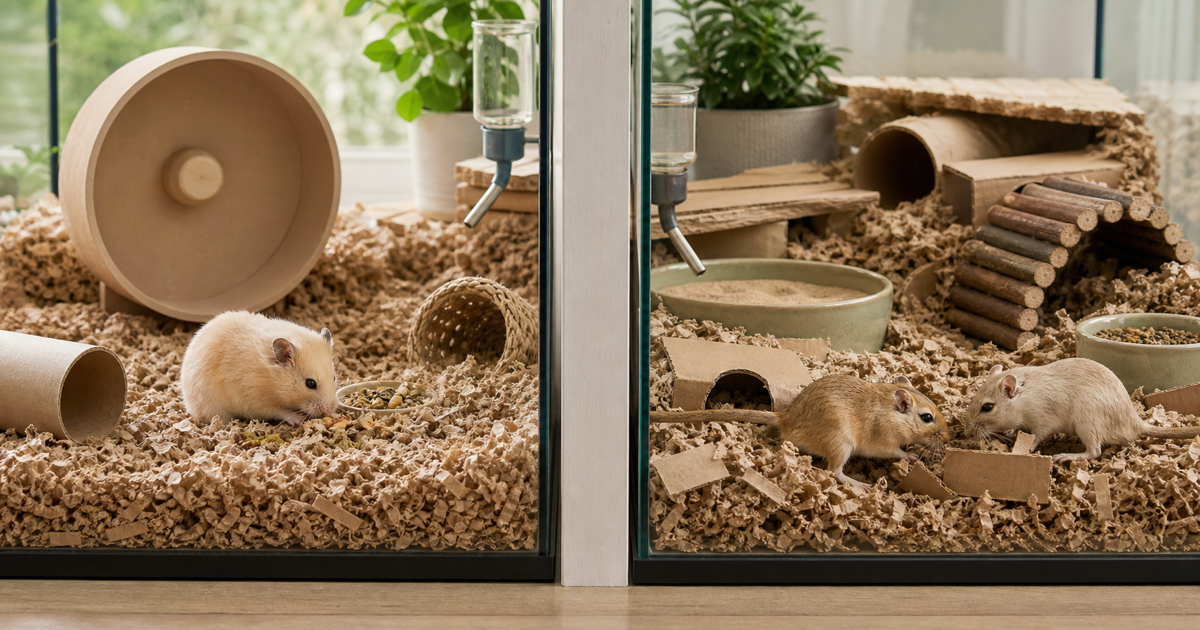
To prevent boredom in hamsters and gerbils, build the habitat around behaviors they are motivated to perform: burrowing, hiding, foraging, gnawing and moving through secure routes. Add a correctly sized solid-surface wheel, but do not treat it as the whole solution. Rotate small challenges while keeping the nest, burrows and familiar scent stable. Most importantly, respect the species difference: a hamster should not be given a cage mate simply as “enrichment,” while gerbils usually need an established, compatible same-species companion. Sudden inactivity, appetite loss or a major behavior change may signal illness rather than boredom and needs veterinary advice.
Key Takeaways
- Start with habitat functions, not a pile of toys: the animal needs places to dig, hide, search, chew and exercise.
- Provide a large, upright, solid-surface wheel without an exposed axle; keep other activities available as well.
- Let sleeping animals rest. Hamsters are commonly most active in the evening and at night.
- Keep hamsters and gerbils separate. Never place the two species together.
- Change one or two lightweight enrichment items at a time, then observe whether the change helps.
- Treat a sudden change in appetite, posture, breathing or normal activity as a health question, not a boredom diagnosis.
Prevent Boredom in Hamsters and Gerbils by Designing for Behavior
“Boredom” is a useful everyday word, but it is not a medical diagnosis. Repetitive escape attempts, persistent bar biting, prolonged corner digging or inactivity during the animal's normal waking period can suggest that the environment deserves review. The same behavior can also occur with stress, fear, pain or illness, so context matters.
The RSPCA's hamster behavior guidance recommends opportunities to run, dig, burrow, forage and explore, while allowing uninterrupted daytime sleep. Its gerbil environment guidance similarly emphasizes deep substrate, hiding places, safe gnawing materials and exercise. A good plan therefore begins with the enclosure itself and adds challenges that support normal behavior.
First, Do Not Treat Hamsters and Gerbils as the Same
The two animals may use similar enrichment materials, but their social and daily patterns are different.
| Decision | Hamsters | Gerbils |
|---|---|---|
| Social housing | Do not add another hamster merely to solve boredom. Housing compatibility depends on species and history, and adult hamsters can fight. | Gerbils are social and are generally kept in a stable, compatible same-sex pair or established group. Do not casually introduce an unfamiliar adult. |
| Active period | Often most active in the evening and at night; daytime sleep should not be interrupted. | May show activity in shorter periods across day and night. |
| Strong habitat priorities | Secure nesting, burrowing, foraging, routes and individual exercise. | Deep connected burrows, shredding and gnawing, routes, exercise and stable same-species social contact. |
| Change tolerance | Preserve the sleeping area and introduce changes gradually. | Preserve familiar scent and burrow structure; a total redesign can be disruptive. |
The RSPCA's gerbil company guidance advises stable same-sex companionship and warns against housing gerbils with other species. It also notes that unfamiliar adults can be aggressive. If a gerbil is alone because a companion died or because of a medical or behavioral issue, seek species-experienced advice before attempting an introduction.
Build Five Habitat Functions Before Buying More Toys
1. A stable burrowing zone
Give the animal a deep, compactable substrate in which tunnels can hold their shape. Place heavy items on secure platforms or the enclosure base so digging cannot undermine them. For hamster-specific material choices and setup, see our hamster bedding guide.
2. More than one secure retreat
Provide a dark nest or chamber plus covered routes and hiding points. Gerbil pairs should have enough usable shelter and routes to avoid one animal trapping the other. Openings must be large enough for the animal to pass without getting stuck.
3. Safe movement
Use a wheel with a continuous running surface, no exposed axle and enough diameter for a natural posture rather than a sharply curved back. Merck Veterinary Manual's hamster housing guidance recommends a solid running surface and also lists tubes and boxes as exercise opportunities. Check the wheel regularly for wobbling, chewing damage and trapped bedding.
4. Food searching
Use part of the animal's measured daily ration for scatter feeding, paper parcels or simple hidden-food searches. Begin with easy finds. Increase difficulty only when the animal completes the task without persistent frustration. Food enrichment should redistribute the normal diet, not silently add extra calories.
5. Gnawing and shredding
Plain cardboard, untreated species-appropriate wood and paper can provide manipulation and nesting material. Remove staples, tape, adhesive labels, glossy coatings, threads and parts that could be swallowed or entangle feet. Replace items when they become soiled, sharp or unstable.
Use a Species-Appropriate Enrichment Menu
For a hamster, a practical weekly menu can include scattered food, a folded paper parcel, a cardboard tunnel, a sand area, a stable climbing step and a secure playpen session when the hamster is already awake. Supervise out-of-enclosure exploration and block drops, gaps, cords and access by other pets. Do not use an exercise ball: it limits the animal's control over hiding, stopping and investigating.
For gerbils, emphasize deep digging material, connected tunnels, plain cardboard to shred, chew-safe structures, a sand bath and multiple routes. A bonded pair may investigate and work on materials together, but duplicate key resources if one animal guards access. Watch for chasing, blocking, squeaking, wounds or one gerbil being excluded from food, water or the nest.
When choosing a puzzle or moving toy, start below the maximum challenge level. Our guide to choosing interactive pet-toy difficulty explains how to increase complexity only after the animal can use the easier version safely.
Avoid fluffy cotton-style nesting fiber, wire or mesh running surfaces, very small wheels, sharp-edged homemade items, chemically treated wood, adhesive-rich packaging and plastics that are being chewed into pieces. No material or toy is automatically safe without correct sizing, setup and inspection.
Rotate the Challenge, Not the Whole Habitat
Frequent total cleaning and complete rearrangement can remove familiar scent, destroy burrows and turn enrichment into disruption. Instead:
1. Keep the sleeping area, main burrow zone, water and wheel location stable.
2. Change one or two lightweight items, such as a cardboard shape or forage location.
3. Introduce the change during the animal's normal waking period.
4. Observe approach, avoidance, use and any repeated frustrated behavior.
5. Keep a successful item, simplify an ignored task, or remove anything that causes risk.
For gerbils, retain a portion of clean familiar bedding during routine cleaning when hygiene allows. The RSPCA advises preserving familiar scent because a completely unfamiliar-smelling environment can cause stress. Hygiene still comes first when bedding is wet, contaminated or unsafe.
Run a Seven-Day Enrichment Audit
A short observation log is more useful than guessing. For seven days, record:
- when the animal wakes without being disturbed;
- time spent digging, foraging, gnawing, running and resting;
- which items are used and which are ignored;
- repetitive bar biting, corner digging, pacing or escape attempts;
- food and water intake, droppings and visible hoards;
- interactions between gerbil companions, including access to resources;
- any sudden change in posture, breathing, movement or response to handling.
Change only one major variable during the audit. If scatter feeding increases searching and reduces repeated bar attention, keep it and reassess. If a puzzle is ignored, make access easier rather than adding more parts. If a gerbil repeatedly digs at a corner despite an otherwise active routine, review substrate depth, tunnel stability and access to a covered retreat.
A peer-reviewed study indexed by PubMed linked stereotypic digging in laboratory gerbils with development in housing that lacked a suitable retreat structure. The finding does not diagnose an individual pet, but it supports checking whether the habitat allows the digging sequence to end in a functional burrow or shelter.
Know When the Problem May Be Medical
Do not wait on enrichment experiments when behavior changes suddenly. Contact a veterinarian promptly if a hamster or gerbil stops eating, produces markedly fewer droppings, loses weight, sits hunched, seems unusually weak, has diarrhea, shows a swollen abdomen, is injured, or has difficulty breathing. Dental disease can also reduce eating even when the animal approaches food.
The RSPCA gerbil health guide recommends daily observation and veterinary advice for changes in eating, drinking, droppings, behavior or appearance. Merck Veterinary Manual likewise lists appetite loss, inactivity, weight loss, abnormal posture and breathing difficulty among signs of illness in hamsters. Small animals can deteriorate quickly; a sudden quiet animal is not necessarily a bored animal.
Common Mistakes That Reduce Enrichment Value
- Waking a hamster for scheduled play. Work with the animal's natural waking period instead.
- Using a wheel as the only activity. Running does not replace digging, hiding, foraging and chewing.
- Adding a companion without species-specific planning. This can cause serious fighting in hamsters or an unsafe introduction in gerbils.
- Overfilling the habitat with objects. Enrichment should not block floor routes, ventilation, water or access to retreats.
- Changing everything at once. The owner cannot identify what helped, and the animal loses familiar structure.
- Hiding too many treats. Food puzzles should use part of the normal ration.
- Ignoring wear. Cardboard, wood, wheels, platforms and fasteners need repeated inspection.
Final Daily Checklist
- Let the animal sleep undisturbed and observe it during its normal waking time.
- Confirm access to water, food, a secure retreat, stable substrate and a safe wheel.
- Offer at least one opportunity to forage and one to gnaw or shred.
- Check that heavy furniture cannot collapse into a burrow.
- Watch gerbil companions for normal shared use rather than blocking or aggression.
- Remove damaged, wet, sharp or swallowable items.
- Record sudden changes and seek veterinary help when health signs are present.
Effective enrichment is not about constant novelty. It is a stable, species-appropriate habitat with small, testable challenges that let the animal control how it digs, hides, searches, chews and moves.
*This article provides general small-pet care information and does not replace veterinary diagnosis or individualized advice from a species-experienced professional.*
Sources and Further Reading
- Hamster Behaviour — RSPCA
- Creating the Right Home for Gerbils — RSPCA
- Gerbils Living Together — RSPCA
- Gerbil Health and Welfare — RSPCA
- Providing a Home for a Hamster — Merck Veterinary Manual
- Disorders and Diseases of Hamsters — Merck Veterinary Manual
- Stereotypies Resulting From a Deviation in the Ontogenetic Development of Gerbils — PubMed
Frequently Asked Questions
Can hamsters and gerbils live together?
No. They are different species with different social and communication needs and must have separate enclosures. Never introduce one as a companion for the other.
Is a running wheel enough enrichment for a hamster or gerbil?
No. A correctly sized solid-surface wheel supports movement, but the habitat should also allow burrowing, hiding, foraging, gnawing and secure exploration.
How often should I change hamster or gerbil enrichment?
Change one or two lightweight items at a time, often about weekly, and let the animal's response guide the schedule. Keep the nest, main burrow structure and essential resources stable.
Why does my gerbil keep digging in one corner?
Short digging bouts can be normal. Persistent, repetitive corner digging suggests reviewing substrate depth, tunnel stability and access to a covered retreat; seek veterinary advice if it is sudden or occurs with health changes.
Should I wake my hamster for playtime?
No. Let the hamster wake naturally and offer enrichment during its active period. Repeated daytime disturbance can disrupt normal sleep and create stress.
Sources and References
- Hamster Behaviour — RSPCA
- Creating the Right Home for Gerbils — RSPCA
- Gerbils Living Together — RSPCA
- Gerbil Health and Welfare — RSPCA
- Providing a Home for a Hamster — Merck Veterinary Manual
- Disorders and Diseases of Hamsters — Merck Veterinary Manual
- Stereotypies Resulting From a Deviation in the Ontogenetic Development of Gerbils — PubMed
About this article
ShineePets Editorial Team creates evidence-informed pet care and product guidance for global readers.
ShineePets is a commercial B2B pet-supply sourcing brand. Read our editorial standards and commercial disclosure.