Small Pet Care
Rabbit Litter Training: Setup, Tools and Daily Care
Quick answer
Set up and maintain a rabbit litter station with the right tray, safe litter, hay placement, training steps, daily cleaning and health checks.
By ShineePets Editorial Team · Published · Updated
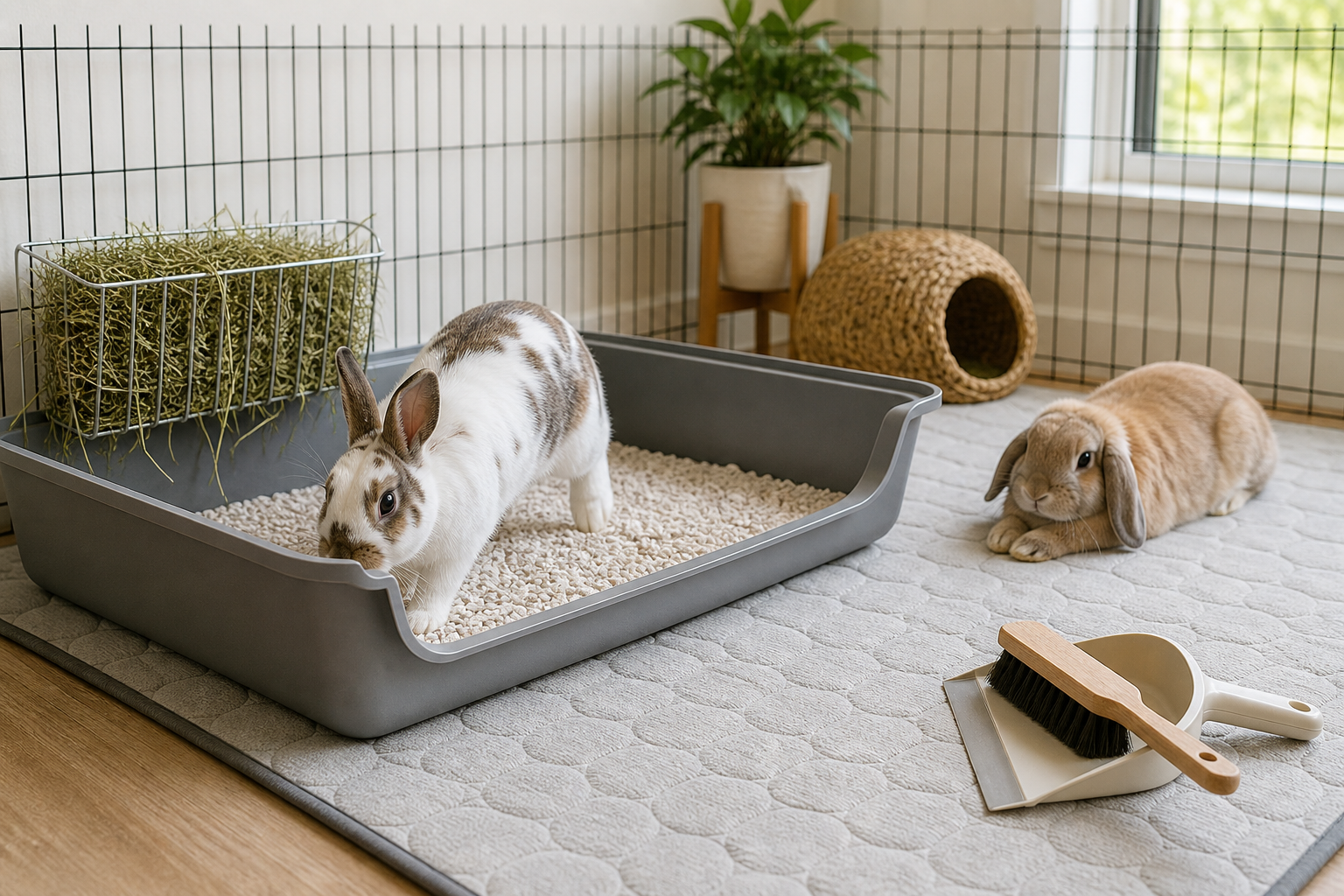
Rabbits are naturally tidy animals, and many choose one or two regular toilet corners without being taught. Litter training works best when owners build on that behavior instead of trying to force a rabbit to use a convenient but unfamiliar location.
A good litter setup is more than a small tray. It needs enough room, a comfortable entrance, rabbit-safe litter, reliable hay access and a cleaning routine that protects both hygiene and the rabbit's sense of security.
Quick recommendation: Put a large, low-entry tray in the corner your rabbit already uses, add a thin layer of non-clumping paper litter, provide fresh hay within easy reach and reward calm tray use without punishment.
What Litter Training Can and Cannot Do
Litter training can concentrate most urine and many droppings in predictable places. It makes daily cleaning easier and helps owners notice changes in urine, droppings and appetite.
It does not mean that every dry dropping will always land in the tray. Rabbits may leave occasional pellets while exploring, resting or marking territory. Young, unneutered, newly adopted or recently bonded rabbits may also be less consistent.
The aim is a reliable, low-stress toilet routine, not a perfectly spotless floor.
Start With the Rabbit's Chosen Corner
Watch where the rabbit naturally urinates and leaves clusters of droppings. This is usually the best place for the first tray. Moving the tray to a location that only suits the room layout can slow training.
If the rabbit uses two corners, begin with two trays. Once habits are stable, you can test whether one tray can be removed. Rabbits should have access to a toilet area at all times.
Avoid placing the tray:
- In a narrow route where another rabbit can block access
- On a slippery or unstable surface
- Next to loud appliances or busy doorways
- Where a dog, cat or child can disturb the rabbit
- So far from the rabbit's main area that it is inconvenient to reach
The toilet area should be separate from the sleeping area, while still remaining easy to access.
Choose a Tray That Is Large Enough
A common training problem is a tray that is too small. The rabbit should be able to enter, turn around and sit with all four feet inside. A bonded pair that shares a tray needs enough room for both rabbits without crowding.
PDSA recommends a box at least twice as long as the rabbit. A large open cat litter tray or shallow storage box can work if the material is sturdy and the edges are smooth.
Useful features include:
- A low entrance for easy access
- Higher back and side walls to contain urine and litter
- A stable base that does not flex or slide
- Smooth corners that are easy to clean
- No lid, door flap or tight enclosed roof
- No loose pieces that can be chewed or swallowed
For an older rabbit or one with arthritis, a cut-down entrance may be easier. Sand any altered edge until it is completely smooth, or choose a purpose-made low-entry tray. Sudden reluctance to step into a familiar tray deserves veterinary attention.
Use Rabbit-Safe Litter
Rabbits investigate with their mouths, so litter must be safe if a small amount is nibbled. Use a thin absorbent layer rather than filling the tray deeply.
Suitable starting options include:
- Unscented paper-based pellets
- Shredded plain paper
- Soft straw
- A rabbit-safe, non-clumping and non-expanding litter
Avoid scented litter, clay litter, clumping cat litter and expanding products. These may create dust or present a risk if swallowed. PDSA and RWAF also advise avoiding wood shavings or pine-based litter.
Do not confuse the toilet substrate with a digging box. Soil or sand used for supervised digging should be provided separately so the rabbit has a clear toilet location.
Put Hay Beside or Over the Tray
Rabbits often eat hay while toileting. This natural pattern can make a well-designed hay station one of the most effective litter-training tools.
Place fresh hay:
- In a secure rack immediately beside or partly over the tray
- In one clean end of an oversized tray
- At a height the rabbit can reach without stretching or trapping its head
Check that the rack has no dangerous gaps and cannot fall. Remove wet or soiled hay promptly. Hay should remain fresh, dry, dust-free and available throughout the day; litter training should never reduce hay access.
The Rabbit Housing Basics: Space, Flooring and Enrichment guide explains how the toilet area fits into a complete rabbit living space.
The Basic Training Process
Step 1: Prepare a Safe Training Area
Start in the rabbit's usual enclosure or a manageable section of the exercise area. The space can be temporarily limited, but it must still meet the rabbit's welfare needs for movement, rest, food, water, hiding and companionship.
Do not confine a rabbit in a tiny cage to speed up training.
Step 2: Place the Tray in the Preferred Corner
Put the prepared tray exactly where the rabbit already urinates. If necessary, protect the surrounding floor with a washable, non-slip mat.
Step 3: Add a Familiar Scent Cue
Move a few dry droppings into the tray. If the rabbit urinates on plain paper, place a small piece of the urine-marked paper under the clean litter. The familiar scent helps identify the tray as a toilet.
Do not leave the tray heavily soiled. A small scent cue during early training is enough.
Step 4: Add Fresh Hay
Make sure the rabbit can eat hay comfortably while sitting in or beside the tray. Refresh it often so the training area stays inviting.
Step 5: Reward Calm Use
Offer quiet praise or a small portion of the rabbit's normal daily food allowance when the rabbit enters or toilets in the tray. Keep the reward calm and immediate.
Never shout, chase, spray water or push the rabbit into the box. Punishment can create fear without teaching the desired location.
Step 6: Expand Space Gradually
When tray use is consistent, open a little more space. Add another tray if the rabbit selects a new toilet corner. Increase access in stages instead of opening the whole home at once.
If accidents increase after expansion, reduce the area slightly, review tray placement and progress more slowly.
Helpful Tools for the Setup
A simple litter station usually needs:
- One large tray per rabbit plus an extra tray, especially across multiple rooms
- Rabbit-safe absorbent litter
- Fresh feeding hay and a secure hay rack
- A washable, non-slip floor protector
- Paper towels or washable cloths for accidents
- An unscented rabbit-safe cleaner
- A dedicated hand brush and dustpan stored out of reach
- A covered waste container positioned outside the rabbit area
Tools should reduce work without adding hazards. Keep cleaners, waste bags, brushes and electrical devices where rabbits cannot chew or reach them.
Daily Litter Care
Check the litter area at least daily. A practical routine is:
1. Remove very wet litter and heavily soiled hay.
2. Add fresh rabbit-safe litter where needed.
3. Replace any hay that is damp, dirty or stale.
4. Wipe urine from the tray rim and surrounding mat.
5. Check that the tray entrance and hay rack remain secure.
6. Observe urine volume, droppings and the rabbit's willingness to eat.
7. Wash hands after cleaning.
Clean the tray thoroughly on a regular schedule, often daily or as soon as it becomes wet or smelly. The exact frequency depends on tray size, number of rabbits and litter absorbency.
Use a mild, unscented rabbit-safe cleaner, rinse well and dry the tray before refilling it. Avoid strongly perfumed products that may irritate the rabbit or make the toilet area smell unfamiliar.
Cleaning Accidents Without Creating Fear
Blot urine promptly and clean the area with an unscented pet-safe product suitable for the flooring. Keep the rabbit away until the surface is rinsed if required and fully dry.
Move loose droppings to the litter tray during early training. Do not react dramatically. An accident is information: the tray may be too far away, too small, too dirty, difficult to enter or positioned in the wrong place.
Protect valuable flooring with a washable waterproof layer rather than allowing repeated soaking. Avoid loose plastic sheets that can be chewed.
Training Bonded Rabbits
Bonded rabbits may share a large litter tray, but they should not be forced to compete for access. RSPCA guidance recommends one tray per rabbit plus one extra, which is especially useful in large or multi-level living areas.
Check that:
- Both rabbits can enter and leave freely
- One rabbit cannot trap the other against a wall
- The tray and hay supply are large enough for simultaneous use
- Each main area has a nearby toilet option
- Changes in droppings or urine can still be monitored
A sudden increase in marking can occur after moving home, rearranging furniture, introducing new smells or changing the social group. Restore familiar layouts and expand territory slowly.
Neutering and Litter Habits
Unneutered rabbits are more likely to spray urine or mark territory with droppings. PDSA, RSPCA and RWAF note that neutered rabbits are often easier to litter train.
Neutering is a veterinary procedure with individual timing and health considerations. Discuss it with a rabbit-experienced veterinarian rather than treating it as a simple training shortcut. Hormonal behavior may also take time to settle after the procedure.
Why a Rabbit May Stop Using the Tray
Common setup-related causes include:
- The tray was moved
- The litter type or scent changed
- The tray is too small or difficult to enter
- The tray is too dirty
- The rabbit has gained access to a new preferred corner
- Another rabbit blocks the tray
- The home, furniture or social group changed
- The rabbit dislikes an enclosed or noisy location
Return to the last successful setup, add a tray where accidents occur and make changes one at a time.
When Accidents May Signal a Health Problem
A previously reliable rabbit that suddenly urinates or defecates outside the tray may be uncomfortable or unwell. Possible concerns include pain, arthritis, urinary problems or difficulty moving into the box.
Contact a rabbit-experienced veterinarian promptly if you notice:
- Straining or repeated attempts to urinate
- Blood-colored urine that is unusual for the rabbit
- Wet fur or urine scald around the hindquarters
- Very small, misshapen or sharply reduced droppings
- No droppings, no appetite or reduced hay eating
- Lethargy, hunched posture or tooth grinding
- A sudden inability to enter the tray
- A major change in drinking or urination
A change of tray or litter is not a substitute for veterinary assessment. Rabbits can deteriorate quickly when eating or toileting stops.
Troubleshooting Common Problems
The Rabbit Sleeps in the Tray
This can be normal if the tray is comfortable and clean. Make sure a separate dry, quiet resting area is available and keep the litter station hygienic.
The Rabbit Digs Out the Litter
Use only a thin litter layer, try a heavier tray and provide a separate digging box. Do not add a wire grate, because hard or mesh flooring can harm rabbit feet.
The Rabbit Urinates Beside the Tray
The rabbit may be positioning the body inside while the tail remains outside. A larger tray with a higher back can help. For mobility-limited rabbits, keep the entrance low while protecting the rear and side walls.
The Rabbit Uses Several Corners
Place trays in those corners first. After habits stabilize, test removing the least-used tray one at a time.
The Rabbit Rejects New Litter
Return to the familiar safe substrate, then mix in a small amount of the new litter over several changes. Never force a sudden switch when the existing material is safe.
Setup Checklist
Before starting, confirm:
- [ ] The tray is in the rabbit's chosen toilet corner.
- [ ] The rabbit can turn around with all four feet inside.
- [ ] The entrance is comfortable and the tray does not slide.
- [ ] The litter is unscented, non-clumping and non-expanding.
- [ ] Clay, scented litter and loose wood shavings are excluded.
- [ ] Fresh hay is available safely beside or over the tray.
- [ ] The rabbit retains adequate living and exercise space.
- [ ] Bonded rabbits have enough trays and cannot block access.
- [ ] Cleaning tools and chemicals are stored out of reach.
- [ ] Accidents will be cleaned calmly without punishment.
- [ ] Changes in urine, droppings or appetite will be taken seriously.
Final Takeaway
Successful rabbit litter training begins with observation. Use the corner the rabbit already prefers, provide a large and accessible tray, choose rabbit-safe litter and connect the station with fresh hay. Clean it often enough to stay hygienic while keeping the routine familiar.
Progress may slow during adolescence, bonding, moves or household changes. Stay patient, adjust the setup and avoid punishment. Most importantly, treat a sudden loss of litter habits as a possible health or mobility signal, not simply bad behavior.
Frequently Asked Questions
Can every rabbit be litter trained?
Many rabbits can learn to use a litter tray because they naturally choose regular toilet areas. Consistency varies with age, neuter status, environment, health and individual behavior, and occasional dry droppings outside the tray are normal.
What litter is safest for rabbits?
Use an unscented, non-clumping and non-expanding rabbit-safe material such as paper-based pellets or shredded plain paper. Avoid clay, clumping, scented and expanding litters, as well as loose wood shavings or pine-based products.
How large should a rabbit litter tray be?
The rabbit should be able to enter, turn around and sit with all four feet inside. PDSA recommends a tray at least twice as long as the rabbit, with a low entrance and higher back or sides where practical.
Why should hay be placed near the litter tray?
Rabbits commonly eat hay while toileting. Providing fresh hay in a safe rack beside or partly over the tray encourages natural behavior and can make the litter station easier to learn.
Why has my litter-trained rabbit started having accidents?
Check whether the tray moved, became dirty, is difficult to enter or is being blocked by another rabbit. Sudden changes can also indicate pain, arthritis or urinary illness, so contact a rabbit-experienced veterinarian if the change persists or is accompanied by appetite, urine or dropping changes.
Sources and References
About this article
Practical, evidence-informed pet care guidance from the ShineePets Editorial Team.
ShineePets is a commercial B2B pet-supply sourcing brand. Read our editorial standards and commercial disclosure.