Bird Care
Safe Bird Toy Materials: Wood, Rope, Metal and Plastic
Quick answer
Compare wood, rope, metal and plastic bird-toy components by source, construction, breakage and the individual bird's behavior.
By ShineePets Editorial Team · Published
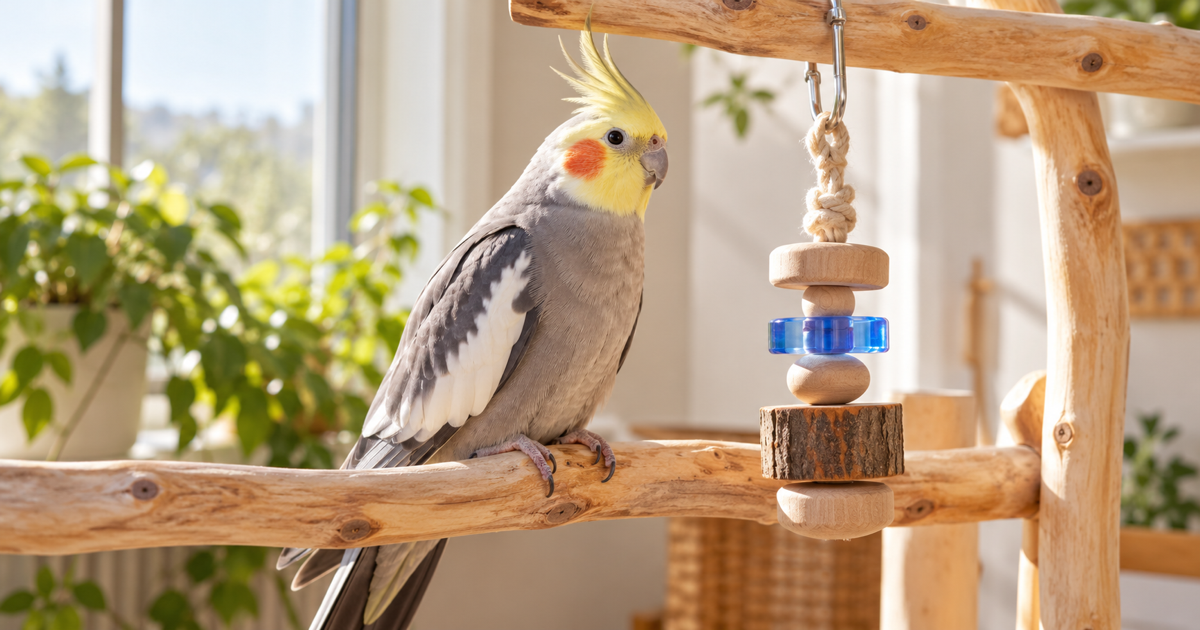
Safe bird toy materials are not a list of four substances that are always acceptable. Untreated, correctly identified wood can provide a satisfying item to shred; short natural-fiber rope can support climbing; suitable stainless-steel fittings can hold parts together; and hard acrylic can work where the bird cannot break or swallow it. Each choice fails when the construction creates loose fibers, trapping gaps, toxic metal exposure or small fragments. Choose for the *individual bird's* size and beak strength, inspect every connector, and watch how the bird uses a new toy. The Association of Avian Veterinarians (AAV) emphasizes that no toy is safe for every bird and that even an otherwise suitable material becomes unsafe if swallowed in pieces.
This guide is for owners choosing non-food toys for companion birds. It complements our bird-enrichment guide, which covers daily foraging, movement and social opportunities rather than a material-by-material buying decision.
Safe Bird Toy Materials Start With the Whole Assembly
A wooden block on a hanging toy may be appropriate, while its chain, clasp or exposed string is not. Assess the whole object in the order a bird encounters it: mounting point, connector, cord, main body, seams and every detachable detail. An attractive label such as “natural,” “pet-safe” or “durable” does not disclose wood species, treatment, metal grade or how parts are fixed.
| Material | Potential use | Question that decides suitability | Stop-use signal |
|---|---|---|---|
| Identified, untreated wood | Chewing and shredding | Is the source known, clean, pesticide-free and appropriate for this bird? | Sharp splinters, mold, unknown coating or easily swallowed pieces. |
| Short natural-fiber rope | Climbing or holding toy parts | Can the bird pull fibers loose or catch a foot in a loop? | Fraying, long strands, new loops or deliberate fiber swallowing. |
| Stainless-steel hardware | Hanging and joining parts | Is the grade identified, connector closed and edge smooth? | Loose clasp, open link, corrosion, exposed wire or unknown plating. |
| Hard acrylic or similar rigid plastic | Washable puzzle or manipulative part | Can this beak crack it or detach a small piece? | Chips, sharp cracks, weak hinges or missing fragments. |
This is a screening table, not a certification. AAV's basic-care guidance supports carefully selected chewable branches, natural-fiber rope and soft white pine, while World Parrot Trust advises checking new toys for places that trap toes, legs or heads.
Wood: Verify Source and Finish Before Calling It a Chew Toy
Wood is useful precisely because many birds can work it apart. That also means the source and resulting pieces matter. Prefer a toy whose maker names the wood or a branch whose identity and treatment history you can confirm. Look for clean, untreated, pesticide-free material without paint, varnish, glue residue, staples or embedded wire. AAV recommends clean, pesticide-free natural branches for perches and names soft white pine among chewable toy materials; the RSPCA suggests untreated wood and safe, unsprayed branches for parrot enrichment.
Do not turn an unidentified garden cutting or scrap of painted furniture into a toy merely because it is “natural.” Plant and wood suitability varies; when the species or treatment is uncertain, ask an avian veterinarian before offering it. For a small bird, check whether blocks are manageable without swallowing hardware or tiny attached beads. For a stronger-beaked parrot, inspect whether the toy's core, screws or wire become exposed once the wood is removed.
Shredding is the intended use for some wooden toys, but it does not justify leaving sharp splinters, moldy surfaces or pieces the bird repeatedly tries to swallow. Inspect the newly exposed interior after chewing. Replace the wood component when safe use is no longer possible; do not patch an uncertain finish with household glue or tape.
Rope: Natural Fiber Still Needs a Short, Inspectable Design
Rope is not automatically unsafe, but its geometry and the bird's behavior determine whether it remains appropriate. Choose a product that identifies its fiber, uses short lengths and avoids large loops. Natural-fiber rope is listed as a chewable material by AAV; RSPCA guidance specifically suggests short natural-fiber cord for parrots. This is not permission to leave a bird with loose, unraveling fibers.
Run fingers along the rope before installation. Look for unraveling ends, knots that loosen, gaps that could encircle a toe and places where the rope rubs against metal. Watch the bird's first session: climbing, pulling and shredding are different from swallowing strands. World Parrot Trust's toy-safety guidance calls for daily inspection of hanging toys and removal when rope frays, loops appear or parts break down.
If the bird pulls long strands free or seems to ingest them, remove the toy rather than trimming only the most obvious fiber. A fresh cut can start unraveling again; a safer response is a different construction without rope. If a foot or leg becomes entangled, do not yank the toy away or pull a tightened strand: keep the bird calm and seek urgent avian-veterinary help if there is constriction, injury or difficulty releasing it.
Metal: The Connector Matters as Much as the Main Toy
Metal is most often encountered as a hanger, chain, bell or fastener. Prefer clearly identified stainless-steel components with smooth, closed edges and a connection the bird cannot unscrew. World Parrot Trust favors screw-closed stainless-steel quick links over spring-loaded clasps because the latter can trap toes and beaks. Check the quick link after mounting and during routine inspections; no fastener stays safe just because it was closed on day one.
Unknown “silver-color” metal is not the same as identified stainless steel. Avoid offering galvanized or zinc-coated hardware, lead-containing solder, lead weights and soft, bendable mystery metal as chewable toy parts. AAV's household-danger guidance identifies lead in poorly designed bird toys and zinc in galvanized hardware as poisoning hazards when ingested. Coatings can hide the underlying metal; if the seller cannot identify a component, choose another design or consult your avian veterinarian.
Reject open chain links, accessible bell clappers and clips that can catch a beak or foot. Examine the point where metal passes through wood or acrylic: chewing may reveal a sharp end that was hidden when the toy was new. Do not improvise replacements from key rings, jewelry findings or hardware-store parts with unknown metal composition.
Plastic: Judge Breakage, Not Just the Word on the Label
Hard acrylic can be useful for a washable puzzle or manipulative component if the bird cannot crack it, release small pieces or reach sharp edges. AAV lists acrylic alongside stainless steel as a material that is too hard to chew, but it warns against soft plastics a bird can chew apart and against swallowing pieces of any toy. AAV's material guidance therefore supports a conditional choice, not a blanket claim that all plastic is acceptable.
Before buying, flex moving joints gently, examine drilled holes and seams, and ask whether replacement parts are available. A thin wall, brittle hinge or loose cap can matter more than the main plastic shell. During first use, watch whether the bird manipulates the item or shaves off material. Remove it if a chip appears or a small part can detach. An intact toy for a smaller, gentler bird may be a poor match for a larger bird with a more powerful beak.
For food-contact puzzles, check that every cavity can be washed, rinsed and dried. Do not use a cracked item: damage creates hard-to-clean crevices and can expose sharp edges. Keep melted or heated plastic and household packaging out of bird play areas; they are not substitutes for a purpose-designed toy.
A Five-Minute Purchase and Installation Check
Apply the same sequence to a shop purchase, a gift and a homemade toy:
1. Identify the bird and use. Is it a foot toy, hanging chew, climbing item or food puzzle? Check the maker's intended bird size and the strength of the actual bird's beak.
2. Request material identity. Record wood type and treatment, rope fiber, metal grade or finish, and plastic type where available. Treat an unanswered question about a bird-accessible component as a reason to choose another toy.
3. Test the assembly. Tug lightly on each attachment. Reject loose small parts, accessible clappers, open links, large loops, pinch points and sharp edges.
4. Check cage fit. Mount securely without blocking food, water or normal movement. A toy that crowds the bird or can swing into its head is not a good installation.
5. Observe first use. Watch what the bird actually pecks, pulls, chews or swallows. Remove a toy that changes shape in a hazardous way; inspect it daily while in use.
Introducing a new toy gradually may help a wary bird, but hesitation is not proof that a toy is unsafe—or that it should be forced into use. Keep an acceptable alternative available. Our general pet-toy safety guide explains why species, size and supervision must be considered together.
Clean, Retire and Respond to Warning Signs
Clean reusable parts according to the maker's instructions; rinse and dry food-contact surfaces before returning them. Replace soiled, moldy or damaged wood and rope rather than assuming every material can be disinfected like a hard surface. Keep a quick photo or note of the toy when new so a missing component is easier to spot. If pieces are missing, stop use and ask an avian veterinarian whether the bird needs assessment. AAV warns that swallowed toy material can obstruct the intestines even when the material itself is not poisonous.
Seek immediate avian-veterinary assistance for bleeding, injury, labored breathing, seizures, inability to perch, marked reduction in eating or droppings, or suspected lead or zinc ingestion. Do not try home remedies or wait for more obvious symptoms. AAV's signs-of-illness guide lists these as serious warning signs requiring prompt help. This article is general product-selection information, not a substitute for an avian veterinarian's diagnosis or treatment.
The practical rule is simple: know what each part is, know what this bird can do to it, and remove the toy when either answer changes.
Sources and Further Reading
For retailers, distributors and pet brands
Planning a bird or small-animal product range?
Compare relevant product categories, then discuss packaging, private-label or OEM/ODM requirements with our B2B team.
Explore Bird & Small Animal Products Discuss OEM/ODMFrequently Asked Questions
Is any untreated wood automatically suitable for a bird toy?
No. Confirm the wood identity and treatment history, and check for pesticide exposure, unknown finishes, mold and sharp damage before offering it.
Can a bird keep using a natural-fiber rope toy after it frays?
No. Loose strands and loops can entangle toes or be swallowed. Remove a fraying toy and choose a construction that suits the bird's behavior.
Does a silver-colored hook mean it is stainless steel?
No. Appearance does not identify a metal grade or coating. Ask the maker for the material and avoid unidentified bird-accessible hardware.
Is hard acrylic a good choice for every parrot?
No. It may suit a bird that manipulates it without cracking it, but remove the toy if its joints, walls or edges chip or release swallowable parts.
Sources and References
Continue Reading
Bird Enrichment: Foraging, Climbing and Social Time
Arrange daily foraging, accessible movement and suitable company for companion birds, with species differences, practical setup checks and veterinary warning signs.
Pet Toy Safety: Materials, Size and Supervision
A practical guide to choosing safer pet toy materials and sizes, supervising first use, inspecting damage and responding to swallowed pieces.