Small Pet Care
Senior Guinea Pig Care: Housing, Food and Observation
Quick answer
Support an older guinea pig with accessible housing, reliable hay and vitamin C, weight tracking, daily health checks and prompt veterinary care.
By ShineePets Editorial Team · Published · Updated
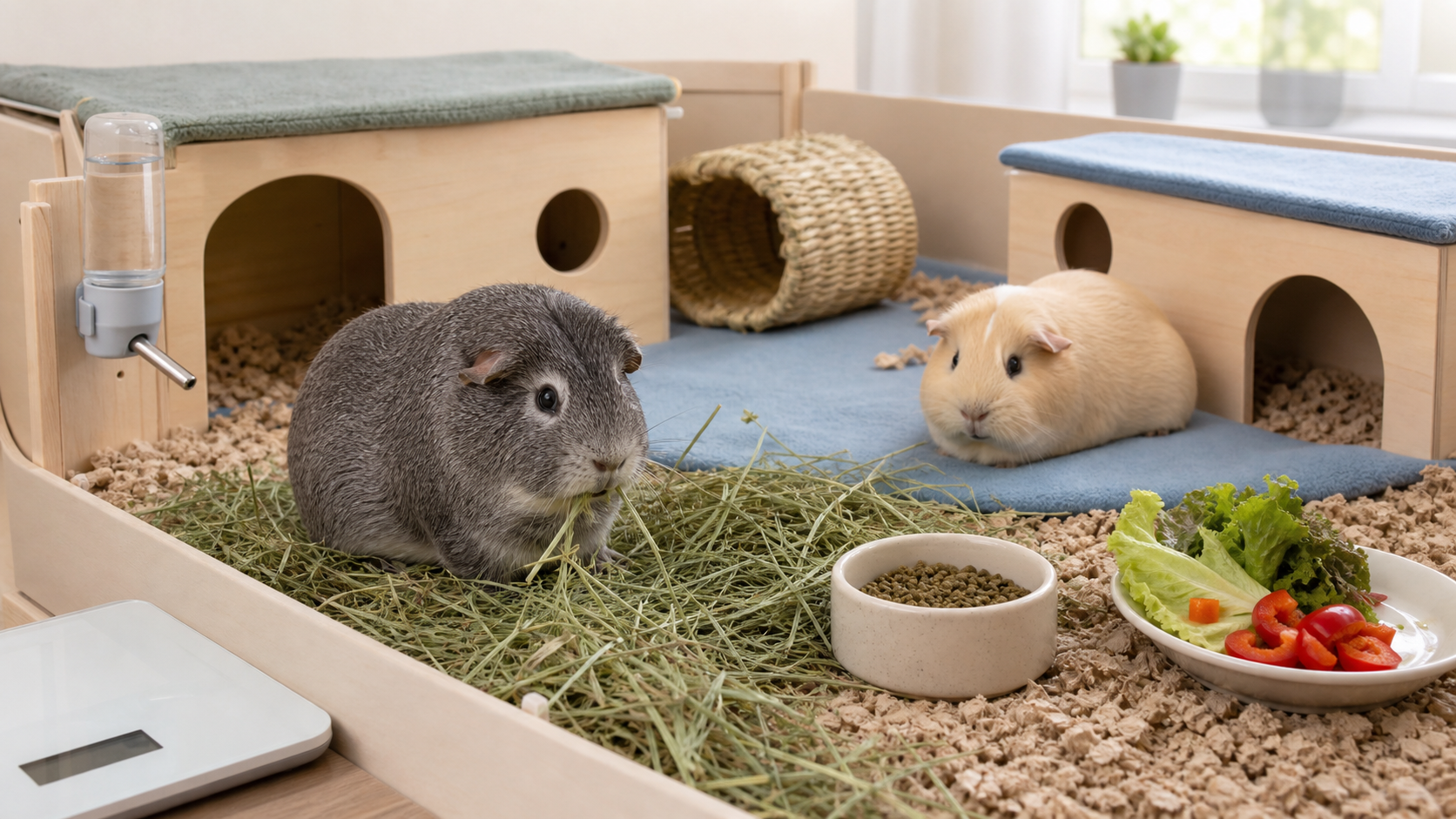
An older guinea pig may eat more slowly, move with less urgency or spend longer in a favorite hide. Those changes can call for a gentler setup—but they should never be dismissed automatically as normal aging. Guinea pigs often conceal illness, and a small change in appetite, weight, breathing or behavior can be important.
Senior care works best when housing, food access and daily observation support one another. A flat, dry enclosure helps movement; well-positioned hay and water protect access; and consistent records help the caregiver notice a problem before it becomes obvious.
The central rule: If a guinea pig eats less, produces fewer droppings or suddenly behaves differently, contact a guinea-pig-experienced veterinarian promptly. Do not wait for the next routine check.
“Senior” Is Not a Diagnosis
Guinea pigs age at different rates. Genetics, previous illness, dental health, body condition and lifelong housing all affect how an individual changes. A date of birth can guide preventive care, but daily function matters more than applying one universal age label.
Changes that may look like aging can be caused by dental disease, pain, respiratory disease, urinary disease, vitamin C deficiency, a mass or another medical problem. Merck Veterinary Manual notes that tumors are more common after five years of age, while dental and nutritional problems can affect guinea pigs more broadly.
Establish a relationship with a veterinarian who is experienced with guinea pigs before an emergency occurs. Ask how often examinations, dental assessment and other monitoring are appropriate for the individual animal.
Know Which Changes Are Urgent
Guinea pigs depend on frequent intake of fiber to support normal digestive function. Reduced eating can progress quickly and should be treated seriously.
Seek prompt veterinary advice for:
- eating less, refusing hay or stopping food entirely;
- fewer, smaller or absent droppings;
- rapid or continued weight loss;
- drooling, a wet chin, dropping food or difficulty chewing;
- noisy, fast or labored breathing;
- nasal or eye discharge, repeated sneezing or marked lethargy;
- blood in urine, straining or vocalizing while urinating;
- diarrhea or a soiled, wet rear end;
- inability to stand, sudden weakness, collapse or severe pain;
- a swollen abdomen, persistent tooth grinding or an abnormal posture.
Breathing difficulty, collapse, severe weakness and complete refusal of food are emergencies. Do not give leftover antibiotics, human pain medicine or medication prescribed to another species. Merck warns that many commonly used antibiotics can seriously harm guinea pigs by disturbing their normal gut bacteria.
Keep the Enclosure Spacious, Flat and Predictable
A senior guinea pig still needs room to walk, forage, explore and avoid a companion. Do not shrink the enclosure simply because activity has declined. Instead, make the usable space easier to navigate.
Use a solid, level floor. MSD Veterinary Manual recommends solid flooring to reduce foot and limb injury and pododermatitis risk. Wire flooring, unstable grids and rough surfaces can concentrate pressure on the feet and should not be used as the main walking surface.
Organize the enclosure so that:
- hay, water, pellets and preferred sleeping areas are reachable without climbing;
- routes are wide enough to turn without becoming trapped;
- hiding places do not create blind dead ends;
- essential resources are duplicated when competition is possible;
- the layout remains familiar unless a change is needed for safety.
Keep ramps low, wide and gently sloped if they are used at all. Cover them with secure traction and provide a protected edge. A senior guinea pig should never need a high shelf or steep ramp to reach food, water or a resting place.
Choose Bedding for Feet, Warmth and Cleanliness
Bedding should be soft, dry, low in dust and free from dangerous loose fibers or strings. Appropriate paper-based bedding or a correctly managed washable fleece system can work, depending on the enclosure and cleaning routine.
Fleece is not maintenance-free. It needs an absorbent layer beneath it, frequent spot cleaning and complete laundering before it becomes damp or odorous. Paper bedding should be deep enough for comfort and changed often enough to prevent wet areas.
Pay extra attention beneath water bottles, hay stations and favorite sleeping places. Senior animals may remain in one area longer, allowing moisture and waste to accumulate around the feet and belly.
Avoid scented bedding and strongly aromatic wood shavings. MSD Veterinary Manual advises against wood shavings or chips because aromatic oils can be associated with respiratory irritation. Whatever material is used, it should not stick to wounds, wrap around toes or create a slippery surface.
Provide More Hides Than Guinea Pigs
Hiding is a normal need, not a sign that the enclosure is large enough by itself. MSD guidance recommends more hiding places than guinea pigs. In a pair, provide at least three suitable retreats distributed through the habitat.
For older guinea pigs, choose hides with:
- a low, wide entrance;
- enough interior space to turn normally;
- two openings where possible, reducing the risk of one animal trapping another;
- no sharp edges, exposed fasteners or chewable coatings;
- a stable structure that cannot roll or collapse.
Soft beds and fabric hides must be checked for dampness, chewing and loose threads. Remove damaged fabric promptly. A simple low tunnel can also provide shelter while allowing forward movement.
Protect Companionship Without Ignoring Conflict
Guinea pigs are social animals, and aging alone is not a reason to separate a compatible pair or group. Familiar companionship can remain valuable. At the same time, reduced mobility can change how easily an older animal reaches food or moves away from social pressure.
Watch for subtle resource control:
- one animal consistently occupies the only hay pile or water point;
- the senior waits until the companion leaves before eating;
- chasing occurs near hides or narrow entrances;
- the older guinea pig loses weight despite food being present;
- resting places or favorite routes become inaccessible.
Add separate hay piles, more than one drinking point and multiple hides rather than immediately isolating the senior. If aggression, persistent chasing, wounds or severe stress occurs, seek advice from a veterinarian or guinea-pig welfare professional. Separation can create stress and should be planned carefully when medically or behaviorally necessary.
Make Hay Easy to Reach at All Times
Grass hay is central to guinea pig nutrition, dental wear and gut function. It should be continuously available, fresh and easy to reach. For detailed storage and rack selection, use the related ShineePets Guinea Pig Hay Guide.
For a senior setup:
- offer loose hay at floor level or through a rack with large, safe access openings;
- avoid racks that require stretching upward or placing the head through narrow bars;
- provide more than one hay location for a pair or group;
- place hay near a preferred resting area without allowing it to become wet;
- refresh it often enough that the animals can select good strands.
Observe the act of eating, not just the amount of hay remaining. A guinea pig with dental pain may approach food, chew slowly, drop strands, favor softer items or stop eating long hay while still accepting vegetables.
Use Guinea-Pig-Specific Pellets Carefully
Choose uniform, grass-based pellets formulated specifically for guinea pigs and containing stabilized vitamin C. Avoid colorful muesli-style mixes that allow selective feeding.
Pellets are a supplement to hay, not a replacement. The appropriate portion can vary with the product, body condition and medical needs, so follow the food label and veterinary plan rather than using a universal scoop for every senior animal.
Vitamin C in pellets degrades with time, heat, light and moisture. Store food sealed in a cool, dry, dark place, note the opening date and avoid buying a package so large that it remains open for months. Check the manufacturer’s storage and use guidance.
Do not abruptly switch pellet brands or formulas. PDSA advises making diet changes gradually because a sudden change can upset digestion and reduce intake. A veterinarian may recommend a different plan for an animal with dental, urinary, kidney or weight concerns.
Supply Vitamin C Through a Reliable Plan
Guinea pigs cannot make their own vitamin C and require a regular dietary source. Appropriate guinea-pig pellets and suitable fresh vegetables can contribute, but the individual plan should account for food freshness, actual intake and health status.
Red or green bell pepper and selected leafy greens are commonly used vitamin C sources. Introduce new vegetables gradually and use portions appropriate to the full diet. Fruit and sugary treats should not become a routine substitute for balanced vegetables and hay.
Do not assume that adding vitamin C to drinking water is the safest solution. MSD Veterinary Manual does not recommend water supplementation because vitamin C is unstable and may change the taste, potentially reducing water intake. If a supplement is medically needed, ask the veterinarian for the correct product, dose and administration method.
Never give a general multivitamin automatically. Merck notes that some added vitamins can be harmful to guinea pigs.
Keep Water Accessible and Verify Delivery
Fresh water must be available at all times. A bottle can appear full even when the nozzle is blocked. Check flow daily by activating the ball or valve, inspect for leaks and clean the bottle and nozzle regularly.
Place the nozzle low enough for a comfortable head position but high enough to avoid constant bedding contamination. If mobility is limited, provide a second bottle near another resting or feeding zone.
Some guinea pigs use bowls, but bowls can be tipped or contaminated quickly. If offering one, choose a heavy, stable design and inspect it frequently. Do not change the established water method suddenly without confirming that each animal is drinking.
Increased or decreased drinking, a wet chin, repeated visits without normal drinking or an unexplained change in urine output deserves veterinary attention.
Track Weight as a Trend
Visual inspection can miss weight loss beneath a dense coat. Use a stable digital scale that reads in grams and a secure container or low-sided bowl that the guinea pig cannot jump from. Tare the container before weighing.
Weigh on a consistent schedule and under similar conditions—many caregivers use a weekly check for a stable adult, with more frequent monitoring when a veterinarian recommends it. Record the number rather than relying on memory.
One reading can vary with food, urine and time of day. The trend is more useful. Contact the veterinarian about a significant loss, repeated downward movement or any weight change accompanied by reduced appetite, smaller droppings or altered behavior.
Do not put a weak animal on a high kitchen scale without containment, and never leave a guinea pig unattended on a table.
Observe Eating and Dental Clues
All guinea pig teeth grow continuously. Back-tooth disease may not be visible by looking at the incisors. MSD Veterinary Manual explains that dental disease can cause reduced appetite, difficulty chewing or swallowing, drooling, decreased activity and weight loss.
Daily observations should include:
- Does the guinea pig take hay promptly?
- Is chewing even and continuous?
- Are strands or pieces dropped from the mouth?
- Is the chin or chest damp?
- Are the incisors visibly broken, angled or suddenly long?
- Has food preference shifted toward only soft items?
Do not trim teeth at home. Dental diagnosis may require a complete oral examination and imaging, and treatment must be performed by a veterinarian with appropriate equipment and pain control.
Check Feet, Skin, Coat and Rear End
Gently examine each guinea pig every day while minimizing stress. Look and feel for:
- redness, swelling, sores or scabs on the feet;
- nails growing long or curling;
- lumps, asymmetry or tender areas;
- hair loss, flakes, parasites or wounds;
- damp fur around the mouth, eyes, nose or rear;
- urine staining or droppings stuck to the coat;
- reduced grooming or an unusually rough coat.
PDSA recommends checking the face, coat, rear end and feet as part of routine observation. Long-haired guinea pigs may need additional grooming and careful trimming around areas that soil easily, but avoid cutting close to skin and stop if handling causes distress.
Foot sores, a persistently wet rear, a new lump or skin damage needs veterinary evaluation. More bedding is not a complete treatment for a medical problem.
Monitor Droppings and Urination
Normal output provides useful information about intake and gut function. During spot cleaning, notice the approximate amount, shape and consistency of droppings and any change from the individual’s usual pattern.
Watch for:
- fewer or much smaller droppings;
- diarrhea or misshapen soft stool;
- straining or a hunched posture;
- squeaking during urination;
- blood, gritty residue or markedly wet bedding;
- strong changes in odor combined with other symptoms.
Do not diagnose bladder stones, infection or gut stasis from the enclosure alone. Collect a photo or sample only if the veterinary clinic requests it, and seek care promptly.
Make Handling Short, Low and Supported
An older guinea pig may be less flexible or more easily startled. Handle close to the floor or over a secure padded surface. Support the chest and hindquarters together and keep the spine level. Never lift by the legs or scruff.
A small carrier, tunnel or cuddle sack can allow voluntary transfer when direct lifting is stressful, provided it is structurally safe and the animal cannot fall. For weighing or enclosure cleaning, prepare the destination before moving the guinea pig so handling time stays short.
If the animal reacts to touch, struggles more than usual or vocalizes, stop and consider pain rather than assuming stubbornness.
Keep Temperature and Air Quality Stable
Place the enclosure away from direct sun, drafts, radiators, air-conditioning outlets, smoke, aerosols and strong household fumes. Good ventilation matters, but an aquarium-style tank can restrict airflow and is not an appropriate substitute for a well-ventilated enclosure.
Older animals may cope poorly with temperature extremes. Monitor the conditions at enclosure level, not only the room thermostat. Provide dry bedding and a sheltered sleeping area while ensuring the guinea pig can move away from warmer zones.
During hot weather, seek veterinary advice immediately for weakness, rapid breathing, drooling or collapse. Do not use frozen objects directly against the animal or make sudden temperature changes.
Clean Without Erasing Every Familiar Scent
Spot-clean wet and heavily soiled areas daily and perform full cleaning often enough to keep the enclosure dry and hygienic. Wash bowls and check water equipment every day. Launder reusable fabrics with a suitable unscented process and rinse thoroughly.
Keep the animals in a secure temporary enclosure during cleaning. Avoid leaving disinfectant residue or returning them to a damp habitat. Follow product instructions and keep cleaning chemicals away from food, hay and animals.
When practical, retain a small amount of clean familiar bedding or keep the layout consistent. A complete scent and layout change can be stressful, especially for an older animal with reduced vision or confidence.
Use a Simple Daily Observation Routine
Morning and evening, check:
1. Both guinea pigs are visible and responsive in their normal way.
2. Hay has been eaten and fresh hay is accessible.
3. Pellets and vegetables are being taken normally.
4. Water equipment works and intake has not changed unexpectedly.
5. Dropping quantity and appearance are typical.
6. Breathing is quiet and effortless.
7. Eyes, nose, mouth and rear are clean and dry.
8. Walking, posture and social behavior are unchanged.
Add a recorded weight check on the schedule recommended for the individual. Keep notes concise enough that every caregiver can maintain them. A simple trend is more useful than an elaborate chart that is abandoned.
Final Recommendation
Senior guinea pig care should reduce barriers without reducing normal choices. Keep the enclosure large, flat, dry and well ventilated. Provide more hides than animals, duplicate important resources, keep grass hay continuously available and make water delivery easy to verify. Use fresh guinea-pig-specific pellets and a reliable vitamin C plan rather than adding uncertain supplements to the bottle.
Most importantly, learn the individual’s normal eating, weight, droppings, movement and social routine. Guinea pigs can decline quickly, so early observation and prompt veterinary care are the most valuable forms of senior support.
Frequently Asked Questions
At what age is a guinea pig considered senior?
There is no single age that describes every guinea pig’s health or function. Genetics, previous illness, dental health and body condition affect aging. Use age to plan preventive care, but base daily support on the individual’s movement, eating, weight and veterinary assessment.
How often should I weigh an older guinea pig?
Use a stable digital gram scale on a consistent schedule and record each result. Many caregivers weigh a stable adult weekly, while a veterinarian may recommend more frequent checks for illness or recovery. Contact the clinic about a significant or continuing loss.
Should I add vitamin C drops to a guinea pig’s water?
Routine water supplementation is not recommended because vitamin C is unstable and the taste may reduce drinking. Use fresh guinea-pig-specific pellets and suitable vegetables, and ask the veterinarian for a specific oral product and dose if extra supplementation is required.
Should an older guinea pig be separated from its companion?
Not simply because of age. Maintain a compatible relationship while providing multiple hay piles, water points and more hides than animals. Seek professional advice for aggression, wounds, persistent chasing, resource blocking or medically necessary separation.
How long can I wait if a senior guinea pig eats less?
Do not wait for the next routine appointment. Reduced intake, fewer droppings or refusal of food can become serious quickly. Contact a guinea-pig-experienced veterinarian promptly, and treat complete refusal, severe weakness, collapse or breathing difficulty as an emergency.
Sources and References
- MSD Veterinary Manual - Housing and Nutrition of Guinea Pigs
- Merck Veterinary Manual - Nutritional Problems of Guinea Pigs
- MSD Veterinary Manual - Noninfectious Diseases of Guinea Pigs
- Merck Veterinary Manual - Common Health Problems of Guinea Pigs
- PDSA - Guinea Pig Health
- PDSA - Your Guinea Pig’s Diet
- RSPCA - How to Take Care of Your Guinea Pigs
About this article
Independent pet-care guidance from the ShineePets Editorial Team for pet owners, retailers and animal-care professionals.
ShineePets is a commercial B2B pet-supply sourcing brand. Read our editorial standards and commercial disclosure.