Pet Product Knowledge
Space-Saving Pet Products for Compact Homes
Quick answer
Choose compact cat and dog products by usable space, folding practicality and cleaning access, with a shortlist and a measure-before-buying checklist.
By ShineePets Editorial Team · Published · Updated
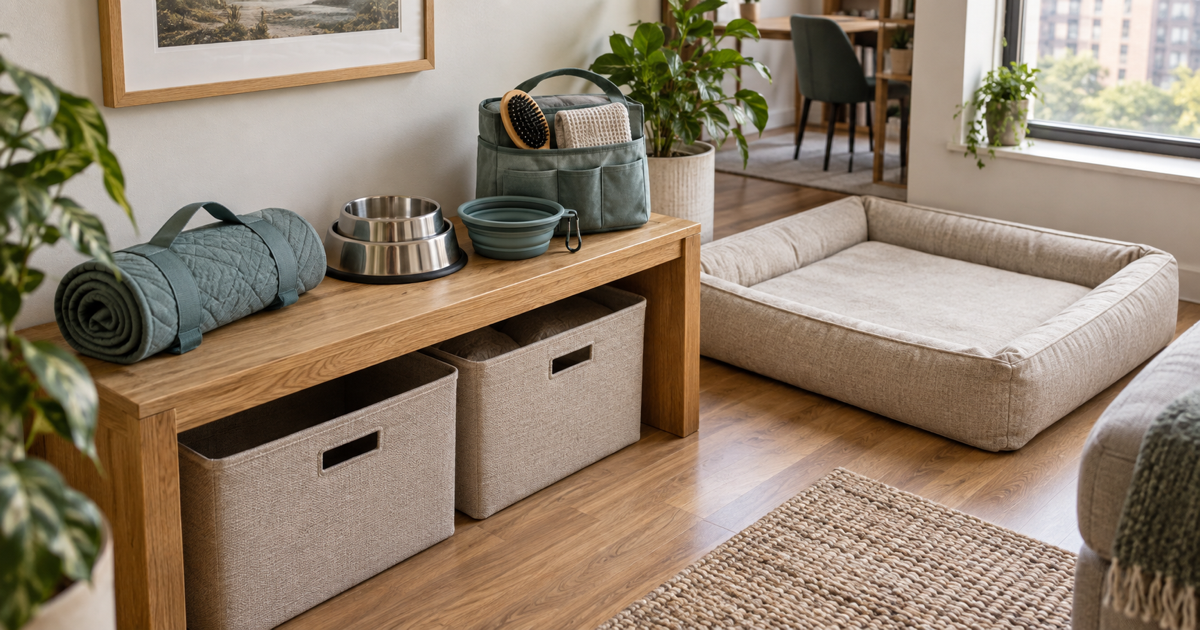
Choose space-saving pet products by the room they free up during ordinary use, not by how small they look in a listing. Roll-up travel mats, nesting spare bowls and compact grooming caddies can reduce storage clutter. A correctly sized bed, accessible water and a usable litter area still need dependable space. Folding an item helps only when it can genuinely be put away.
This buying guide is for cat and dog owners comparing products for an existing compact home. The aim is to remove unnecessary bulk while keeping useful pet resources. It is not a guide to choosing smaller habitats for rabbits, rodents, birds or other animals.
Space-Saving Pet Products: Identify the Space You Actually Need Back
Start with one problem: a blocked hallway, an overflowing cupboard, awkward laundry or equipment that must move every evening. Different problems need different purchases.
Storage-saving products become smaller between uses. A collapsible travel bowl may fit your walking bag, but it does not free floor space occupied by the everyday water bowl. In-use space-saving products remove unnecessary structure around a function, such as a less bulky bed frame with the same usable sleeping area. Organizers make existing items easier to find; they may add a footprint of their own.
Before buying, finish this sentence: “This item will replace ___ and live ___ when not in use.” If neither blank has a clear answer, it may simply become another thing to store.
Take Three Measurements, Not One
A product's advertised width is only part of the decision. Record these measurements for each serious candidate:
1. Working size: its fully assembled length, width and height, plus the space needed for the pet to enter or use it.
2. Operating clearance: room for opening a lid or door, lifting out a tray, removing a cover and reaching a latch.
3. Stored size: the actual folded dimensions, including handles, straps and parts that detach.
As a hypothetical example, a storage bin 30 cm deep may fit a 35 cm-deep cupboard, yet its lid may hit the shelf above. The bin fits geometrically but fails in use. These measurements illustrate the method; they are not recommended pet-product sizes.
Check the candidate against an ordinary busy moment: a dining chair pulled out, laundry drying and someone walking to the bathroom. Use a paper outline while pets are elsewhere, then remove it before they return. Include the pet's approach route rather than filling every empty rectangle on the floor.
For online purchases, ask the seller for missing internal or folded dimensions before ordering. Check delivery access and return conditions for bulky items, especially whether assembly or pet use changes return eligibility.
Which Compact Products Are Worth Shortlisting?
The following options address different household problems. None is automatically the right choice simply because it folds or combines functions.
| Product type | Useful when | What to check before buying |
| --- | --- | --- |
| Roll-up travel or training mat | You need an occasional portable resting surface | Rolled dimensions, grip, drying space and whether it stays flat in use |
| Nesting spare bowls | Cupboard space is the problem | Bowls separate easily, dry fully and remain stable when used individually |
| Portable grooming caddy | Tools are spread across several rooms | It fits the intended shelf and has removable, accessible compartments |
| Low-profile pet bed | A bulky frame wastes room around an adequate sleeping surface | Usable cushion size, support, washable cover and entry access |
| Cat scratcher with a resting surface | Your cat uses both functions in the proposed location | Stability, usable scratching area, resting space and replaceable wear surfaces |
| Fold-flat crate or carrier | Transport or occasional storage is the real need | Suitable open dimensions, secure assembly and the actual storage location |
Prioritize the item that fixes the named problem. If an existing bed fits the dog and the room, replacing it with a fashionable “compact” bed may achieve nothing. A spare washable cover or a better place for grooming tools could be the more useful purchase.
What Should You Avoid Shrinking?
The space an animal actually occupies
RSPCA advises choosing a dog bed that accommodates natural sleeping positions, including stretching out. Compare the usable cushion with your dog's resting posture, not just the bed's outside dimensions. RSPCA dog-bed guidance
For crates, RSPCA says the dog needs room to stand, turn, lie down and stretch. A folding mechanism changes storage, not those requirements. A crate also requires a positive introduction; it is not a way to confine a dog simply to keep a room tidy. RSPCA crate guidance
Access to separate resources
FelineVMA and iCatCare recommend multiple, separated resources for cats, including food, water, toileting, scratching and resting areas. An all-in-one cabinet that crowds these functions together is therefore not automatically a useful improvement. Feline environmental-needs guidance
Treat litter furniture as a conditional purchase. Start with a tray and access arrangement your cat can use, then consider the outer furniture—not the reverse. Check whether you can remove and clean the tray without dismantling the unit. Keep established access available while assessing a change.
A vertical product may offer a useful alternative to bulky floor furniture, but it still needs appropriate installation and a usable route. Use our cat shelves and perches guide for that separate decision rather than choosing by height alone.
Folding and Multifunction Designs Have Hidden Costs
Imagine using the product when you are tired or in a hurry. Will you really fold it after every session? Where do the loose panels go? Does the stored item block another cupboard? If daily folding is unlikely, compare the permanent open footprint instead.
For a folding item, request clear assembly instructions and confirmation of intended use. Inspect hinges, latches and accessible edges on arrival. Set it up and put it away with pets elsewhere, following the instructions; do not improvise a mechanism or use your pet as a test load. Stop using damaged or incompletely secured equipment.
For multifunction furniture, ask what happens when one part needs cleaning or replacement. If washing a cushion makes the entire structure unavailable, you need an alternative resting place. If a worn scratching insert cannot be replaced, the apparent saving may require replacing the whole unit later.
Renters should check permission before permanent installation. A “no-drill” claim describes an installation method, not proof that a product suits every surface or load. When mounting information is unclear, choose an option with requirements you can actually meet.
Fit Cleaning and Food Storage into the Plan
Material labels alone do not tell you how an item will work at home. Look for care instructions for each component: fabric cover, foam insert, rigid shell, rubber feet and removable seal. Check whether the largest washable part fits your equipment and where it can dry before reassembly.
CDC distinguishes cleaning from disinfecting and recommends following care and product-label instructions. Dishwasher use depends on an item being dishwasher-safe. Build rinsing and drying into the storage plan rather than packing damp components tightly together. CDC pet-supply cleaning guidance
For a slim food bin, measure the food bag as well as the cupboard. FDA recommends retaining the original packaging and, when using an outer container, placing the bag inside it. Containers should be washed and dried between bags. An attractive narrow bin is a poor fit if using it means losing package information or making cleaning impractical. FDA food-storage guidance
Avoid assuming that “silicone,” “stainless steel” or “washable” proves every part has the same care requirements. Ask about intended food contact where relevant, removable parts and replacement availability. Specific instructions are more useful than unsupported “non-toxic” or “completely safe” labels.
Make One Change, Then Decide Whether It Earned Its Place
Keep the first purchase small in scope. Choose one item, retain a workable alternative during introduction and observe an ordinary day before buying matching accessories.
- Did it clear the specific space you wanted back?
- Can the pet use it voluntarily without losing access to familiar resources?
- Can everyone in the household set it up, clean it and put it away?
- Does its storage position stay clear of doors and routine walking routes?
- Would replacement parts or a spare cover solve future wear without another large purchase?
If the answer is no, change the location or reconsider the item within the seller's return terms. Do not force continued use to justify the purchase.
For a cat-tree shortlist, our cat tree buying guide helps compare usable features before committing floor space. The goal is fewer poorly placed objects, not fewer opportunities for your pet to rest, explore or use essential resources.
If a pet has difficulty breathing, collapses or has white, grey or blue gums, seek emergency veterinary care immediately—not another product adjustment. PDSA emergency guidance
This guide covers product selection and household organization. It does not replace veterinary assessment or treatment.
Sources and Further Reading
Frequently Asked Questions
Are expensive multifunction pet products better value?
Not necessarily. Compare the functions your pet will use, replacement-part availability and cleaning workload. Two simple items may be easier to position and maintain than one combined unit.
Should I buy a complete matching compact pet set?
Only if each item solves a specific need and fits its own location. Buying one priority item first lets you assess use before committing to the rest of the set.
Can I use existing household storage for pet equipment?
Often you can reuse a suitable shelf or removable bin for clean accessories. Keep care instructions, protect access to items that should not be chewed and do not assume an ordinary organizer is suitable for direct food contact.
What if the seller lists only package dimensions?
Ask for assembled dimensions, usable internal space, operating clearance and folded dimensions where relevant. Package size alone does not show whether the product will fit or function in your home.
Is a travel mat a replacement for an everyday dog bed?
Not automatically. A portable mat solves a transport or occasional-use problem; an everyday resting surface must suit the individual dog's comfort, size and support needs.
Sources and References
About this article
ShineePets publishes practical, source-checked guidance for pet owners and pet-product professionals.
ShineePets is a commercial B2B pet-supply sourcing brand. Read our editorial standards and commercial disclosure.