Dog Care
Caring for a Dog in a Small Apartment
Quick answer
Build a practical apartment dog-care routine around toilet access, outdoor activity, quiet rest, alone-time training and reliable daytime help.
By ShineePets Editorial Team · Published · Updated
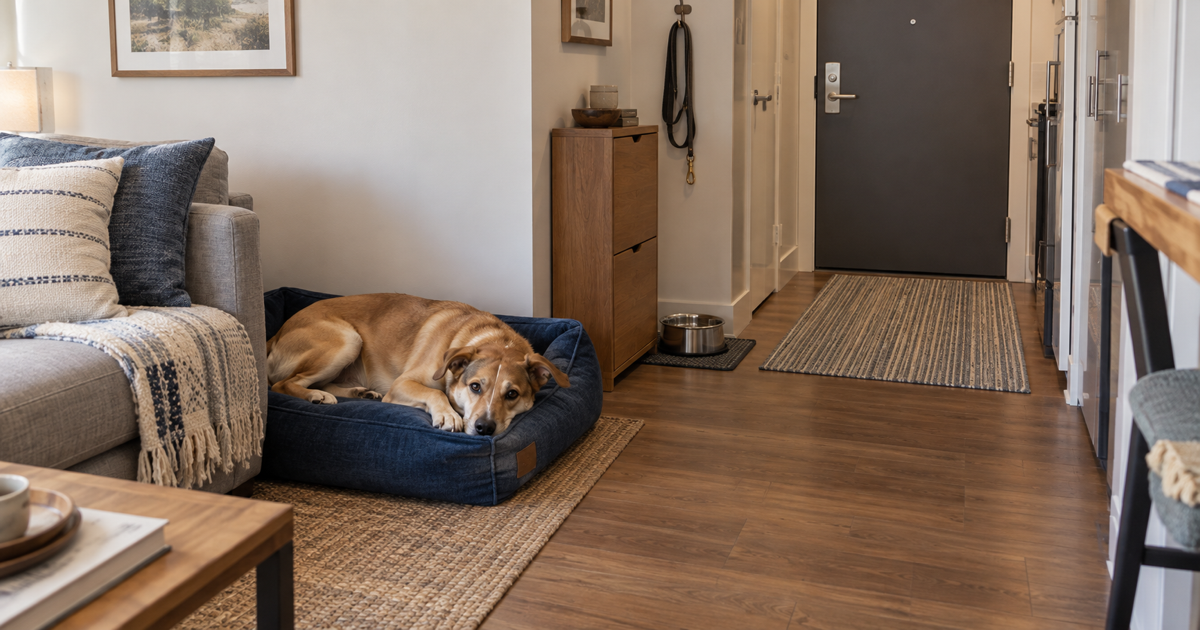
Caring for a dog in a small apartment means making daily needs easy to meet: timely toilet trips, suitable outdoor exercise, fresh water, comfortable sleep, mental activity and companionship. A workable layout gives the dog room to stretch and move while keeping the route to the front door clear. A workable schedule includes help when you cannot be there.
Begin by checking how your particular dog copes with the building. A long elevator wait, repeated stair trips or a noisy corridor may create more difficulty than the apartment's floor area. This guide shows how to connect the home layout with outdoor access, plan a realistic weekday and identify problems that need professional help.
Caring for a Dog in a Small Apartment Starts at the Front Door
Walk the complete route from the dog's bed to the permitted outdoor toilet area. Include finding keys, fitting walking equipment, waiting for the elevator and reaching the street. Repeat it during a busy period so your plan reflects ordinary conditions.
Dogs Trust's guide to keeping a dog in a flat recommends considering outdoor access, elevator delays and outages, stair use, and the individual dog's mobility and energy needs. It also highlights windows and balconies as hazards requiring secure access control.
Turn that assessment into a small household access plan:
- Name the usual exit, toilet location and an alternative route.
- Confirm the building's pet and shared-space arrangements with management.
- Keep keys, waste bags and walking equipment together by the door.
- Identify who can help if you are delayed or the elevator is unavailable.
- Check whether an injured dog could be transported out of the building.
For a dog that struggles with stairs, discuss the building's demands with your veterinarian. Do not make repeated forced stair climbing the backup plan.
Give Each Part of the Room a Clear Job
PDSA's dog-friendly home advice calls for a quiet, comfortable bed, room to stretch, access to fresh water and a suitable temperature. In a studio, these functions can occupy different corners without needing separate rooms.
Rest without constant interruption
Position a correctly sized bed away from the door's swing, kitchen activity and the route to the bathroom. Check its usable sleeping area, not just its outer dimensions. Everyone in the household should be able to pass without stepping over the dog. Keep the area comfortable as sunshine and room temperature change.
Feed and drink without blocking movement
Use a stable water bowl on a washable mat where it will not be kicked over. Water should remain available; reducing access to avoid toilet trips is not a care plan. Put the feeding bowl in a predictable location and clear it after the meal when appropriate to the dog's feeding routine.
Store equipment where it is used
Keep drying towels near the entrance, spare bedding with the laundry and cleaning supplies in closed storage. Measure a product while it is open: a folding pen, ramp or storage unit still needs enough room when in use. Prioritize a washable bed cover, secure bowl base and accessible seams over extra features that are difficult to clean.
The essential dog supplies checklist can help you select the basics. Add equipment when it solves an observed problem rather than filling every available corner.
Schedule Toilet Opportunities Before the Elevator Becomes Urgent
During toilet training, the RSPCA recommends taking dogs to the appropriate place after waking, meals, play and excitement, as well as before bed and around departures. Reward successful toileting promptly and do not punish accidents. See its toilet-training guidance.
For apartment use, keep a simple record of when the dog wakes, eats and toilets, together with the time needed to get outdoors. Leave before the usual urgent point. Puppies and dogs with health-related needs may require substantially more opportunities than an established adult routine provides.
If accidents occur, record whether they happened near the door, during a delayed trip or while the dog was alone. That pattern helps you adjust the schedule and gives your vet useful context if the problem persists or starts unexpectedly. Clean the area using a suitable product according to its directions; keep the dog away until the surface is ready for use.
Make Outdoor Time and Indoor Time Work Together
PDSA explains that exercise requirements vary with age, breed, health and fitness. Walks can combine movement with time to sniff and explore, and changes in activity should be gradual. Ask your veterinarian about restrictions for a growing puppy, an older dog or a dog with a medical condition.
Use outdoor time for the movement and exploration your dog can comfortably manage. Indoors, choose activities that fit the available floor area: a brief reward-based training session, a supervised food puzzle or an easy search for part of the dog's normal meal. Account for food used in activities when planning the daily ration.
Select the puzzle for the dog's size and chewing style, supervise its introduction and remove damaged parts. Leave a clear area for the activity and put equipment away afterward. For more options, use the dog enrichment guide by energy level. Indoor games supplement a care routine; they do not automatically meet every dog's outdoor needs.
A Weekday Plan You Can Adapt
The following is a planning example, not a universal exercise or bladder schedule. Adjust the timing, activity and frequency to the dog, and add toilet trips whenever needed.
- On waking: take the dog to the toilet area, then provide breakfast and an appropriate walk or activity period, arranged around the dog's feeding needs.
- Before work: refresh water, check the rest area and confirm the day's care cover. Make sure the dog has had an opportunity to toilet.
- During the day: arrange company, a toilet break and suitable activity with a household member, sitter or walker as needed.
- After work: check the dog's comfort, go outside and spend time together. Offer dinner according to the established feeding routine.
- Before bed: allow a final toilet opportunity and prepare the exit kit for the morning.
Write the responsible person's name beside each commitment. A calendar entry saying 'dog walk' is incomplete if everyone assumes someone else will do it. Keep one backup contact and explain how they enter the building and collect the dog.
Practice Being Alone Before Relying on a Workday Absence
The RSPCA recommends building alone time gradually, progressing at the dog's pace and avoiding absences that cause distress. It also suggests occasional video checks because signs such as pacing or whining can be missed when the owner is out.
Start with very brief, comfortable separations and observe the response. Extend them only while the dog remains settled. If you must be away longer than the dog currently manages, arrange care rather than using that absence as a training test. A crate or food toy does not establish that a dog is ready to be left.
Persistent howling, pacing, trembling, destructive escape attempts or toileting during separation deserve veterinary advice and, where appropriate, referral to a qualified clinical behaviour professional. A camera helps you understand what happens; it cannot provide company or a toilet trip.
Reduce Hallway Barking by Changing the Setup
Record what happens just before barking: footsteps, a doorbell, another dog passing or your departure. Dogs Trust's barking guidance recommends identifying triggers, reducing exposure and rewarding calm alternative behaviour. Shouting or forcing a frightened dog to face the trigger can make matters worse.
Move the resting area farther from the entrance if possible. If passersby trigger barking, reduce that view while preserving light and ventilation. Practice going to a mat during quiet periods before expecting the skill during a delivery. Arrange handovers so the dog can remain comfortably separated from an opening door.
Ask a concerned neighbour for approximate times rather than assuming the dog barks continuously. Match those reports with your observations and seek help early if the dog appears distressed.
Check Whether the Plan Works for Your Dog
Review one ordinary week using four questions:
1. Access: were toilet trips timely, including busy periods and late evenings?
2. Rest: could the dog lie fully supported without repeated disturbance?
3. Care cover: did every planned visit happen, and was there a workable backup?
4. Comfort: did walks, alone time or building noises produce signs of difficulty?
Change the specific weak point: move the bed, leave earlier, book a visit or simplify the exit routine. Reassess after a move, schedule change or mobility change.
Sudden changes in movement, toileting or behaviour warrant veterinary advice. Difficulty breathing, collapse or white, grey or blue gums require immediate veterinary attention, as described in PDSA's emergency breathing guidance. These are not problems to solve by adjusting the apartment layout.
*This article provides general daily-care information and does not replace veterinary assessment, diagnosis or treatment.*
Sources and Further Reading
Frequently Asked Questions
Is there a minimum apartment size for a dog?
This guide does not set a universal floor-area threshold. Check whether the individual dog can move and rest comfortably and whether daily outdoor access, care cover and building arrangements are practical.
Can a large dog live in a small apartment?
Size alone does not decide suitability. Check usable floor space, energy needs, mobility, elevator access and how you would transport the dog during illness or injury.
Do two walks cover all toilet needs?
Not necessarily. An exercise outing and a toilet opportunity serve different purposes, and some dogs need additional short trips. Use the individual dog’s needs to plan the day.
Can an indoor toilet replace going outside?
An indoor toilet may be part of an individualized care arrangement, but it does not provide outdoor exploration, exercise or companionship. Keep those needs in the daily plan.
What should I measure before buying apartment dog supplies?
Measure the dog’s usable sleeping space, the clear walking route and each item’s dimensions while open. Check that washing, drying and storing it will work in your home.
Sources and References
About this article
ShineePets publishes practical, source-checked guidance for pet owners and pet-product professionals.
ShineePets is a commercial B2B pet-supply sourcing brand. Read our editorial standards and commercial disclosure.