Cat Care
Cat Feeding Schedules: Bowls, Portions and Routine
Quick answer
Build a practical cat feeding schedule by measuring the daily ration, dividing meals, choosing clean bowls and tracking appetite and body condition.
By ShineePets Editorial Team · Published
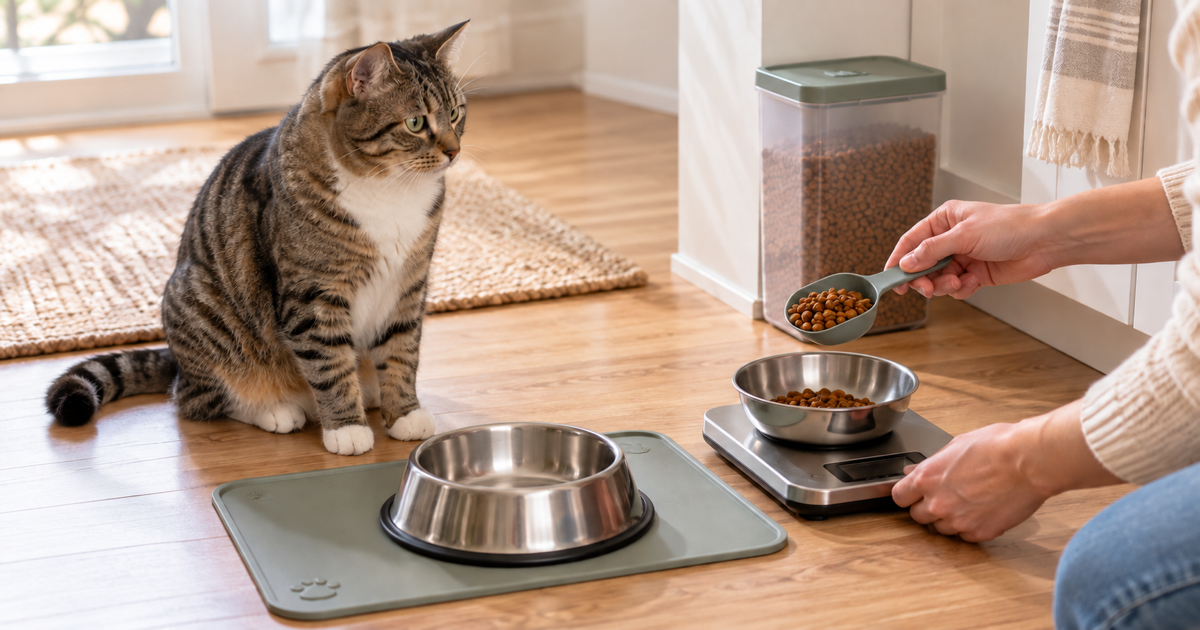
A useful cat feeding schedule does three things: it starts with one measured daily ration, divides that ration into manageable meals, and makes changes in appetite or body condition easy to notice. Healthy adult cats often do well when their daily food is offered as several small meals, but there is no universal clock or portion that suits every cat. Age, body condition, activity, food calorie density and health all affect the plan.
Begin with a veterinarian-supported calorie target, translate it into grams or packages using the label, and count treats or puzzle-feeder portions within the same total. Choose meal times the household can repeat without making minor timing changes stressful.
Build the Daily Portion Before Choosing Meal Times
The amount printed in a feeding chart is a starting estimate, not a prescription for every cat. The American Animal Hospital Association's young-adult cat nutrition guidance notes that energy needs vary with factors including age, body and muscle condition, neuter status, health and activity. The amount offered should be adjusted to maintain an appropriate body condition.
Ask your veterinarian to identify the cat's ideal weight and daily calorie target, especially for a kitten, senior, pregnant or nursing cat, or a cat with obesity or disease. The WSAVA nutrition toolkit provides body-condition and muscle-condition resources, but a visual score does not replace an examination.
Once you have a daily target, use the calorie statement on the exact food:
- Dry food: daily grams = target kcal ÷ kcal per gram.
- Food labelled in kcal/kg: divide kcal/kg by 1,000 to obtain kcal per gram.
- Cans or pouches: daily packages = target kcal ÷ kcal per package.
- Mixed feeding: subtract the calories supplied by wet food, treats and toppers before calculating the dry-food portion.
Use a kitchen scale when possible. Volume scoops can vary with kibble shape and how full the scoop is. Recalculate whenever the recipe, calorie density or food format changes; the same-looking portion of a new food may supply a different amount of energy.
Choose a Cat Feeding Schedule That Fits Real Life
The Feline Veterinary Medical Association's consensus statement on feeding programs describes cats as adapted to frequent small, solitary meals and recommends feeding approaches that support hunting and foraging behavior. This does not mean owners must serve food around the clock. It means a measured daily ration can be divided into several opportunities rather than delivered as one oversized meal.
For a healthy adult, choose the pattern the household can maintain:
| Daily pattern | Example allocation | When it may fit |
|---|---|---|
| Two anchor meals | 50% morning, 50% evening | Simple routine when additional meals are impractical |
| Three meals | 35% morning, 25% midday, 40% evening | Home schedules or a timed feeder for midday |
| Four small meals | 25% at each feeding | Cats that prefer smaller servings or use food puzzles |
These percentages divide the already-approved daily ration; they do not increase it. Meal timing can move gradually to fit work, travel or daylight changes. Keep at least two dependable anchor points, such as after waking and before the household settles for the night.
Kittens generally need more frequent meals because they are growing and have smaller stomach capacity. Senior cats may need changes if they lose weight, struggle to reach the bowl or develop a health condition. Cornell University's feeding-frequency guide emphasizes that meal frequency depends on age, health and individual preference. A therapeutic diet or medication schedule should follow the veterinarian's plan rather than a generic timetable.
Decide Between Meal Feeding and Free-Choice Feeding
Measured meal feeding makes intake easier to track. It can reveal whether the cat finished breakfast, ignored dinner or is eating another pet's food. Free-choice feeding may suit some cats, but it becomes difficult to know how much was eaten when a bowl is repeatedly topped up.
If a cat currently grazes, do not restrict food abruptly. Measure the amount placed down and left after 24 hours for several typical days, then work with the veterinarian to transition gradually. A timed feeder can preserve small eating opportunities without exposing the entire ration.
Food puzzles can turn part of the ration into foraging activity. Start with an easy device, confirm the cat can retrieve the food, and count that portion within the daily total. A puzzle that remains full is not enrichment; it may simply be too difficult, unstable or uncomfortable.
Pick Bowls That Support the Routine
The bowl should make the selected portion easy to serve, eat and clean. Look for:
- a smooth, intact, nonporous food-contact surface;
- enough width and depth for the cat's preferred eating posture;
- a stable base that does not slide or tip;
- no chips, cracks, sharp edges or inaccessible food traps; and
- compatibility with the chosen wet, dry or mixed-food routine.
Stainless steel and properly finished ceramic bowls can be practical when they are undamaged and easy to wash. Plastic quality varies; scratches and seams can become difficult to clean. Do not rely on an unverified “whisker-friendly” claim. Observe whether the cat approaches comfortably, eats without repeatedly pulling food onto the floor, and finishes a normal portion.
Raised bowls are not automatically better. A low, stable dish works for many cats, while an individual with mobility, neck or swallowing problems may need a veterinarian-recommended setup. Change the height for a clear reason and watch the cat's posture and intake.
Use One Clean-Bowl Rule
Food hygiene belongs inside the schedule. The U.S. Food and Drug Administration advises washing pet-food bowls and measuring utensils with soap and hot water after each use and using a dedicated scoop rather than the pet's bowl as a measuring tool. Its safe pet-food handling guidance also recommends promptly refrigerating or discarding unused canned or pouched food.
The U.S. Centers for Disease Control and Prevention gives a practical frequency in its pet-supply cleaning guidance: clean bowls after every wet-food use and daily for dry food and water. Follow the bowl maker's dishwasher and cleaning instructions, rinse thoroughly and let the bowl dry before reuse.
Keep a spare bowl so cleaning never requires reusing a dirty dish. Disassemble and clean automatic feeders and food puzzles as instructed, including hinges, seals and narrow channels.
Make Mixed Feeding Add Up Correctly
Wet and dry foods can share one schedule, but both count toward the same daily energy total. Write the plan in actual units:
`Breakfast: half pouch + measured dry grams`
`Midday feeder: measured dry grams`
`Dinner: half pouch + measured dry grams`
Avoid vague entries such as “some kibble.” If more than one family member feeds the cat, pre-portion the entire day into a labelled household container or simple meal compartments. This prevents accidental second breakfasts while preserving the original food packaging for lot codes and storage instructions.
Treats, lickable snacks and food used for training are still food. Record them and reduce meal calories as directed by the veterinarian. Do not reduce a complete and balanced main diet aggressively to make room for extras, because that can disturb nutrient balance.
Monitor the Cat, Not Just the Empty Bowl
An empty bowl does not prove the portion is correct. Use the same scale to record body weight at a veterinarian-recommended interval, and review body and muscle condition during veterinary visits. Track trends rather than reacting to one reading.
Keep a short feeding log when starting or changing a schedule:
- food name, recipe and calorie density;
- grams or package fraction offered at each meal;
- leftovers and time taken to eat;
- treats and food-puzzle portions;
- vomiting, diarrhea or difficulty chewing;
- changes in thirst, urination, energy or behavior; and
- body-weight trend.
If weight rises or falls unexpectedly, do not simply make a large portion change. Confirm the measurement, check for uncounted food, and contact the veterinarian. Older cats can lose muscle even when body weight seems stable, so hands-on assessment matters.
Adjust the Routine for Multi-Cat Homes
A shared bowl makes individual portions and appetite changes hard to see. Feed cats separately or at spaced stations with clear escape routes, and verify that each cat receives its own ration. Microchip feeders may help in some homes, but access must be tested and bowls still need cleaning.
For resource placement and individual monitoring, use the ShineePets guide to food, water and litter in multi-cat homes. For bowl location and cleaning workflow, see how to build a calm cat feeding station.
Know When a Schedule Problem Is a Health Problem
A sudden appetite change is not merely a routine failure. Cornell's feline anorexia guidance warns that not eating can seriously affect a mature cat within about 24 hours, with young kittens at risk sooner.
Contact a veterinarian promptly if a cat refuses food, eats much less than usual, loses weight, vomits repeatedly, seems lethargic, has trouble chewing or swallowing, or shows a marked change in thirst or urination. A diabetic cat that misses a meal, a kitten, or an already unwell cat needs earlier professional guidance. Do not force-feed or make major diet changes without veterinary direction.
This article supports everyday organization for generally healthy cats. It does not replace an individualized nutrition plan, diagnosis or treatment from a veterinarian.
A Seven-Step Routine to Use Every Day
1. Confirm the veterinarian-supported daily energy target.
2. Convert calories into grams, cans or pouches using the current label.
3. Divide the daily ration into repeatable meal percentages.
4. Pre-portion treats and puzzle food from that same total.
5. Serve each meal in a clean, stable bowl.
6. Record meaningful leftovers or appetite changes.
7. Recheck weight, body condition and the plan over time.
The best cat feeding schedule is measurable, repeatable and responsive. It gives the cat several calm opportunities to eat while giving the household a reliable way to notice when intake or health changes.
Sources and Further Reading
- Feline Feeding Programs Consensus Statement — Feline Veterinary Medical Association
- How Often Should You Feed Your Cat? — Cornell University College of Veterinary Medicine
- Nutrition and Weight: Young Adult Cats — American Animal Hospital Association
- Global Nutrition Guidelines — World Small Animal Veterinary Association
- Tips for Safe Handling of Pet Food and Treats — U.S. Food and Drug Administration
- Cleaning and Disinfecting Pet Supplies — U.S. Centers for Disease Control and Prevention
- Anorexia in Cats — Cornell University College of Veterinary Medicine
For retailers, distributors and pet brands
Building a cat-product assortment?
Explore cat trees, scratchers, toys, grooming and feeding products, with B2B sourcing and customization support.
Explore Wholesale Cat Products Discuss OEM/ODMFrequently Asked Questions
How many times a day should an adult cat eat?
Many healthy adult cats can eat two or more measured meals, while several smaller meals may better support natural feeding behavior. Choose a repeatable pattern and keep the total daily ration unchanged.
Should I leave dry food out all day for my cat?
Free-choice feeding works for some cats but makes intake harder to measure. If weight or appetite monitoring matters, measured meals or a timed feeder usually provide clearer information.
How do I divide wet and dry cat food in one day?
Convert both foods to calories using their labels, subtract wet-food and treat calories from the daily target, then measure the remaining dry portion. Ask your veterinarian to confirm the total.
What bowl is best for a cat?
Choose a stable, smooth and easy-to-clean bowl that fits the cat's eating posture and food type. Replace any bowl with chips, cracks, sharp edges or residue-trapping damage.
When should I call a veterinarian about my cat not eating?
Contact a veterinarian promptly for a sudden appetite loss. A mature cat that has not eaten for about 24 hours can be at serious risk; kittens, diabetic cats and ill cats need help sooner.
Sources and References
- Feline Feeding Programs Consensus Statement — Feline Veterinary Medical Association
- How Often Should You Feed Your Cat? — Cornell University College of Veterinary Medicine
- Nutrition and Weight: Young Adult Cats — American Animal Hospital Association
- Global Nutrition Guidelines — World Small Animal Veterinary Association
- Tips for Safe Handling of Pet Food and Treats — U.S. Food and Drug Administration
- Cleaning and Disinfecting Pet Supplies — U.S. Centers for Disease Control and Prevention
- Anorexia in Cats — Cornell University College of Veterinary Medicine
About this article
ShineePets publishes practical, source-checked guidance for pet owners and pet-product professionals.
ShineePets is a commercial B2B pet-supply sourcing brand. Read our editorial standards and commercial disclosure.
Continue Reading
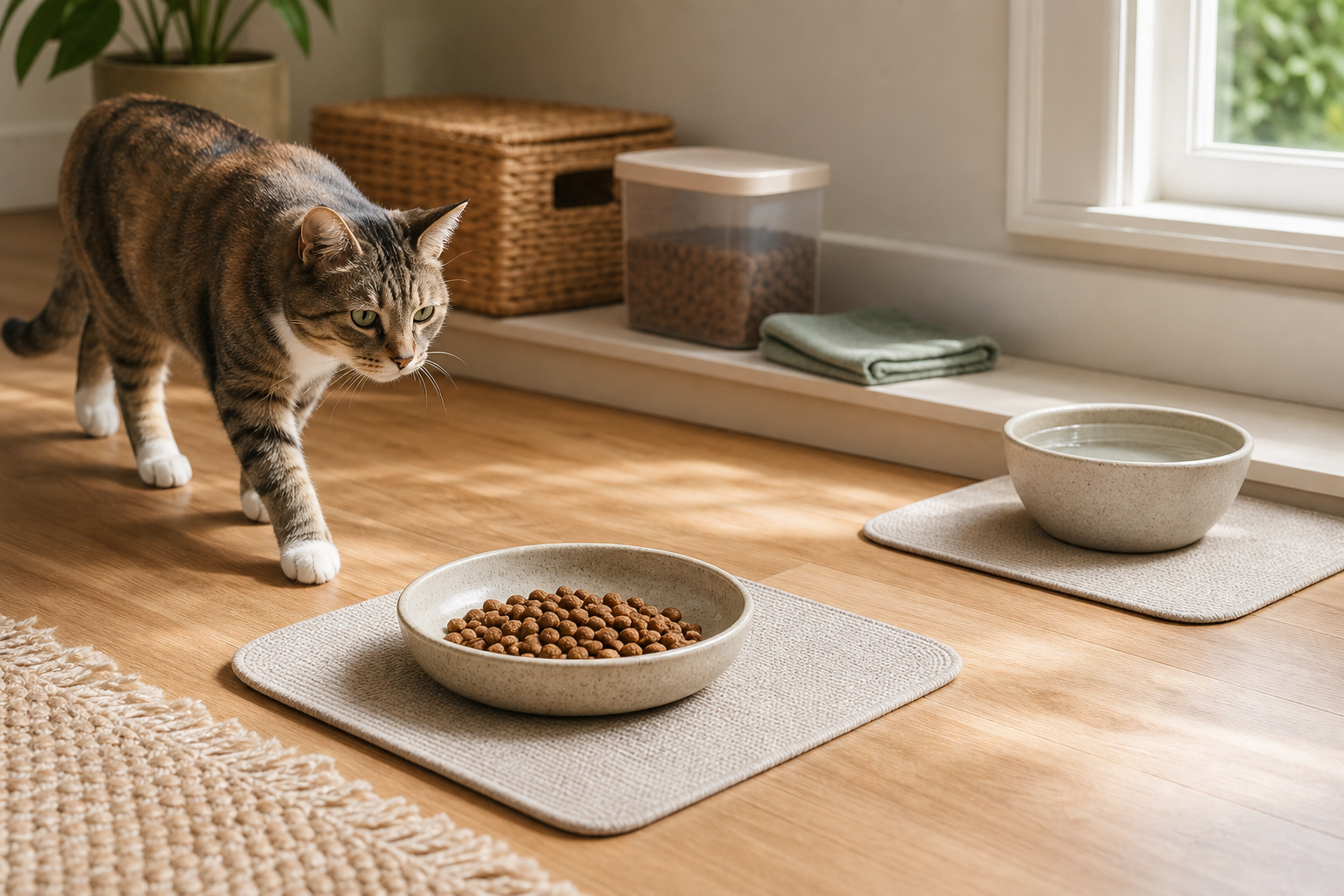
How to Build a Calm and Clean Cat Feeding Station
Create a quieter, more hygienic cat feeding station with smart placement, separate water, washable bowls and a practical cleaning routine.
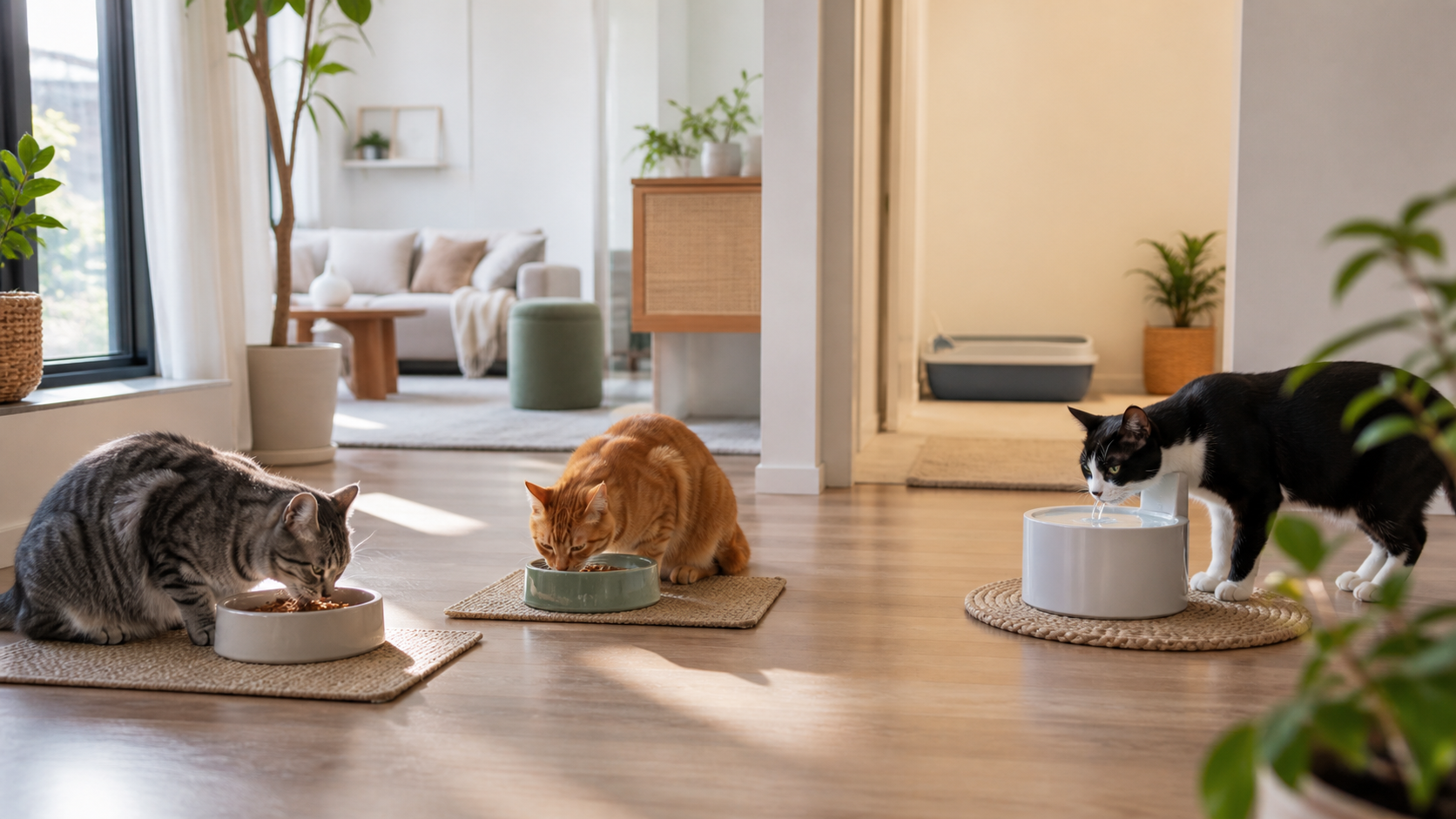
Multi-Cat Homes: Managing Food, Water and Litter
Manage food, water and litter in a multi-cat home with separated resources, safer routes, individual monitoring and practical cleaning routines.
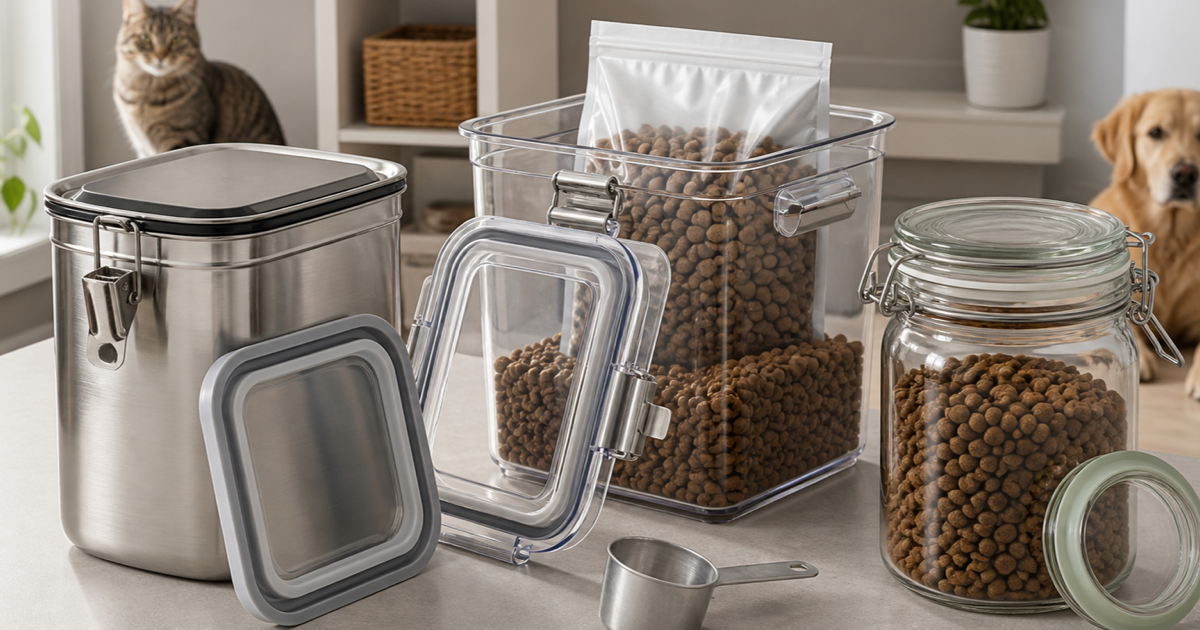
Pet Food Storage Containers: Materials and Seal Quality
Compare pet food storage containers by food-contact material, gasket design, closure strength, cleanability and practical sample testing.