Cat Care
How to Build a Calm and Clean Cat Feeding Station
Quick answer
Create a quieter, more hygienic cat feeding station with smart placement, separate water, washable bowls and a practical cleaning routine.
By ShineePets Editorial Team · Published · Updated
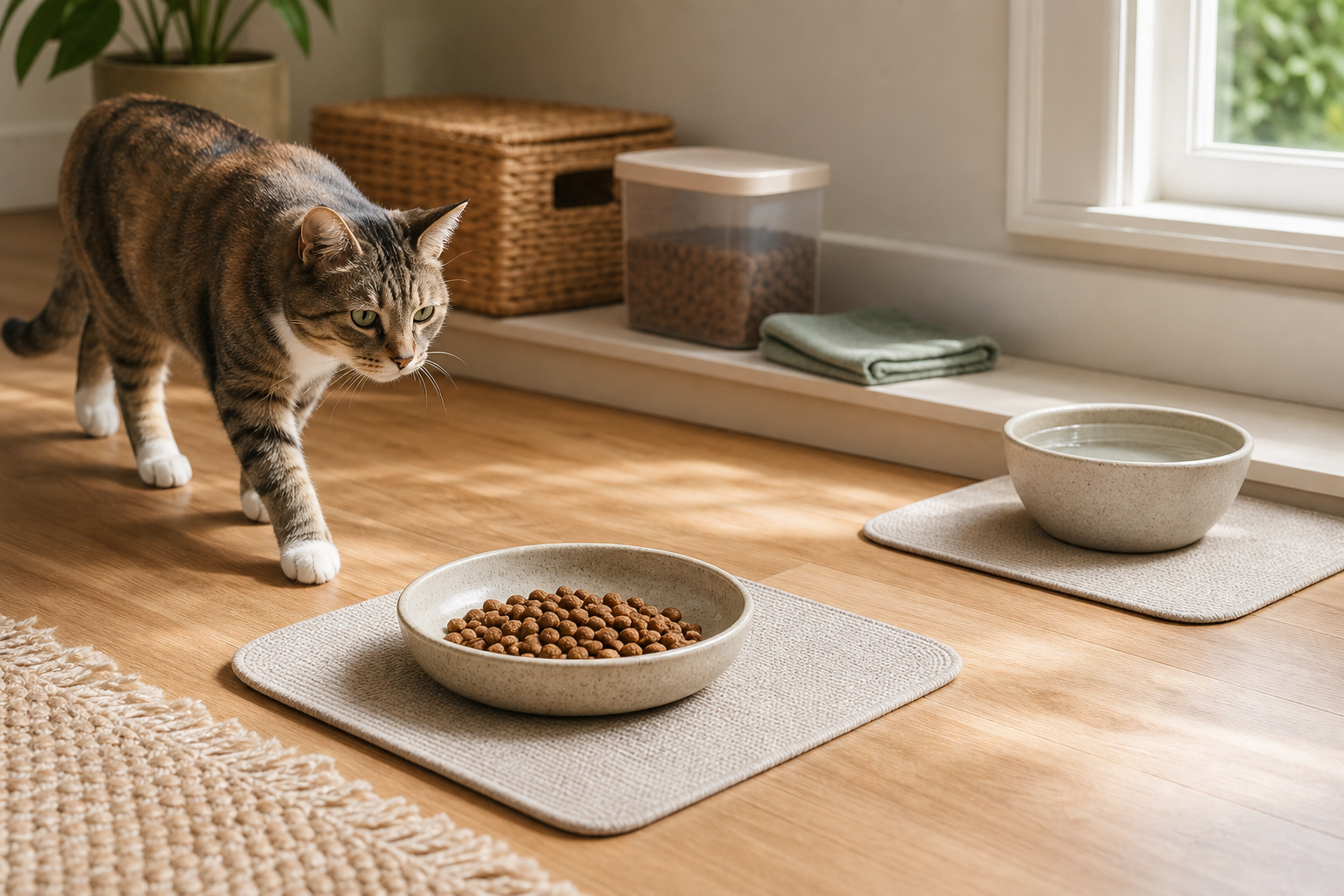
A feeding station is more than a place to put a bowl. Its location, layout and cleaning routine can influence whether a cat approaches meals comfortably, drinks often enough and eats without being interrupted by people or other pets.
A good setup does not need to be expensive or decorative. It needs to be quiet, accessible, easy to wash and adapted to the individual cat. This guide explains how to build one step by step, including practical changes for kittens, senior cats and multi-cat homes.
Quick recommendation: Put the food bowl in a calm place with a clear escape route, move fresh water to a separate nearby location, and make every surface easy to lift, wash and dry.
What Makes a Feeding Station Calm and Clean?
A calm station lets the cat eat without feeling trapped, watched or challenged. A clean station prevents old food, grease, crumbs and standing water from accumulating around the bowls.
The two goals support each other. A quiet location is not useful if it is difficult to clean, and a spotless bowl is not enough if another cat blocks access to it.
A practical station should provide:
- a predictable location;
- low foot traffic and limited sudden noise;
- an open approach and exit route;
- food separated from drinking water;
- distance from litter trays;
- stable, washable bowls;
- a mat or tray that can be removed and cleaned;
- enough space for the cat to stand naturally;
- separate resources when cats do not comfortably share.
Step 1: Choose a Low-Stress Location
Quiet does not mean hidden
Select a place outside the busiest household route. Avoid putting the bowl beside a slamming door, washing machine, vacuum storage area or speaker. The cat should not have to squeeze behind furniture or enter a dead-end corner to eat.
A calm corner of a kitchen, dining area, utility room or hallway can work if it remains accessible and predictable. Watch how the cat already moves through the home. A location the cat visits voluntarily is usually a better starting point than a visually perfect corner it avoids.
Preserve a clear view and escape route
Cats may be reluctant to lower their head over food when they cannot see what is approaching. Place the bowl so the cat can look into the room and move away without passing another pet.
Do not wedge the station between a wall and a large appliance. A little open space around the mat can make the area feel less restrictive.
Keep food and water away from the litter area
The RSPCA advises placing food and water well away from litter trays. If space is limited, use different sides of the room, a visual barrier or separate rooms rather than placing bowls directly beside the tray. See our room-by-room litter box guide for more placement ideas.
Check the floor
The floor should be level, dry and easy to wipe. Avoid deep carpet where wet food and water can soak in. If the only suitable location has carpet, use a rigid waterproof tray under a washable mat.
Step 2: Separate Food from Drinking Water
Food and water do not need to sit side by side. International Cat Care notes that cats may prefer fresh water sources away from food and advises avoiding double feeders that place the two together.
Start by moving the water bowl at least a short distance from the food. In a small room, use opposite ends of the same wall or a nearby counter that is safe and accessible. In a larger home, offer more than one water location.
Separation has practical advantages:
- food crumbs are less likely to enter the water;
- splashed water does not soften nearby dry food;
- each resource can be cleaned without disturbing the other;
- the cat has more opportunities to drink while moving around the home.
Provide fresh water every day. International Cat Care recommends regular cleaning, daily if possible, with soap or dishwashing detergent and hot water followed by thorough rinsing. For additional hydration ideas, read How to Help Indoor Cats Drink More Water Every Day.
Step 3: Choose Bowls That Are Stable and Washable
The best bowl is one the cat uses comfortably and the owner can clean completely.
Look for these features:
- Non-porous surface: Smooth ceramic, stainless steel or glass is generally easier to wash than scratched or porous material.
- Stable base: The bowl should not slide, tip or rattle during meals.
- Appropriate width: Many cats appear comfortable with a wide, shallow eating surface, but preferences vary.
- Safe edges: Check for chips, cracks, rust, rough seams and sharp points.
- Suitable height: Most healthy adult cats can use a floor-level bowl. A cat with mobility, neck or joint problems may need an individualized setup recommended by a veterinarian.
- Simple shape: Deep grooves and decorative corners can hold residue and make washing harder.
Do not assume a raised bowl, fountain or slow feeder is automatically better. Introduce any new format gradually and observe the cat's posture, eating speed and willingness to return.
Step 4: Add a Washable Base
A mat defines the station and catches crumbs and splashes. Choose one that lies flat and does not slide under the cat's paws.
Useful features include:
- waterproof or water-resistant construction;
- a smooth surface or shallow texture;
- rounded edges;
- enough area around the bowl to catch spills;
- easy lifting without folding food debris onto the floor;
- compatibility with the cleaning method you will actually use.
Avoid thick absorbent fabric directly beneath wet food unless it is changed frequently. Damp material can trap odors and stay wet against the floor. A low-lipped tray can help messy eaters, but the lip should not obstruct the cat's stance.
Step 5: Build a Simple Cleaning System
Place the cleaning supplies near the station but outside the cat's reach. A small routine is more reliable than an elaborate setup.
After every wet-food meal
1. Remove leftovers according to the food label and your veterinarian's guidance.
2. Scrape food residue into the appropriate waste container.
3. Wash the bowl with hot water and dishwashing detergent.
4. Rinse thoroughly so no detergent remains.
5. Dry the bowl or allow it to air-dry completely.
6. Wipe visible spills from the mat and floor.
Do not keep adding fresh wet food over dried residue. If you use several small meals, rotate clean bowls rather than leaving one bowl in continuous service.
Every day
- replace drinking water with fresh water;
- wash the water bowl;
- remove dry-food dust and crumbs;
- wipe the feeding mat;
- check the floor for moisture;
- inspect bowls for damage;
- confirm that stored food is sealed.
Every week
- wash and fully dry the mat or tray;
- clean the floor beneath it;
- wipe the outside of the food container;
- inspect the storage area for pests, moisture or stale odors;
- clean fountain components and replace filters according to the manufacturer's instructions;
- review whether the cat is leaving food, approaching nervously or drinking elsewhere.
Use unscented or lightly scented cleaning products suitable for food-contact surfaces, and rinse them well. Strong residual odors may discourage some cats from approaching.
Step 6: Store Food Without Turning the Station into a Pantry
Keep only the amount of food needed for the current meal at the bowl. Store the main supply in a cool, dry location according to the manufacturer's instructions.
For dry food, retaining the original package inside a clean sealed container can preserve the label, batch information and feeding instructions. Do not mix a new bag into old crumbs at the bottom of a container. Empty and clean the container before refilling it.
For wet food, refrigerate opened portions as directed on the label and use a clean utensil. Do not leave opened cans, pouches, medication or supplements beside the station where the cat can reach them.
Step 7: Plan for More Than One Cat
Cats that rest together may still prefer to eat separately. The Feline Veterinary Medical Association warns that group feeding can contribute to gorging, feeding aggression and hidden stress. It recommends distance and visual separation between feeding stations in multi-cat homes.
Do not simply line several bowls against one wall. Instead:
- place stations in different rooms or around a visual barrier;
- make sure one cat cannot guard the only route to food;
- provide each cat with a predictable bowl and location;
- supervise introductions to a new routine;
- feed at different heights only when every cat can access its station safely;
- observe from a distance rather than forcing cats to eat side by side.
Signs of competition can be subtle. One cat may wait until another leaves, eat unusually fast, look over its shoulder, abandon food or approach only when the room is empty.
Step 8: Match the Routine to Natural Feeding Behavior
The FelineVMA feeding guidance recommends dividing a cat's daily allowance into multiple small meals and incorporating hunting or foraging opportunities gradually.
A feeding station can remain the home base while some measured dry food is offered in puzzle feeders or safe hiding locations. Count all food toward the daily ration, and wash puzzle feeders as carefully as bowls.
Predictability matters. Sudden changes in location, bowl type, food or schedule can make it difficult to identify why a cat stops eating. Change one element at a time when possible.
Adjustments for Different Cats
Kittens
Use a shallow, stable bowl and keep the station easy to find. Make sure water is always available. A kitten's food and feeding frequency should match veterinary and label guidance for growth.
Senior cats
Keep the route short, well lit and free of slippery flooring. Watch for stiffness, difficulty lowering the head or hesitation at steps. Ask a veterinarian whether bowl height or location should change.
Cats with flat faces or long coats
A wider bowl may help keep the face and coat cleaner, but the cat's behavior is the best guide. Wipe food from long facial hair gently and keep the bowl rim free from residue.
Timid or newly adopted cats
Begin in the cat's safe room, away from the door and litter tray. Do not hover during meals. Move the station gradually only after the cat eats reliably.
Common Feeding-Station Mistakes
Avoid these frequent setup problems:
- placing food beside the litter tray;
- positioning the bowl in a corner with no escape route;
- keeping food and water in one double feeder;
- using one shared station for cats that avoid each other;
- putting the bowl beside a noisy appliance;
- topping up a dirty bowl without washing it;
- leaving wet mats under the bowl;
- using damaged, chipped or heavily scratched dishes;
- moving the station repeatedly;
- changing the bowl, food and schedule on the same day;
- ignoring insects, moisture or stale odors around stored food.
A 10-Minute Setup Checklist
Use this checklist before serving the first meal:
- [ ] The cat can approach without passing a litter tray or threatening pet.
- [ ] The location is quiet but not a dead end.
- [ ] The floor is level, dry and easy to wipe.
- [ ] The food bowl is stable, smooth and undamaged.
- [ ] Fresh water is available in a separate location.
- [ ] The mat lies flat and can be removed for washing.
- [ ] Food storage is sealed and out of reach.
- [ ] Cleaning supplies are nearby but inaccessible to the cat.
- [ ] Multi-cat stations have distance or visual separation.
- [ ] The daily food amount and meal schedule are clear.
Observe the Cat, Not Just the Station
A clean-looking setup can still be uncomfortable for a particular cat. During the first week, observe whether the cat:
- approaches without crouching or repeatedly stopping;
- maintains a relaxed body posture;
- eats at a steady pace;
- can leave without being followed or blocked;
- uses the water sources;
- returns at normal meal times;
- keeps food down and maintains normal stools.
Record meaningful changes rather than adjusting the station every day. Our daily cat care routine can help owners monitor eating, drinking and behavior consistently.
When to Contact a Veterinarian
Environmental improvements can make meals easier, but they do not diagnose or treat disease. Contact a veterinarian if a cat suddenly refuses food, has difficulty chewing or swallowing, repeatedly vomits, loses weight, drinks much more or less than usual, appears painful at the bowl or shows another significant change.
Cats can become seriously unwell when they do not eat. Do not wait for a new bowl or feeding location to solve persistent appetite loss.
Final Takeaway
The best cat feeding station is not the most elaborate one. It is a calm, accessible place with clean bowls, separated water, a washable base and a routine the household can maintain.
Build the station around the cat's behavior. Keep the layout simple, give each cat safe access and treat changes in eating or drinking as useful health information. A few thoughtful placement and cleaning decisions can make every meal quieter, easier to monitor and more hygienic.
Frequently Asked Questions
Where should I put my cat's feeding station?
Choose a quiet, accessible place with a clear view and escape route, away from litter trays, noisy appliances and busy walkways. The cat should not need to pass another pet to reach food.
Should a cat's food and water bowls be next to each other?
They do not need to be together. Many cats prefer fresh water away from food, and separation helps prevent crumbs from contaminating the water. Offer at least one clean water source in another location.
How often should cat food and water bowls be washed?
Wash wet-food bowls after use and replace drinking water daily. International Cat Care recommends cleaning water containers regularly, daily if possible, with dishwashing detergent and hot water followed by thorough rinsing.
What is the best bowl material for a cat feeding station?
Smooth stainless steel, intact ceramic or glass can be practical because they are non-porous and easy to wash. Whatever the material, the bowl should be stable, free from chips or sharp edges and comfortable for the individual cat.
Do multiple cats need separate feeding stations?
Separate stations are advisable when cats compete, avoid each other or appear tense during meals. Use distance, different rooms or visual barriers so one cat cannot block another cat's food or escape route.
Sources and References
About this article
Practical, evidence-informed pet care guidance from the ShineePets Editorial Team.
ShineePets is a commercial B2B pet-supply sourcing brand. Read our editorial standards and commercial disclosure.