Cat Care
How Often Should Cat Litter Accessories Be Replaced?
Quick answer
No fixed replacement date fits every cat litter accessory. Use a clean–inspect–replace check for scoops, mats, trays, liners and odor inserts.
By ShineePets Editorial Team · Published · Updated
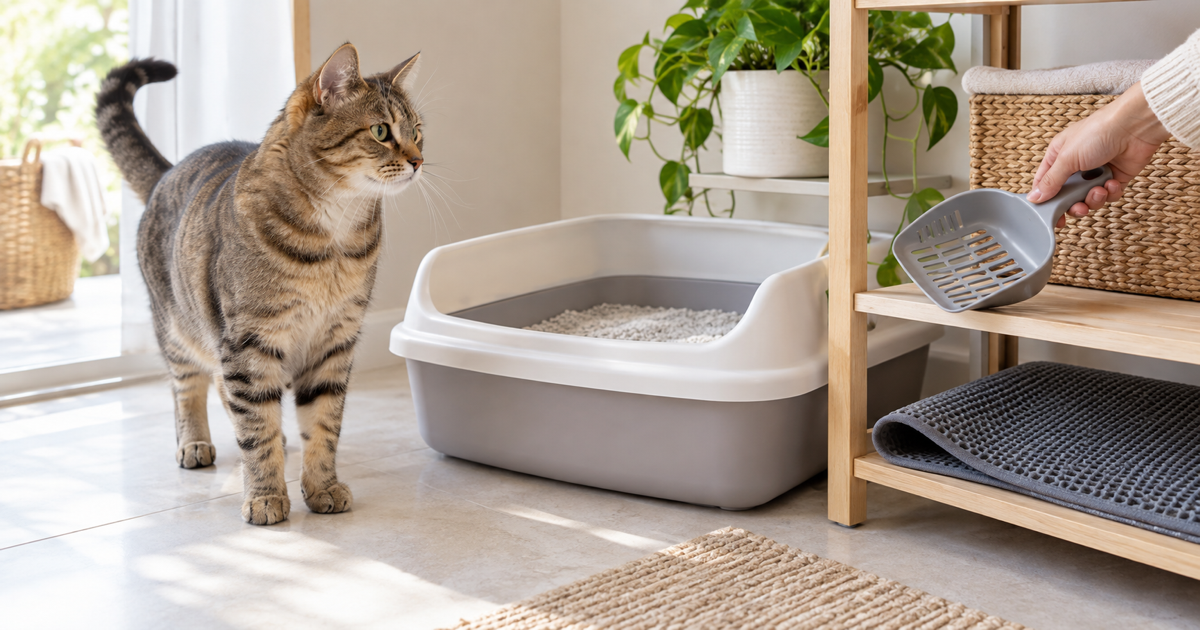
Cat litter accessories do not share one reliable replacement date. Keep a scoop, mat, waste container or tray while it remains intact, easy to clean and acceptable to your cat; replace it when damage, trapped waste, persistent contamination or poor fit defeats those jobs. Cleaning happens much more often than replacement. Scoop waste every day, clean the tray regularly and check the tools as you use them. A new accessory will not fix an unclean litter area—and a sudden change in toileting may be a health problem, not a shopping problem. Cats Protection’s toileting guidance and Cornell’s urinary-tract guide help distinguish these issues.
The practical rule is clean, inspect, then replace only if the item no longer performs its job. The exception is a single-use item, such as a waste bag, which is disposed of after use. The schedule below separates maintenance from a replacement decision; the condition checks are household decision criteria, not manufacturer-certified life spans.
Cat Litter Accessories: Clean, Inspect, or Replace?
| Item | Routine check | Replace or remove when… |
| --- | --- | --- |
| Scoop | Remove waste daily; wash when soiled and dry fully | The edge cracks, slots break, the handle loosens, or residue cannot be removed |
| Litter mat | Shake out tracked litter and wash according to its label when dirty | It tears, curls into a trip or access obstacle, stays damp, or cannot be cleaned thoroughly |
| Litter tray or box | Empty and wash regularly; inspect during each full clean | It breaks, warps, develops hard-to-clean damage, or no longer suits the cat’s size or mobility |
| Hood, door or removable rim | Check hinges, clips and underside when cleaning | Parts fail, trap dirt, obstruct entry or make the cat avoid the box |
| Waste pail or caddy | Empty and clean its surfaces as needed | It leaks, cracks, cannot close properly or retains soil after cleaning |
| Disposable bag or liner | Check for tears and follow its intended single-use cycle | It has been used, torn or soiled; avoid tray liners if your cat dislikes them |
| Filter or deodorizer insert | Follow the maker’s instructions, if you use one | Its stated service period ends or it no longer performs after the tray itself has been cleaned |
These are replacement triggers, not a promise that any material will last a particular number of months. Product construction, cleaning method, litter type, cat behavior and household use all change wear. If an item has a manufacturer service schedule, follow it unless damage calls for an earlier change.
Start With the Cleaning Routine, Not the Shopping List
Cats Protection advises removing deposits twice a day and washing the entire tray at least weekly; some cats need more frequent removal, and hooded trays may need extra attention because odors can build up inside. The Feline Veterinary Medical Association recommends at least daily scooping and a convenient, clean toileting area. Cats Protection · Feline Veterinary Medical Association
At each scoop, glance at the tool’s teeth and handle. At the full tray clean, empty the litter, wash the tray and removable parts as directed, rinse and dry them, and inspect seams, corners and clips before refilling. Clean a mat separately according to its care label. Keep a dedicated brush or wash tub for heavily soiled pet items rather than using a food-preparation surface. The CDC’s pet-supply cleaning guide distinguishes cleaning from disinfection, advises following product labels and keeping pets away while cleaning chemicals are in use.
Disinfection is an additional step when appropriate, not a substitute for first removing waste. The CDC notes that items touching feces or urine, including litter boxes, merit more frequent disinfection and extra care when a pet or household member is at higher risk from germs. Choose a method compatible with the item and product label, rinse when directed, and let surfaces dry before the cat returns. Do not spray fragrance to cover a dirty tray. CDC pet-supply cleaning guide
Decide Whether a Scoop, Mat, or Box Has Reached Its Limit
Scoop: Keep it if its edge lifts clumps without crumbling, the openings remain clear and the handle is secure. A broken tooth or sharp crack can make scooping less effective and harder to clean. Replace the tool when washing cannot restore a smooth, usable surface. There is no evidence-based rule that every plastic scoop must be replaced at a fixed interval.
Mat: Its job is to catch tracked litter without making the route to the box unpleasant. Shake out trapped granules and wash both sides when soiled. Replace a mat that curls underfoot, holds moisture, tears or has a deep structure you cannot clean. If the cat jumps over it or refuses the box after it is added, remove the mat and reassess; the accessory is optional, but access to the tray is not. The Feline Veterinary Medical Association’s environmental guidance emphasizes convenient, unchallenged access to toileting resources.
Tray: Replace it immediately if it breaks or becomes unstable. Otherwise, judge it after a thorough wash: can you remove visible deposits from corners and the base, and can the cat enter, turn and dig comfortably? A sound tray may still need changing when a kitten grows or an older cat struggles with high sides. Cats Protection explicitly recommends replacing broken trays and using easier-entry trays for older cats with reduced mobility. Cats Protection’s toileting guidance
Before discarding a tray for “odor,” clean the entire setup, check the surrounding floor and confirm that the litter is being changed appropriately. A replacement box with the same small dimensions or awkward location will not solve a size or access problem. See our room-by-room litter-box placement guide if the location itself may be the issue.
Be Selective With Liners, Hoods, and Odor Accessories
Plastic tray liners are not essential. Cats Protection advises against newspaper or plastic liners because some cats find them off-putting. If your cat scratches, tears or avoids a liner, remove it instead of replacing it with another liner on a calendar. Never leave torn plastic where the cat can interact with it. Cats Protection
A hood or swing door may look tidy to people but can trap smells or make entry less comfortable. Clean the underside and hinges when you wash the tray. If a broken latch or stiff door obstructs access, repair or remove that part, or use an open tray. Replace only the affected component if the manufacturer supplies a compatible spare; otherwise assess the whole box. Cats Protection notes that hooded trays need particularly careful cleaning. Cats Protection
Filters, deodorizer cartridges and scented inserts are not substitutes for waste removal. Their replacement intervals are product-specific; follow the maker’s directions, and do not claim that an odor is “fixed” when the tray is still soiled. Cats can be sensitive to unfamiliar or scented products around toileting areas, as the Feline Veterinary Medical Association explains. If a new insert coincides with avoidance, remove it and observe whether use returns to normal.
Use a Two-Minute Replacement Check
At the next full clean, ask five questions:
1. Is any part broken, sharp, warped, leaking or unstable?
2. Does waste remain in grooves, seams or fabric after normal cleaning?
3. Can the cat reach and use the tray comfortably today?
4. Did a newly added accessory coincide with avoidance or hesitation?
5. Would cleaning, moving or removing the accessory solve the problem without buying a replacement?
If the answer points to damage or an uncleanable surface, replace that part. If it points to fit or access, choose a more suitable design. If the cat’s behavior changes suddenly, do not assume the equipment is the only cause. Cats Protection advises veterinary assessment for new house-soiling; Cornell lists straining, painful or frequent urination, blood in urine and urination outside the box among signs needing veterinary attention. A cat repeatedly trying to urinate while producing little or no urine needs immediate veterinary care because a urinary blockage is an emergency. Cats Protection · Cornell University College of Veterinary Medicine
Wash hands after handling litter or accessories. If you are pregnant or immunocompromised, ask another household member to change the litter when possible; if that is not possible, use disposable gloves and wash your hands afterward. CDC guidance for people at increased risk gives those precautions, and its prevention guidance recommends daily litter-box cleaning. This article offers routine home-care guidance, not a diagnosis or a substitute for advice from your veterinarian or physician.
Choosing new litter rather than replacing accessories? Compare texture, tracking and cleaning needs in our cat litter types guide.
Sources and Further Reading
- Cats and Toileting — Cats Protection
- About Cleaning and Disinfecting Pet Supplies — CDC
- Client Education: Cat-Friendly Practices — Feline Veterinary Medical Association
- Feline Lower Urinary Tract Disease — Cornell University College of Veterinary Medicine
- Preventing Toxoplasmosis — CDC
- People at Increased Risk for Toxoplasmosis — CDC
For retailers, distributors and pet brands
Building a cat-product assortment?
Explore cat trees, scratchers, toys, grooming and feeding products, with B2B sourcing and customization support.
Explore Wholesale Cat Products Discuss OEM/ODMFrequently Asked Questions
Should I replace a plastic litter box every year?
No universal annual deadline is supported. Replace it if it breaks, becomes hard to clean or no longer fits your cat; otherwise keep cleaning and inspecting it regularly.
Can I wash a litter scoop instead of buying a new one?
Yes, if the scoop remains intact and the residue can be removed. Wash and dry it according to its material and replace it if the edge, slots or handle fail.
Are disposable tray liners necessary?
No. Some cats dislike plastic liners. If a liner tears or your cat avoids the tray after it is added, remove it; keep the tray clean without relying on a liner.
How often should I change a litter-box filter?
Follow the specific product instructions, and replace it sooner if damaged. First clean the box and remove waste; a filter cannot compensate for a dirty tray.
Does sudden litter-box avoidance mean I need new accessories?
Not necessarily. Check cleanliness and access, but contact a veterinarian about sudden toileting changes. Repeated straining with little or no urine needs immediate veterinary care.
Sources and References
- Cats and Toileting — Cats Protection
- About Cleaning and Disinfecting Pet Supplies — CDC
- Client Education: Cat-Friendly Practices — Feline Veterinary Medical Association
- Feline Lower Urinary Tract Disease — Cornell University College of Veterinary Medicine
- Preventing Toxoplasmosis — CDC
- People at Increased Risk for Toxoplasmosis — CDC
Continue Reading
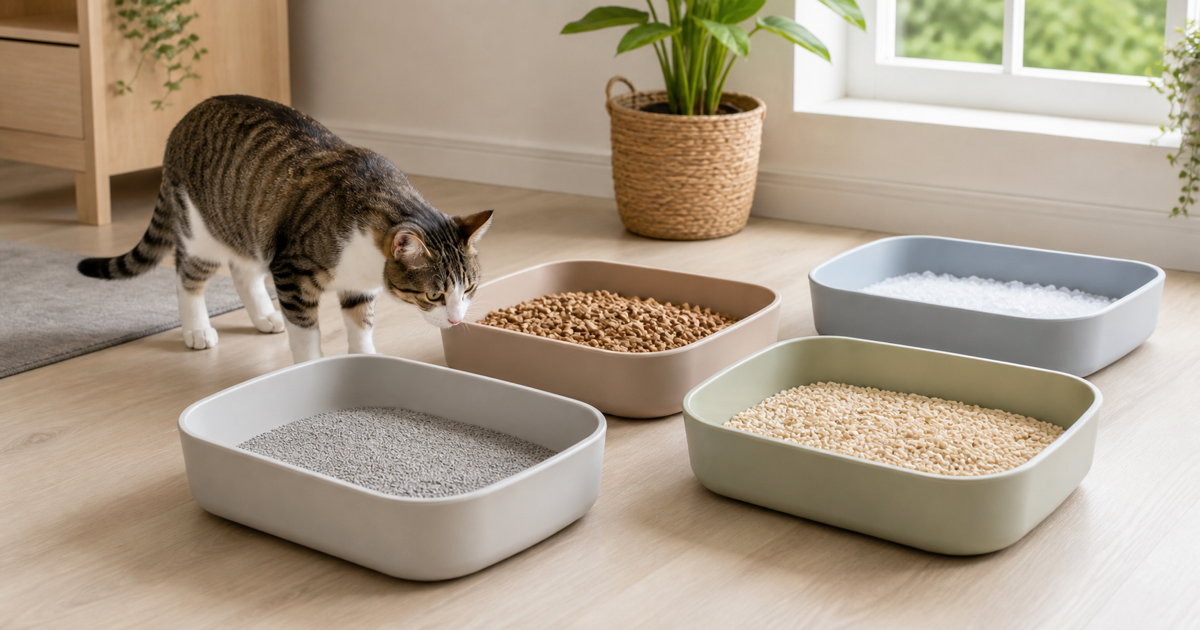
Cat Litter Types Compared: Clay, Tofu, Wood and Silica
Compare clay, tofu, wood and silica cat litter by texture, clumping, dust, tracking, cleaning and cat comfort before changing products.
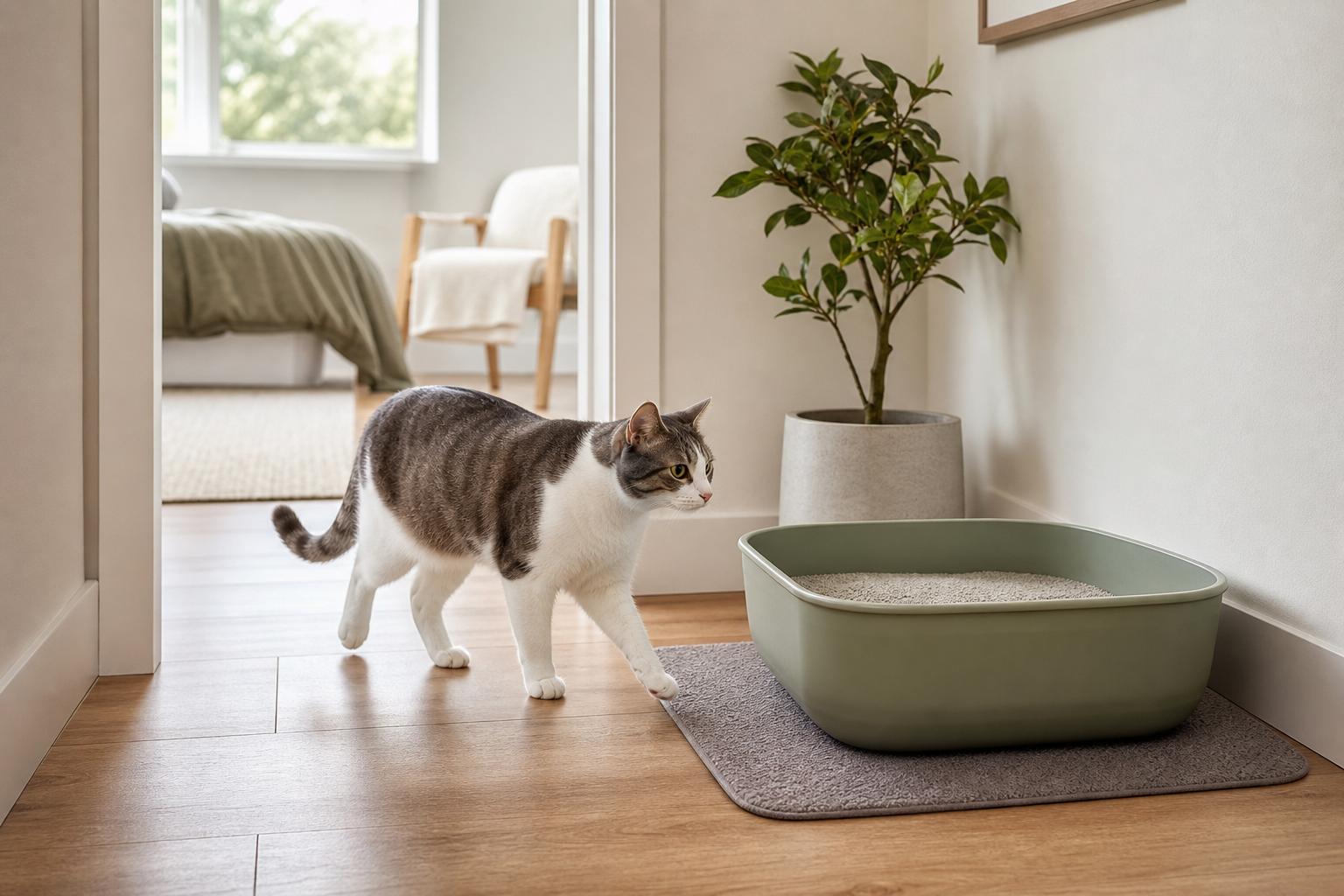
Cat Litter Box Placement: A Room-by-Room Guide
A practical room-by-room guide to placing litter boxes for privacy, easy access, cleaner routines and lower conflict in single- and multi-cat homes.
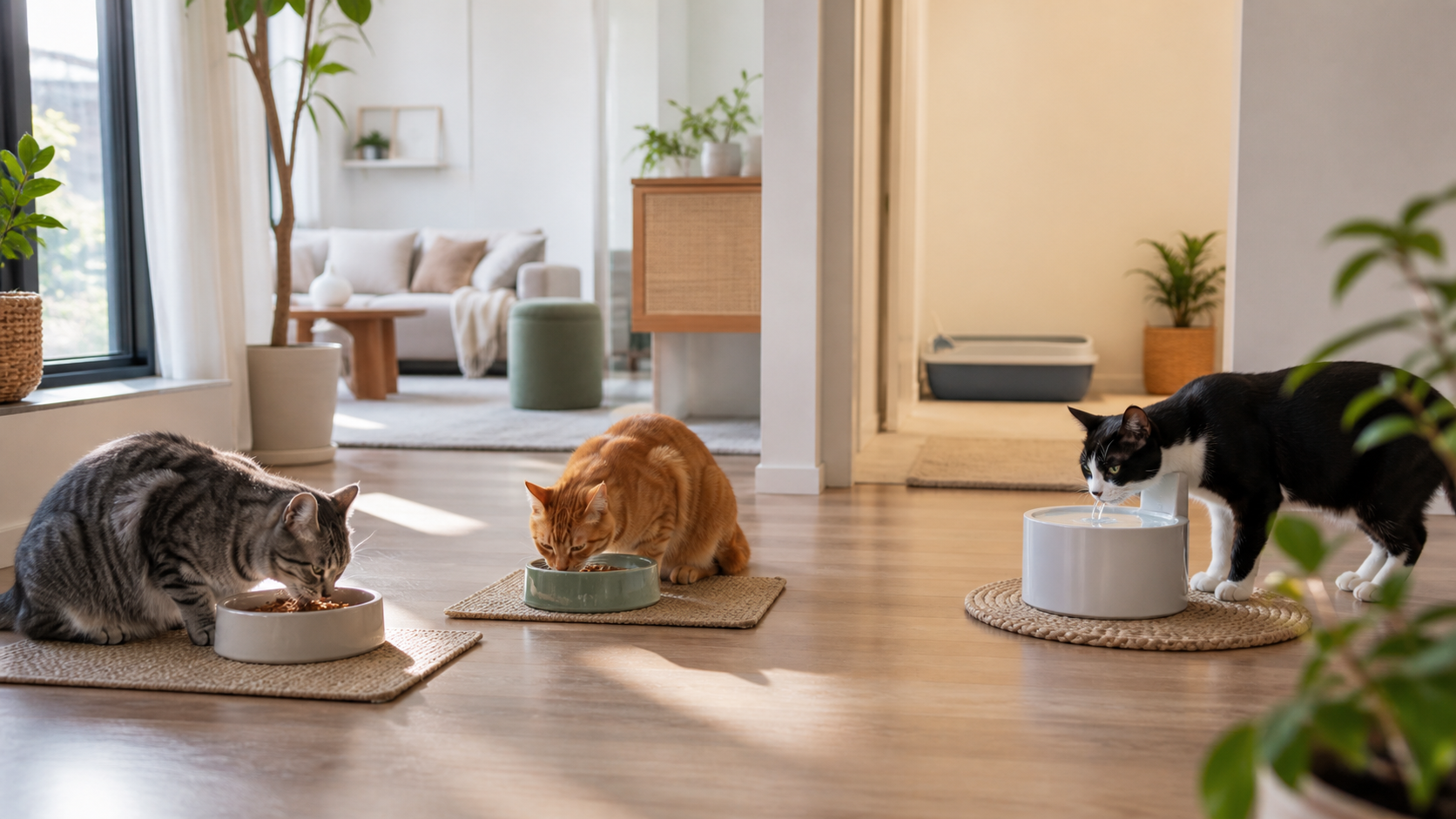
Multi-Cat Homes: Managing Food, Water and Litter
Manage food, water and litter in a multi-cat home with separated resources, safer routes, individual monitoring and practical cleaning routines.