Dog Care
Essential Dog Travel Gear for Cars and Short Trips
Quick answer
Build a practical dog car-travel kit with a fitted restraint, separate leash, water, cleanup supplies, first aid and a pre-trip safety check.
By ShineePets Editorial Team · Published · Updated
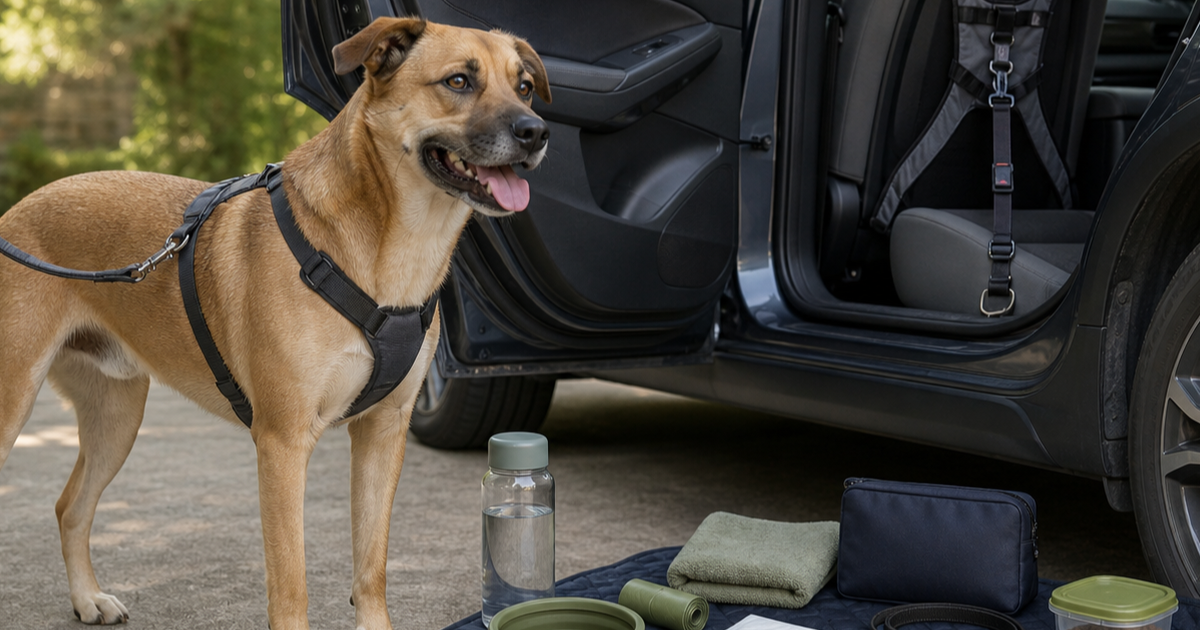
Essential dog travel gear for a car or short trip starts with five systems: a vehicle restraint or secured crate, a separate walking leash and identification, drinking water and a bowl, cleanup supplies, and an emergency kit with veterinary contacts. Add comfort items only when they do not interfere with restraint, ventilation or driver visibility.
The right kit depends on the dog's size, health, behavior and vehicle. Fit and rehearse equipment before departure. A short drive does not remove crash, escape or heat risk, so restraint and identification remain priorities.
Build Dog Travel Gear Around Real Risks
Pack by function rather than filling a generic “pet travel” bag. Every item should control one of these risks:
1. Vehicle movement: Prevent the dog from roaming and provide an appropriate restraint or containment system.
2. Escape during transfer: Keep a fitted walking setup connected before any vehicle door opens.
3. Heat and dehydration: Carry water and maintain a safe cabin environment.
4. Mess and delay: Manage drool, mud, urine, vomit or an unexpected wait.
5. Injury or illness: Keep first-aid supplies, medication and emergency contacts accessible.
The CDC advises keeping dogs in the back seat with a harness attached to the seat-belt system or using a ventilated crate that is secured against shifting. It also warns against allowing pets to roam or put their heads outside a window. Read the CDC pet travel guidance. Product instructions and vehicle compatibility still determine how a specific device should be installed.
1. Choose a Vehicle Restraint or Secured Crate
A walking harness, car restraint harness and crash-protection product are not automatically the same thing. Decide whether the goal is only to limit driver distraction or also to provide tested crash protection, then ask for evidence supporting the claim.
Vehicle harness checklist
Look for:
- a size range based on body measurements, not breed name alone;
- broad load-bearing straps positioned away from the throat;
- adjustment that remains set after repeated use;
- metal or engineered load-path hardware appropriate to the design;
- clear instructions for both dog fit and vehicle attachment;
- independent crash-test information that identifies the tested size and setup;
- replacement guidance after a collision or visible damage.
Never connect a vehicle tether to the dog's collar. A collar carries identification; it is not designed to distribute crash forces across the body. For everyday collar adjustment, use the ShineePets guide to fitting a dog collar safely.
Crate or carrier checklist
A crate should let the dog stand, sit, turn and lie naturally, while remaining small enough to control excessive movement. Check ventilation, door security, structural fasteners and the manufacturer's vehicle installation method. Secure it so that ordinary braking cannot make it slide, tip or rotate.
The Center for Pet Safety warns that extension tethers and zipline-style systems allow excessive movement and can negate a harness manufacturer's crash-protection claim. Read the extension-tether advisory. Because “crash tested” can describe different protocols, examine independent evidence rather than relying on the phrase alone. Follow the exact instructions for the selected product and vehicle; do not improvise attachment points.
2. Pack a Separate Walking and Transfer Setup
The vehicle system should stay installed, while a separate leash handles movement between the home, car and destination. Pack:
- a standard fixed-length leash in good condition;
- a correctly fitted walking harness or collar;
- current ID tag and updated microchip contact details;
- a spare leash or simple backup connector;
- a small light for low-visibility stops if the trip may end after dark.
Connect the leash before opening the vehicle door. A dog that is normally reliable may react differently to traffic, unfamiliar dogs or a new parking area. Avoid relying on an open tailgate, voice cue or retractable leash as the primary transfer control.
Check buckles, stitching, D-rings and leash clips before every trip. Replace hardware that sticks, bends or opens under side pressure. The walking harness must not restrict normal shoulder movement or rub behind the front legs.
3. Carry Water and a Stable Bowl
Bring more water than the planned drive appears to require in case of traffic, a breakdown or a warmer-than-expected stop. Use a leak-resistant container and a bowl the dog already accepts.
A practical travel bowl should:
- be wide and stable enough for the dog's muzzle;
- open and close without creating sharp folds;
- resist tipping on the intended surface;
- be easy to rinse and dry completely;
- remain separate from waste and first-aid items.
For a comparison of capacity, stability and life-stage needs, see Choosing Dog Bowls for Puppies, Adults and Seniors.
Do not introduce unfamiliar food or rich travel treats simply because the trip is short. Pack the regular food only when timing or delays may make it necessary. Ask the veterinarian for feeding instructions if the dog has diabetes, gastrointestinal disease, takes medication with food or has a history of motion sickness.
4. Add Cleanup and Comfort Without Blocking Safety
Useful cleanup items include:
- waste bags;
- absorbent pads;
- a washable towel;
- pet-safe wipes selected for the intended use;
- a sealable bag for soiled materials;
- a washable seat or crate liner.
A blanket or familiar mat may help the dog settle, but it should lie flat and remain clear of buckles, straps, vents and crate latches. Avoid loose pillows, heavy toys or hard objects that could move during sudden braking. A seat protector is secondary to restraint and must not cover the vehicle connection points required by the safety device.
Use a waterproof container or separate pouch so spilled water and soiled items do not contaminate food, medication or documents. After the trip, wash and dry bowls, liners and reusable cleanup equipment before repacking the kit.
5. Keep an Emergency and First-Aid Pouch Accessible
The kit should be reachable from a safe stop without unloading the entire vehicle. Pack only supplies the owner knows how to use, including:
- veterinarian and destination emergency-clinic contacts;
- vaccination or health records needed for the route;
- prescribed medication in its original labeled container;
- gauze, non-stick dressings and self-adhering bandage;
- blunt-tip scissors and disposable gloves;
- saline suitable for wound or eye flushing when advised;
- a clean towel or blanket for handling;
- a recent photo of the dog and emergency contact card.
The American Red Cross recommends an emergency kit and advises discussing travel anxiety or motion-sickness medication with a veterinarian, including whether it should be tested in advance. See the Red Cross pet travel guidance. First aid supports the dog until veterinary care is available; it does not replace diagnosis or treatment.
Do not add human pain medication, unlabelled tablets or leftover prescriptions. If the dog is injured or ill, contact a veterinarian before giving anything not already included in the dog's written care plan.
Match the Kit to Dog Size and Life Stage
| Dog profile | Gear adjustment | Main check |
|---|---|---|
| Puppy | Smaller adjustable restraint, absorbent pads, more frequent planned stops | Fit has not become loose as the puppy grows |
| Small adult | Correctly sized carrier or harness; compact bowl | Vehicle attachment matches the product's tested configuration |
| Large or deep-chested dog | Longer fitting session, strength-rated hardware, stable water bowl | Straps lie on the body as instructed without throat pressure |
| Senior dog | Nonslip loading surface, step or ramp if already trained, supportive flat liner | Entry does not require jumping or painful twisting |
| Dog with medical needs | Written veterinary plan, labeled medication, records and destination clinic | Temperature, feeding and medication timing are confirmed |
A ramp is useful only when it is stable, correctly rated and introduced before travel. An unfamiliar ramp at the roadside can increase hesitation or fall risk. For older dogs with changing mobility, the ShineePets guide to senior dog beds, ramps and supportive gear provides a broader home-and-travel framework.
Do a Five-Minute Pre-Trip Check
Fit and installation
- Confirm the harness or crate matches the dog's current weight and measurements.
- Inspect stitching, shell panels, doors, latches and vehicle connectors.
- Install the device exactly as the manufacturer specifies.
- Check that it does not interfere with seat belts, airbags or driver visibility.
Load and access
- Put water, leash, waste bags and first-aid pouch where they can be reached at a safe stop.
- Keep heavy or hard luggage from moving toward the dog.
- Confirm that liners and seat covers do not block attachment points or ventilation.
- Set the cabin temperature before loading the dog.
Dog readiness
- Give the dog a calm toilet break before departure.
- Attach the walking leash before approaching the open vehicle.
- Watch for reluctance, drooling, lip licking, pacing or vomiting.
- Delay the trip and call the veterinarian when the dog is unwell or cannot travel safely.
Recognize Motion Sickness and Travel Anxiety
Gear cannot diagnose or cure nausea. VCA lists whining, pacing, excessive drooling, lip licking, lethargy, vomiting and defecation among possible signs of canine motion sickness. It recommends gradual conditioning and veterinary advice when additional support is needed. Read the veterinary overview.
Start with the dog resting in a parked vehicle, then progress to very short drives and positive destinations. Stop while the dog is still coping. If signs continue, ask the veterinarian whether nausea, anxiety, pain or another condition may be contributing. Do not improvise medication or use a sedating product solely to make restraint easier.
What Not to Pack or Use
- a neck-collar connection to the vehicle tether;
- long extension tethers or zipline systems without credible safety evidence;
- loose hard toys, glass bottles or unsecured storage boxes;
- a seat cover that hides required restraint anchors;
- unfamiliar food or supplements introduced on travel day;
- medication not prescribed or approved for the dog;
- a damaged crate, frayed harness or sticking carabiner;
- any setup that allows the dog to reach the driver or put its head outside a window.
Never leave a dog alone in a parked vehicle. The CDC warns that vehicle temperatures can become dangerous quickly, and opening a window does not make a parked car safe. Review the CDC travel guidance.
Dog Travel Gear Final Checklist
Before a car or short trip, confirm that:
- the dog has a correctly fitted vehicle restraint or secured crate;
- the product's installation and crash-test claims have been verified;
- a separate fixed-length leash is connected before doors open;
- identification and microchip contact details are current;
- water, a stable bowl and delay allowance are packed;
- waste bags, absorbent pads, towel and a soiled-item bag are available;
- first-aid supplies, records and emergency contacts are accessible;
- medication remains labeled and follows the veterinary plan;
- comfort items do not block restraints, latches or ventilation;
- the cabin is ready and the dog has completed calm practice drives;
- no dog will be left unattended in the vehicle.
The most useful travel kit is compact, fitted to one dog and installed correctly. Extra accessories do not compensate for an unsuitable restraint, an unsecured crate or an escape risk at the door.
*This article provides general product-selection and pet-care information. It does not replace veterinary advice, emergency care, vehicle instructions or local legal requirements.*
Sources and Further Reading
Frequently Asked Questions
What is the most important dog travel gear for a short car trip?
Start with a correctly fitted vehicle restraint or secured crate, a separate leash and identification, water and a bowl, cleanup supplies, and an accessible emergency kit.
Can I attach a dog seat-belt tether to a collar?
No. A collar should carry identification, not distribute vehicle forces. Use a vehicle restraint harness and attachment method specified for that product.
Is a walking harness the same as a crash-tested car harness?
Not necessarily. Walking products may only control everyday movement. Check independent test evidence, the tested size and the exact vehicle installation before relying on a crash-protection claim.
How much water should I pack for a short trip?
Pack enough for the planned outing plus a reasonable delay. The amount depends on the dog's size, health, weather and activity, so ask a veterinarian about dogs with medical restrictions.
What should I do if my dog drools or vomits in the car?
Stop safely, keep the dog cool and contact a veterinarian if signs are severe or recurring. Drooling, lip licking, pacing and vomiting can occur with motion sickness or anxiety.
About this article
ShineePets publishes practical, source-checked guidance for pet owners and pet-product professionals.
ShineePets is a commercial B2B pet-supply sourcing brand. Read our editorial standards and commercial disclosure.