Small Pet Care
Guinea Pig Feeding Stations: Hay, Water and Cleanliness
Quick answer
Build a cleaner guinea pig feeding station with constant hay, reliable water, measured food and a repeatable daily hygiene and monitoring routine.
By ShineePets Editorial Team · Published · Updated
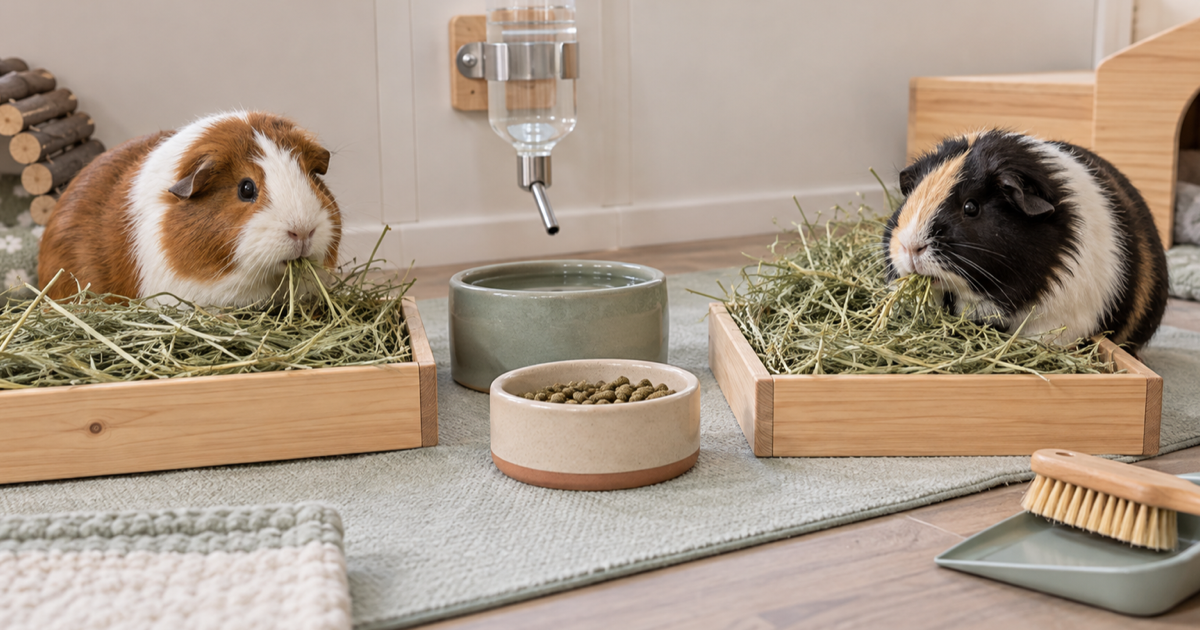
A well-designed guinea pig feeding station keeps hay continuously available, fresh water easy to reach and measured foods separate from wet bedding and waste. It is not one crowded corner. It is a small system of accessible feeding points, clear walking routes and surfaces that can be checked and cleaned without disrupting the whole enclosure.
For a compatible pair or group, distribute hay and water so one guinea pig cannot control every resource. Use low, stable containers, verify bottles and bowls every day, remove spoiled fresh food promptly and watch what each animal actually eats. The station should make problems visible: an empty bottle, damp hay, untouched pellets or fewer droppings should be noticed during routine care, not days later.
Quick recommendation: Build at least two easy-access hay points and more than one practical route to water for a social group, then use a written morning-and-evening check rather than relying on how full the containers look.
A Guinea Pig Feeding Station Has Four Jobs
Treat the setup as four connected zones.
| Zone | Main job | Useful equipment | Failure to prevent |
|---|---|---|---|
| Hay | Continuous grazing access | Open hay tray, large clean pile or carefully designed feeder | Empty, damp or trapped hay |
| Water | Continuous hydration | Stable bowl, functioning bottle or both | Blockage, leakage, contamination or competition |
| Measured food | Pellets and fresh produce | Heavy, washable dish | Endless top-ups and spoiled leftovers |
| Care area | Inspection and cleaning | Washable mat, small brush, food-only scoop and checklist | Hidden wet spots and inconsistent handoffs |
Keep sleeping hides and main running lanes usable. A feeding station should not block a hide entrance or force one guinea pig to squeeze past another to eat or drink.
Choose a Dry, Visible Location
Place food and water on a solid, foot-friendly surface that stays level. The caregiver should be able to see the water level, sipper tip, hay condition and floor beneath the station without dismantling the enclosure.
Avoid placing the station:
- beneath a shelf where urine or debris can fall into food;
- beside a hide with only one exit, where another guinea pig can block access;
- in a damp corner or directly under a leaking bottle;
- against a radiator, sunny window or draught; or
- where a dog, cat or busy household route repeatedly frightens the guinea pigs.
The RSPCA's guinea pig environment guidance recommends a dry, well-ventilated home, daily spot cleaning and, on average, a weekly deep clean adjusted for enclosure and group size.
Make Hay the Largest Part of the Station
Good-quality grass hay should be the most abundant and easiest resource to reach. The RSPCA states in its guinea pig diet guidance that hay should form most of the diet and remain available at all times. This supports normal grazing, digestion and tooth wear.
Use a large open tray or loose pile if it keeps hay accessible and supports natural foraging. A feeder can separate feeding hay from wet bedding, but openings must not trap a head or limb, and the animal should not have to stretch, climb or balance on a narrow edge.
For two guinea pigs, one attractive hay pile can become a social bottleneck. Provide separated access points with enough space for both animals to eat without facing or climbing over each other. Refill before the last clean hay disappears; do not wait until the tray is bare.
At every check:
- remove hay that is wet, mouldy, dusty or heavily soiled;
- lift the remaining hay to inspect the floor underneath;
- confirm each guinea pig can reach it with all four feet supported; and
- add fresh hay without mixing it into a damp bottom layer.
For selection, storage and feeder-risk details, use the separate guinea pig hay guide.
Build Redundancy Into the Water Setup
Fresh water must remain available continuously. A bottle can keep the reservoir away from bedding, while a heavy bowl may be easier for some guinea pigs to use. Neither format is maintenance-free.
| Water option | Advantage | Daily risk check |
|---|---|---|
| Sipper bottle | Limits open-surface contamination | Tap the ball, confirm flow, inspect for air lock, leakage and algae |
| Heavy bowl | Natural open drinking surface | Check tipping, bedding, droppings and wet floor around it |
| Bowl plus bottle | Offers choice and backup during a transition | Clean and verify both; do not assume one compensates for neglect of the other |
The 2026 Merck Veterinary Manual review on guinea pig housing and nutrition notes that guinea pigs can soil sipper tubes, so water should be changed and nozzles checked often. The RSPCA recommends checking fresh water twice daily. VCA's guinea pig feeding guidance advises daily cleaning of bowls and sippers and checking tubes for food, algae or blockage.
Mount a bottle at a comfortable height and secure the tip without making the bottle difficult to remove for cleaning. Marking the morning water level can help reveal a leak, but still watch each animal drink.
If changing from a bottle to a bowl or the reverse, overlap the old and new water sources and monitor use. The UK's statutory guidance for licensed pet sellers specifically says changes in guinea pig drinking receptacles should be gradual and drinking should be monitored. Pet owners can apply the same precaution without treating the licensing document as a universal legal rule for homes.
Keep Pellets and Fresh Produce Measured
Use a small, stable dish for the veterinarian-appropriate portion of guinea-pig-specific pellets. Do not keep topping up yesterday's crumbs: vitamin C in fortified pellets degrades over time, and a permanently full bowl hides how much was eaten. Follow the current food label and veterinary guidance for the individual animal's age and health.
Offer washed fresh produce in a separate clean area rather than burying it in soiled hay. Remove wilted, contaminated or uneaten pieces before they spoil. Introduce dietary changes gradually.
Guinea pigs require dietary vitamin C, but adding it to drinking water is not a reliable general solution. Merck advises against water supplementation because it requires frequent changing, can alter taste and may reduce intake. Ask an exotics veterinarian to set the vitamin C plan rather than adding drops to the shared bottle.
Use a Cleaning Sequence That Protects the Food
Cleaning is easier when the order is repeatable. Keep a food-only scoop, bottle brush and bowls separate from tools used for litter and waste.
Morning and evening
1. Observe both guinea pigs before moving anything.
2. Confirm each animal approaches hay and can reach water.
3. Test every bottle and inspect every bowl.
4. Remove wet hay, leftover produce and obvious waste.
5. Wipe or replace the feeding mat if damp.
6. Refill water and hay with clean hands and utensils.
7. Record unusual intake, wetness or droppings.
After fresh food
Collect uneaten produce and wash its dish. The U.S. FDA's pet-food handling advice recommends washing food bowls and measuring utensils with soap and hot water after use, using a dedicated scoop and discarding spoiled food safely.
During the deeper clean
Move the guinea pigs to a secure familiar area with hay and water. Empty and wash containers according to their material and manufacturer instructions, rinse away residue and dry everything before refilling. Inspect bottle seals, sipper balls, bowl glaze, tray corners and feeder fasteners. Replace cracked, chipped, corroded or uncleanable items.
Do not spray cleaner over food, water or animals. Follow its dilution, contact-time, rinsing and storage instructions.
Prevent Competition in a Pair or Group
A shared station is useful only if every guinea pig can use it. Watch from a distance during the busiest feeding period. Repeated chasing, blocking, guarding, weight loss or one animal waiting until the other leaves means the layout needs more separation and professional advice if conflict persists.
Duplicate the high-value resources rather than placing two bowls side by side. Put hay and water points far enough apart that one guinea pig cannot cover both with its body. Preserve more than one approach and exit route. The ShineePets guide to guinea pig companionship and proper space explains how space, hides and duplicated resources work together.
Do not use one group bowl to judge individual intake. Weigh each guinea pig regularly on a suitable gram scale and keep trends by name. If an animal needs a therapeutic diet, medication or closer intake measurement, ask the veterinarian how to separate feeding without causing unnecessary social stress.
Know When the Station Is Revealing a Health Problem
The setup cannot diagnose illness, but it can reveal change. Contact an exotics veterinarian promptly if a guinea pig eats less, stops eating, drinks much more or less, produces fewer or abnormal droppings, loses weight, has a wet chin, struggles to chew, sits hunched, seems weak or has noisy or difficult breathing.
Do not assume untouched food means boredom or fix it only by buying a different bowl. The RSPCA advises immediate veterinary consultation for changes in eating, drinking or toilet habits. Guinea pigs can deteriorate quickly when intake falls.
Final Feeding Station Check
- Hay is clean, abundant and continuously accessible.
- A social group has separated hay access and practical water redundancy.
- Every bottle flows and every bowl is stable, clean and reachable.
- Pellets are measured and fresh produce is removed before spoilage.
- Wet hay and damp flooring are found during twice-daily checks.
- Food utensils never double as waste-cleaning tools.
- Containers are intact, washable and free of trapped residue.
- Each guinea pig's appetite, droppings and weight trend can be monitored.
- Any meaningful change triggers veterinary advice, not guesswork.
A successful guinea pig feeding station is not spotless for every minute of the day. It is designed so contamination, equipment failure and unequal access are easy to detect and correct while the animals keep grazing, drinking and moving normally.
*This article provides general husbandry information and does not replace diagnosis, treatment or an individualized nutrition plan from a veterinarian experienced with guinea pigs.*
Sources and Further Reading
- Housing and Nutrition of Guinea Pigs — Merck Veterinary Manual
- What to Feed a Guinea Pig — RSPCA
- Creating a Good Home for Guinea Pigs — RSPCA
- Selling Animals as Pets: Statutory Guidance — GOV.UK
- Tips for Safe Handling of Pet Food and Treats — U.S. Food and Drug Administration
- Feeding Guinea Pigs — VCA Animal Hospitals
Frequently Asked Questions
Is a water bottle or bowl better for guinea pigs?
Either can work when it is reachable and maintained. Bottles can block or leak; bowls can tip or collect bedding. Many groups benefit from more than one verified water option, especially during a gradual transition.
How often should a guinea pig feeding station be cleaned?
Check and spot-clean it at least morning and evening, remove fresh-food leftovers promptly, and wash food and water containers daily or after use as appropriate. Adjust deeper cleaning to enclosure and group size.
Can I place guinea pig hay over a litter tray?
A large low tray can contain some mess and keep the floor easier to inspect, provided access is comfortable and the hay above it remains clean, dry and available at all times.
How many feeding stations do two guinea pigs need?
Provide separated access to the resources that create competition, especially hay and water. Two hay points and water redundancy are practical starting choices, then change the layout if either animal blocks the other.
Should vitamin C drops be added to a guinea pig water bottle?
Not as a routine substitute for a proper diet. Vitamin C can degrade or change the taste of water and reduce drinking. Use guinea-pig-specific food and suitable produce, and ask an exotics veterinarian about supplementation.
Sources and References
- Housing and Nutrition of Guinea Pigs — Merck Veterinary Manual
- What to Feed a Guinea Pig — RSPCA
- Creating a Good Home for Guinea Pigs — RSPCA
- Selling Animals as Pets: Statutory Guidance — GOV.UK
- Tips for Safe Handling of Pet Food and Treats — U.S. Food and Drug Administration
- Feeding Guinea Pigs — VCA Animal Hospitals
About this article
ShineePets publishes practical, source-checked guidance for pet owners and pet-product professionals.
ShineePets is a commercial B2B pet-supply sourcing brand. Read our editorial standards and commercial disclosure.