Cat Care
Kitten-Proofing Your Home: A Practical Safety Checklist
Quick answer
A room-by-room kitten-proofing checklist for securing windows, cords, appliances, chemicals, plants, furniture and toys before a curious kitten explores.
By ShineePets Editorial Team · Published · Updated
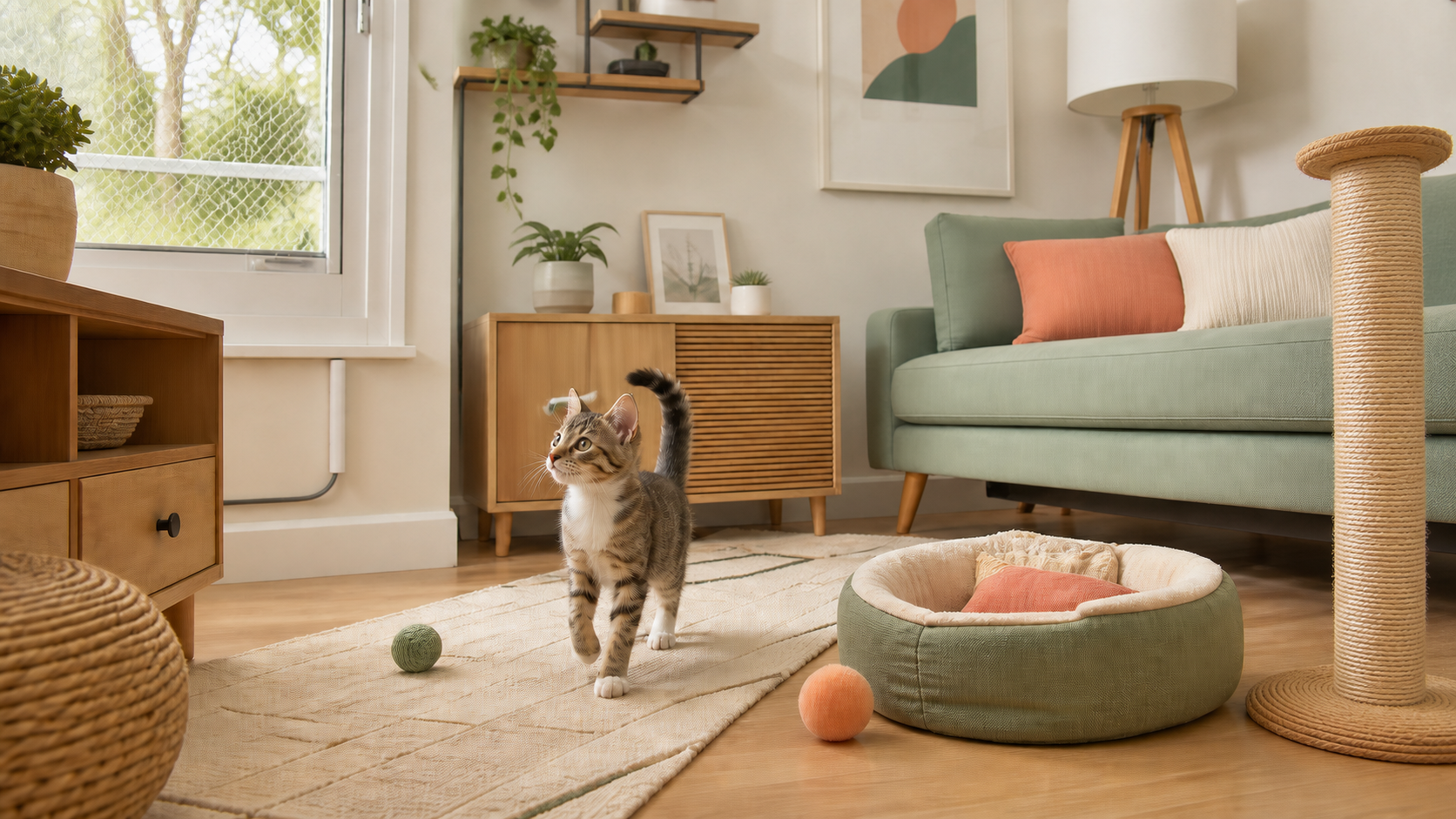
Kittens explore with their paws, mouths and remarkable climbing ability. A room that looks harmless at adult eye level can contain tempting gaps, dangling cords, unstable objects and substances that are unsafe for a small, fast-moving animal. Kitten-proofing your home works best as a repeatable inspection, not a one-time tidy-up.
Quick recommendation: Prepare one calm base room first, then inspect every new room from floor level before your kitten is allowed to explore it under supervision.
Start With One Safe Base Room
A whole home can feel overwhelming during the first few days. Begin with a quiet room where your kitten can learn the locations of food, water, a litter tray, a bed and a hiding place.
The room should include:
- A comfortable bed and an open carrier or covered hide
- Fresh water positioned away from the food bowl
- A low-sided litter tray placed away from food and water
- A stable scratching surface
- A few sturdy toys without loose threads or detachable parts
- An easy route to a safe raised resting place
Block gaps behind cupboards, appliances and heavy furniture if you could not safely reach a kitten there. Keep wardrobes, drawers and cupboards closed, and check them before closing if your kitten has been exploring nearby. Expand access one room at a time instead of opening the entire home on arrival.
Secure Windows, Balconies and Exit Doors
A partially open window is not automatically a safe window. Use a properly fitted, kitten-resistant screen or restrictor, and check that the frame cannot be pushed out. Do not rely on an ordinary insect screen unless it is secure enough to resist climbing and pressure.
Balconies require a purpose-built cat-safe enclosure or professionally secured netting with no escape gaps. Supervision alone cannot prevent every sudden jump or squeeze. If the balcony is not completely secured, keep it off limits.
Create a simple door routine for everyone in the household:
- Look down before opening an external door
- Open the door only as wide as necessary
- Keep delivery and moving activity separated from the kitten
- Confirm the kitten's location before guests leave
- Check window screens and door latches after cleaning or maintenance
Remove Cord, String and Swallowing Hazards
Electrical cables can attract chewing, while blind cords, yarn and ribbon can become entanglement or ingestion hazards. Route cables through cord covers, attach them securely along walls or place them behind furniture that a kitten cannot enter.
Store these items in closed containers after use:
- Sewing thread, needles, yarn and elastic bands
- Ribbon, tinsel and gift-wrap ties
- Dental floss and hair ties
- Earplugs, batteries and small magnets
- Rubber bands, twist ties and plastic tabs
- Children's construction pieces and tiny toy parts
Interactive wand toys are excellent for supervised play, but put them away when the session ends. Never pull on thread or string that is protruding from a kitten's mouth or rear; contact a veterinarian because pulling may cause internal injury.
Check the Kitchen and Dining Area
Kitchens combine heat, sharp objects, food and narrow hiding spaces. Keep kittens off worktops while cooking, cover or block access to a recently used hot hob, and turn pan handles away from the edge.
After every meal or cooking session:
- Clear bones, skewers, foil, plastic wrap and food packaging
- Close the rubbish bin with a secure lid
- Wipe up spills and crumbs
- Store human food in closed cupboards or the refrigerator
- Keep knives and breakable dishes away from edges
- Close the dishwasher and inspect it before starting
Do not assume a kitten will ignore food because it is wrapped. Packaging that smells like food may be chewed or swallowed even after the food is gone.
Make Laundry, Bathrooms and Utility Spaces Safe
Washing machines and tumble dryers are warm, enclosed hiding places. Keep their doors shut, check the drum before loading, check again before starting, and ask every household member to follow the same routine.
In bathrooms and utility areas:
- Keep toilet lids closed
- Store detergent pods, powders and liquids in a latched cupboard
- Put razors, cotton swabs and dental floss away
- Empty buckets and baths after use
- Keep hot styling tools unplugged and inaccessible while cooling
- Secure access behind appliances and pipework
A closed internal door is often the safest control for rooms with several hazards, especially when nobody is available to supervise.
Lock Away Medicines, Cleaners and Chemicals
Human medicines, veterinary products, cleaning agents, pesticides, paint products and automotive fluids should be stored in closed cabinets that a kitten cannot open. A high shelf is not enough if nearby furniture creates a climbing route.
Follow product directions, ventilate when required, clean up spills immediately and keep the kitten away until treated surfaces are fully dry. Never give human medicine to a kitten unless a veterinarian has specifically directed you to do so.
If you share your home with a dog, keep dog flea and tick products separate. Some products formulated for dogs contain permethrin at concentrations that are dangerous to cats. Use only parasite-control products specifically approved for your kitten by a veterinarian.
Audit Every Plant and Bouquet
Check each houseplant and cut flower against a reliable veterinary toxicity database before bringing it into the home. Common names can be confusing, so identify the plant accurately.
True lilies and daylilies should not be kept in a home with a cat. Leaves, petals, stems, pollen and even vase water may create a serious poisoning risk. Keeping a bouquet on a high surface is not a reliable safeguard because pollen can fall or be transferred to fur.
If a kitten may have contacted or swallowed a toxic plant, medicine or chemical, contact a veterinarian or animal poison service immediately. Do not wait for symptoms and do not induce vomiting unless a veterinary professional instructs you to do so.
Stabilize Furniture and Inspect Hiding Places
Kittens climb earlier and higher than many people expect. Test cat trees, shelving, television stands and lightweight furniture for wobble. Anchor tall or unstable pieces where appropriate, and remove heavy objects from edges.
Recliners, sofa beds and adjustable furniture require special care because a kitten can hide inside or underneath the mechanism. Confirm the kitten's location before moving or closing them. Also inspect fireplaces, chimneys, open vents and gaps around cabinets.
Use this floor-level test in every room:
1. Get down to kitten height and scan beneath furniture.
2. Look upward for cords, climbable fabrics and unstable objects.
3. Check every gap your hand cannot easily reach.
4. Move chairs or boxes that create an unintended route to a hazard.
5. Repeat the inspection after repairs, deliveries or rearranging furniture.
Choose Safe Toys and Enrichment
A kitten-safe home should still invite movement, scratching and exploration. Without suitable outlets, a curious kitten is more likely to investigate cables, curtains and shelves.
Select toys that are durable, appropriately sized and free from loose parts. Inspect them regularly for split seams, exposed stuffing, sharp edges or pieces that are becoming detached. Supervise play with feather wands, fishing-rod toys and anything containing string.
Provide several safer choices:
- A stable vertical or horizontal scratching surface
- Cardboard boxes with handles and staples removed
- Large lightweight balls that cannot be swallowed
- Food puzzles suitable for kittens and used as directed
- Low, stable climbing options with easy routes down
- Short interactive play sessions followed by toy storage
A shopping bag is not a toy unless the handles have been removed and the material is safe for supervised exploration. Store plastic bags completely out of reach.
Use a Daily and Weekly Safety Checklist
Run a quick check each morning and before leaving the kitten unsupervised.
Daily check
- [ ] Windows, screens, balconies and external doors are secure
- [ ] Cords, thread, hair ties and small objects are stored
- [ ] Medicines, cleaners and hazardous foods are locked away
- [ ] Washer, dryer, dishwasher, cupboards and recliners are checked
- [ ] Rubbish bins and toilet lids are closed
- [ ] Toys are intact and unsupervised string toys are removed
- [ ] Food, water and litter areas are clean and accessible
- [ ] The kitten's location is known before appliances or furniture move
Weekly check
- [ ] Window screens, latches and balcony barriers remain secure
- [ ] Furniture, shelves and cat equipment do not wobble
- [ ] Cable covers and cupboard locks still work
- [ ] Plants and incoming bouquets have been rechecked
- [ ] Toys, bedding and scratching surfaces show no dangerous damage
- [ ] Emergency veterinary contacts are current and easy to find
Prepare an Emergency Plan Before You Need It
Save the numbers for your regular veterinarian, nearest emergency clinic and local animal poison service. Keep a carrier accessible rather than buried in storage, and make sure every caregiver knows where it is.
Seek urgent veterinary advice after suspected poisoning, electrical shock, a fall, breathing difficulty, severe burns, repeated vomiting, collapse, seizures or suspected swallowing of string, a needle, a battery or another foreign object. This guide supports prevention; it does not replace professional diagnosis or emergency care.
Kitten-proofing changes as your kitten grows. Recheck the home when climbing ability improves, new furniture arrives or household routines change. The goal is not an empty room—it is a secure environment where normal curiosity has safe places to go.
Frequently Asked Questions
When should I kitten-proof my home?
Complete the first safety check before your kitten arrives. Repeat it whenever your kitten gains access to a new room, becomes a stronger climber or the household layout changes.
Is an open window safe if it has an insect screen?
Only if the screen and frame are firmly secured and designed to resist a kitten climbing or pushing against them. A loose ordinary insect screen can fail, so use a reliable restrictor or cat-safe solution.
Can kittens play with string or ribbon?
Only during close, active supervision. Store string, ribbon, yarn, tinsel and wand toys after play because they can cause entanglement or serious internal injury if swallowed.
Which plants are especially dangerous to kittens?
True lilies and daylilies are among the most serious risks for cats, including their pollen and vase water. Check every plant and bouquet using a reliable veterinary toxicity source before bringing it home.
What should I do if my kitten may have swallowed something toxic?
Contact a veterinarian or animal poison service immediately, even if the kitten appears normal. Keep the product or plant information available and do not induce vomiting unless a veterinary professional directs you to do so.
Sources and References
About this article
Practical, evidence-informed guides for safer and more comfortable everyday pet care.
ShineePets is a commercial B2B pet-supply sourcing brand. Read our editorial standards and commercial disclosure.