OEM / ODM
OEM vs. ODM Pet Products: Which Model Fits Your Brand?
Quick answer
Compare OEM and ODM pet product models by control, speed, cost, MOQ, intellectual property, compliance and brand fit before choosing a supplier path.
By ShineePets Editorial Team · Published · Updated
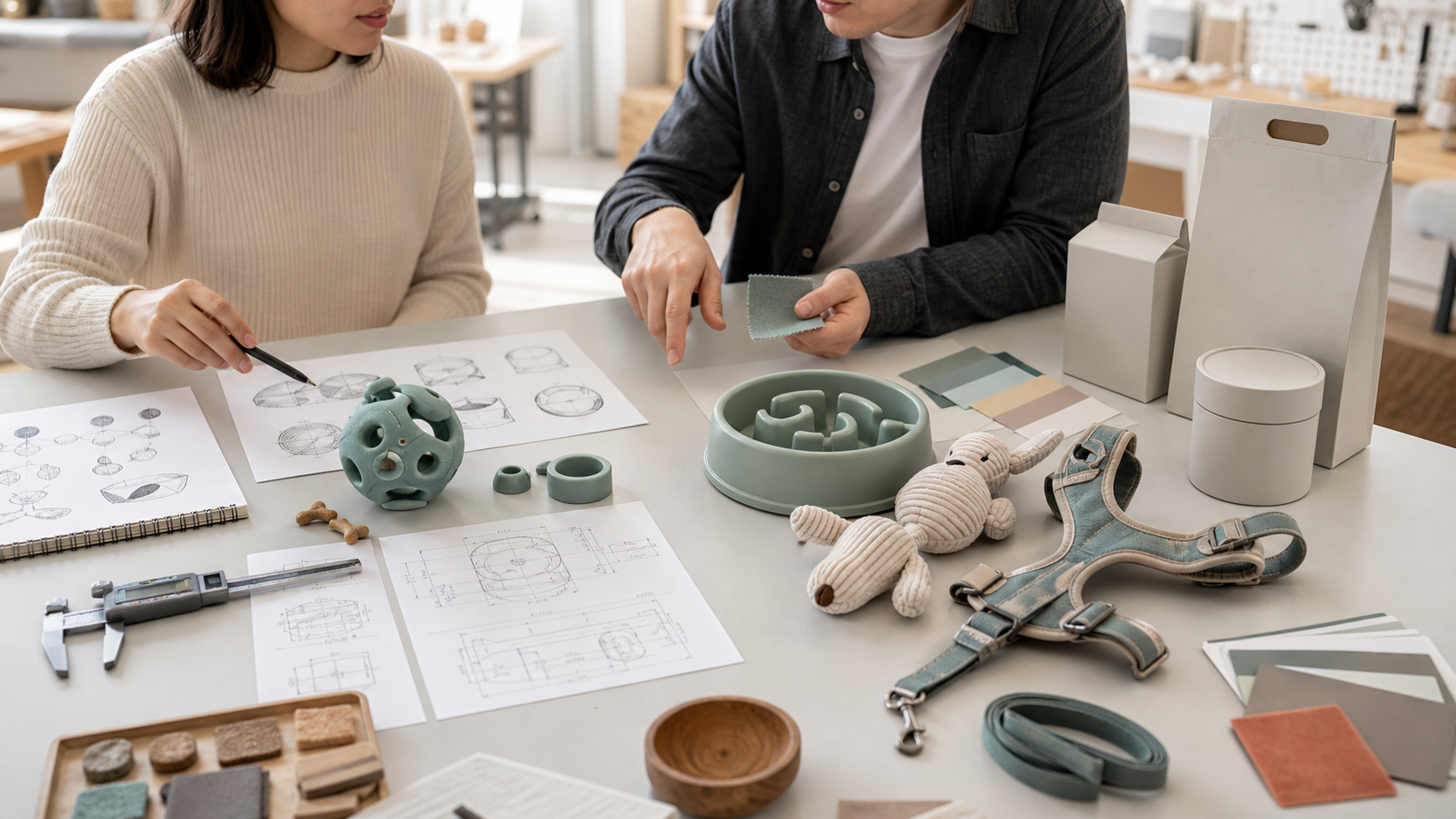
Choosing between OEM and ODM is not simply a question of whether a factory can add your logo. It is a decision about who leads the product design, who carries development risk, how quickly you can reach the market, and how much control your brand retains after launch.
For pet brands, the choice matters because a product must work for an animal, satisfy the buyer, survive real use, and meet the rules of every target market. A low unit quote can become expensive if the specification is vague, the tooling rights are unclear, or a material changes after approval.
The best model is the one that matches your brand's differentiation goal, technical capability, cash runway, forecast confidence, and compliance plan—not the label a supplier puts on its quotation.
OEM and ODM: Practical Working Definitions
Terminology varies by country, industry, and supplier. Some factories use “OEM” for almost any branded order, while others reserve it for a fully custom build. The contract, specification, and ownership clauses matter more than the acronym. For this guide, the following definitions are useful:
- OEM (original equipment manufacturing): your brand leads or owns the product concept and specification. You define the performance targets, dimensions, materials, bill of materials, appearance, and acceptance criteria; the manufacturer industrializes and produces the item to that controlled specification.
- ODM (original design manufacturing): the supplier contributes an existing product, base design, or development platform. Your brand selects from defined options and may customize colors, materials, features, packaging, or accessories, but the supplier retains meaningful design and engineering input.
- Private label: a commercial arrangement in which a product is sold under your brand. It often overlaps with ODM, but private label describes the branding outcome rather than precisely who designed the product.
An “ODM” product may range from a catalog item with a new color to a platform that receives substantial engineering changes. An “OEM” project may still use factory design-for-manufacture advice. Document the actual division of work instead of relying on the name.
The Decision at a Glance
OEM usually offers more differentiation and specification control, but it asks the brand to invest more time, technical attention, and money before the first sale. ODM usually reaches the market faster and lowers the development burden, but it can limit exclusivity and make it easier for competitors to source a similar base product.
Compare the models across eight dimensions:
- Design control: OEM is normally higher; ODM is bounded by the supplier's platform.
- Launch speed: ODM is usually faster because a base design and process already exist.
- Upfront cost: OEM commonly involves engineering, prototypes, tooling, and more testing. ODM may reduce those costs, although customization can still trigger them.
- Minimum order quantity: ODM may support a lower opening order, especially for standard materials. OEM quantities often need to justify dedicated tooling and setup.
- Unit economics: either model can win. Volume, materials, complexity, yield, packaging, and inspection matter more than the acronym alone.
- Intellectual property: OEM can provide stronger control if ownership is clearly established. ODM often depends on licensed or supplier-owned background designs.
- Operational responsibility: both require a controlled specification, quality plan, testing strategy, and change process.
- Supplier dependence: ODM can tie a brand more closely to the supplier's platform; OEM can be more portable only when the brand owns the necessary design files and tooling rights.
When OEM Pet Products Fit Best
OEM is a strong fit when your brand has identified a specific user problem and the solution itself is central to your positioning. Examples include a new slow-feeder geometry, a travel crate with a proprietary folding mechanism, or a harness system developed around a distinctive fit method.
Consider OEM when most of these statements are true:
- The product needs meaningful functional or structural differentiation.
- Your team can write or approve measurable requirements.
- You have engineering, design, testing, or category expertise available.
- Your forecast can support development cost, tooling, and production minimums.
- You need defined ownership or exclusivity for important product features.
- You can tolerate a longer sample and validation cycle.
- You have a plan for version control and post-launch changes.
OEM does not mean sending a sketch and expecting the factory to fill every gap. The brand should convert the idea into a controlled product brief: intended animal and size range, use conditions, materials, dimensions and tolerances, performance tests, warnings, packaging, appearance standards, and acceptance criteria. If these are not defined, the factory will make assumptions—and those assumptions may not match the brand promise.
When ODM Pet Products Fit Best
ODM is often the practical choice for a younger brand, a retailer testing a category, or an established business expanding its assortment without creating every product from zero. A proven base product can reduce iteration and let the team focus on positioning, merchandising, packaging, and customer education.
Consider ODM when most of these statements are true:
- Speed to market is more important than a unique internal architecture.
- Customer value can come from curation, design language, bundles, service, or content.
- The team has limited product-development resources.
- Demand is uncertain and a smaller pilot order is preferable.
- Color, material, size, packaging, or accessory changes create enough distinction.
- The supplier can provide credible evidence about the base product's history and quality controls.
- You accept that similar versions may be available to other buyers unless exclusivity is negotiated.
ODM should not mean “buy first, investigate later.” Ask which parts of the design are fixed, which can change, who owns the base design, whether third-party rights are involved, and whether the product has been modified since any test report was issued. A tested sample does not automatically validate a later material, component, size, or factory change.
Pet-Category Factors That Can Change the Answer
The right model may differ across one brand's assortment because the hazards, use patterns, and engineering burden differ.
Toys and enrichment products
For chew toys, puzzle toys, and interactive feeders, specify the intended species, animal size, play style, supervision level, replace-when-damaged guidance, small-part risks, material requirements, and cleaning method. A custom challenge mechanism may justify OEM, while a curated family of proven puzzle formats may suit ODM. Either way, durability and foreseeable misuse need attention.
Harnesses, collars, and leashes
Textile products look simple but depend on sizing, stitch construction, webbing, hardware, seam allowance, load performance, abrasion, colorfastness, and user instructions. ODM can work well when an established fit block is suitable. OEM becomes more valuable when fit, load distribution, or attachment architecture is a brand differentiator.
Bowls, feeders, and grooming tools
Material identity, food-contact considerations where applicable, cleanability, leak resistance, coatings, detachable parts, and claims must be controlled. An ODM platform may accelerate an assortment, but any new material or finish should enter the change-and-test process.
Beds, carriers, and pet furniture
These products add dimensional stability, load, tipping, assembly, entrapment, ventilation, washability, and shipping-volume questions. A custom mechanism or flat-pack structure often needs deeper OEM engineering. A mature supplier platform can make ODM attractive if the relevant use and load assumptions match your product.
Cost: Compare the Full Landed Development Model
Do not decide using the quoted unit price alone. Build a model that includes:
- product design, engineering, and non-recurring development charges;
- prototypes, sample freight, and repeated sample rounds;
- molds, dies, fixtures, gauges, and maintenance;
- testing, inspection, audits, and technical documentation;
- packaging engineering, artwork, translations, and labeling;
- minimum order quantities for both finished goods and custom materials;
- production yield, defect allowances, rework, and replacement stock;
- freight, duty, insurance, warehousing, and inventory carrying cost;
- forecast error, markdown risk, and cash tied up during a longer launch;
- future revisions, tooling changes, and supplier transfer costs.
An ODM offer can have a higher unit cost but a lower total risk for an unproven launch. An OEM offer can become more attractive at scale if differentiation supports better demand or if development cost is spread across larger volume. Run a base case, downside case, and scale case rather than treating the opening quote as the answer.
Intellectual Property, Tooling, and Exclusivity
This is where vague expectations become costly. Before sharing sensitive files, use appropriate confidentiality controls and limit access to information that the supplier actually needs. In the manufacturing agreement, distinguish:
- Background IP: designs, processes, software, know-how, and assets each party owned before the project.
- Foreground IP: new designs, drawings, improvements, test methods, packaging structures, or other assets created during the project.
- Tooling ownership: who pays, who owns, where tools are stored, how they are marked, who maintains them, and when they must be released.
- Permitted reuse: whether the supplier may use the design, components, molds, or visual appearance for other customers.
- Exclusivity: exact product, territory, channel, duration, volume commitment, and remedy. “Exclusive” without boundaries is not operational.
- Transfer materials: CAD files, drawings, bills of materials, color standards, software, source files, gauges, and approved supplier lists needed to move production.
WIPO guidance on outsourcing emphasizes contractual clarity around ownership of IP created or improved during the relationship and the protection of confidential information. Local law and facts differ, so qualified counsel should review important IP, exclusivity, and tooling provisions.
Compliance Responsibility Does Not Disappear with Outsourcing
A factory can support testing and documentation, but a brand or importer may still have direct legal duties in the target market. In the United States, the Consumer Product Safety Commission explains that manufacturers and importers are responsible for applicable testing and certification, and that relying on supplier information requires due care. In the European Union, a business that has a product designed or manufactured and markets it under its own name or trademark can be treated as the manufacturer under the General Product Safety Regulation.
The exact requirements depend on product, materials, claims, user group, and market. A pet product is not automatically covered by every consumer-product rule, and a supplier certificate is not a universal approval. Before production, create a market-by-market compliance matrix that identifies:
- applicable laws, restrictions, standards, and retailer requirements;
- responsible economic operators and required contact information;
- risk assessment and technical-documentation needs;
- test methods, sample selection, and laboratory qualifications;
- product identification, traceability, warnings, and language versions;
- record retention, complaints, incident reporting, and recall cooperation;
- rules triggered by special features such as batteries, electronics, radio functions, chemicals, or food-contact use.
Treat compliance as an input to design and sourcing, not a document collected just before shipment.
Quality Control: Build a System Around the Product
A quality certificate can be useful evidence about a supplier's management system, but it is not proof that your product will meet its specification. ISO describes ISO 9001 as a framework for establishing, maintaining, and continually improving a quality management system. Your project still needs product-level controls.
At minimum, align on:
- a numbered specification and bill of materials;
- an approved “golden sample” and boundary samples for appearance;
- critical-to-quality dimensions and performance requirements;
- incoming-material, in-process, and finished-goods checks;
- sampling plan and acceptance criteria;
- batch or lot traceability;
- calibration and test-fixture control;
- corrective-action expectations;
- written approval before material, component, process, sub-supplier, or production-site changes.
The CPSC's manufacturing best-practices guidance specifically warns about unauthorized raw-material substitutions and recommends controls in specifications and contracts. This is relevant whether the project is called OEM or ODM.
Contract and Purchase-Order Checklist
The commercial agreement and each purchase order should work together. Address:
1. Parties, product definition, territories, and order of precedence among documents.
2. Specification revision, bill of materials, drawings, approved sample, and packaging files.
3. Development milestones, sample rounds, approval authority, and change requests.
4. Pricing, payment terms, tooling charges, minimums, forecasts, lead times, and delivery terms.
5. Ownership, confidentiality, permitted reuse, exclusivity, and tooling release.
6. Compliance roles, testing, reports, claims, labeling, and document retention.
7. Inspection rights, acceptance, nonconforming goods, rework, replacement, and credits.
8. Subcontracting limits, approved production sites, and sub-supplier controls.
9. Change notification and the consequences of unapproved substitutions.
10. Complaints, incidents, corrective actions, recalls, insurance, indemnities, and termination.
This checklist is operational guidance, not legal advice. Contract enforceability and appropriate remedies depend on the jurisdictions and transaction.
A Simple Brand-Fit Scorecard
Score each factor from 1 to 5, then weight the factors that matter most to your strategy.
- Need for proprietary differentiation: high scores favor OEM.
- Urgency of launch: high urgency favors ODM.
- Internal technical capacity: high capacity supports OEM.
- Forecast confidence and available capital: stronger confidence and capital support OEM investment.
- Tolerance for similar products in the market: low tolerance favors OEM or a tightly defined ODM exclusivity deal.
- Customization depth: cosmetic changes favor ODM; structural changes move toward OEM.
- Portability requirement: if a future factory transfer is important, favor arrangements with clear ownership and complete transfer files.
- Supplier platform quality: a well-documented, proven platform strengthens the ODM case.
Do not let the total score make the decision automatically. Use it to expose assumptions that the finance, product, quality, legal, and commercial teams need to resolve.
A Hybrid Path Often Works
The choice is not permanent. A brand can launch with a controlled ODM product, learn which features customers value, and then invest in OEM development for the next generation. Another option is an ODM platform with one or two custom modules that create useful distinction without rebuilding the entire product.
Plan the transition early. Confirm what knowledge and files you can carry forward, avoid presenting supplier-owned design elements as your own proprietary technology, and track which test evidence applies to which version. The goal is to learn quickly without creating an IP, compliance, or supply-chain dead end.
Red Flags Before You Commit
Pause if a supplier:
- cannot explain which design elements it owns or licenses;
- promises worldwide exclusivity without defining scope or volume;
- refuses to identify the actual production site;
- provides reports that do not match the product, material, factory, or current revision;
- treats the approved sample as a substitute for a written specification;
- will not provide advance notice of material or component changes;
- quotes an unusually low price but omits tooling, testing, packaging, or quality costs;
- pressures you to make broad safety or performance claims without evidence;
- cannot trace batches or document corrective actions.
These signs do not prove misconduct, but they justify deeper verification before deposits or large orders.
From Decision to Pilot Order
Use a staged process:
1. Define the consumer problem, target animal, use conditions, markets, target cost, and launch date.
2. Decide which features must be unique and which can use a proven platform.
3. Request separate quotations for development, tooling, testing, packaging, and production.
4. Review supplier capability, ownership claims, quality systems, production site, and relevant experience.
5. Agree on the specification, responsibilities, IP terms, change control, and quality plan.
6. Approve representative samples only after documenting the exact revision and materials.
7. Complete required risk assessment, testing, labeling, and technical files before mass production.
8. Run a pilot or controlled first order, inspect it, and close corrective actions before scaling.
Final Recommendation
Choose OEM when the product itself must carry a defensible, proprietary advantage and your brand is ready to manage the longer development process. Choose ODM when speed, assortment breadth, and lower initial development exposure matter more than owning every design element. Use a hybrid when a proven platform can reduce risk while a focused custom feature creates meaningful customer value.
Whichever model you choose, make the operating reality explicit: controlled specifications, documented ownership, market-specific compliance, traceable quality controls, and a total-cost view. Those disciplines protect the brand more effectively than an OEM or ODM label on its own.
Discuss Your Sourcing Project with Our B2B Team
Planning a pet-product range, private-label project, or supplier brief? Share your target market, product category, MOQ expectations, sample requirements, and timeline with the ShineePets B2B team through our 24/7 WhatsApp Business contact page.
Explore our OEM and private-label support, dog product sourcing options, and cat product sourcing options before preparing your brief.
Frequently Asked Questions
What is the main difference between OEM and ODM pet products?
In this guide, OEM means the brand leads or owns the product specification and the factory manufactures to it. ODM means the supplier contributes an existing design or development platform that the brand customizes. Supplier usage varies, so the contract and specification should define the real division of work.
Is private label the same as ODM?
Not exactly. Private label describes selling a product under your brand. Many private-label products use an ODM or catalog platform, but a fully custom OEM product can also be private-labeled.
Is OEM or ODM cheaper?
ODM often needs less upfront engineering and tooling, which can lower launch risk. OEM may produce better economics at scale or stronger differentiation, but only after including development, samples, testing, tooling, inspection, freight, inventory and revision costs.
Who owns the molds, design and intellectual property?
Ownership depends on the agreement, not only on who pays an invoice. Define background and newly created IP, tooling title, storage, maintenance, permitted reuse, exclusivity and the files required for a supplier transfer. Use qualified legal advice for important provisions.
Can a pet brand start with ODM and move to OEM later?
Yes. A controlled ODM launch can validate demand before a custom second generation. Plan the transition early by documenting which elements the supplier owns, which evidence applies to each version, and which drawings, data or tools the brand may carry forward.
Sources and References
- Hong Kong Trade Development Council - Off the Shelf (ODM) vs Product Development (OEM)
- World Intellectual Property Organization - The Outsourcing Offshore Conundrum: An IP Perspective
- U.S. Consumer Product Safety Commission - Manufacturing Best Practices
- U.S. Consumer Product Safety Commission - General Use Products: Certification and Testing
- European Commission - GPSR Business Guidelines
- International Organization for Standardization - ISO 9001:2015
About this article
Independent pet-industry guidance from the ShineePets Editorial Team for retailers, distributors and sourcing professionals.
ShineePets is a commercial B2B pet-supply sourcing brand. Read our editorial standards and commercial disclosure.