Product Sourcing
How to Evaluate a Pet Supplies Manufacturer
Quick answer
A practical framework for assessing pet supplies manufacturers across quality systems, compliance, samples, capacity, traceability and commercial risk.
By ShineePets Editorial Team · Published · Updated
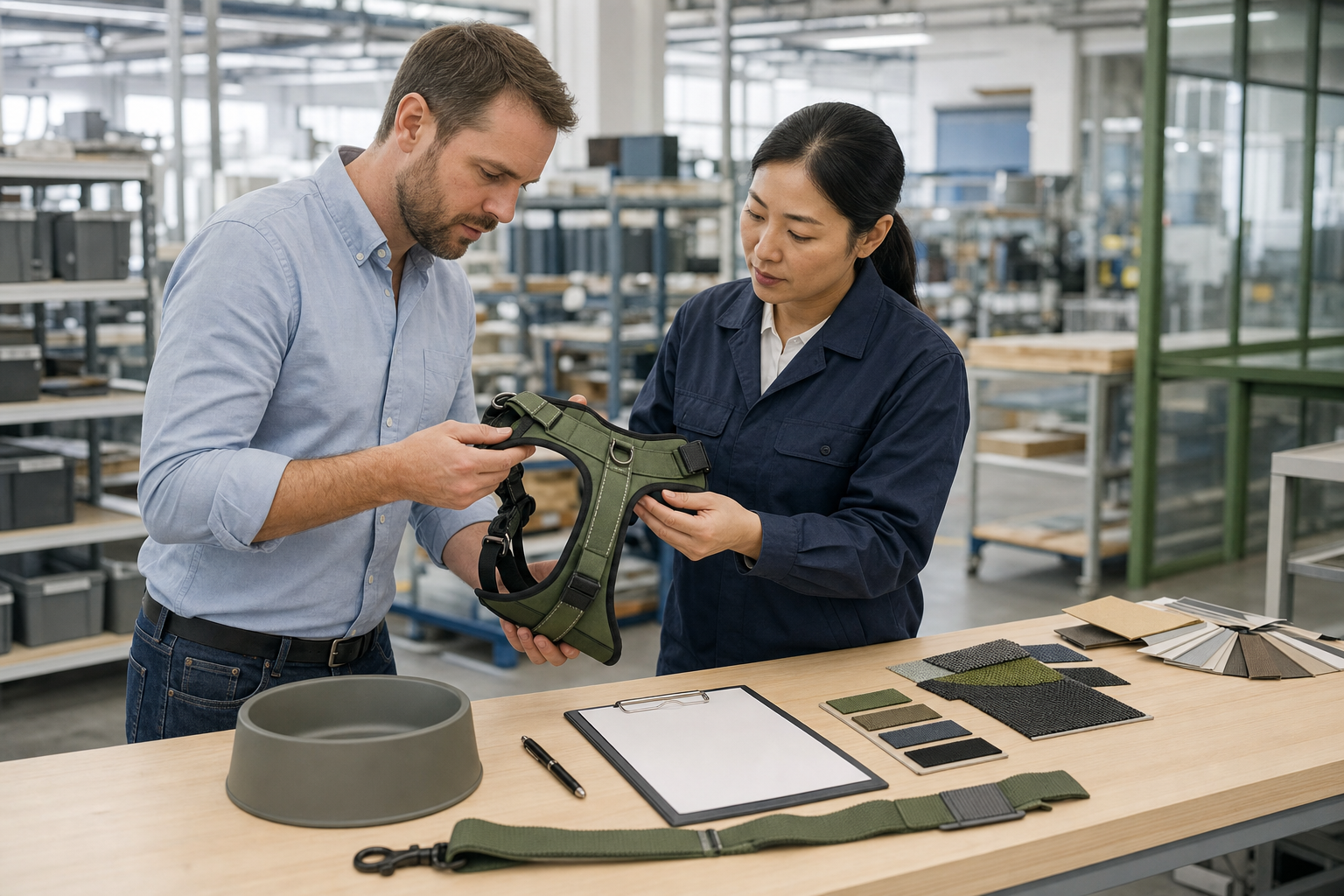
Choosing a pet supplies manufacturer is not a search for the lowest quotation or the longest certificate list. It is a structured decision about whether a factory can repeatedly turn your specification into safe, compliant, consistent products at the promised scale.
A strong evaluation separates verified evidence, observed process, and commercial assumptions. It also recognizes that a factory suitable for a textile pet bed may not be suitable for an electronic feeder, animal food, a grooming chemical, or a load-bearing dog harness.
Quick recommendation: Define the product, target market, critical safety risks, inspection method, and acceptable defect limits before requesting quotations. A supplier cannot prove capability against a specification that does not exist.
Start with the product and destination market
Manufacturer evaluation begins with your own requirements. Before comparing factories, create a one-page sourcing brief that states:
- Product type and intended use
- Target animal, size range, and foreseeable misuse
- Countries or regions where the product will be sold
- Materials, dimensions, performance, color, packaging, and labeling requirements
- Critical safety characteristics
- Target order quantity and annual forecast
- Required testing, documentation, and traceability
- Desired delivery window and shipping terms
Compliance is product- and market-specific. A non-food pet accessory sold in the European Union may fall within the General Product Safety Regulation and relevant chemical rules. Materials in articles may create REACH communication duties. Pet food and treats manufactured for the United States follow a different regulatory path that can include FDA facility registration and the Preventive Controls for Animal Food requirements.
Do not ask a factory for a generic statement that its products meet all international standards. Ask which requirements apply to this product in this destination market, who made that determination, and what evidence supports it.
Verify who you are actually buying from
A polished website does not prove factory ownership. Establish the legal and operational identity of the supplier.
Request and cross-check:
- Registered legal company name and business address
- Manufacturing-site address
- Exporting entity and invoice entity
- Bank-account beneficiary name
- Main product categories produced at the named site
- Processes performed in-house and processes subcontracted
- Ownership or contractual relationship between the seller and factory
- Years producing the relevant product type, supported by records rather than a marketing claim
During a video or physical audit, follow the production flow from incoming material to finished-goods storage. Look for equipment, work instructions, current production records, and staff who can explain the process. If the supplier will not identify subcontracted steps, treat that as a material risk.
Evaluate the quality management system, not the certificate image
ISO describes a quality management system as a defined set of processes and responsibilities used to achieve consistent results and continual improvement. ISO 9001 provides a recognized framework, but certification alone does not prove that your product will meet its specification.
When a supplier presents an ISO 9001 certificate:
- Verify the legal name and manufacturing address.
- Confirm the certificate scope covers the relevant activity.
- Check the standard edition, issue date, expiry date, and certification body.
- Validate the certificate through the certification body or an accredited database where available.
- Review actual records showing that the system is used.
Ask to see examples of:
- Document and revision control
- Approved supplier management
- Incoming material inspection
- Employee training and competence records
- Equipment calibration and maintenance
- In-process and final inspection
- Nonconformance control
- Corrective and preventive action
- Customer complaint analysis
- Management review and improvement actions
A valid certificate is supporting evidence, not a substitute for process evidence. Also remember that ISO develops standards but does not itself certify individual factories.
Build a product-specific compliance matrix
Create a table listing every requirement, the responsible party, the evidence needed, and the approval status. Separate legal requirements from retailer policies and voluntary performance standards.
A useful compliance matrix includes:
- Destination country or region
- Product classification
- Applicable regulation or standard
- Restricted substances or material limits
- Label and warning requirements
- Responsible economic operator or importer obligations
- Required technical documentation
- Test method and acceptance criteria
- Sample model, material, color, and size covered by each report
- Report issuer, issue date, and report number
- Renewal or change-trigger rules
For EU non-food products, the General Product Safety Regulation provides the general safety framework. ECHA explains that suppliers of articles containing a Candidate List substance above the relevant threshold may have supply-chain communication duties under REACH. These are not box-ticking exercises: the materials tested must match the materials used in production.
For animal food, FDA explains that covered facilities may need current good manufacturing practices, hazard analysis, risk-based preventive controls, monitoring, corrective actions, verification, training, and records. Do not apply food-factory evidence to a hard-goods factory or vice versa.
Review the bill of materials and material controls
A reliable factory should be able to connect a finished product to controlled materials and approved suppliers. Request a bill of materials at the level needed to manage risk.
For a sewn dog harness, that might include:
- Webbing fiber and width
- Buckle and adjuster resin
- Metal ring grade and finish
- Thread specification
- Padding and lining materials
- Reflective trim
- Dyes, coatings, adhesives, and printed ink
- Packaging components
Then check how the factory prevents unapproved substitution. Important controls include approved-supplier lists, incoming inspection, lot identification, color or material standards, change authorization, and retained samples.
A test report for one black sample does not automatically cover every color, coating, size, or material combination. Ask the laboratory or a qualified compliance specialist to confirm the scope.
Test samples in stages
One attractive sample is not enough. Use a staged sample process so each round has a clear purpose.
1. Capability sample
This shows whether the factory can make the general product type. It may use available materials and should not be treated as production approval.
2. Development sample
This tests your dimensions, materials, construction, function, and packaging. Record every change in a revision-controlled specification.
3. Pre-production sample
This should use approved production materials, tooling, components, labels, and packaging. Sign and date the approved reference sample.
4. Production validation
Inspect early production units to confirm that the line matches the approved sample. Do not wait until the entire order is packed to discover a systematic error.
Evaluate samples with measurable tests rather than opinion alone. Depending on the product, checks may include dimensions, seam strength, buckle cycling, corrosion resistance, tip-over stability, sharp edges, small parts, odor, colorfastness, wash performance, leakage, electrical safety, or packaging transit performance.
Audit the factory process
A factory audit should follow material and information flow, not just photograph the showroom. Review:
- Incoming material receipt and quarantine
- Identification of accepted and rejected material
- Storage conditions and first-in-first-out controls where relevant
- Work instructions at the production line
- Tooling and machine maintenance
- In-process inspection points
- Calibration status of measuring equipment
- Segregation and disposition of nonconforming goods
- Finished-product inspection and release authority
- Packing-line controls
- Lot coding and traceability
- Complaint, recall, and corrective-action procedures
Interview operators as well as managers. If the written procedure says one thing but operators consistently do another, the operational practice is the real process.
Examine quality control at three levels
A practical control plan covers more than final inspection.
Incoming quality control
Verify critical materials before they enter production. The inspection method should match the risk: identity, dimensions, color, strength, composition documents, or laboratory testing as appropriate.
In-process quality control
Inspect the steps where defects are created or can still be corrected. Examples include cutting dimensions, sewing density, buckle orientation, adhesive application, assembly torque, molding parameters, or fill weight.
Final quality control
Compare finished goods with the approved specification, packaging requirements, workmanship standard, and functional tests. Define defect categories and acceptance criteria before production.
Sampling plans can help structure inspection, but an AQL result is not a product-safety guarantee. Critical safety characteristics may require tighter controls or full verification. The buyer and factory should agree in writing on what counts as a critical, major, or minor defect.
Check traceability and change control
Ask the supplier to demonstrate a traceability exercise. Select a finished unit or carton and request the related production date, line, material lots, inspection records, and shipment record.
The system should support questions such as:
- Which orders used this material lot?
- Which component supplier provided it?
- Who approved the production release?
- What other customers or SKUs may be affected by the same issue?
- How quickly can the factory isolate suspect inventory?
Require written approval before changes to materials, sub-suppliers, construction, tooling, production site, labeling, or packaging. A cheaper resin, different coating, or alternate fabric can change performance and compliance even when the product looks identical.
Separate laboratory evidence from marketing language
Review test reports carefully. Confirm:
- The laboratory is appropriate for the required test.
- The client and manufacturer names are clear.
- The sample description matches your product.
- Photos, model numbers, materials, colors, and sizes are identifiable.
- The test method and limits match the target market.
- Results are complete rather than selected pages.
- Dates remain relevant and no material change has occurred.
- The report can be verified with the issuer when necessary.
Statements such as eco-friendly, non-toxic, food-grade, premium, or heavy-duty require definitions and evidence. Convert every important claim into a measurable specification or remove it.
Assess capacity with records, not promises
Ask for a capacity model for your product and forecast. It should identify:
- Bottleneck process
- Units per line or machine per shift
- Number of available lines and shifts
- Typical changeover time
- Yield and rework rate
- Peak-season load
- Material lead times
- Tooling availability
- Labor and maintenance constraints
- Contingency plan for interruption
Compare the claim with recent production records and visible equipment. A factory may have high total capacity but little available capacity during your delivery window.
Request a realistic production schedule with material arrival, pre-production approval, production start, in-process inspection, final inspection, packing, and shipment milestones.
Investigate subcontracting
Subcontracting is not automatically unacceptable, but undisclosed subcontracting removes control. Identify which processes are external, such as plating, dyeing, printing, electronics assembly, sterilization, food processing, testing, or packaging.
For every critical subcontractor, determine:
- Who approved the subcontractor
- What specifications are issued
- How incoming work is inspected
- Whether changes require buyer approval
- How traceability is maintained
- Whether the subcontractor is covered by relevant audits and compliance evidence
Prohibit movement of production to another site without written approval.
Evaluate communication and engineering discipline
Fast replies are useful, but accurate change control is more important. During sampling, observe whether the team:
- Confirms requirements in writing
- Identifies ambiguity before production
- Returns drawings and specifications with revisions marked
- Provides realistic lead times
- Escalates quality problems promptly
- Distinguishes confirmed facts from estimates
- Keeps commercial, engineering, and quality teams aligned
Use one controlled specification, one change log, and one approval record. Avoid decisions scattered across informal messages.
Review commercial and continuity risk
A low unit price can hide tooling, testing, packaging, inspection, rework, freight, duty, payment, or delay costs. Compare total landed and risk-adjusted cost.
Review:
- Quotation validity and included specifications
- Minimum order quantity and price breaks
- Tooling ownership, maintenance, and storage
- Payment terms and beneficiary verification
- Incoterms and responsibility transfer
- Packaging and carton assumptions
- Test and inspection costs
- Defect, rework, replacement, and claim procedures
- Intellectual-property and confidentiality terms
- Business continuity and backup arrangements
Do not send payment based only on a changed bank instruction in an email. Verify beneficiary changes through a previously established contact method.
Use a pilot order before scaling
A pilot order tests the complete system: material purchasing, production control, inspection, packaging, documentation, and delivery. Keep the quantity meaningful enough to expose process variation but limited enough to contain risk.
During the pilot:
- Approve the pre-production sample and specification.
- Inspect early production.
- Run agreed functional and compliance tests.
- Conduct final inspection before shipment.
- Review carton marks and shipping documents.
- Record defects, delays, questions, and corrective actions.
- Recalculate realistic capacity and landed cost.
Scale only after the factory closes important issues with evidence.
Red flags that justify a pause
Pause the evaluation when a supplier:
- Refuses to identify the legal entity or production site
- Presents certificates that cannot be verified
- Uses reports for a different product, material, or company
- Promises compliance without reviewing the destination market
- Will not disclose critical subcontracting
- Resists a controlled specification or approved sample
- Changes materials without permission
- Prevents access to production and quality areas
- Cannot trace material lots to finished orders
- Quotes lead times that conflict with visible capacity
- Requests payment to an unrelated beneficiary
- Treats final inspection as the entire quality system
One red flag may have an explanation. A pattern of unverifiable claims is a supplier-selection decision.
A weighted manufacturer scorecard
Use the same scorecard for every candidate. One practical starting structure is:
- Product and engineering capability: 20%
- Quality management and process control: 20%
- Compliance and material evidence: 20%
- Capacity, delivery, and continuity: 15%
- Traceability and change control: 10%
- Communication and corrective action: 10%
- Commercial fit: 5%
Set minimum pass conditions for critical safety, legal identity, compliance evidence, and traceability. A high total score should not compensate for failure in a mandatory area.
Manufacturer evaluation checklist
Before approving a supplier, confirm:
- [ ] Legal entity, factory address, and payment beneficiary are verified.
- [ ] The factory has demonstrated relevant product capability.
- [ ] Product requirements and destination markets are documented.
- [ ] Quality certificates and scopes are verified independently.
- [ ] The bill of materials and critical suppliers are controlled.
- [ ] Test reports match the actual product and materials.
- [ ] Pre-production samples use approved production inputs.
- [ ] Incoming, in-process, and final inspections are defined.
- [ ] Traceability and change-control exercises have passed.
- [ ] Subcontracted processes are disclosed and controlled.
- [ ] Capacity is supported by records and a realistic schedule.
- [ ] Commercial terms define defects, claims, tooling, and changes.
- [ ] A pilot order has been reviewed before scale-up.
For demand context before developing a sourcing plan, read 2026 Global Pet Supply Spending Trends: Regional Signals and Category Mix Shift. For category planning, see How Pet Market Categories Shifted Over the Past Five Years.
Sources
- ISO: Quality Management Systems - An Introduction
- ISO: ISO 9001 Explained
- European Commission: Product Safety
- ECHA: REACH Communication in the Supply Chain
- FDA: How Do I Start an Animal Food Business?
- FDA: Frequently Asked Questions on FSMA
Discuss Your Sourcing Project with Our B2B Team
Planning a pet-product range, private-label project, or supplier brief? Share your target market, product category, MOQ expectations, sample requirements, and timeline with the ShineePets B2B team through our 24/7 WhatsApp Business contact page.
Explore our OEM and private-label support, dog product sourcing options, and cat product sourcing options before preparing your brief.
Frequently Asked Questions
What is the first step in evaluating a pet supplies manufacturer?
Define the exact product, destination market, safety risks, specification, inspection method and required evidence before comparing quotations.
Does ISO 9001 certification prove product quality?
No. It supports evaluation of a quality management system, but buyers must verify the certificate and review actual process records, samples, testing and production controls.
How can a buyer verify that a supplier owns the factory?
Cross-check the legal entity, manufacturing address, exporting entity and payment beneficiary, then trace real production during a video or physical audit and identify subcontracted processes.
What should a pilot order test?
It should test approved materials, production control, inspections, packaging, traceability, documentation, delivery and the factory's response to defects or changes.
What are the most serious supplier red flags?
Unverifiable certificates, mismatched test reports, hidden subcontracting, unauthorized material changes, weak traceability, blocked factory access and payment requests to unrelated beneficiaries justify a pause.
Sources and References
About this article
Evidence-led pet industry sourcing and quality guidance from the ShineePets Editorial Team.
ShineePets is a commercial B2B pet-supply sourcing brand. Read our editorial standards and commercial disclosure.