Pet Product Knowledge
Pet Cooling Mats: Materials, Use and Safety Checks
Quick answer
Compare pet cooling mats by cooling method, materials, fit and care, then use a practical checklist to prevent leaks, chewing and unsafe heat reliance.
By ShineePets Editorial Team · Published
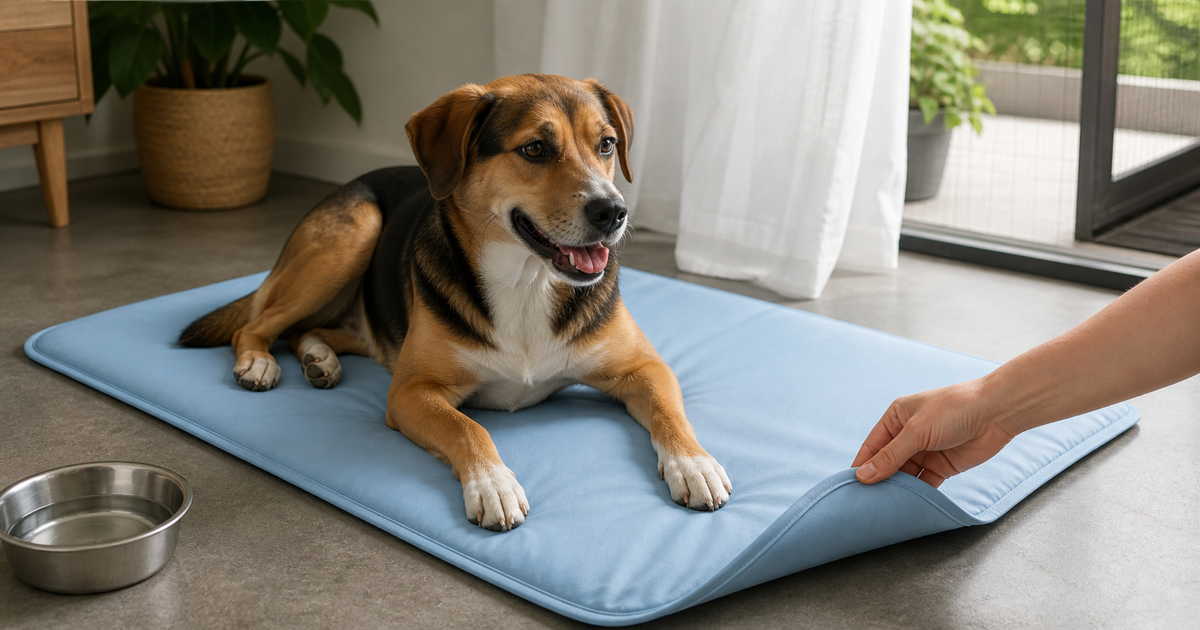
Pet cooling mats can provide a cooler place to rest, but the right choice depends on how the mat cools, what is inside it, how your pet uses bedding and whether the product stays intact. A mat is a comfort aid—not a substitute for shade, drinking water, ventilation or avoiding unsafe heat. It is also not a treatment for heatstroke.
Before buying, identify the cooling mechanism, complete material information, activation and recharge instructions, usable dimensions, cleaning limits and what to do if the mat leaks. During use, keep it out of direct sun, let the pet move away, supervise chewers and inspect the cover, seams and temperature repeatedly. Retire any mat that leaks, swells, separates, smells unusual or has been punctured.
Pet Cooling Mats Compared by How They Work
“Cooling mat” describes several products with different benefits and failure modes. Marketing terms such as self-cooling or pressure-activated do not reveal the formulation, cooling duration or safety of a damaged product.
| Type | How it provides a cooler surface | Advantages | Main limitations and checks |
|---|---|---|---|
| Gel or phase-change mat | Internal material absorbs heat while it remains cooler than the pet | No filling; often portable | Formula may be unclear; inspect welded seams, punctures, swelling and warming |
| Water-filled mat | Water adds thermal mass and accepts heat from the pet | Fill level may be adjustable; contents are simple when only water is used | Heavy when filled; valves can leak; water must be changed and the interior kept hygienic |
| Pre-cooled insert mat | Removable packs or sections are cooled as directed before use | Predictable preparation; inserts may be replaceable | Can be too cold if misused; condensation and damaged packs need control |
| Evaporative mat | Damp fabric loses heat as water evaporates | Lightweight and usually gel-free | Needs water and airflow; effectiveness falls as it dries or in humid, still air |
| Cool solid surface | Ceramic, stone or metal accepts body heat without a filled pad | Easy to inspect; no gel chamber | Hard, slippery or unsuitable for pets needing cushioning; can heat in sunlight |
The RSPCA's hot-weather product guidance notes that some mats use self-cooling gel while others require refrigeration or freezing, and that a mat may retain heat after its cooling effect ends. Follow the directions for the exact product rather than applying one method to every mat.
Materials Matter, but the Finished Product Matters More
A cooling mat has at least two material questions: what touches the pet and what is sealed inside. Covers may be woven fabric, coated textile or laminated plastic. Internal layers may contain water, gel, foam, absorbent fibers or a removable cold pack. The product label should identify enough of the construction and contents for an owner to make a responsible decision.
Do not treat “non-toxic” as permission for chewing or ingestion. In September 2025, ASPCA Poison Control warned about severe neurologic signs reported after pets ingested the hydrogel from certain cooling pads. The ASPCA said the investigation was continuing and advised immediate veterinary or poison-control contact after suspected ingestion. This newer warning means a general reassurance about polymers cannot establish the safety of every formulation.
Older guidance from the UK's Veterinary Poisons Information Service describes many phase-change mats as containing sodium sulphate, cellulose and water, while warning that swallowed cover pieces can cause an obstruction. Its cooling-mat poison guidance applies to the products it describes, not to every mat on the global market. The practical conclusion is simple: verify the specific finished product and prevent access to its contents.
Before purchase, look for:
- an identifiable manufacturer or responsible supplier;
- clear outer-cover and internal-content information;
- activation, recharge and maximum-use instructions;
- cleaning, drying, folding and storage directions;
- usable dimensions rather than only package dimensions;
- warnings for chewing, puncture, leakage and ingestion; and
- a reachable customer-service contact and lot or model identification.
If those basics are missing, appearance and vague “safe cooling” claims are not enough.
Choose the Size and Surface for the Pet
Measure the pet in a natural resting position and compare that footprint with the usable cooling area. A dog that stretches out needs a different shape from a curled cat. The torso should fit without forcing the head, limbs or spine into an awkward position. A mat placed inside a crate or carrier must not block ventilation, reduce safe standing space or interfere with restraints.
Surface grip is as important as softness. Very smooth coated covers can slide on tile or under an older pet with reduced mobility. Put the mat on a stable, level floor and test whether the mat or the pet's feet shift during entry and exit. Pets with joint pain may need cushioning, but adding a thick blanket on top can reduce heat transfer and hide leaks.
Chewing behavior can rule out a filled mat. Puppies, dogs that shred bedding, curious cats and any pet that scratches or digs through fabric need close supervision or a different cool surface. “Chew resistant” does not mean chew proof.
Set Up a Cooling Mat Without Trapping the Pet
Place the mat indoors or in full, reliable shade on a surface that is already reasonably cool. Direct sun, hot paving and a closed vehicle can warm the whole environment faster than a mat can help. Always provide a normal dry resting area and enough space for the pet to leave.
Introduce the mat without placing, holding or restraining the pet on it. Some cats avoid unfamiliar texture or odor; some dogs use only one edge. That choice is useful feedback. Do not cover the animal with the mat or put an unwrapped frozen insert directly against the body.
For dogs and cats, PDSA's 2026 hot-weather advice recommends supervision so animals cannot chew cooling mats or ice packs. It also advises extra care with rabbits and guinea pigs: cover cooling items to prevent direct contact and make sure the animal can move away. A product marketed for dogs should not automatically be repurposed for a rabbit, bird, reptile or other species without species-appropriate guidance.
Use a Start–Check–Stop Routine
Start
1. Read the activation and recharge directions again.
2. Confirm the mat is at the intended temperature, not frozen unless specifically directed.
3. Inspect both sides, every seam, valve, insert and closure.
4. Place it in shade with water and an alternative resting surface nearby.
5. Observe the pet's movement and behavior during the first session.
Check
Recheck the mat regularly while it is in use; there is no universal safe duration. Compare the center, edges and floor beneath it. Look for warming, moisture, tackiness, bulges, thinning, delamination, odor, mold, loose threads, damaged fasteners or new tooth and claw marks. Check the pet for shivering, avoidance, skin redness, restlessness or difficulty standing up.
A mat that has warmed is not necessarily defective, but its useful cooling period may be over. Recharge or remove it according to the instructions. Never assume the surface is still cool because the product color has not changed.
Stop
Remove the mat immediately after a puncture, leak, open seam, damaged valve, swollen chamber or exposed insert. Keep the pet away from the spill and retain the product label and packaging for identification. Contact a veterinarian or animal poison service promptly if ingestion may have occurred. Neurologic signs, repeated vomiting, marked weakness or abnormal behavior require urgent veterinary care.
Cleaning and Storage Protect the Seams
Use only the cleaning method permitted by the manufacturer. A wipe-clean cover may not tolerate machine washing, soaking, bleach, heat drying or strong disinfectants. Removable fabric covers should dry completely before reassembly. Residual moisture can create odor or microbial growth, especially around valves and folded edges.
Before storage:
- clean and dry every surface;
- empty water-filled models if the instructions require it;
- inspect inserts and caps separately;
- avoid sharp folds unless folding is specifically permitted;
- keep the mat away from direct sun, heaters and freezing conditions; and
- store it where pets cannot chew it unattended.
Record the purchase date, product identity and any change in performance. Replace a mat based on condition and the manufacturer's limits, not on an invented universal lifespan.
A Cooling Mat Cannot Treat Heatstroke
Heatstroke is an emergency in any species. Warning signs may include heavy or abnormal panting, breathing difficulty, excessive drooling, weakness, vomiting, confusion, poor coordination, collapse or seizures. Cats and small pets may show less obvious distress, so abnormal breathing, severe lethargy or collapse is urgent.
PDSA's veterinary first-aid guidance for heatstroke advises moving the pet to shade or a cool room, beginning active cooling and calling a veterinarian as soon as possible. Species react differently to water and stress, so follow current veterinary instructions. Do not place an overheated pet on a mat and wait for improvement.
For prevention, pair a suitable mat with water, shade, airflow and reduced activity. Cats Protection's warm-weather cat guidance recommends multiple cooling measures, including fresh water, shade and air circulation, rather than dependence on one product.
For more species-specific planning, see our guides to hot-weather dog gear, summer cat care and keeping rabbits comfortable in hot weather.
Final Pet Cooling Mats Safety Checklist
- The cooling mechanism and preparation method are clearly stated.
- The cover and internal contents are sufficiently identified.
- The usable area fits the pet's natural resting position.
- The surface is stable, intact and appropriate for the pet's mobility.
- The mat is in shade with water and an alternative resting place.
- The pet can leave freely and chewing is supervised.
- The mat is rechecked for warming, leaks and damage during use.
- Cleaning and storage follow the exact product instructions.
- The mat is removed after damage; suspected ingestion triggers professional advice.
- Heat illness triggers active first aid and urgent veterinary contact—not reliance on the mat.
A well-chosen cooling mat provides one optional cooler surface within a complete heat-safety plan. Material transparency, fit, supervision and repeated inspection matter more than an unsupported promise that a product stays cool or is harmless.
*This article provides general product and pet-care information. It does not replace veterinary diagnosis, poison-control advice or emergency treatment.*
Sources and Further Reading
For retailers, distributors and pet brands
Building a cat-product assortment?
Explore cat trees, scratchers, toys, grooming and feeding products, with B2B sourcing and customization support.
Explore Wholesale Cat Products Discuss OEM/ODMFrequently Asked Questions
Are gel pet cooling mats safe?
An intact, clearly labeled mat may be used as directed, but no filled mat should be treated as safe to chew. Supervise use and contact a veterinarian or poison service after suspected ingestion.
Should a pet cooling mat go in the freezer?
Only when the product instructions specifically require or permit freezing. Many gel mats are designed to work without freezing, and incorrect preparation can damage the mat or make it uncomfortably cold.
How long does a pet cooling mat stay cool?
There is no universal duration. It depends on the mechanism, room conditions, pet size and product design, so monitor the surface and follow the stated recharge instructions.
Can cats use dog cooling mats?
Some cats may use an appropriately sized intact mat, but they must be free to leave it. Check the contents, texture, seams and claw damage, and do not force a cat onto an unfamiliar surface.
Can a cooling mat help a pet with heatstroke?
A mat is not heatstroke treatment. Begin current species-appropriate first aid, call a veterinarian immediately and do not delay active cooling or transport while waiting for a mat to work.
Sources and References
About this article
ShineePets publishes practical, source-checked guidance for pet owners and pet-product professionals.
ShineePets is a commercial B2B pet-supply sourcing brand. Read our editorial standards and commercial disclosure.
Continue Reading
Hot Weather Dog Gear: What Helps and What Does Not
Compare cooling mats, vests, fans, water gear, shade and dog boots by function, fit and limits—without using products to justify unsafe heat exposure.
Summer Cat Care: Hydration, Shade and Indoor Comfort
Create a safer summer setup for indoor cats with accessible water, shaded resting zones, secure airflow and clear heatstroke warning signs.
Keeping Rabbits Comfortable During Hot Weather
Keep rabbits safer in hot weather with measured shade, ventilation, water, cool surfaces, flystrike checks and an emergency response plan.