Retail & Distribution
The Complete Pet Product Category Map for Retailers
Quick answer
Use a structured pet product category map to organize retail navigation, product data, sourcing, reporting and compliance boundaries.
By ShineePets Editorial Team · Published · Updated

Discuss Your Sourcing Brief With ShineePets
Planning a pet-product range, private-label project, or supplier brief? Share your target market, product category, MOQ expectations, and timeline with the ShineePets B2B team. Our WhatsApp Business channel is monitored 24/7. Explore our OEM/ODM capabilities, dog product sourcing, and cat product sourcing.A pet product category map should give every sellable item one stable operational home while allowing shoppers to browse by species, need and product type. The practical model is not one giant storefront menu. Retailers need a master taxonomy for product data, a simpler customer navigation layer, external mappings for marketplaces and a separate regulatory lane. Start by defining the boundaries between food, non-food supplies, regulated health products, live animals and services. Then classify physical products into the 11 departments below, assign clear inclusion and exclusion rules, and treat size, life stage, material and price as attributes rather than endless subcategories.
Key Takeaways
- Give each SKU one canonical master category, even if it appears in several storefront collections.
- Separate operational taxonomy, customer navigation, external channel codes and regulatory status.
- Organize physical products by function and product family; use species and attributes as controlled filters.
- Keep food, drugs, non-food supplies, live animals and services in distinct governance lanes.
- Define every category with inclusions, exclusions, required attributes and an accountable owner.
- Review uncategorized, duplicate and obsolete assignments before adding more branches.
One Retailer Needs Four Connected Classification Views
A category structure fails when one tree is expected to serve buyers, shoppers, marketplaces, compliance teams and financial reporting equally well. Use four connected views instead.
| View | Primary job | Operating rule |
|---|---|---|
| Master taxonomy | Stable product ownership, purchasing and reporting | One leaf category per SKU |
| Storefront navigation | Help shoppers browse by pet and task | One SKU may appear in several valid paths or collections |
| External channel mapping | Translate products into marketplace or trading-partner categories | Store the external code separately from the internal category |
| Regulatory lane | Route food, drugs, general merchandise and other controlled products to the right review | Never infer regulatory status from a merchandising label |
This design prevents duplicate product records and avoids forcing internal language to match every marketplace. The GS1 Global Product Classification browser uses a standardized hierarchy of segment, family, class, brick and attribute so trading partners can group products consistently. Retailers can map their leaf categories to GPC without copying it into the customer menu.
Build the Pet Product Category Map in Five Levels
Use a short, governed hierarchy:
1. Business lane: food and ingestibles, non-food merchandise, regulated health products, live animals, or services.
2. Department: the stable function-based groups in the map below.
3. Product family: beds, carriers, bowls, litter boxes, filters or another recognizable group.
4. Product type: the most specific operational leaf needed for buying and reporting.
5. Attributes: species, life stage, size, material, use condition, compatibility, color and other filters.
Do not turn every attribute into a branch. “Large,” “senior,” “recycled content,” “blue” and “travel” describe products; they are not durable product families.
The Complete Physical Pet Product Department Map
| Department | Core product families | Important boundary |
|---|---|---|
| 1. Food, treats and ingestibles | Everyday food, treats, edible chews, supplements and feeding additives | Separate prescription, therapeutic and claim-sensitive products; do not mix accessories here |
| 2. Feeding and hydration equipment | Bowls, feeders, fountains, waterers, bottle systems, mats, scoops and food-storage containers | Classify the vessel or tool here, not the food it holds |
| 3. Sleep, shelter and containment | Beds, mats, blankets, crates, carriers, kennels, gates, playpens, doors and containment accessories | Record intended species, size and travel or home use as attributes |
| 4. Walking, handling and travel | Collars, harnesses, leashes, muzzles, vehicle barriers, travel restraints, strollers and portable travel gear | Separate identification, mobility support and regulated restraint requirements where relevant |
| 5. Play, training and enrichment | Fetch, tug, chew, puzzle, foraging and comfort toys; scratchers; training aids; agility products | Classify by primary function, then filter by species, size and supervision level |
| 6. Grooming and personal care | Brushes, combs, clippers, dryers, bathing tools, shampoos, wipes, nail tools and oral-care accessories | Products making disease or treatment claims require a different review lane |
| 7. Litter, waste and household hygiene | Litter, trays, liners, mats, pads, diapers, waste bags, disposal tools, stain and odor-control products | Distinguish animal-use products from general household cleaners and check claims |
| 8. Health, protection and mobility | First-aid items, protective collars, ramps, steps, lifts, supports, monitoring products and parasite-control products | Approval, claims and sales restrictions can vary widely by market |
| 9. Apparel, identification and seasonal accessories | Coats, boots, cooling or weather gear, ID tags, charms and apparel storage | Safety, fit and intended use belong in attributes and specifications |
| 10. Specialist habitat systems | Bird cages, perches and baths; small-animal habitats and bedding; aquariums, filters and water care; reptile enclosures, heating, lighting and substrates | Preserve ecosystem-specific families instead of forcing them into dog-and-cat departments |
| 11. Connected pet products | Trackers, cameras, automated feeders, smart doors and app-connected monitoring products | Add power, connectivity, privacy, software-support and regional electrical fields |
The map is complete as an operating framework, not as a claim that every retailer should stock every family. A dog boutique may use only part of it; a multi-species retailer may need deeper specialist habitat branches. Range selection remains a separate decision, covered in our guide to building a balanced pet product range.
Add a Species Navigation Layer Without Duplicating SKUs
Use controlled species values such as dog, cat, bird, small animal, fish and aquatic, reptile and amphibian, and multi-pet. Add more precise values only when they change fit, safety, care or search behavior. A generic stainless-steel bowl might have one master product record but appear under both dog and cat navigation. An aquarium filter belongs only in the aquatic path.
For each species, expose the relevant missions rather than the full department list. Cat navigation may emphasize feeding, hydration, litter, scratch and climb, play, rest and travel. Small-animal navigation may emphasize habitat, bedding, feeding, foraging and cleaning. Aquatic navigation needs tanks, filtration, aeration, lighting, heating, water treatment, substrate, decor, feeding and maintenance tools.
Keep Attributes Out of the Category Tree
Create required attributes by product family: intended species, size, life stage, material, dimensions, care method, use conditions, supervision, compatibility, pack quantity and warnings. Electrical products may need voltage and plug type; habitats need usable dimensions; apparel needs fit measurements.
Claims should also be stored as controlled data with supporting evidence, not embedded in category names. For example, “eco-friendly grooming” is a weak branch because the claim may change or lack a consistent definition.
Draw Regulatory Boundaries Before Merchandising Products
Product names do not determine the legal lane. In the United States, the FDA states that animal food includes pet food and pet treats. A retailer should therefore keep ingestibles under food-specific supplier, label, storage and traceability controls rather than treating them like bowls or toys.
Claims can change classification. The FDA definition of an animal drug includes articles intended to diagnose, cure, mitigate, treat or prevent disease, as well as non-food articles intended to affect body structure or function. This US example is not a global rule, but it shows why “health” cannot be one unreviewed merchandising bucket.
Non-food products also need a destination-market safety route. UK government product safety guidance emphasizes applicable rules, safety evidence, risk information, traceability and post-sale monitoring. In the EU, the General Product Safety Regulation summary covers general non-food consumer-product safety and has applied since 13 December 2024. Maintain jurisdiction, responsible party, test evidence, warnings and batch or lot data outside the category name.
Live animals and services should be separate from the physical-product master. They require different welfare, licensing, scheduling, tax, fulfillment and liability workflows. A service can still be cross-linked to relevant products without pretending it is a SKU in the same inventory hierarchy.
Map Internal Categories to Selling Channels
External channels should receive a translation, not ownership of the internal structure. Google Merchant Center's product data specification distinguishes the Google-defined product category from the merchant-defined product type. It directs merchants to use one relevant Google category and allows the merchant's own full product path for product type. Google's downloadable product taxonomy includes species-specific pet supplies and cross-species families such as bowls, carriers, grooming supplies and leashes.
Store these fields separately:
- internal category ID and full path;
- storefront navigation paths;
- Google product category ID;
- GS1 GPC code where used;
- marketplace-specific codes; and
- category-map version and last review date.
Implement the Map in Seven Steps
1. Inventory the current catalogue. Export SKU, name, current category, species, brand, supplier and sales status.
2. Approve the top-level lanes and departments. Do this before creating leaf categories.
3. Write a category card. Give every category an ID, definition, inclusions, exclusions, required attributes, owner and status.
4. Map existing SKUs. Flag items with no fit, more than one master assignment or conflicting claims.
5. Create channel crosswalks. Keep external codes in mapping tables rather than renaming internal categories.
6. Run catalogue QA. Review uncategorized active SKUs, empty branches, duplicate leaves, missing required attributes and obsolete mappings.
7. Govern changes. Require a named owner, reason, affected-SKU count, migration plan, approval date and version log for every structural change.
Before a new sourced product enters the catalogue, its specification and evidence should confirm where it belongs. The same discipline improves supplier briefs; see our international pet product sourcing guide.
Common Category-Map Mistakes
- Copying a supplier catalogue and inheriting its inconsistent names.
- Creating several master records because one product suits several species.
- Mixing products, services and live animals in one inventory tree.
- Using material, color, price or marketing claims as permanent departments.
- Treating a marketplace code as the retailer's master taxonomy.
- Placing supplements, medicines and routine accessories in one unreviewed “health” branch.
- Adding a leaf category for one SKU without a durable business reason.
- Changing paths without migrating reports, redirects, feeds and product records.
Final Retailer Checklist
- Every active SKU has one master leaf category.
- Every category has written inclusion and exclusion rules.
- Species and product attributes use controlled values.
- Food, regulated health items, non-food supplies, live animals and services have separate workflows.
- Storefront paths and external channel codes are mappings, not duplicate products.
- Required attributes are defined by product family.
- Category changes have an owner, version and migration record.
- Navigation, sourcing, reporting and compliance teams use the same category IDs.
A durable pet product category map is a product-data system, not merely a menu. Once the stable master, shopper paths, external mappings and regulatory lanes are separated, retailers can expand the catalogue without losing control of product ownership, search, reporting or risk.
*This article provides general retail classification and product-planning information. It is not legal advice or a destination-market compliance determination.*
Sources and Further Reading
- GPC Browser — GS1
- Product Data Specification — Google Merchant Center
- Google Product Taxonomy — Google
- Animal Food Regulations — US Food and Drug Administration
- FDA Regulation of Animal Drugs — US Food and Drug Administration
- Product Safety Law: Advice for Manufacturers and Importers — UK Office for Product Safety and Standards
- General Product Safety Regulation — EUR-Lex
For retailers, distributors and pet brands
Turn this insight into a sourcing plan
Browse the ShineePets B2B catalog or discuss product selection, packaging, private-label and OEM/ODM requirements.
Explore the Wholesale Catalog Discuss OEM/ODMFrequently Asked Questions
What is a pet product category map?
It is a governed classification system that assigns every product one operational category while connecting it to species navigation, attributes, channel codes and regulatory workflows.
Should species be the top level of a pet store taxonomy?
Species is useful for shopper navigation, but not always for the master taxonomy because many products serve more than one species. Store species as a controlled facet and allow multiple navigation paths.
Can one SKU appear in more than one category?
It should have one canonical master category, but it may appear in several storefront collections or species paths through mappings without duplicating the product record.
How often should retailers review product categories?
Review the map when new product families, regulations, channels or reporting needs create a real structural gap, and run routine catalogue QA to catch uncategorized or obsolete assignments.
Sources and References
- GPC Browser — GS1
- Product Data Specification — Google Merchant Center
- Google Product Taxonomy — Google
- Animal Food Regulations — US Food and Drug Administration
- FDA Regulation of Animal Drugs — US Food and Drug Administration
- Product Safety Law: Advice for Manufacturers and Importers — UK Office for Product Safety and Standards
- General Product Safety Regulation — EUR-Lex
About this article
ShineePets Editorial Team creates evidence-informed pet care and product guidance for global readers.
ShineePets is a commercial B2B pet-supply sourcing brand. Read our editorial standards and commercial disclosure.
Continue Reading
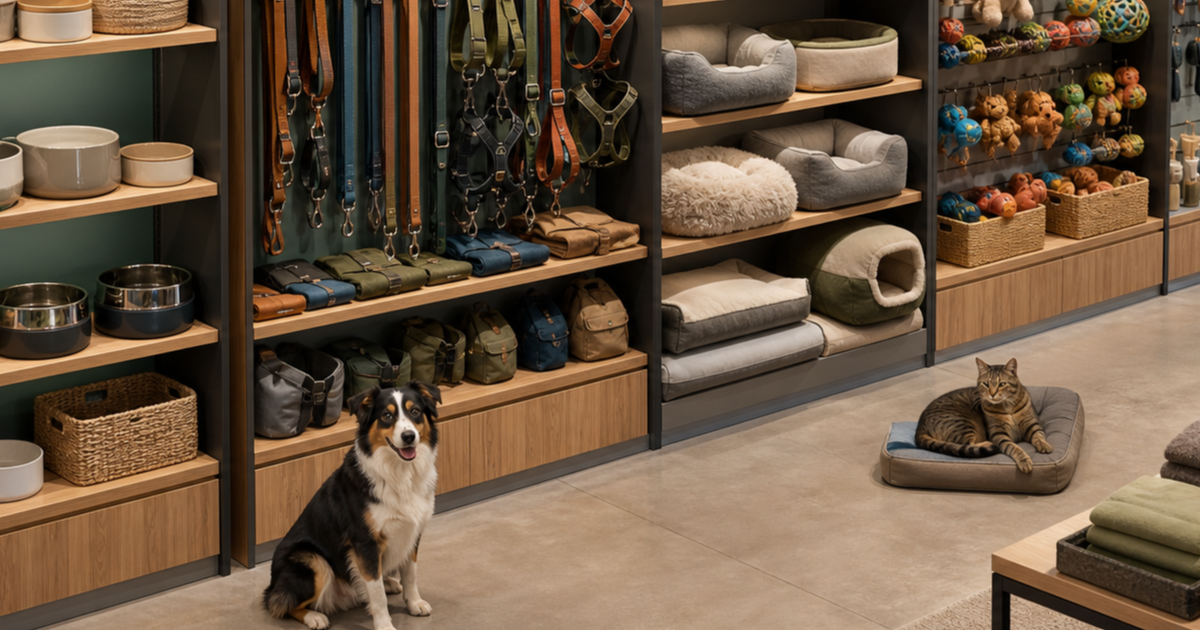
How Retailers Can Build a Balanced Pet Product Range
A practical framework for pet retailers to balance categories, SKU depth, price tiers, inventory, compliance and controlled product testing.

How to Plan a High-Value Pet Toy Assortment
Plan a pet toy range using play-function coverage, safety gates, supplier evidence, explainable price steps and measurable retail pilots.

International Pet Product Sourcing: A Step-by-Step Guide
A practical international pet product sourcing workflow covering specifications, supplier verification, compliance, samples, quality control, contracts, shipping and reorders.
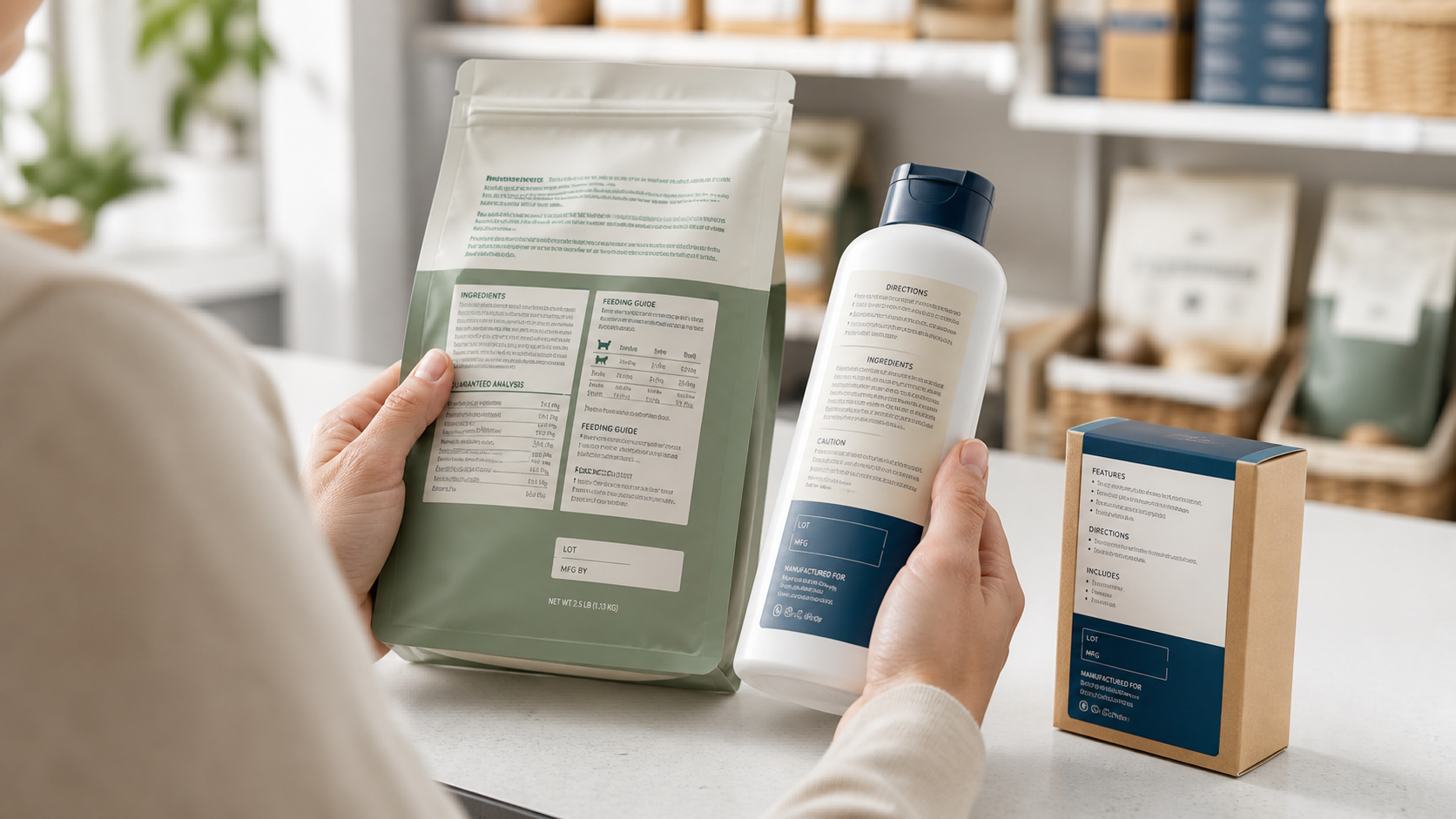
Pet Product Packaging Labels: What Buyers Should Check
Learn how to inspect pet product packaging labels for identity, ingredients, directions, warnings, quantity, claims, and traceability before buying.