Retail & Distribution
Product Bundling Strategies for Pet Retailers
Quick answer
A retailer framework for profitable pet-product bundles: choose formats by customer mission, price after variable costs, and test inventory, fit and returns.
By ShineePets Editorial Team · Published · Updated
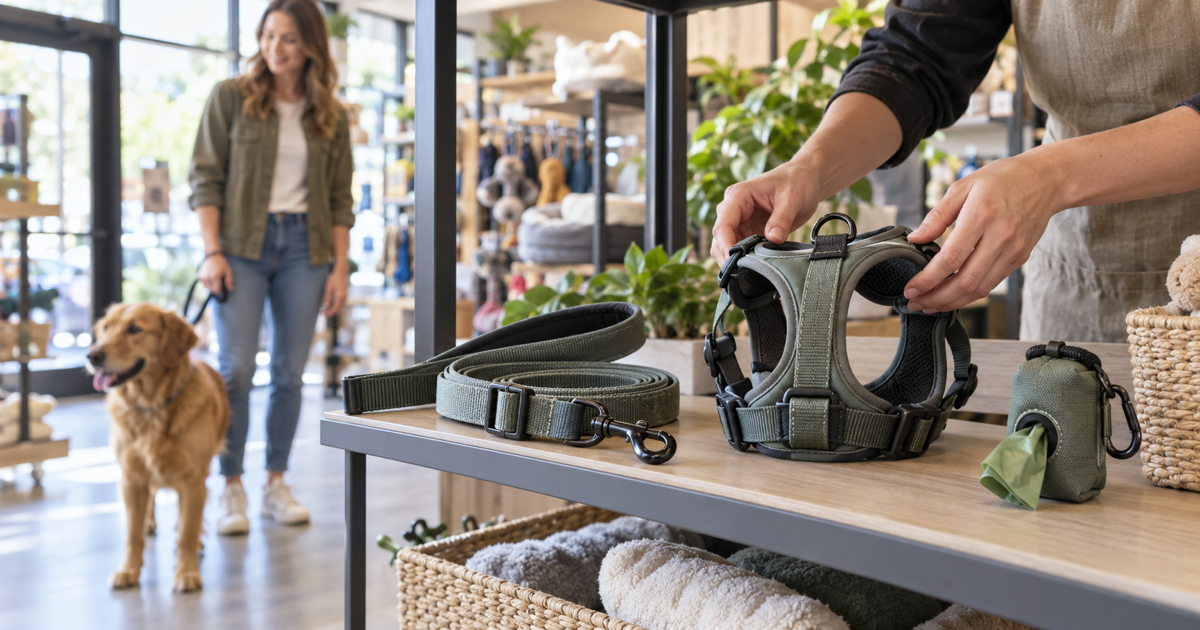
Product bundling works for pet retailers when the grouped products complete a specific customer job, remain suitable for the animal, and make commercial sense after discounts and fulfillment costs. Start with a narrow use case—such as an adult-dog walking refresh—then choose a fixed, virtual, or customer-selected offer. Verify every component, show exactly what is included, and calculate the contribution from the *whole* offer before promoting it. A larger basket is not automatically a better sale if one awkward item drives returns or the discount erases margin.
This guide is about merchandising and operating bundles, not building a new-pet starter kit. For the latter, see our pet starter kit inclusion guide.
Choose the Product Bundling Strategy Before the Products
Three models solve different retail problems. The terminology also maps to fixed, multipack, and mix-and-match formats described in Shopify's bundle documentation, although the technical implementation depends on your commerce platform.
| Model | Useful when | Main operational question |
| --- | --- | --- |
| Fixed physical bundle | A stable set can be packed, displayed and replenished together | Will every component remain available and identifiable? |
| Virtual bundle | Separate shelf or warehouse SKUs are sold together at checkout | Can the system reserve and decrement every component? |
| Choose-your-own bundle | Fit, size or preference must be selected by the customer | Are eligible choices, prices and exclusions obvious? |
Multipacks are a fourth, simpler option for repeat purchases of the *same* product, such as a retailer-approved pack of waste bags. Do not confuse them with cross-category bundles. A retailer can also display complementary items together without applying a bundle price; that may be the right first test when inventory integration is weak.
If a bundle is sold as a separate physical trade item, confirm its barcode and data requirements before printing packaging. GS1's GTIN management rules explain that changing a component in a predefined assortment calls for a new GTIN. A virtual promotion has different identification needs; ask the relevant marketplace or trading partner which item identifier it expects.
Build Around a Shopping Mission, Not a Convenient Supplier Carton
Write the customer job in one line, then make each proposed item earn its place. “Prepare for a short dog walk” is clearer than “dog essentials.” A leash, waste-bag holder and suitable bag refill may be complementary. A harness should be a selectable, measured option because fit varies. Similarly, a cat grooming offer could pair a brush and comb while leaving skin products or specialized tools to an informed choice.
Use this selection test for every component:
1. Relevance: Is it needed for the same task or merely available from the supplier?
2. Compatibility: Do sizes, connectors, materials and care instructions work together?
3. Choice: Does the customer need to select it for species, size, age or preference?
4. Condition: Will its shelf life, fragility or cleaning requirement complicate storage?
5. Traceability: Can the retailer identify the affected component if a complaint or recall occurs?
Avoid using a bundle to hide slow-moving or unsuitable stock. A discount cannot make an incompatible harness, weak toy or short-dated food a better customer experience. Food and treats deserve a separate review: retain the original labeling and lot information, check species and life-stage suitability, and avoid implying a health benefit without support. The US FDA's animal-food labeling guidance explains both label-information requirements and why disease-related claims need particular care. Requirements vary by destination market.
Price the Bundle After All Variable Costs
Calculate contribution per bundle, not only a headline discount:
Bundle contribution = selling price − component landed costs − incremental packaging and picking costs − payment and channel costs − expected returns allowance.
The allowance must come from your own return history or an explicitly stated test assumption; it is not an industry benchmark. Consider a *hypothetical* three-item offer priced at $29. If landed components total $16 and incremental packing, picking and transaction costs total $3, its contribution before returns and overhead is $10. That arithmetic does not prove the offer is better than selling one item alone. Compare it with the actual alternative purchase and any extra labor, not just with the sum of three list prices.
Keep a dated record of the individual selling prices used for any “save $X” or percentage-off message. The US FTC's small-business advertising guidance says price comparisons and sale claims must be truthful. For UK-facing promotions, the Competition and Markets Authority's price-transparency guidance also stresses clear upfront total prices and mandatory charges. Check rules in each market where you sell; do not present one jurisdiction's guidance as a global law.
Treat Inventory and Fulfillment as Part of the Offer
For a virtual bundle, sellable quantity is limited by the scarcest component after accounting for the quantity of each item required. For example, 12 bag holders and 20 bag refills permit at most 12 one-of-each bundles before reservations and other orders. Shopify documents this component-based calculation, but verify that your own system handles shared stock across standalone and bundled sales. Shopify bundle inventory guidance
Before launch, perform a test order through every selling channel:
- Confirm that checkout shows the complete offer and the correct total.
- Confirm that each component is reserved, picked and deducted only once.
- Pack the real items and measure the finished parcel; do not price shipping from product-page dimensions alone.
- Check that labels, instructions, lot or model identifiers remain available after outer wrapping.
- Simulate one damaged component and one partial return. Decide whether replacement, refund or full-bundle return applies.
A fixed physical bundle may save picking time but adds assembly, storage and rework costs. A virtual bundle can be more flexible but creates system and substitution risks. Platform-specific return behavior may differ: Shopify, for example, bases bundle return eligibility on the underlying products, so its settings should be tested rather than assumed. Shopify bundle returns guidance
Put a Safety Gate Before the Promotional Calendar
Approve products as individual items and as a combined offer. Review supplier specifications, intended use, materials, dimensions, closures and care instructions. Confirm that a customer can tell which product is appropriate for their animal without relying on a misleading bundle photograph. A leash and harness may look coordinated yet still require a separate fit choice.
Check applicable product rules and recalls in the destination market. For US consumer products within CPSC's scope, its retailer responsibilities guidance describes retailer obligations around unsafe or non-compliant goods. Do not assume that inclusion in a bundle changes a component's regulatory status. Keep a component bill of materials, supplier identity and version history so a substitution is reviewed rather than silently introduced.
If a food item is included, avoid covering its original label or lot code with decorative packaging. FDA explains why pet-food lot information matters for identifying affected batches. FDA pet-food lot-number guidance
Pilot One Offer and Judge Incremental Value
Start with one customer mission and one or two variants, not a storewide bundle catalog. Record a baseline for the relevant standalone items before the pilot. During the test, review:
- Attachment: What share of eligible shoppers add complementary items?
- Contribution: What remains after discounts and bundle-specific operating costs?
- Availability: How often is the offer blocked by a missing component?
- Customer friction: Which fit questions, substitutions, complaints and returns recur?
- Cannibalization: Are buyers switching from a higher-contribution purchase without adding useful value?
Segment results by channel and customer mission where volume permits. Do not declare success based only on average order value; a discounted bundle can lift basket size while lowering contribution. Keep, revise or retire the offer using thresholds set before the promotion starts. If the bundle works, document its exact component version and packing method before scaling.
Retailers planning a wider category mix can pair this decision process with our balanced pet product range framework. For a private-label bundle, ShineePets can discuss component specifications, sample review and packaging through its OEM/ODM service; any performance or safety claim still needs product-specific evidence.
Sources and Further Reading
- Eligibility and Considerations for Product Bundles — Shopify Help Center
- GTIN Management Standard — GS1
- Advertising FAQs: A Guide for Small Business — US FTC
- Providing Clear and Accurate Information About Prices — UK CMA
- Retailers: Product Safety and Your Responsibilities — US CPSC
- Animal Food Labeling and Pet Food Claims — US FDA
- Save Your Pet Food Lot Number! — US FDA
For retailers, distributors and pet brands
Turn this insight into a sourcing plan
Browse the ShineePets B2B catalog or discuss product selection, packaging, private-label and OEM/ODM requirements.
Explore the Wholesale Catalog Discuss OEM/ODMFrequently Asked Questions
Should pet retailers offer a fixed bundle or let shoppers choose?
Use a fixed bundle when all components are broadly suitable and stable. Offer a selectable or virtual format when size, fit or preference matters; test the checkout and inventory logic first.
Does every pet product bundle need a discount?
No. Clear curation can help shoppers without a price cut. If you advertise savings, compare against genuine individual prices and include bundle-specific operating costs in the margin calculation.
How do I prevent a bundle from overselling?
Track each component at the quantity required per bundle, reserve shared inventory across bundle and standalone orders, and test an order when one component reaches zero.
Can I swap a component after a physical bundle has been printed?
Review the new component for fit, claims, packaging and trade-item identification first. GS1 rules call for a new GTIN when a predefined assortment changes.
Which metrics show whether a bundle is worth keeping?
Review contribution after discounts and variable costs, component availability, attachment, returns and customer questions alongside basket size; compare with the relevant standalone purchase.
Sources and References
- Eligibility and Considerations for Product Bundles — Shopify Help Center
- GTIN Management Standard — GS1
- Advertising FAQs: A Guide for Small Business — US FTC
- Providing Clear and Accurate Information About Prices — UK CMA
- Retailers: Product Safety and Your Responsibilities — US CPSC
- Animal Food Labeling and Pet Food Claims — US FDA
- Save Your Pet Food Lot Number! — US FDA
Continue Reading

Pet Starter Kits: What to Include and What to Avoid
A retailer framework for species-specific pet starter kits: choose useful core items, leave fit and diet decisions open, and test the full bundle before launch.

How Retailers Can Build a Balanced Pet Product Range
A practical framework for pet retailers to balance categories, SKU depth, price tiers, inventory, compliance and controlled product testing.
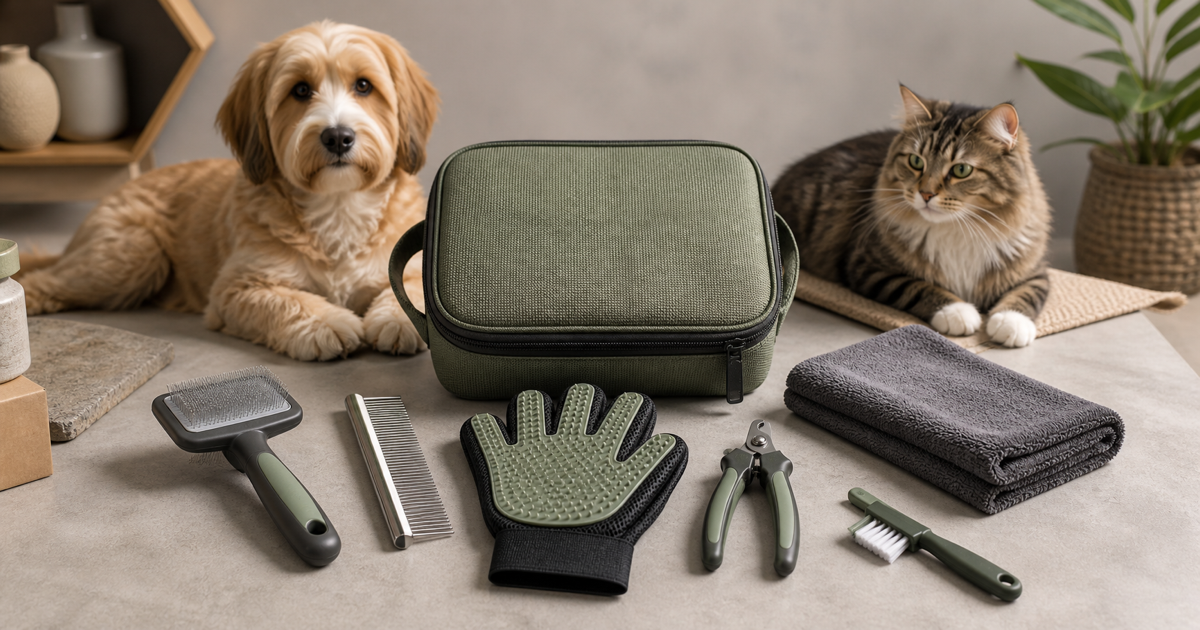
Building a Private Label Pet Grooming Kit
A brand-owner framework for defining a private label pet grooming kit, selecting compatible tools, testing samples and controlling packaging.