Cat Care
Why Cats Scratch Furniture and How to Redirect Them
Quick answer
Learn why cats scratch furniture, map the behavior, protect target areas and redirect scratching through placement and positive reinforcement.
By ShineePets Editorial Team · Published · Updated
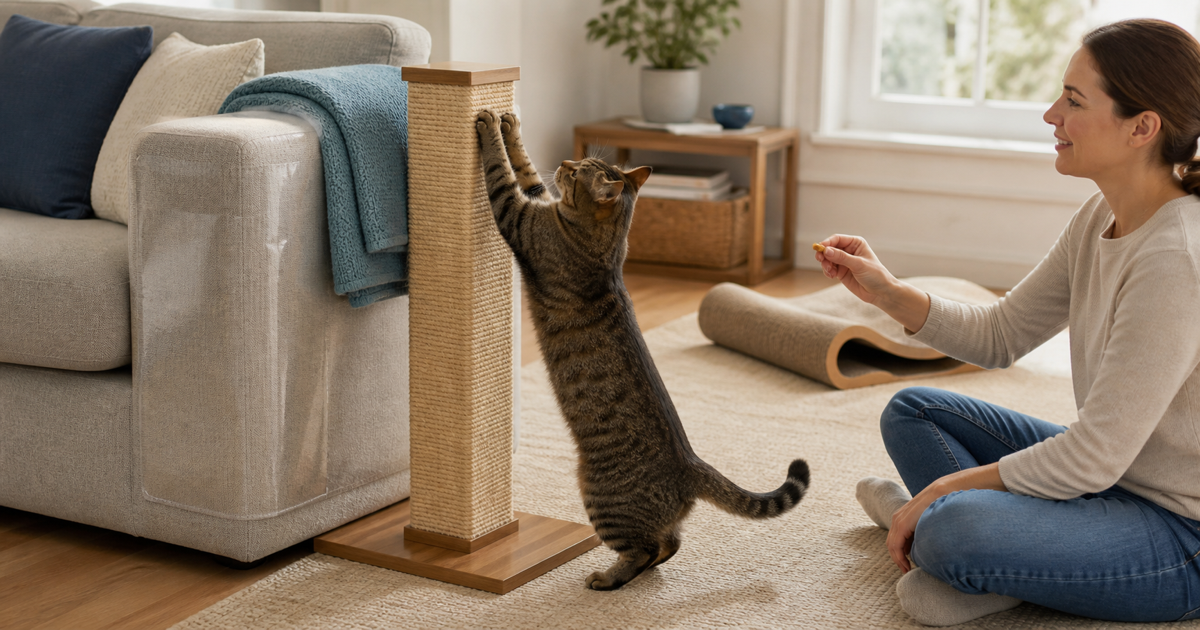
Understanding why cats scratch furniture starts with a simple fact: scratching is a normal way to maintain claws, stretch, leave visible and scent marks, and respond to arousal. A sofa arm often wins because it is tall, stable, textured and positioned on an important route—not because the cat is spiteful. To redirect the behavior, protect the chosen furniture, place a matching scratcher directly beside it, reward voluntary use and change the setup only after the new habit is reliable.
This guide focuses on reading the furniture pattern and changing the home routine. For detailed product dimensions, materials and construction checks, use the separate ShineePets guide to choosing a scratching post your cat will use.
Why Cats Scratch Furniture
Scratching serves several functions at once:
- Claw maintenance: Pulling against a resistant surface helps shed loose outer claw layers.
- Stretching and movement: A vertical surface lets a cat extend the forelegs, shoulders and back.
- Communication: Scratches leave a visible mark and scent from the paws.
- Location marking: Cats often choose prominent edges, routes, doors, windows and shared rooms.
- Arousal release: Scratching commonly follows waking, play, greetings or a stimulating event.
RSPCA guidance describes scratching as normal claw care and recommends that indoor cats always have an appropriate scratching opportunity. Read the RSPCA indoor-cat guidance. The 2013 AAFP/ISFM Environmental Needs Guidelines place scratching areas among the resources needed for a healthy feline environment. Review the environmental-needs guidelines.
Furniture may satisfy those needs better than the available scratcher. A sofa does not wobble, its fabric catches the claws, and its arm may sit exactly where the cat wants to mark after entering the room or leaving a resting place.
Read the Scratch Pattern Before Changing Anything
The scratch location tells you more than the price or appearance of a post.
| Pattern | Likely practical clue | First response |
|---|---|---|
| Sofa arm or door frame | Vertical stretch and a prominent route | Put a rigid vertical scratcher against that exact edge |
| Rug or stair tread | Horizontal movement and grippy texture | Add a secured horizontal pad at the used spot |
| Furniture beside a bed | Scratching after waking | Place the alternative within one or two steps of the resting area |
| Window or doorway | Visual or scent marking at a boundary | Preserve access and add a scratch surface there |
| Several new sites after a household change | Increased marking or distress may be involved | Stabilize routines and review the whole environment |
| One cat uses the post while another uses furniture | Access, location or social blocking may differ | Distribute scratchers across separate routes |
Do not interpret every scratch as one motive. A cat may stretch after waking and also reinforce a mark near a doorway. The goal is to reproduce the useful features at an acceptable target.
Make a Seven-Day Furniture Scratch Map
Before buying more equipment, observe for one week. For every event, record:
1. exact location and furniture surface;
2. vertical, horizontal or angled body position;
3. approximate reach height or scratch length;
4. what happened immediately before—waking, play, arrival, noise or another cat;
5. time of day and people or animals present;
6. which scratchers were available and whether access was blocked;
7. how the person responded.
Do not interrupt events just to collect data when damage can be prevented calmly. The map should reveal repeated triggers and positions, not produce a perfect count.
Protect the Furniture Without Punishing the Cat
Cover the used section while leaving an appropriate scratch surface beside it. A fitted furniture guard, secured close-weave cover or throw can prevent further damage without startling the cat. Check daily that fasteners, edges and folds cannot trap claws.
Feline Veterinary Medical Association guidance specifically recommends sofa or carpet protectors and a suitable scratcher at the used location. It advises against double-sided sticky tape as a deterrent and states that punishment must be avoided. Read the FelineVMA training guidance.
Avoid yelling, spraying water, clapping near the cat, pushing paws onto the post or using strong-smelling deterrents. Punishment does not teach which surface will work instead, may increase fear and can make the cat scratch only when people are absent. If you see scratching begin, stay neutral and make the preferred option easier to choose next time.
Match the Replacement to the Evidence
Use the scratch map to reproduce four variables:
- Orientation: vertical, horizontal or angled;
- Resistance: the replacement must not rock, slide or tip;
- Reach: it must allow the posture the cat is already using;
- Location: it begins at the furniture, doorway, window or resting area the cat selected.
Texture matters, but location and stability can outweigh a theoretically popular material. Offer one alternative that closely matches the marked surface and one different option if the preference is unclear. In multi-cat homes, provide choices in separate locations so one cat cannot control the only useful scratcher.
A peer-reviewed survey study of 2,465 cat caregivers found that restricting access to off-limit objects, providing additional scratching posts and applying attractants to appropriate scratchers were associated with less unwanted scratching. Because it was observational, the study shows associations rather than proving that one tactic caused the result. Read the scratching-management study.
Redirect With a Three-Phase Routine
Phase 1: Put the alternative at the target
Place the stable scratcher directly against the scratched furniture, not across the room. Protect the furniture area and keep the new surface available at all times. Add another scratcher near a favored sleeping place if events often follow waking.
Phase 2: Reinforce voluntary use
When the cat approaches, touches or scratches the new surface, mark the moment with a calm word and immediately offer something the individual values: a small treat, brief play or preferred attention. Reward the correct behavior; do not lure the cat and then hold its paws against the material.
The FelineVMA positive-reinforcement statement recommends enticing a cat to the post and rewarding scratching there, while warning against physical and verbal punishment. Review the positive-reinforcement statement. If catnip increases interest for that cat, use a small amount on the scratcher only. It is optional, not a substitute for placement and stability.
Phase 3: Preserve success before moving anything
Keep the furniture protected and the scratcher in place until voluntary use is consistent and furniture attempts have clearly declined. If the scratcher must eventually move, shift it only a small distance at a time and reverse the move if furniture scratching returns. Some meaningful locations should keep a permanent scratcher.
If Scratching Gets Attention
A cat may learn that touching the sofa immediately starts conversation, play or a chase. Do not punish or create a dramatic reaction. Instead:
- schedule a short play opportunity before the usual scratching time;
- reward calm approach to the scratcher;
- keep an appropriate surface near the social area;
- provide predictable feeding, play and rest routines;
- ensure the cat is not asking because a basic resource is inaccessible.
The purpose is not to ignore welfare needs. It is to make the acceptable behavior the reliable route to engagement.
Review Stress and Multi-Cat Access
A sudden increase in scratches at windows, doors or shared routes can occur alongside changes such as a new animal, visitors, building work, outdoor cats or conflict between household cats. Look for blocking, staring, chasing, hiding, reduced play, altered appetite or litter-box changes.
Distribute scratching, resting, feeding, water and toileting resources so cats have more than one route. Do not place every scratcher side by side and call them separate choices. The ShineePets guide to multi-cat home resources explains how location changes access and conflict.
Claw Care Can Reduce Damage, Not the Need to Scratch
Regular nail checks and careful trimming may reduce sharp tips, but they do not replace scratching behavior. If the cat has not been trained to accept paw handling, ask a veterinarian or cat-friendly grooming professional for a gradual plan. Stop if the cat struggles or becomes frightened. Nail caps also require correct sizing, application, monitoring and professional guidance.
Elective declawing is not a behavior-redirection method. The FelineVMA strongly opposes elective declawing and describes it as amputation of the third phalanx, with potential acute and long-term complications. Read the FelineVMA position statement. Discuss humane alternatives with a veterinarian.
Troubleshoot the Setup
| Problem | What to check next |
|---|---|
| Cat sniffs the post but does not scratch | Wobble, reach, texture direction and whether it is truly at the marked spot |
| Cat scratches beside the protector | Extend protection to the full marked zone and align the scratcher with that edge |
| Cat uses both post and sofa | Keep reinforcement and protection longer; add another matched surface at a second meaningful site |
| Cat switches to carpet | Provide a secured horizontal option and review whether the vertical post is uncomfortable |
| Senior cat stops using a tall post | Offer lower or horizontal options and arrange a veterinary mobility assessment |
| Scratching spreads after a new cat arrives | Separate resources and assess intercat tension rather than adding one shared post |
Change one variable at a time. Moving the post, changing the surface and removing the protector on the same day makes the result hard to interpret.
When to Contact a Veterinarian
Arrange veterinary advice when scratching changes suddenly, becomes markedly more frequent or appears alongside vocalization, hiding, aggression, altered appetite, litter-box changes, reduced mobility or compulsive repetition. Seek prompt care for a torn claw, bleeding, swelling, limping or obvious pain. A veterinarian can check medical causes and refer to a qualified feline behavior professional when needed.
Why Cats Scratch Furniture: Final Checklist
- Map when, where and how the cat scratches.
- Match orientation, reach, resistance and location.
- Put the alternative directly beside the furniture target.
- Protect the full damaged zone without startling deterrents.
- Reward voluntary contact and scratching immediately.
- Never yell, spray water or force the cat's paws.
- Keep the successful setup stable before moving it.
- Distribute scratchers and other resources in multi-cat homes.
- Treat nail care as damage reduction, not behavior removal.
- Seek veterinary help for sudden change, distress, injury or mobility problems.
Successful redirection does not suppress a feline need. It makes an acceptable surface more functional, accessible and rewarding than the furniture while preserving the cat's sense of safety.
*This article provides general feline-care information and does not replace veterinary diagnosis or individualized behavior advice.*
Sources and Further Reading
- Training Techniques for Addressing Undesirable Behaviors — Feline Veterinary Medical Association
- Positive Reinforcement of Cats Position Statement — Feline Veterinary Medical Association
- AAFP/ISFM Environmental Needs Guidelines — Feline Veterinary Medical Association
- Unwanted Scratching Behavior in Cats: Management Strategies — Animals
- Keeping Cats Indoors — RSPCA
- Declawing Position Statement — Feline Veterinary Medical Association
Frequently Asked Questions
Why does my cat scratch the sofa when a scratching post is nearby?
The sofa may be more stable, better located, taller or closer to the cat's preferred texture and route. Place a matched scratcher directly beside the used sofa area before expecting the cat to choose it.
Should I spray water when my cat scratches furniture?
No. Spraying, yelling and startling can increase fear and do not teach the desired alternative. Protect the furniture, provide a suitable surface at that location and reward voluntary use.
Can I move the scratching post after my cat starts using it?
Wait until use is consistent and furniture attempts have clearly declined. Then move it only a small distance at a time; return it to the successful position if scratching resumes.
Why has my cat suddenly started scratching more furniture?
Household change, social tension, inaccessible resources, arousal or a medical problem may contribute. Record the context and contact a veterinarian if the change is sudden, marked or accompanied by other behavioral or physical signs.
Does trimming a cat's claws stop furniture scratching?
Trimming may reduce damage from sharp tips, but it does not remove the need to scratch for movement, claw maintenance and communication. Continue providing suitable scratching areas.
About this article
ShineePets publishes practical, source-checked guidance for pet owners and pet-product professionals.
ShineePets is a commercial B2B pet-supply sourcing brand. Read our editorial standards and commercial disclosure.