Dog Care
Why Dogs Chew Household Items and What Helps
Quick answer
Learn what your dog's chewing pattern may mean, how to prevent access, offer safer alternatives, teach an exchange, and recognize urgent ingestion risks.
By ShineePets Editorial Team · Published · Updated
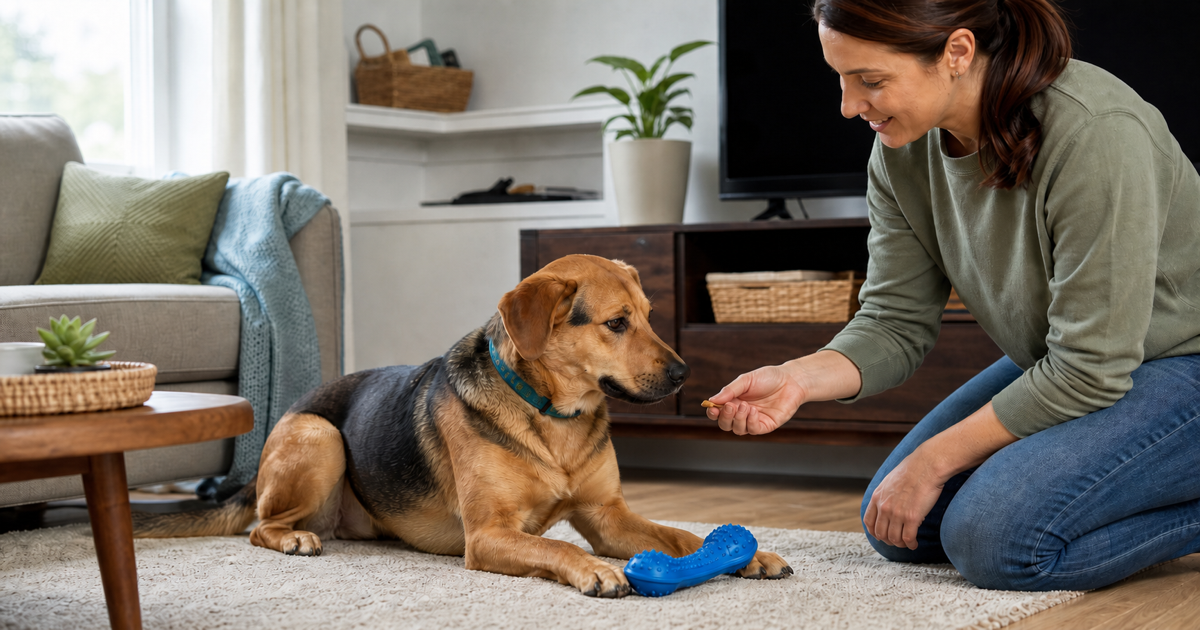
Why dogs chew household items depends on age, access and context. Chewing is a normal way to explore and, in puppies, cope with teething discomfort. It becomes a problem when tempting objects are reachable, no suitable outlet exists, the dog is distressed, or non-food material is swallowed. The answer is not punishment. Protect the dog from cords, batteries, medicines, fabric and small objects; identify the pattern; provide a size-appropriate chew; and reward that choice. Suspected swallowing or sudden, intense chewing puts veterinary advice before training.
Key Takeaways
- Chewing is normal; repeated destruction is information about access, development, unmet needs or distress.
- The time, place and object involved are more useful than assuming the dog is bored or being spiteful.
- Prevent access while teaching an alternative, because every successful raid rehearses the unwanted behavior.
- Choose chews for the individual dog's size and chewing style, then inspect and supervise them.
- Known ingestion, choking, mouth injury or obstruction signs require prompt veterinary guidance.
Why Dogs Chew Household Items: Start With the Pattern
The same damaged shoe can have different explanations. A puppy may explore reachable textures, a dog raiding laundry may follow scent, and damage at a door only after people leave may indicate separation-related distress. Persistent eating of fabric, plastic or stones needs veterinary assessment.
Chewing itself is not evidence of defiance. The ASPCA's overview of destructive chewing describes exploration, teething, boredom, mild anxiety and frustration as possible drivers. Use those as hypotheses, not labels. Record what happened immediately before the chewing, whether anyone was present, what material was targeted and whether pieces were swallowed.
| Pattern you observe | A useful question to investigate | First response |
|---|---|---|
| Many reachable objects in a young dog | Is this exploration or teething with too much freedom? | Reduce access and offer supervised textures. |
| Food packaging, bins or kitchen items | Is scent or leftover food rewarding the search? | Secure food waste and clean residue. |
| Cushions, shoes or remotes during quiet periods | Is an appropriate outlet missing? | Offer a matched chew before the usual time. |
| Doors, frames or windows only when alone | Are there also vocalization, pacing, drooling or escape attempts? | Record a short absence and seek qualified help if distress is visible. |
| Repeated swallowing of fabric, plastic, stones or other objects | Is this persistent pica rather than ordinary chewing? | Prevent access and arrange a veterinary assessment. |
| Sudden chewing in an adult or senior dog | Could pain, appetite change, medication or anxiety be involved? | Contact the dog's veterinarian instead of assuming a training lapse. |
This table is a triage tool, not a diagnosis. Dogs Trust advises looking for the underlying need and using management, alternatives and calm interruption rather than treating destruction as “naughty.”
Check for Immediate Danger Before Training
Pause behavior work if the dog has chewed or swallowed a hazardous object. Batteries, medicines, cleaning products, nicotine products, sharp items, string, socks, sanitary products, electrical cords and pieces of toys can cause poisoning, burns, choking, dental injury or gastrointestinal obstruction.
Contact a veterinarian or animal poison service immediately after a known or suspected toxic exposure; do not wait for symptoms or induce vomiting unless instructed. The ASPCA Animal Poison Control Center serves the United States; elsewhere, use a local veterinary emergency or poison service.
Seek urgent veterinary care for choking or breathing difficulty, collapse, repeated retching or vomiting, a painful or swollen abdomen, marked lethargy, refusal of food, or inability to keep water down. The Merck Veterinary Manual notes that foreign-body obstruction signs vary but often include vomiting and loss of appetite, with diarrhea, lethargy or shock also possible. A dog can still have an obstruction without every listed sign.
Match the Response to the Likely Cause
Exploration and puppy teething
Young dogs learn with their mouths, and teething can increase chewing. Give a puppy a supervised area with water, rest and suitable chew options. Expand access only after those items are chosen reliably. Our puppy-proofing guide helps remove cords, medicines, rubbish and small objects first.
An unmet chewing or activity need
Build a routine with sniffing, social contact, short reward-based training, appropriate movement, rest and legal chewing. Offer the chew before damage usually happens. For a broader activity plan, use dog enrichment ideas matched to energy level.
Attention and chase games
If grabbing a sock makes people chase or shout, the sequence may become rewarding. Do not corner the dog. Cue a trained exchange, secure the item while the dog is occupied, then provide an acceptable activity. If the dog freezes, growls, guards or has bitten, stop direct removal and seek qualified help.
Stress or separation-related behavior
For destruction only during absence, record the first 20 to 30 minutes after departure and note pacing, panting, vocalizing, drooling, house soiling or escape attempts. Do not test longer absences if the dog is distressed. This pattern may need an individualized professional plan, not a tougher toy.
Persistent ingestion of non-food items
Persistent non-food ingestion is commonly called pica. The veterinarian-authored VCA guide to pica in dogs lists behavioral and medical contributors and warns about obstruction, pain, reduced appetite and vomiting. Keep targets inaccessible and arrange veterinary evaluation rather than trying unprescribed supplements, diet changes or medication.
Use a Four-Part Plan That Prevents Rehearsal
1. Remove access to the exact targets
Use closed hampers, lidded bins, cable covers, drawers, doors and baby gates. Clear low surfaces. A safe zone must not contain objects the dog can dismantle or swallow. Confinement is management, not treatment; introduce it positively and provide adequate breaks, movement, toileting and contact.
2. Offer an alternative that matches the dog
Match texture and function without sacrificing safety. Start with a product sized for the dog's mouth and chewing style, supervise first sessions, and remove it if chunks loosen, seams open or it becomes small enough to swallow. Our pet toy safety guide covers materials, size, wear and supervision.
The American Animal Hospital Association warns that overly hard chews can fracture teeth and that broken or undersized pieces may cause choking or blockage. Its chew-toy safety guidance recommends considering size, hardness, durability and the individual chewing style. No chew is universally safe or appropriate for unsupervised access.
3. Teach “trade” away from emergencies
Practice with a low-value dog toy, not a stolen household item:
1. Present a treat near the dog's nose and say “trade” once.
2. When the dog releases the toy, mark the release with “yes” or a click and give the treat.
3. Return the toy when safe so releasing does not always end access.
4. Repeat briefly, then progress to slightly more valued objects.
5. Separately teach “leave it” before the dog picks something up.
The American Veterinary Society of Animal Behavior recommends reward-based training and advises against aversive methods. Avoid yelling, physical correction, startling devices and forcing the mouth open.
4. Reinforce the right choice early
Keep suitable chews where problems begin. Reward the dog for approaching or settling with one. Rotate options, but change one variable at a time. Count food-filled toys within the normal diet and ask a veterinarian about restrictions.
Run a Seven-Day Chewing Audit
For one week, log five fields: time, location, object, what happened in the previous 15 minutes, and what the dog did after redirection. Also record meals, rest, exercise, departures and any swallowed material. The aim is not to count damage; it is to find a repeatable trigger.
At the end of the week:
- Same time each day: place a suitable activity before that period and check whether rest or toileting is being missed.
- Same location: block access and station an acceptable chew nearby.
- Only during absence: review video for distress and shorten unsupported alone time while seeking help.
- Many materials are swallowed: contact the veterinarian and strengthen barriers immediately.
- No improvement despite consistent management: ask a reward-based trainer or veterinary behavior professional to observe the pattern.
Common Mistakes That Slow Progress
- Punishing after the event. The dog cannot connect a later reprimand to earlier damage, and fear can worsen anxiety.
- Giving an old shoe as a toy. Dogs do not reliably distinguish the permitted shoe from the new pair.
- Offering one unsuitable chew. Preference, size and chewing force vary; an ignored or rapidly damaged item is not an effective alternative.
- Using deterrent spray as the whole plan. It does not meet the need or teach the dog what to choose.
- Increasing exercise without enough rest. More arousal is not always the answer; a balanced routine includes recovery.
- Assuming all alone-time damage is boredom. Distress needs a different, carefully paced response.
When to Ask for Professional Help
Arrange veterinary advice when chewing starts suddenly, becomes compulsive, includes repeated ingestion, damages teeth or gums, accompanies appetite or weight changes, or occurs in a dog with a new medication or health change. Seek behavioral support when the dog shows separation distress, guarding, aggression or no progress after access and routine have been consistently managed.
Choose a professional who uses reward-based methods, explains the plan clearly and coordinates with the veterinarian when health or anxiety may be involved. A qualified professional should not promise a universal quick fix or rely on pain, fear or intimidation.
Final Household Checklist
- Secure cords, batteries, medicines, bins, laundry and small objects.
- Write down when, where and what the dog chews.
- Provide more than one suitable, supervised chew option.
- Inspect size, flexibility and damage before and after each session.
- Practice “trade” and “leave it” with low-stakes objects.
- Reward appropriate chewing before a problem starts.
- Review short absence video if damage happens only when alone.
- Call a veterinarian promptly after suspected ingestion or sudden behavior change.
Household chewing improves most reliably when access control, a suitable outlet and reward-based teaching work together. The goal is not to stop a normal canine behavior; it is to make the safe choice easy, valuable and repeatable.
*This article provides general dog-care information and does not replace veterinary diagnosis, emergency advice or an individualized behavior plan.*
Sources and Further Reading
- Destructive Chewing — ASPCA
- Why Dogs Destroy Things and What You Can Do — Dogs Trust
- Position Statements: Humane Dog Training — American Veterinary Society of Animal Behavior
- Gastrointestinal Obstruction in Small Animals — Merck Veterinary Manual
- Don't Chew on This! — American Animal Hospital Association
- Pica in Dogs — VCA Animal Hospitals
- ASPCA Animal Poison Control Center — ASPCA
Frequently Asked Questions
Why does my dog chew my belongings when toys are available?
The available toys may not match the texture or function the dog seeks, or chewing may be linked to access, routine, attention or distress. Track the pattern, restrict access and test suitable supervised alternatives.
Will my dog grow out of chewing household items?
Puppy exploration and teething usually change with maturity, but chewing remains normal throughout life. Management and reward-based teaching are still needed rather than waiting for the behavior to disappear.
Should I punish my dog for chewing furniture?
No. Punishment after the event does not teach the desired choice and may increase fear or anxiety. Prevent access, interrupt calmly when safe, redirect to an appropriate chew and reward that choice.
When is chewing a veterinary emergency?
Seek prompt veterinary advice after suspected swallowing or toxic exposure, and urgently for breathing difficulty, collapse, repeated vomiting or retching, abdominal pain or swelling, marked lethargy, or refusal of food and water.
Sources and References
- Destructive Chewing — ASPCA
- Why Dogs Destroy Things and What You Can Do — Dogs Trust
- Humane Dog Training Position Statement — AVSAB
- Gastrointestinal Obstruction in Small Animals — Merck Veterinary Manual
- Don't Chew on This! — AAHA
- Pica in Dogs — VCA Animal Hospitals
- ASPCA Animal Poison Control Center — ASPCA
About this article
ShineePets Editorial Team creates evidence-informed pet care and product guidance for global readers.
ShineePets is a commercial B2B pet-supply sourcing brand. Read our editorial standards and commercial disclosure.