Dog Care
Puppy-Proofing Essentials for Every Room
Quick answer
Puppy-proof every room with practical checks for cords, food, medicines, cleaners, stairs, windows, tools, plants, yards and daily supervision.
By ShineePets Editorial Team · Published · Updated
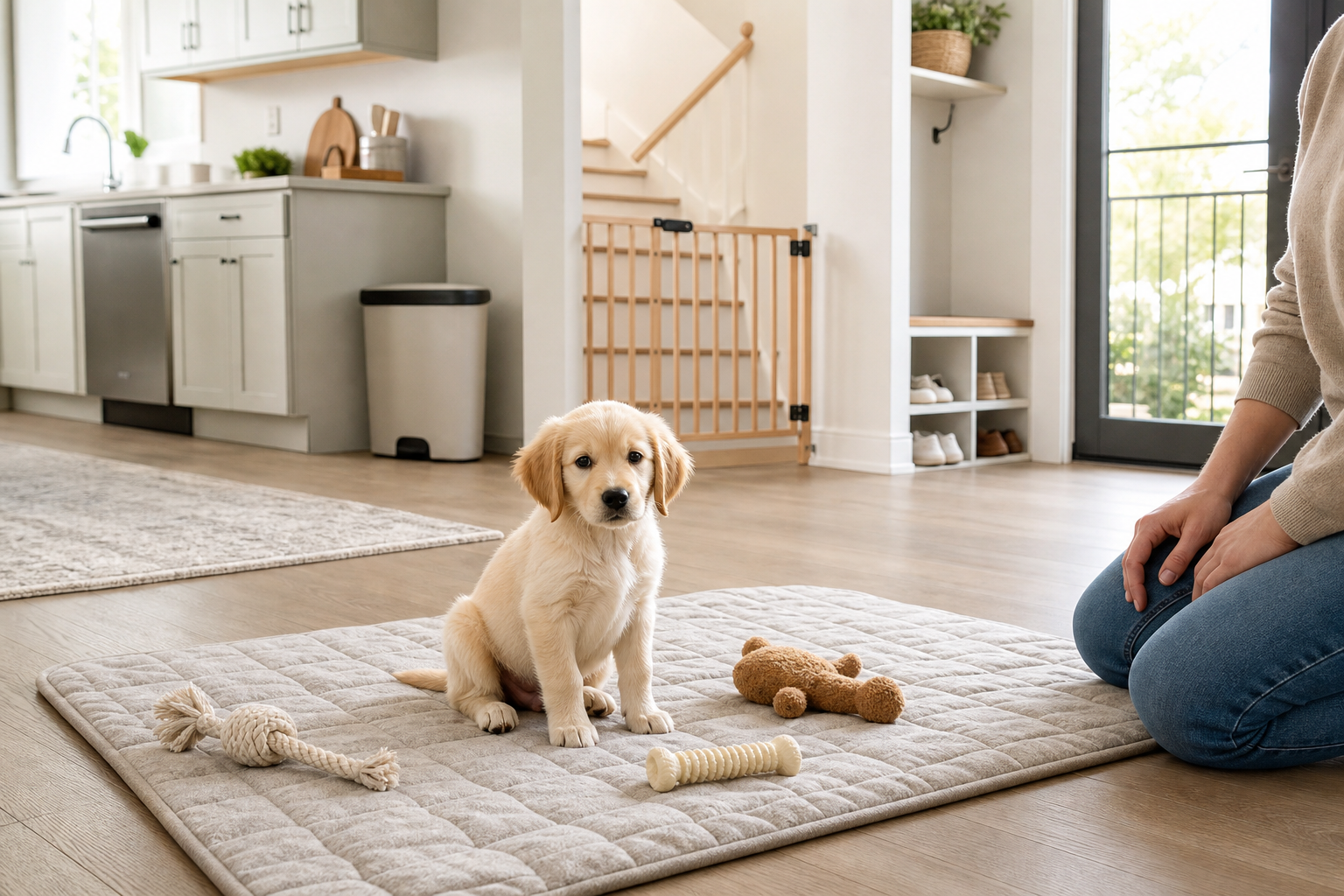
A new puppy explores with its nose, mouth and paws. That curiosity is normal, but an ordinary home contains cords, medicines, food, cleaning products, small objects and open exits that can become dangerous within seconds. Effective puppy-proofing is therefore less about buying equipment and more about controlling access, supervising consistently and reviewing the environment as the puppy grows.
Quick recommendation: Start with one supervised puppy-safe zone, inspect every surface from nose level, and expand access room by room only after the setup and the puppy's habits are reliable.
Puppy-Proofing Is a System, Not a One-Time Cleanup
Puppies change quickly. A barrier that works for an eight-week-old puppy may be easy to climb or push aside a month later. Teething, confidence and reach also change. Treat puppy-proofing as a repeating household routine:
- remove or secure hazards;
- restrict access when active supervision is not possible;
- teach calm alternatives such as resting on a mat or chewing an appropriate toy;
- inspect rooms again after visitors, deliveries, cleaning or home projects;
- update barriers as the puppy becomes taller, stronger and more agile.
Management prevents rehearsals of unsafe behavior. Training matters, but a cue such as "leave it" should never be the only protection between a puppy and medicine, a power cord or an open gate.
Build a Safe Base Before Opening the Whole Home
Choose a low-traffic area where the puppy can rest, eat and play under supervision. A correctly sized exercise pen, an appropriately introduced crate or a gated room can form the safe base. Include water, washable bedding and a small rotation of puppy-appropriate toys.
A safe zone is not permission for prolonged isolation. Puppies still need toilet breaks, social contact, sleep, exercise and gradual exposure to normal household life. The purpose is to prevent unsupervised roaming while owners cook, work, shower or answer the door.
Get down to puppy height and scan beneath furniture, along baseboards and behind doors. If an object can be pulled, chewed, swallowed, tipped or climbed, move it or block access before the puppy arrives.
Entryway and Mudroom
Entrances combine escape risk with objects brought in from outdoors. Shoes may carry grit, road salt or lawn chemicals, while handbags and backpacks may contain medication, gum, batteries or food.
Entryway checks:
- store shoes, bags, keys and parcels in closed storage or above reach;
- keep the puppy behind a secure barrier before opening the exterior door;
- check that collars, leads and ID information are ready before outdoor trips;
- remove umbrellas, shopping bags and dangling straps from floor level;
- ask visitors not to leave coats, medicine or snacks where the puppy can reach them.
Use a deliberate door routine: secure the puppy first, open the door second. Screens and verbal cues alone are not reliable escape barriers.
Living Room
The living room often looks safe because people spend time there, yet it usually contains many chewable and swallowable items. Route electrical and charging cords out of reach, unplug devices that are not in use and block access behind entertainment units. Keep remote controls, coins, batteries, earbuds, candles, lighters and children's toys in closed storage.
Secure blind and curtain cords so they cannot form loops. Check reclining furniture before operating it, and block gaps where a puppy could become trapped. Use a stable fireguard around fireplaces and stoves, and keep hot drinks away from low tables.
Houseplants deserve individual identification. A plant should not be considered safe merely because a puppy ignored it yesterday. Move uncertain plants out of the puppy's environment until their safety has been confirmed through a reliable veterinary source.
Select toys by size, condition and play style, then supervise their use. The guide Pet Toy Safety: Materials, Size and Supervision explains why a toy that is suitable for one dog may be unsafe for another.
Kitchen and Dining Area
Kitchens concentrate food, heat, sharp tools, plastic packaging and chemicals. Use secure cabinet doors for cleaning products, medicines and pest-control products. Put knives, skewers and food wrappers away immediately. Keep garbage and compost in a closed, stable container that the puppy cannot open or tip.
Never assume a puppy will distinguish dog food from dangerous human food. Chocolate, products containing xylitol, grapes and raisins, onions, alcohol and other harmful substances must remain inaccessible. Keep groceries off the floor and wipe up spills promptly.
Close the oven, refrigerator and dishwasher after use. Dishwashers may contain sharp utensils and food residue; hot doors and cooking surfaces can also burn. Avoid leaving tablecloths or towels hanging where a puppy can pull hot food or heavy objects down.
During meal preparation, a gate or supervised station outside the work triangle is safer than repeatedly moving a puppy away from hazards.
Bathroom
Bathrooms contain high-risk items in small spaces. Store prescription and non-prescription medicines, razors, dental floss, cosmetics and cleaning products in closed cabinets. Use a lidded bin and keep the toilet lid down, especially when cleaners are present.
Unplug hair dryers, straighteners and electric razors, allow them to cool, and store their cords. Pick up towels and bath mats if the puppy chews fabric. Close the bathroom door when the room cannot be supervised.
Do not leave tablets on a counter and assume they are too high. A fallen pill can be difficult to see but easy for a puppy to find.
Bedroom
Bedrooms commonly contain socks, underwear, hair ties, jewelry and medication. These objects are small enough to swallow or can cause an obstruction. Use a closed hamper, clear bedside tables and keep bags off the floor.
Route charging cables behind furniture or disconnect them when not in use. Secure blind cords and check that windows cannot be pushed open. Look under the bed for dropped tablets, tissues, silica gel packets and small electronics.
Make a guest-room rule as well: visitors should close luggage and keep medicines and snacks in secure storage.
Laundry Room
Concentrated detergent, pods, stain removers and dryer sheets should be stored in closed, elevated cabinets. Keep product packaging intact and follow label directions. Close washer and dryer doors and check inside before every cycle.
A laundry basket is not secure storage. Puppies may swallow socks, fabric pieces or objects hidden in pockets. Use a closed hamper and keep the laundry-room door shut when the room is unattended.
Clean spills immediately and prevent the puppy from walking through detergent or cleaning solutions, then licking residue from its paws.
Home Office and Craft Area
An office may contain staples, paper clips, batteries, ink, adhesives, utility blades and multiple cords. A craft room adds thread, yarn, needles and small components. Store them in closed drawers, empty waste bins promptly and keep shredders switched off and unplugged when not in use.
Bundle and shield cables without creating a new chewable object. Raise power strips and chargers, and do not leave a puppy alone with a rolling chair, unstable shelf or dangling headphone cable.
Hallways and Stairs
Use a securely installed gate where stairs present a fall risk. Follow the gate manufacturer's placement instructions; not every pressure-mounted design is suitable at the top of stairs. Check spindle gaps, loose rails and any route that lets a small puppy squeeze through.
Add traction where smooth flooring causes slipping, but choose mats that lie flat and cannot be shredded. Keep hallways clear so owners do not trip while carrying or guiding the puppy.
Garage, Basement and Storage Areas
These spaces should normally remain closed to a puppy. Antifreeze, fuels, paint, solvents, pesticides, rodenticides, fertilizers and automotive products can be highly dangerous. Store all chemicals in original, sealed containers inside secure cabinets, never in food or drink bottles.
Put away nails, screws, fishing equipment, batteries, tools and sharp garden items. Clean leaks promptly and restrict access around vehicles, machinery and automatic doors. A garage floor is not an appropriate unsupervised play area even when it appears tidy.
Windows, Balconies and Exterior Doors
A window screen is designed for insects, not for containing a puppy. Limit how far windows open, secure screens and remove furniture that enables climbing. Keep blind cords short and inaccessible.
Balconies require solid barriers without gaps large enough for a puppy's head or body. Do not tether a puppy on a balcony, and never rely on supervision from another room. If the barrier has uncertain height, spacing or strength, keep the balcony off-limits.
Check exterior doors for slow latches, damaged screens and gaps. Everyone in the household should follow the same entry and exit routine.
Yard, Patio and Pool
Walk the full boundary at puppy height. Repair gaps under fences, confirm gates latch securely and remove sharp wire, broken tools and small debris. Identify plants and mulch, and block access to anything of uncertain safety.
Store fertilizers, pesticides and gardening chemicals away from the living area. Keep the puppy away from treated surfaces according to product directions. Cover or fence pools and water features with an appropriate physical barrier; swimming ability does not remove drowning risk.
Secure grills, fire pits and hot equipment. Empty standing water and check patios after gatherings for food scraps, skewers, cigarette waste or broken glass.
Children and Other Pets
Puppy-proofing includes managing interactions. Create separate feeding and resting spaces for resident pets. Pick up small pet toys, chews and bowls when they could cause conflict or be swallowed by the puppy.
Teach children to sit calmly, avoid taking food or toys from the puppy and call an adult when the puppy needs help. All child-puppy interactions require active adult supervision. A sleeping or eating puppy should have an undisturbed retreat.
A Five-Minute Daily Reset
A short reset prevents ordinary clutter from becoming a hazard. Before giving the puppy access, check:
- floors for pills, food, plastic, coins and toy fragments;
- cords, plugs and batteries;
- bins, cabinet latches and appliance doors;
- gates, windows and exterior doors;
- laundry, shoes, bags and children's toys;
- plants, cleaning supplies and newly delivered packages;
- puppy toys for tears, exposed filling or pieces that have become too small.
Repeat the scan after visitors, repairs, parties or rearranging furniture.
Reassess as the Puppy Grows
Review the setup weekly during the early months. A growing puppy can reach counters, jump gates and pull heavier objects. Teething can make previously ignored furniture or cables attractive. Adolescence may also increase confidence and exploration.
Record incidents and near misses. If the puppy repeatedly targets one area, change the environment instead of depending on repeated verbal correction. Move the item, add a barrier or supervise more closely while teaching an appropriate alternative.
If Something Goes Wrong
If a puppy may have swallowed a toxic substance or foreign object, remove access without putting yourself at risk. Keep the packaging, plant name or a photo of the item and contact a veterinarian or animal poison service immediately.
Do not induce vomiting or give food, oil, salt, milk or another home remedy unless a veterinary professional specifically instructs you to do so. The correct response depends on the substance, amount, timing and the puppy's condition. Breathing difficulty, collapse, seizures, severe distress or loss of consciousness requires urgent veterinary care.
Room-by-Room Puppy-Proofing Checklist
Before expanding access, confirm that:
- electrical and blind cords are secured;
- medicines, cleaners and chemicals are locked away;
- food, garbage and compost are inaccessible;
- small, sharp and string-like objects are removed;
- windows, doors, balconies, stairs and pools have physical protection;
- plants have been identified and checked;
- appliances, toilets and bins are closed;
- toys match the puppy's size and are inspected regularly;
- every household member follows the same rules;
- an appropriate safe zone is available whenever active supervision ends.
Final Takeaway
The safest home is not the emptiest home. It is a home in which access is deliberate, hazards are stored securely and supervision matches the puppy's age and behavior. Begin with one reliable safe zone, work outward room by room and reassess often. That practical system gives a puppy room to learn without asking training alone to prevent every accident.
Frequently Asked Questions
What is the first step in puppy-proofing a home?
Inspect every accessible area from the puppy's height, remove items that can be chewed or swallowed, secure cords and cabinets, and create one supervised safe zone before expanding access room by room.
Can a puppy be left alone in a puppy-proofed room?
Puppy-proofing reduces risk but does not make a room completely hazard-free. Use an appropriately introduced crate or exercise pen for short unsupervised periods, follow age-appropriate needs and never rely on a safe room instead of regular checks.
Which kitchen items are especially dangerous to puppies?
Secure human food, medications, cleaning products, sharp tools, plastic packaging, garbage, compost and small objects. Foods containing chocolate, xylitol, grapes or raisins, onions or alcohol should never be accessible.
How often should puppy-proofing be reviewed?
Review the home daily during the first weeks and again whenever the puppy grows, reaches new surfaces, begins teething, learns to climb, changes rooms or damages a barrier or cord cover.
What should I do if my puppy may have swallowed something toxic?
Remove access without putting yourself at risk, keep the package or plant information, and contact a veterinarian or animal poison service immediately. Do not induce vomiting or give a home remedy unless a veterinary professional instructs you to do so.
Sources and References
- American Kennel Club: Puppy-Proofing Tips for Your Home and Yard
- American Kennel Club: Save Your Home From Puppy Destruction
- ASPCA: What to Inspect When You Are Expecting a Puppy or Kitten
- ASPCA: Poisonous Household Products
- American Kennel Club: Household Hazards and Poisons for Dogs
- AVMA: Household Hazards
About this article
The ShineePets Editorial Team creates practical, evidence-informed pet care guides for safer and more comfortable everyday living.
ShineePets is a commercial B2B pet-supply sourcing brand. Read our editorial standards and commercial disclosure.