Cat Care
Cat Dental Care at Home: Tools, Habits and Vet Support
Quick answer
Build a calm feline toothbrushing habit, choose appropriate dental tools and know when home care must give way to veterinary treatment.
By ShineePets Editorial Team · Published · Updated
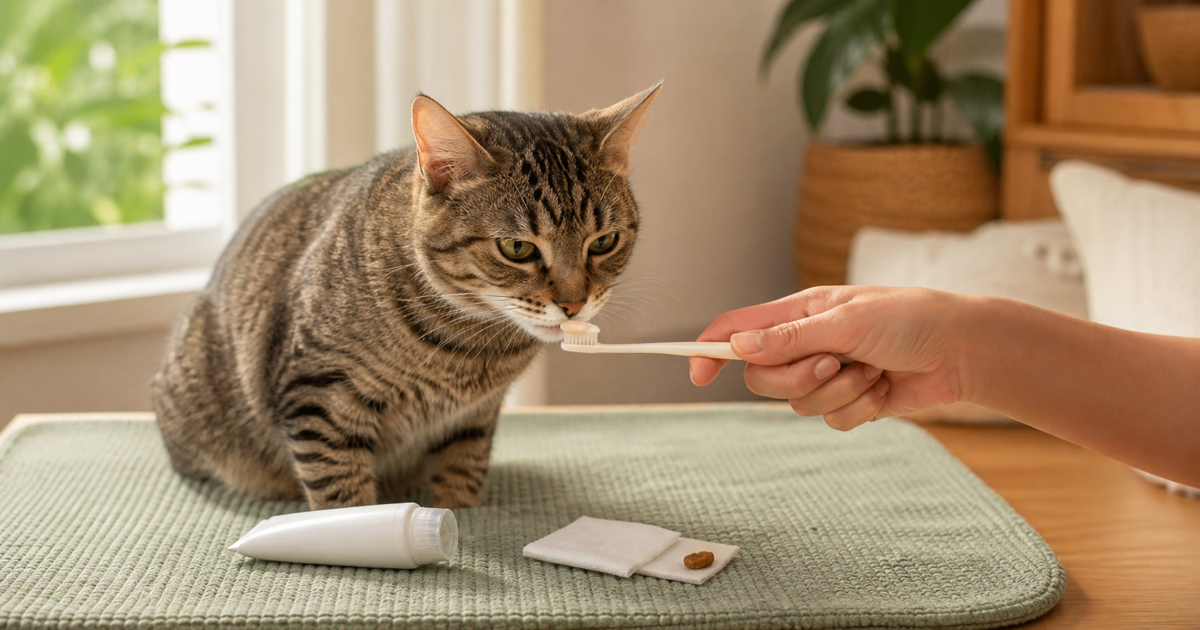
Cat dental care at home is preventive plaque control between veterinary examinations—not a way to diagnose pain, remove tartar or treat diseased teeth. Start only when a veterinarian has confirmed that brushing is comfortable for the cat. Use a small soft-bristled brush and toothpaste made for cats, introduce each step gradually, and aim for a brief daily routine that the cat can predict and accept. If brushing is not yet possible, ask the veterinary team which evidence-backed dental product fits the cat's diet and health. Bad breath, red or bleeding gums, drooling, dropping food, facial swelling or reduced appetite needs veterinary attention rather than more forceful cleaning.
Key Takeaways
- A comfortable mouth comes before a brushing plan; do not brush painful or inflamed gums without veterinary direction.
- Cat-specific toothpaste and a small soft brush are the core tools. Human toothpaste is not suitable for cats.
- Train cooperation in small stages and advance only while the cat remains relaxed.
- Daily brushing is the practical goal for plaque control, but a shorter accepted session is better than a struggle.
- Products with a Veterinary Oral Health Council claim can support a plan, but they do not replace examinations or necessary treatment.
- Home care cannot examine roots, clean below the gumline or remove established disease.
Start Cat Dental Care at Home With a Mouth Check
Before putting a brush near the mouth, watch how the cat eats, drinks and grooms. Note breath odor, drooling, head position while chewing, food dropping, pawing at the mouth and any change in preference for hard or soft food. From a safe distance, look for obvious redness, bleeding, swelling, a broken tooth or a visible mass. Do not pry the jaws open or place fingers inside a painful mouth.
Book a veterinary examination before starting if the cat has any concerning sign, has never had an oral assessment, or has a history of dental disease. Cornell's feline dental disease guide explains that gingivitis, periodontitis and tooth resorption can cause pain and eating changes. It specifically advises consulting a veterinarian before brushing a cat with severe gingivitis because brushing may hurt.
This boundary matters because a cat may continue eating despite oral discomfort. A quick home glance also cannot show what is happening under the gums or inside the tooth. The 2025 FelineVMA oral health guidelines emphasize an individualized continuum of care involving caregiver observations, veterinary assessment, diagnosis, treatment and home support.
Choose Tools by Function, Not Marketing Language
| Tool | Useful role | Selection check | Limitation |
|---|---|---|---|
| Small soft-bristled pet toothbrush | Mechanical plaque removal at the tooth and gum margin | Head fits the cat's mouth; bristles are soft; handle gives control without forcing the jaw | Requires gradual training and a comfortable mouth |
| Cat-specific toothpaste or gel | Adds flavor and may support plaque control, depending on the product | Label identifies cats, directions are clear, ingredients and expiry are visible | Human toothpaste is not an alternative |
| Clean gauze or feline dental wipe | Early touch training or a temporary method for a cat that rejects a brush | Smooth, intact material with no loose fibers; product is intended for cats | Usually provides less precise gumline cleaning than a brush |
| Accepted dental diet, treat, gel, wipe or water additive | Adjunct when brushing is incomplete or as part of a veterinary plan | Verify the exact feline product and whether its VOHC claim is for plaque, tartar or both | Does not treat pain, resorption, loose teeth or disease below the gumline |
| Small reward and simple log | Builds a predictable finish and records tolerance | Reward suits the cat's diet; log records calm progress and warning signs | Rewards cannot compensate for restraint or pain |
Do not buy a metal scaler, sharp pick or human dental instrument for home use. Scraping visible tartar can injure the gums or tooth surface and does not address disease below the gumline. Finger brushes also place a finger close to the teeth; use one only if the cat is comfortable and the handler can do so safely.
When considering alternatives, check the current VOHC accepted-products list and select the cat section. The seal is linked to a specific plaque or tartar claim for a specific product; it is not a blanket guarantee that every item from that manufacturer suits every cat. Discuss diets, treats and additives with a veterinarian when the cat has food allergies, a prescribed diet, kidney disease, diabetes, weight-management needs or reduced water intake.
Use a Cooperative Training Ladder
Treat the following as stages, not deadlines. Repeat an easy stage for as many sessions as needed. Work in a familiar place when the cat is calm, and end after a small success.
Stage 1: Make the tools ordinary
Place the closed toothpaste and brush nearby during a pleasant routine. Let the cat investigate without moving the brush toward the face. Pair calm interest with a suitable reward.
Stage 2: Build comfortable face contact
Briefly touch the cheek, then release and reward. Over later sessions, lift the upper lip for a moment without opening the mouth. Stop if the cat turns away repeatedly, flattens the ears, lashes the tail, freezes, growls or tries to leave.
Stage 3: Introduce the cat toothpaste
Offer a tiny taste according to the product directions. Cornell's four-step toothbrushing program begins by familiarizing the cat with the toothpaste smell and taste before asking for brushing. Never substitute human toothpaste.
Stage 4: Touch one accessible tooth
Lift the lip and briefly touch the outside of a canine tooth with a paste-coated finger, gauze or brush, depending on what the cat safely accepts. Release immediately and reward. Do not chase the cat's head or hold the jaw closed.
Stage 5: Add a few gentle brush strokes
Angle the soft bristles toward the tooth-and-gum margin and brush the outer surface of one or two teeth. Keep pressure light. The Cornell method focuses on the outside surfaces rather than forcing the mouth open to reach the tongue side.
Stage 6: Expand only while the cat stays comfortable
Gradually include more outer tooth surfaces on both sides. Keep the sequence consistent: cue, brief handling, brushing, release and reward. The WSAVA dental resources also frame toothbrushing as a learned routine that depends on gradual introduction and caregiver consistency.
Turn Practice Into a Sustainable Habit
Daily plaque removal is the target, but habit quality matters. Use the same quiet location and a predictable cue. Prepare the brush before calling the cat, keep early sessions very short and finish before tolerance runs out. A cat that accepts three calm strokes today is making more useful progress than one restrained through a complete mouth.
Record only what helps decisions:
- date and highest comfortable stage;
- surfaces reached without resistance;
- breath, gum appearance and eating behavior;
- product used and any change in water or food intake; and
- questions for the next veterinary visit.
Rinse reusable tools as directed, let them dry fully and store them away from contamination. Give each cat its own brush. Replace a brush when bristles bend, the head cracks or cleaning can no longer restore it. Check product expiry and never transfer toothpaste into an unlabeled container.
Link dental care to an existing household routine, not to a perfect time of day. Our daily indoor cat care checklist can help owners place the session beside feeding, play or evening observation without turning the whole day into grooming.
Know What Dental Products Can and Cannot Do
Home brushing interrupts plaque accumulation on accessible surfaces. It cannot safely remove mineralized calculus below the gumline, diagnose tooth resorption, take dental radiographs, probe periodontal pockets or extract a painful tooth. Those tasks belong to a veterinary team.
The American Veterinary Dental College's position on anesthesia-free dental scaling explains that a complete oral examination and cleaning below the gumline cannot be performed properly in an awake, uncooperative patient. Cosmetic removal of visible deposits may leave important disease undetected. Do not treat an “anesthesia-free cleaning” as equivalent to a comprehensive veterinary dental procedure.
After professional treatment, ask for a written home-care plan: when the mouth has healed enough to restart, which teeth or areas need special attention, which products fit the medical and nutritional plan, and when rechecks are due. Do not restart brushing an extraction site or painful area without clearance.
Contact the Veterinarian When the Pattern Changes
Arrange veterinary advice promptly for:
- persistent bad breath;
- red, swollen or bleeding gums;
- visible tartar together with discomfort;
- drooling, pawing at the mouth or unusual jaw movement;
- dropping food, chewing on one side or suddenly preferring soft food;
- a broken, loose, discolored or missing tooth;
- facial swelling, an oral lump or blood from the mouth; or
- reduced appetite, refusal to eat, weight loss or a marked behavior change.
Difficulty breathing, uncontrolled bleeding, major facial trauma, collapse or inability to eat or drink needs urgent veterinary assessment. Avoid giving human pain medicine or leftover antibiotics. Our broader guide to common cat health problems explains how to separate routine observation from signs that should not wait.
Final Home Dental Care Checklist
- The cat has no known painful oral condition and the veterinarian has approved the plan.
- The brush is small, soft, intact and easy to control.
- The toothpaste or gel is labeled for cats and used as directed.
- Training advances only with relaxed participation; restraint is not part of the routine.
- Brushing targets accessible outer tooth surfaces and the gum margin.
- Any adjunct product has a clear purpose and does not conflict with diet or health needs.
- Tools are cleaned, dried, stored and replaced appropriately.
- Eating, breath, gum appearance and tolerance are monitored.
- Veterinary examinations and recommended professional care remain part of the plan.
Home care succeeds when the cat accepts a repeatable routine and the caregiver knows when to stop. The goal is not a perfectly white mouth; it is consistent plaque control, earlier recognition of change and timely veterinary support.
*This article provides general feline dental-care information. It does not replace a veterinary oral examination, diagnosis or individualized treatment plan.*
Sources and Further Reading
- Feline Dental Disease — Cornell University College of Veterinary Medicine
- 2025 Feline Oral Health and Dental Care Guidelines — Feline Veterinary Medical Association
- Accepted Products for Cats — Veterinary Oral Health Council
- Dental Guidelines and Toothbrushing Resources — World Small Animal Veterinary Association
- Dental Scaling Without Anesthesia — American Veterinary Dental College
For retailers, distributors and pet brands
Building a cat-product assortment?
Explore cat trees, scratchers, toys, grooming and feeding products, with B2B sourcing and customization support.
Explore Wholesale Cat Products Discuss OEM/ODMFrequently Asked Questions
Can I brush my cat's teeth with human toothpaste?
No. Use only toothpaste or gel specifically labeled for cats and follow its directions. Human toothpaste is not formulated for feline use.
How often should I brush my cat's teeth?
Daily brushing is the practical goal for plaque control. Build up gradually and ask the veterinary team for an alternative plan if the cat cannot yet accept a brush.
Can I start brushing if my cat already has tartar?
Ask a veterinarian to examine the mouth first. Brushing cannot remove established calculus below the gumline and may be painful when gingivitis, resorption or another oral problem is present.
Are dental treats or water additives enough for cats?
They can support some cats, especially when the exact product has a relevant VOHC claim, but they do not replace brushing where tolerated or veterinary diagnosis and treatment.
Why does my cat need anesthesia for a dental cleaning?
Anesthesia allows the veterinary team to examine and clean below the gumline, obtain diagnostic images when needed, protect the airway and work without causing an awake cat to struggle against instruments.
Sources and References
- Feline Dental Disease — Cornell University College of Veterinary Medicine
- 2025 Feline Oral Health and Dental Care Guidelines — Feline Veterinary Medical Association
- Accepted Products for Cats — Veterinary Oral Health Council
- Dental Guidelines and Toothbrushing Resources — World Small Animal Veterinary Association
- Dental Scaling Without Anesthesia — American Veterinary Dental College
About this article
ShineePets publishes practical, source-checked guidance for pet owners and pet-product professionals.
ShineePets is a commercial B2B pet-supply sourcing brand. Read our editorial standards and commercial disclosure.
Continue Reading
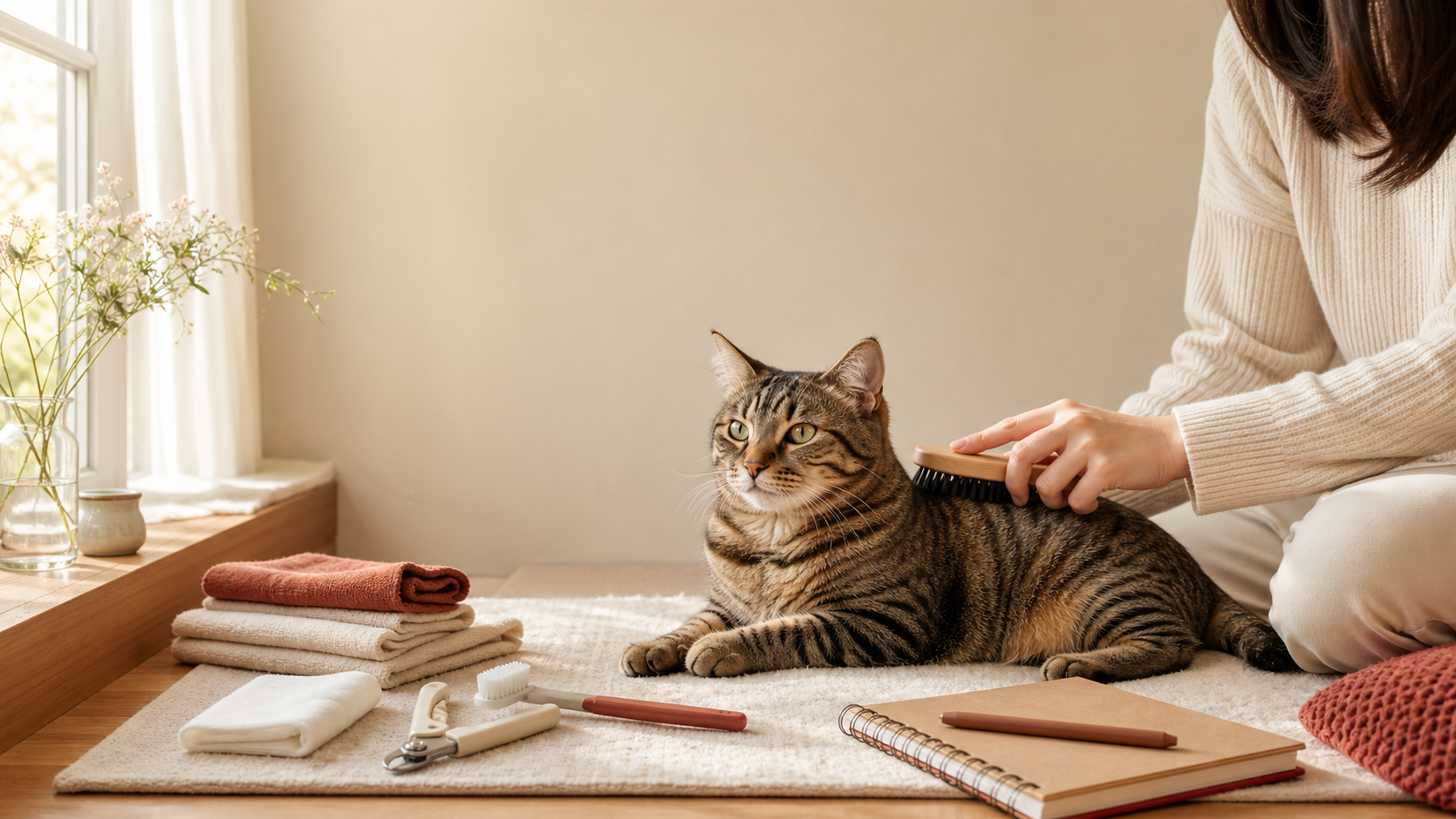
Essential Cat Grooming at Home: Coat, Claws, Teeth, Ears and Eyes
A calm, practical schedule for brushing, nail care, dental hygiene, ear and eye checks, plus the signs that need veterinary attention.

Common Health Problems in Cats: Signs, Prevention and When to See a Vet
A practical guide to common feline health problems, warning signs, veterinary care pathways and prevention steps for responsible cat owners.

A Year-Round Cat Care Calendar for Indoor Homes
Follow a practical 12-month indoor cat care calendar covering preventive observations, grooming, hydration, litter boxes, enrichment, heat and home safety.
A Practical Cat Care Routine: A Daily Checklist for Happy Indoor Cats
A clear daily routine helps indoor cats stay comfortable, engaged, and healthier. This guide gives a practical checklist you can use immediately.