Small Pet Care
Essential Supplies for Rabbits, Hamsters and Guinea Pigs
Quick answer
Compare species-specific housing, food, bedding, hides, enrichment, transport and cleaning supplies for rabbits, hamsters and guinea pigs.
By ShineePets Editorial Team · Published · Updated
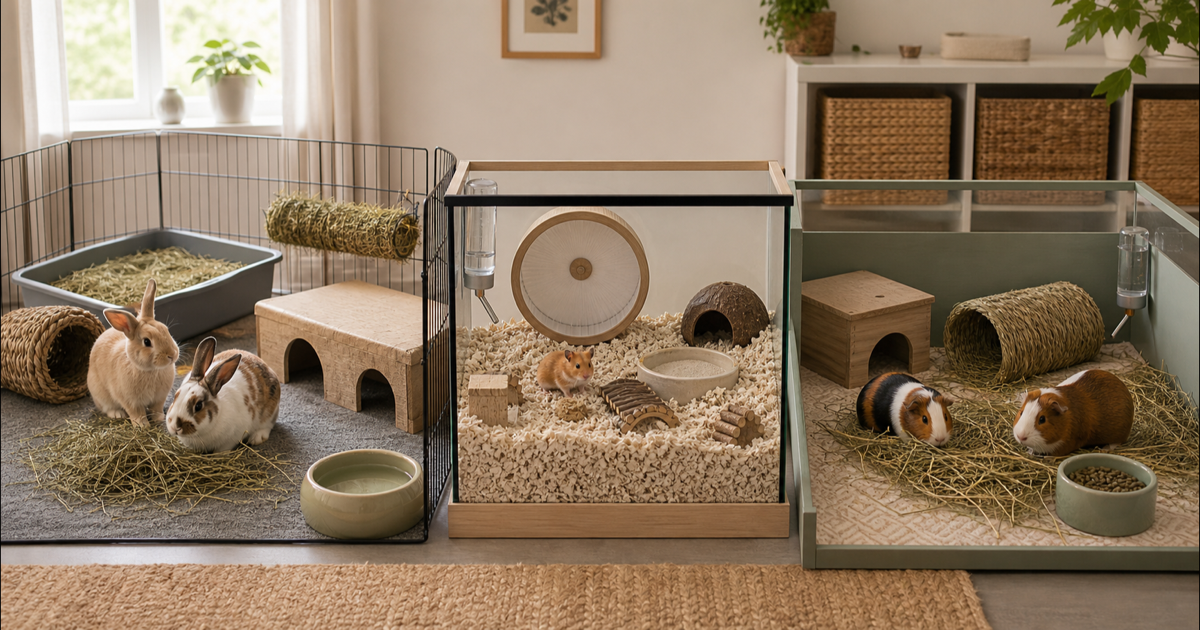
The essential supplies for rabbits, hamsters and guinea pigs serve similar purposes—safe housing, correct food, water, shelter, enrichment, transport and cleaning—but the products are not interchangeable. Rabbits need a large exercise-based environment, hamsters need a secure habitat built around deep burrowing material, and guinea pigs need generous single-level floor space with resources for a compatible social group. Buy the habitat first and measure it as usable space after hides, bowls and toilet areas are installed. Then choose food, bedding, water equipment and enrichment specifically for the animal. A generic “small pet starter kit” can omit critical items or include products designed for the wrong species.
Key Takeaways
- Choose the species before buying an enclosure, food, bedding or exercise equipment.
- Rabbits and guinea pigs need hay-based feeding systems; a hamster needs a hamster-appropriate complete diet.
- Deep burrowing bedding and a solid running wheel are hamster essentials, not universal small-pet products.
- Rabbits and guinea pigs need broad floor space and multiple safe retreats; they should not use exercise wheels or balls.
- Plan resources for the number of animals: rabbits and guinea pigs normally need compatible same-species company, while a hamster should not be purchased as a pair by default.
- Keep a carrier, cleaning tools and a simple observation kit ready before the animal arrives.
Compare Essential Supplies for Rabbits, Hamsters and Guinea Pigs
| Supply decision | Rabbits | Hamsters | Guinea pigs |
|---|---|---|---|
| Main living space | Large secure floor area with attached exercise access | Escape-resistant enclosure that can hold deep bedding | Large, well-ventilated, single-level floor area |
| Floor and substrate | Solid, dry and non-slip; separate toilet setup | Solid base under deep, diggable bedding | Solid, foot-friendly base with absorbent bedding or a managed fleece system |
| Main food system | Abundant grass hay, rabbit pellets as appropriate, safe greens | Hamster-formulated complete food with opportunities to forage | Abundant grass hay, guinea-pig pellets and a reliable vitamin C plan |
| Water equipment | Heavy bowl or suitable bottle, checked daily | Accessible bottle or species-suitable waterer, checked daily | Bottle or stable bowl positioned for easy access, checked daily |
| Retreats | Tunnels and hides with safe exits; enough for the group | Dark nesting chamber and additional cover | Low hides and tunnels; more retreats than guinea pigs |
| Exercise and enrichment | Running area, chew items, dig and forage activities | Large solid-surface wheel, deep burrows, sand area and foraging | Open floor routes, tunnels, chew and forage activities |
| Toilet and cleaning | Large litter tray, non-clumping litter and cleaning tools | Spot-cleaning tools that preserve stable nest areas | Absorbent bedding or fleece-care supplies and frequent spot cleaning |
This is a function map, not a recommendation to use one product across all three species. Size, construction and placement still determine whether an item works safely.
Buy the Habitat Before the Animal
Ignore marketing terms such as “starter cage” and assess what the animal can actually do inside the finished setup. The enclosure must remain usable after bedding, shelters, food, water and enrichment are added.
For rabbits, prioritize a large, continuously useful movement area rather than a small hutch. RSPCA rabbit environment guidance calls for space to hop, run, jump, dig, stretch and stand upright, together with solid non-slip flooring, shelter and secure exercise access. Our detailed rabbit housing guide explains how to divide that space without blocking movement.
A hamster enclosure must be secure and able to contain a thick layer of bedding. The RSPCA's hamster housing guidance recommends a solid floor, deep material for digging and burrowing, a dark nesting box and protection from damp, draughts and disturbance. Check bar spacing, lid closures and every tube opening against the hamster's actual body size.
Guinea pigs need a broad, well-ventilated floor plan rather than climbing height. RSPCA guinea pig housing guidance specifies a secure exercise area, solid flooring, shelter and quiet conditions. Glass tanks are a poor default because ventilation and usable group space matter. Plan for compatible companions and duplicate access to important resources.
Choose Food and Water by Species
Do not buy one “small animal” food for all three.
Rabbits
Build the feeding setup around clean grass hay, a way to keep it accessible, measured rabbit-appropriate pellets, safe greens and constant fresh water. The RSPCA's rabbit diet guidance states that hay or grass should form most of the diet and remain available, with leafy greens and a smaller pellet portion. Use a stable hay station that does not trap the head, plus a heavy water bowl or correctly working bottle.
Hamsters
Choose a complete food formulated for the hamster, a shallow feeding dish if useful, and containers that support scatter feeding without making spoiled food hard to find. RSPCA hamster feeding guidance describes a suitable compound pellet ration or seed mixture, opportunities to forage and continuous clean water. Check the bottle daily for leaks or blockage and inspect stored food during spot cleaning.
Guinea pigs
Provide constant clean grass hay through low, easy access; guinea-pig-specific pellets; suitable fresh produce; and fresh water. Guinea pigs require a regular dietary source of vitamin C. The 2026 peer-reviewed Merck Veterinary Manual guidance supports grass-based hay, species-formulated pellets and appropriate produce, while RSPCA guinea pig diet guidance emphasizes continuous hay and fresh pellets because vitamin C degrades over time. Ask an exotics veterinarian for an individual feeding plan instead of improvising supplement doses.
Select Bedding for Its Job
“Soft” is not enough. Bedding should be low-dust, unscented, dry, absorbent where needed and free of strands that can wrap around limbs.
- Rabbit setup: use a solid non-slip surface, comfortable resting zones and a separate litter tray with rabbit-appropriate non-clumping, non-expanding litter. Bedding should not replace exercise space.
- Hamster setup: choose material that can be packed deeply and hold burrows. Avoid fluffy cotton-style nesting products; the RSPCA warns that thin strands can be swallowed or cause entanglement. See our hamster bedding guide for depth and stability checks.
- Guinea pig setup: use a dry, foot-friendly absorbent layer or a correctly maintained fleece system. Remove wet areas frequently. Avoid loose fibers and ensure hay is feeding material, not a substitute for moisture control.
Place heavy shelters, bowls and wheels on stable platforms where necessary so they cannot collapse a hamster's tunnels or tip onto an animal.
Add Hides, Companionship and Duplicate Resources
Rabbits and guinea pigs should have places to rest together and apart. Buy at least one retreat per animal plus an extra, favoring tunnels or houses with multiple exits so one animal cannot easily block another. For guinea pigs, low entrances and open movement routes are more useful than steep ramps.
Companionship changes the shopping list. A compatible rabbit pair or guinea pig group needs duplicated feeding, water and resting access to reduce competition. Our guide to guinea pig companionship and space explains why company and layout must be planned together.
Do not assume hamsters follow the same rule. Many pet hamsters are solitary, and social compatibility varies by species and history. Confirm the correct housing plan with the rescue, breeder or an exotics veterinarian before purchase; never add a second hamster merely as an enrichment item.
Match Exercise Equipment to Natural Movement
For rabbits, buy tunnels, safe chew materials, a dig box and simple foraging tools, but preserve open running room. For guinea pigs, use floor-level tunnels, low shelters, safe chew items and scattered forage. Neither species needs a running wheel or exercise ball.
A hamster does need an appropriately sized, solid-surface upright wheel that allows a natural running posture. Avoid mesh running surfaces, exposed axles and products so small that the back bends sharply. The wheel supplements—not replaces—deep bedding, hides, gnawing, foraging and exploration. Rotate small enrichment items without repeatedly destroying the nest and burrow system.
Prepare Cleaning, Storage and Transport Supplies
A practical maintenance kit includes:
- a dedicated dustpan, brush and waste container;
- spare dry bedding or clean fleece sets;
- fragrance-free, animal-appropriate cleaning products;
- food-safe storage containers that keep feed dry and identifiable;
- bottle brushes and spare water equipment;
- a ventilated, secure carrier sized for the intended animal; and
- a notebook plus a suitable digital scale for observing weight trends.
Do not deep-clean every area on an arbitrary schedule. Remove wet or spoiled material promptly, but preserve clean familiar bedding when safe, especially in a hamster nest system. Wash and dry reusable items fully before returning them. Keep food packaging or record the product name, batch and best-before information in case a problem occurs.
Run a Pre-Purchase Product Check
Before buying any item, ask:
1. Is the intended species and size clear?
2. Does the item support a real behavior or care task?
3. Are floors solid, edges smooth and openings free from trapping risk?
4. Can it be cleaned and dried without hidden residue?
5. Can the animal chew it, and what happens if a piece breaks off?
6. Will it reduce usable movement or bedding depth?
7. For a group, are enough copies or access points available?
8. Are replacement parts, filters or bottles realistically obtainable?
Reject products that rely on “universal,” “fun” or “deluxe” language without giving dimensions, materials, use limits or cleaning instructions.
Know What Cannot Wait for a Shopping Trip
Supplies support observation but do not replace veterinary care. Contact a veterinarian promptly if a rabbit, hamster or guinea pig stops eating, shows a major change in drinking or droppings, becomes unusually inactive, has difficulty breathing, cannot move normally, or develops a sudden weight change. Do not respond by buying supplements, changing diets abruptly or treating the animal without professional direction.
Final Arrival Checklist
- The complete habitat is assembled, secure and measured as usable space.
- Correct food, hay where required and fresh-water equipment are ready.
- Bedding and litter suit the species and intended function.
- Hides, enrichment and group resources are correctly sized and positioned.
- The carrier and cleaning kit are accessible.
- An exotics-capable veterinary practice has been identified.
- Everyone in the household knows the feeding and observation routine.
The most useful shopping principle is simple: buy for the animal's behavior and biology, not for the retail label “small pet.” A shorter, species-correct list is safer and more useful than a large box of interchangeable-looking supplies.
*This guide provides general care and product-selection information. It does not replace an examination or individual advice from a qualified veterinarian.*
Sources and Further Reading
- Creating a Good Home for Rabbits — RSPCA
- Feeding Your Pet Rabbit a Healthy Diet — RSPCA
- Creating a Good Home for Hamsters — RSPCA
- What to Feed a Pet Hamster — RSPCA
- Creating a Good Home for Guinea Pigs — RSPCA
- What to Feed a Guinea Pig — RSPCA
- Housing and Nutrition of Guinea Pigs — Merck Veterinary Manual
For retailers, distributors and pet brands
Planning a small-pet product range?
Explore product categories for rabbits, hamsters, guinea pigs and other small pets, then discuss your sourcing brief.
Explore Small Pet Products Discuss OEM/ODMFrequently Asked Questions
Can rabbits, hamsters and guinea pigs use the same cage?
No. Rabbits need extensive movement space, hamsters need an escape-resistant enclosure that supports deep burrows, and guinea pigs need broad, well-ventilated single-level floor space.
Do rabbits, hamsters and guinea pigs all need hay?
Rabbits and guinea pigs need constant access to suitable grass hay as a major part of their diet. Hamsters need hamster-formulated food; hay does not serve the same nutritional role.
Do guinea pigs or rabbits need an exercise wheel?
No. Rabbits and guinea pigs need open floor space, tunnels and species-appropriate movement. A correctly sized solid-surface wheel is for a hamster, not for rabbits or guinea pigs.
Is there one safe bedding for every small pet?
No single setup is universal. Choose low-dust, unscented material for the job: deep burrow-supporting bedding for hamsters, absorbent foot-friendly systems for guinea pigs, and suitable flooring plus litter areas for rabbits.
How many hides should I buy?
For rabbits and guinea pigs, provide at least one retreat per animal plus an extra when possible. A hamster needs a dark nesting chamber and additional secure cover appropriate to the enclosure.
Sources and References
- Creating a Good Home for Rabbits — RSPCA
- Feeding Your Pet Rabbit a Healthy Diet — RSPCA
- Creating a Good Home for Hamsters — RSPCA
- What to Feed a Pet Hamster — RSPCA
- Creating a Good Home for Guinea Pigs — RSPCA
- What to Feed a Guinea Pig — RSPCA
- Housing and Nutrition of Guinea Pigs — Merck Veterinary Manual
About this article
ShineePets Editorial Team creates evidence-informed pet care and product guidance for global readers.
ShineePets is a commercial B2B pet-supply sourcing brand. Read our editorial standards and commercial disclosure.
Continue Reading
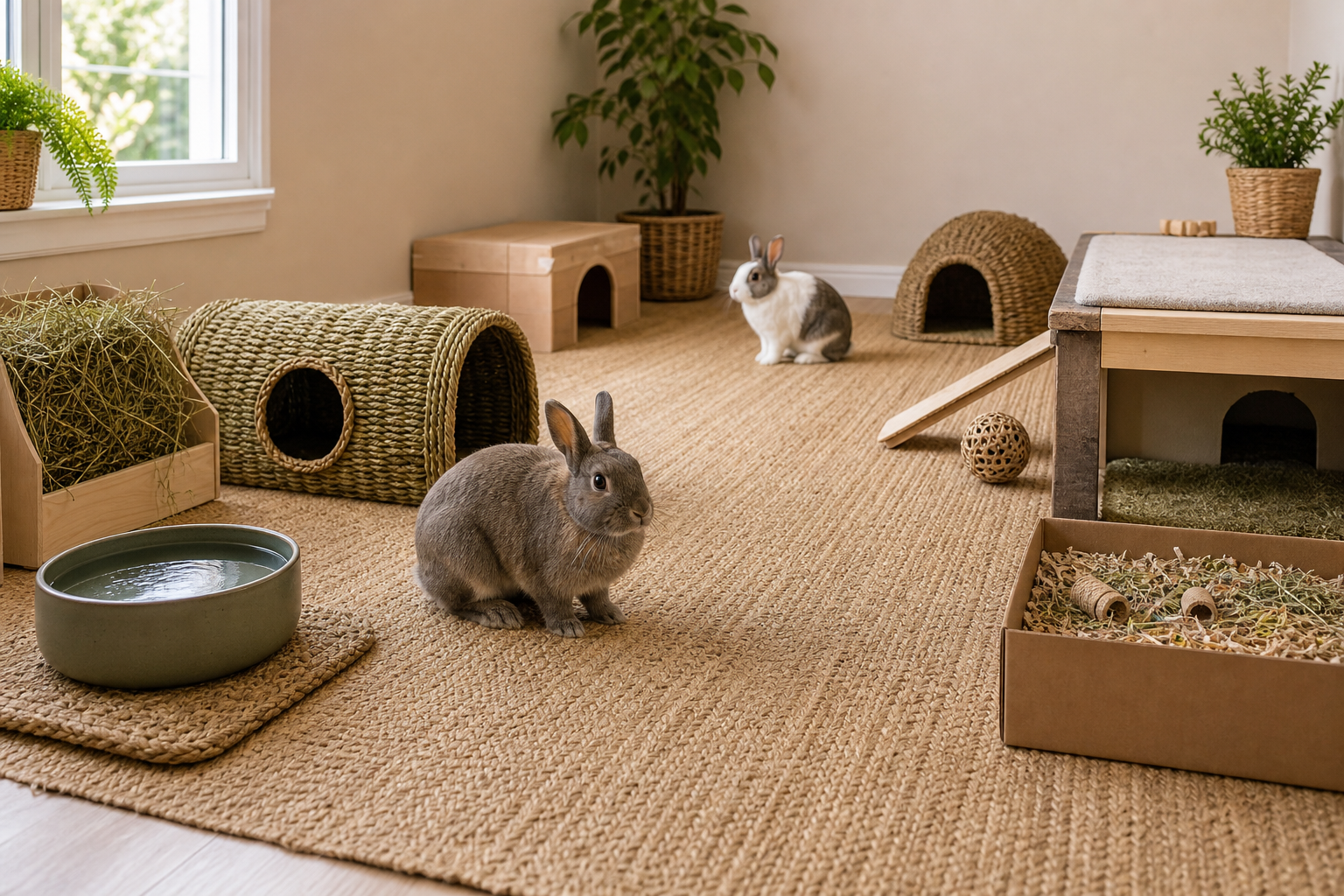
Rabbit Housing Basics: Space, Flooring and Enrichment
A practical welfare-first guide to planning rabbit space, safe flooring, hiding areas, feeding zones and everyday enrichment at home.
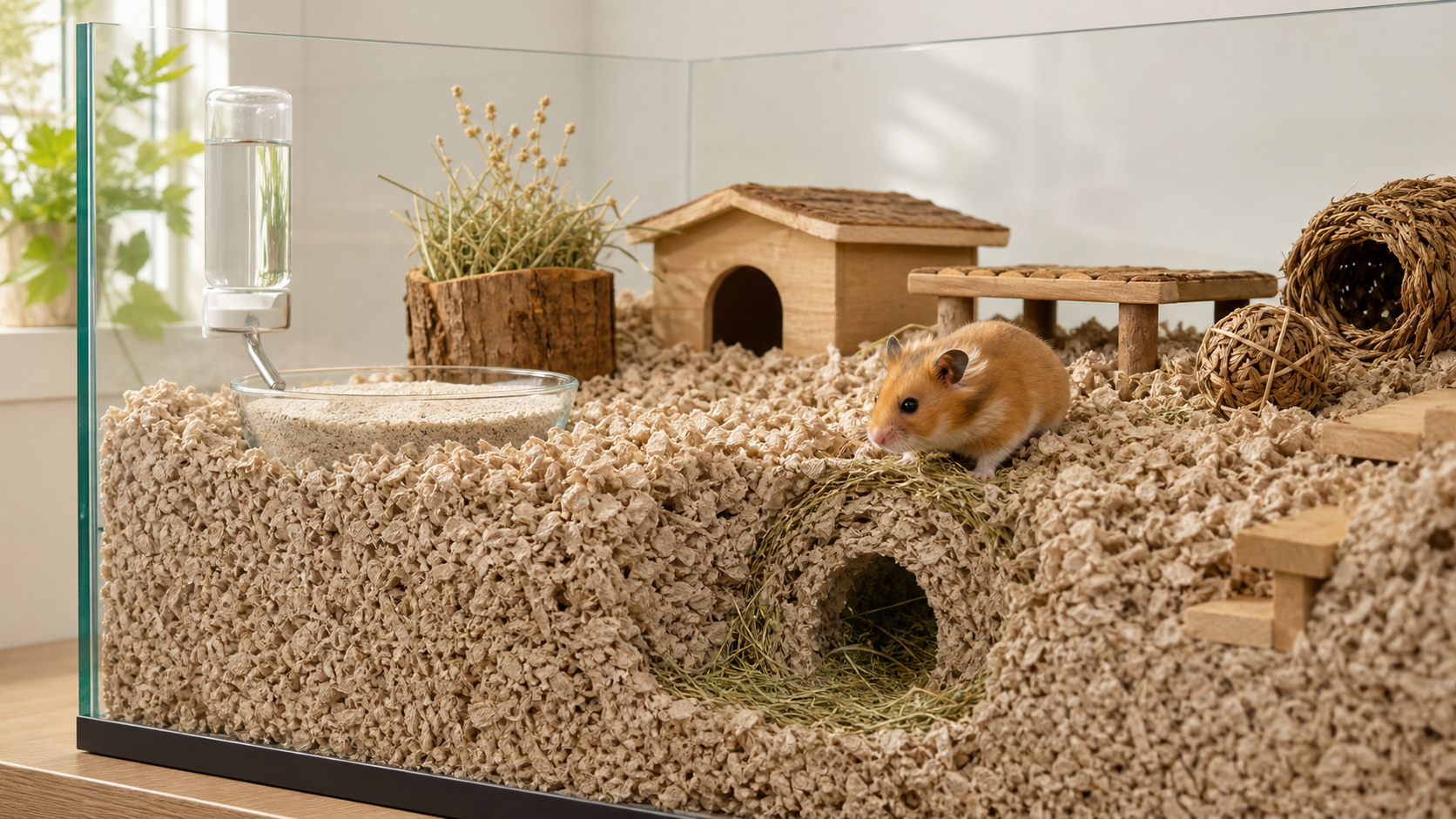
Hamster Bedding Guide: Safe Materials and Proper Depth
Learn which hamster bedding materials are safe, what to avoid, how deep to build a burrowing zone, and how to clean it without unnecessary stress.
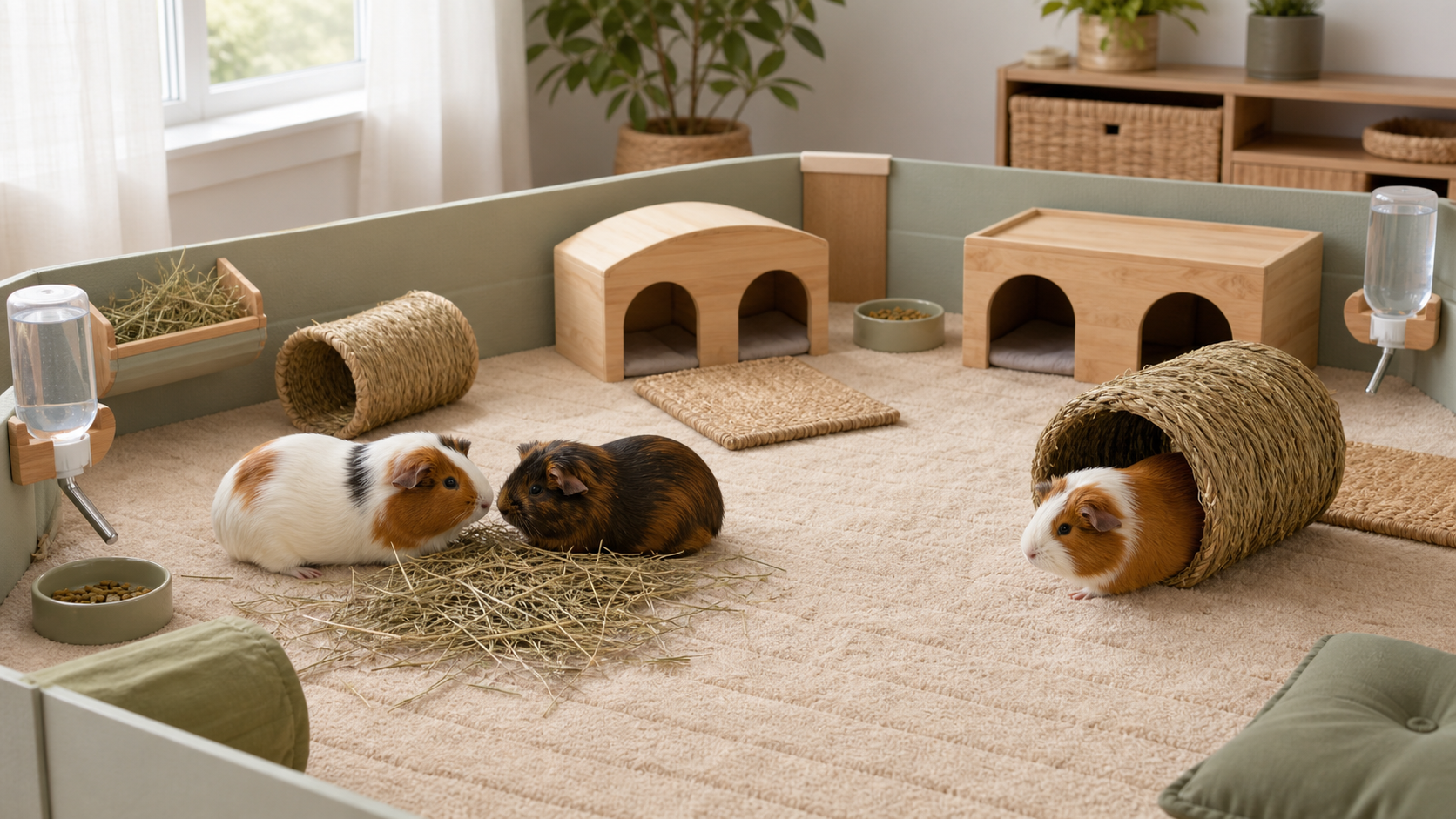
Why Guinea Pigs Need Companionship and Proper Space
Learn why guinea pigs need compatible companions and generous floor space, with practical guidance on pairing, housing, hides and shared resources.
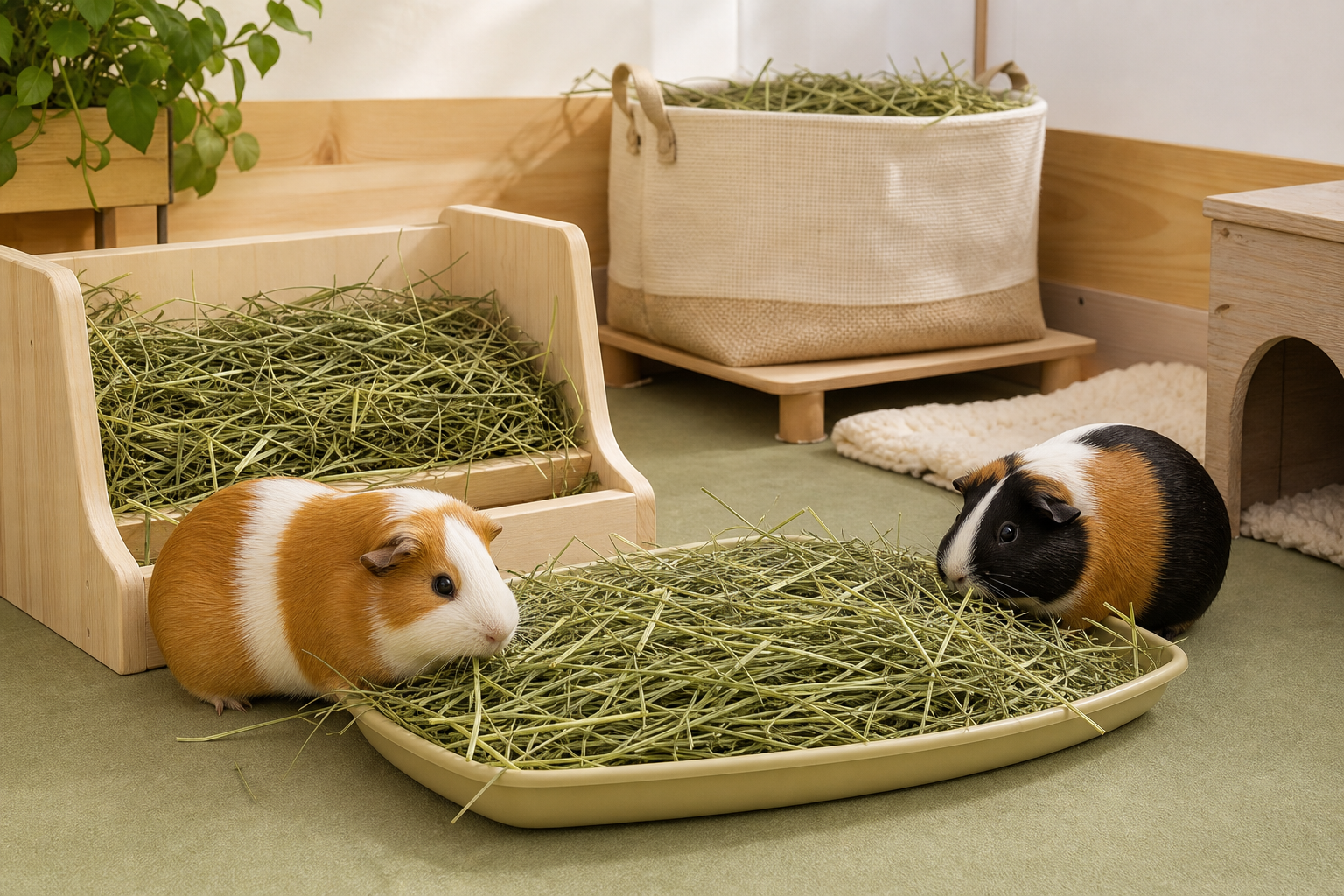
Guinea Pig Hay Guide: Storage, Racks and Daily Access
A practical guide to choosing quality guinea pig hay, storing it safely, designing low-risk racks and maintaining uninterrupted daily access.