Dog Care
Multi-Dog Feeding: Space, Bowls and Mealtime Safety
Quick answer
Feed multiple dogs more safely with individual bowls, physical separation, clear routines, resource-guarding awareness and practical food hygiene.
By ShineePets Editorial Team · Published · Updated
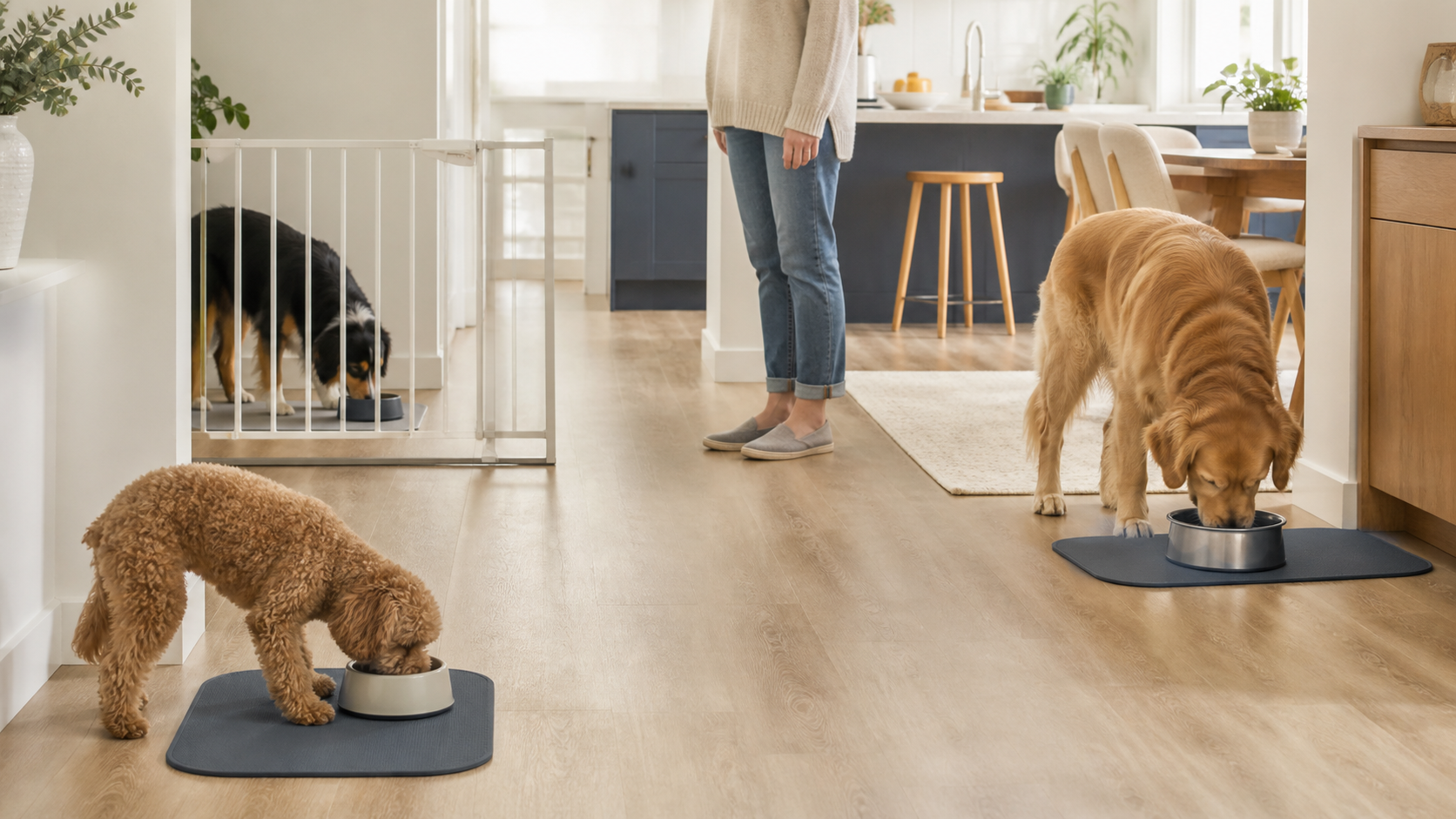
Multi-dog feeding is safest when every dog has a predictable place, an individual portion and enough physical separation to finish without being watched, rushed or approached by another dog. A row of bowls may look orderly, but it still allows food stealing, fast eating and resource conflict.
Quick recommendation: Separate dogs before food appears, serve one labeled bowl per dog, supervise from a neutral distance and remove every bowl before the dogs rejoin. If any dog stiffens, freezes, growls, snaps or guards food, stop testing the situation and seek qualified behavior guidance.
Start With the Individual Dogs
A safe plan begins with the dogs, not the floor plan. Two dogs that usually play together may still need complete separation for meals. Another pair may eat calmly in the same large room with substantial distance and clear boundaries.
Record the factors that change mealtime risk:
- Age, size and mobility
- Eating speed and food motivation
- Diet, portion and medication needs
- History of stealing, hovering or guarding
- Comfort with crates, gates or closed doors
- Whether children or visitors are present
- Any previous conflict around bowls, chews or dropped food
Do not assume that the largest dog is the only possible source of pressure. A small, fast dog can repeatedly enter another dog's space, while a quiet dog may simply move away and miss part of its meal.
Use Separation as the Default Safety Tool
Distance helps only when it prevents access. Bowls at opposite ends of an open kitchen may still be connected by a three-second run. When dogs have different eating speeds or uncertain behavior, use a closed door, secure baby gate, exercise pen or crate that each dog already associates with calm experiences.
Good separation should:
- Be in place before bowls are carried into the area
- Prevent nose-to-bowl and dog-to-dog contact
- Give each dog enough room to stand and turn normally
- Allow a calm exit that does not pass another feeding station
- Remain secure if one dog finishes early
- Be easy for the caregiver to operate without carrying food through a crowd
A barrier is not useful if a dog can jump it, push it over or open it. Match the equipment to the dogs and test it without food present.
Create One Feeding Zone Per Dog
A feeding zone is more than a bowl. It includes the approach route, the space around the dog and the exit after the meal. Give every dog a consistent zone so the routine becomes predictable.
In a large home, separate rooms often provide the clearest boundaries. In a smaller home, use a combination of gates, pens and well-conditioned crates. Visual separation can help dogs that stare at one another, but it should not replace a barrier when physical access would be unsafe.
Avoid these locations:
- Narrow hallways where dogs must pass closely
- Doorways that another dog can block
- The center of a busy family route
- Slippery flooring
- Areas beside hot appliances or cleaning products
- Spaces where children can enter unexpectedly
The goal is not equal-looking stations. The goal is a safe station suited to each dog.
Give Every Dog an Individual Bowl
Individual bowls allow accurate portions, diet separation and better observation. Shared bowls make it difficult to know who ate how much and can create competition even when no growling occurs.
Label bowls or use a consistent color for each dog. This is especially important when one dog receives a therapeutic diet, supplements or medication. Keep the label on the outside or storage area rather than adding loose objects that could enter the food.
Choose bowl capacity so the measured meal fits without overflowing. A bowl that is too small encourages spills; a very large bowl can make a modest portion difficult to judge. Stability, cleanability and a comfortable eating posture matter more than a decorative shape.
Choose Bowl Materials and Bases Carefully
Stainless steel and suitable food-contact ceramic are common choices because smooth, intact surfaces are generally easy to clean. Inspect ceramic for chips or cracks and replace damaged bowls. Plastic bowls should be checked for deep scratches, warping and retained odor.
Use a non-slip base or mat when a dog pushes the bowl across the floor. The mat should lie flat, resist movement and be large enough to catch small spills without curling under the dog's feet.
Raised feeders are not automatically better for every dog. Height should be chosen for an individual dog's comfort, mobility and veterinary needs. Dogs with orthopedic limitations, swallowing problems or a specific risk profile may need personalized advice rather than a household-wide solution.
For a fuller material and life-stage comparison, connect the setup with the related ShineePets guide on choosing dog bowls for puppies, adults and seniors.
Measure Food Before the Dogs Enter
Prepare meals while the dogs are outside the feeding area or already separated. This prevents crowding around storage bins, counters and scoops.
Use the same measuring method every day. Weighing food on a kitchen scale can be more consistent than estimating with different cups, but the appropriate portion still depends on the food's energy density and the individual dog's needs.
Create a simple record for households with different diets:
- Dog's name
- Food product and formula
- Amount per meal
- Number of daily meals
- Approved toppers or supplements
- Medication instructions
- Notes about appetite or leftovers
Confirm diet and portion changes with the dog's veterinary team, particularly for puppies, seniors, pregnant dogs and dogs with medical conditions.
Run Meals in the Same Sequence
A predictable sequence reduces confusion for both dogs and people.
1. Prepare and measure every meal. Check labels before adding supplements or medication.
2. Move each dog into its feeding zone. Secure doors, gates, pens or crates.
3. Place bowls only after separation is complete. Do not walk between loose, excited dogs carrying food.
4. Allow quiet eating. Supervise without hovering, petting or reaching toward bowls.
5. Wait for every dog to finish or move away. A fast dog remains separated while a slow dog eats.
6. Remove bowls and dropped food. Check every zone before opening barriers.
7. Release dogs calmly. Avoid turning the end of the meal into a race toward another station.
Every caregiver should follow the same order. A written note near the food area can prevent mistakes when another family member feeds the dogs.
Manage Fast and Slow Eaters Separately
A fast eater should never be allowed to finish and then stand beside a slower dog. The barrier stays closed until all food is removed.
A slow-feeder bowl or suitable food-dispensing device may help some dogs eat at a steadier pace. Introduce it without competition and confirm that the design is large enough, stable and not causing frustration. The dog's nose, tongue or teeth should not become trapped in narrow channels.
Do not use one shared puzzle feeder for multiple dogs. Food puzzles, lick mats and stuffed toys are valuable resources and can trigger the same competition as bowls. Give them in separate zones and collect them before dogs reunite.
A sudden change from normal eating speed can be meaningful. Difficulty chewing, dropping food, reluctance to lower the head, repeated swallowing or appetite loss warrants veterinary attention.
Recognize Early Resource-Guarding Signals
Resource guarding is not limited to barking or biting. Early signs can be subtle:
- Eating faster when another dog or person approaches
- Freezing or becoming very still
- Lowering the head tightly over the bowl
- A hard stare or side-eye
- Stiff posture or closed mouth
- Standing over spilled food after finishing
- Growling, lip lifting, snapping or lunging
- Leaving the bowl to drive another dog away
Do not punish a warning signal. Growling communicates discomfort; suppressing it does not make the underlying concern disappear.
Do not repeatedly remove a bowl to prove that a dog should tolerate it. Approaching, touching or taking food can increase the dog's expectation of loss. Management keeps everyone safe, while behavior change should be planned with a qualified professional when guarding is present.
Know When Professional Help Is Needed
If a dog has growled, snapped, lunged or bitten around food, feed behind a secure barrier and do not attempt online training exercises on your own. Contact a veterinarian to rule out pain or medical contributors and ask for referral to a board-certified veterinary behaviorist or another appropriately qualified behavior professional.
Get help promptly when:
- Guarding is becoming more intense or spreading to other items
- Dogs have fought or made contact
- A child lives in or regularly visits the home
- A dog guards human food, counters or the dishwasher
- Barriers create panic or escape attempts
- The caregiver cannot safely deliver or remove food
- A dog stops eating because another dog is present
Children should never approach, touch or climb into the space of a dog that is eating or holding a chew. An adult barrier plan is safer than relying on a child to remember body-language rules every time.
Protect Special Diets and Medication
In multi-dog homes, one stolen mouthful can matter when a dog has a food allergy, gastrointestinal condition, weight-management plan or prescribed diet. Separate feeding is the most reliable way to prevent switching.
Prepare one bowl at a time or use a clear verification order. Check the dog's identity, food and dose before serving. If medication is mixed into food, confirm that the intended dog eats the full medicated portion before offering the rest of the meal.
Never place medication in a communal bowl. Store veterinary medicines in their original labeled containers and away from food preparation tools unless the product instructions require otherwise.
If a dog repeatedly leaves medicated food, contact the veterinary team rather than transferring the leftovers to another pet or guessing at a replacement dose.
Keep Water Available Without Creating a Bottleneck
Mealtime separation does not mean dogs should compete over one water bowl afterward. Provide clean water in more than one accessible location when household dynamics or layout make a single station easy to block.
Water bowls should be stable and sized for the dogs using them. Wash them daily and refill whenever contaminated. If one dog guards water, place stations in separated areas and seek professional advice rather than waiting for a conflict.
During the meal itself, follow any individualized veterinary instructions about water access. Do not impose broad restrictions based on internet advice.
Clean Bowls and Handle Food Safely
Food safety is part of mealtime safety. The U.S. Food and Drug Administration advises washing and drying pet food bowls after each use and washing water bowls daily. Scoops and measuring utensils should also be cleaned and used only for pet food.
Keep dry food in its original bag when practical, even if the bag sits inside a protective container. The original package preserves the product name, lot code and best-by information if a recall or complaint occurs. Clean and dry the storage container before starting a new bag.
Also:
- Store dry food in a cool, dry place
- Secure food so dogs cannot raid the supply
- Refrigerate or discard unused wet food promptly according to its label
- Wash hands after handling pet food
- Keep preparation surfaces clean
- Do not mix a new bag into crumbs and residue from an old bag
- Stop using food that smells abnormal or comes from damaged packaging
Raw animal-based foods require particularly careful handling because of contamination risk to animals and people. Households considering them should discuss nutritional completeness and hygiene with a veterinarian.
Watch Each Dog, Not the Empty Bowls
An empty set of bowls does not prove every dog received the correct meal. One dog may have eaten two portions while another backed away.
During and after each meal, note:
- Whether every dog approached willingly
- Normal versus unusually fast or slow eating
- Leftovers and food stealing attempts
- Coughing, gagging, vomiting or regurgitation
- Changes in stool, thirst or body weight
- Tension when barriers are opened
- Which dog searches other feeding zones
Regular body-condition and weight checks help identify gradual overfeeding or underfeeding. The veterinary team can recommend appropriate targets and monitoring intervals for each dog.
Adapt the Setup for Puppies and Seniors
Puppies need strong routine and physical separation before competitive habits develop. Use stable barriers with openings that cannot trap a head or paw, and prevent access to adult food or medication. Growth diets and portions should be assigned to the puppy, not shared across the group.
Senior dogs may need non-slip flooring, a shorter route, quieter space or a bowl position adapted for mobility. They may also eat more slowly and require a longer separation window. Do not let younger dogs enter simply because the senior has paused.
Any new reluctance to stand, lower the head, chew or finish a meal should be evaluated rather than dismissed as normal aging.
Plan Around Exercise and Medical Risk
Dogs vary in their risk for gastrointestinal emergencies and in how they tolerate activity around meals. Avoid chaotic group play immediately before bowls are delivered, because high arousal makes orderly separation harder.
For dogs considered at risk of gastric dilatation-volvulus or with previous gastrointestinal problems, ask a veterinarian for an individualized meal-size, frequency and activity plan. Abdominal enlargement, repeated unproductive retching, marked restlessness, collapse or breathing difficulty can be an emergency and requires immediate veterinary care.
A slow-feeder product is not a medical guarantee. It is one tool that must be matched to the dog and used within a broader feeding plan.
Avoid These Multi-Dog Feeding Mistakes
- Setting several bowls side by side and calling them separate
- Releasing a fast eater while another dog is still eating
- Leaving empty bowls down for dogs to guard
- Allowing children to approach eating dogs
- Testing a dog by touching or taking its food
- Punishing growling or stiff body language
- Using one shared puzzle feeder
- Guessing portions from the household total
- Mixing therapeutic and regular diets
- Carrying bowls through a group of loose, excited dogs
- Reusing unwashed bowls and scoops
- Opening barriers before checking for spilled food
Final Mealtime Safety Check
Before every meal, confirm:
- Each dog has the correct food and measured portion.
- Every bowl is clean, intact, stable and individually assigned.
- Dogs are separated before food enters the feeding area.
- Barriers match the dogs' size and behavior.
- Children and visitors cannot enter feeding zones.
- Fast eaters cannot reach slow eaters.
- Bowls, puzzles, chews and spills are removed before release.
- Changes in appetite, behavior or physical comfort are recorded.
- Guarding or aggression triggers management and professional help, not confrontation.
A well-run multi-dog meal should feel uneventful. Clear zones, individual bowls and a consistent sequence remove the need for dogs to negotiate over food and make it easier for the caregiver to notice small changes before they become safety or health problems.
Frequently Asked Questions
Should dogs in the same home eat in separate rooms?
Separate rooms or secure barriers are the safest default when dogs eat at different speeds, have different diets or show any uncertainty around food. Distance alone is not enough if one dog can reach another.
Can multiple dogs share one food bowl?
Individual bowls are safer because they allow accurate portions, diet separation and observation while reducing direct competition around one resource.
What should I do if one dog finishes before the others?
Keep the fast eater behind its barrier until every dog has finished and all bowls, food toys and spilled food have been removed.
Should I take away a dog's bowl to prevent food guarding?
Do not repeatedly touch or remove food to test the dog. This can increase concern about losing the resource. Use safe separation and seek qualified professional guidance if guarding signs occur.
How often should dog food bowls be washed?
The FDA advises washing and drying pet food bowls after each use, cleaning pet-only scoops and utensils after use, and washing water bowls daily.
Sources and References
About this article
Evidence-informed pet care and product guidance from the ShineePets Editorial Team.
ShineePets is a commercial B2B pet-supply sourcing brand. Read our editorial standards and commercial disclosure.