Cat Care
Senior Cat Home Setup: Comfort, Access and Safety
Quick answer
Create a safer, more comfortable home for a senior cat with low-entry litter boxes, non-slip paths, easier access, warm beds and separated resources.
By ShineePets Editorial Team · Published · Updated
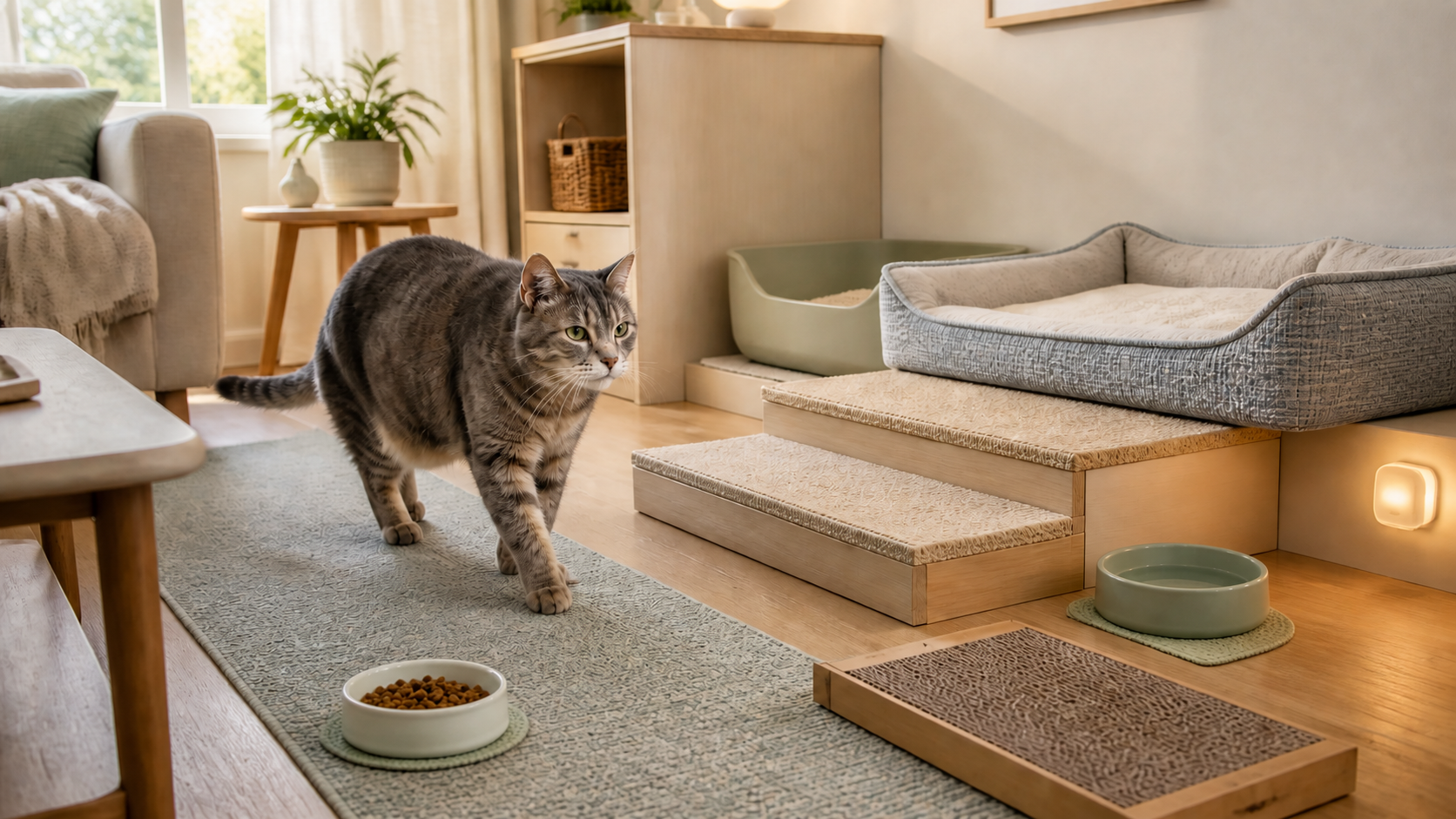
A senior cat may still love the same window, sofa, hiding place and daily rituals, but reaching them can become harder. Joint discomfort, reduced muscle strength, changes in vision or hearing, dental disease, kidney disease and cognitive changes can all alter how an older cat moves through the home.
Good senior-cat design does not mean turning the house into a clinic. It means reducing unnecessary effort while preserving choice, dignity and familiar routines.
Start with observation: Watch where your cat hesitates, slips, changes route, pauses before jumping or stops using a resource. Adapt those exact points first, and discuss new physical or behavioral changes with a veterinarian.
First, Do Not Assume It Is “Just Old Age”
A home modification can make daily life easier, but it cannot diagnose or treat pain or disease. Cornell University’s Feline Health Center advises that changes in an older cat’s behavior or physical condition should prompt veterinary attention rather than being accepted as an inevitable part of aging.
Contact your veterinary team when you notice changes such as:
- reduced appetite, difficulty chewing or unexplained weight change;
- increased or decreased drinking or urination;
- straining, constipation or elimination outside the litter box;
- reluctance to jump, stiffness, an altered gait or difficulty rising;
- hiding, irritability, reduced grooming or sensitivity to touch;
- new night-time vocalization, disorientation or altered sleep patterns;
- changes in vision, hearing, breathing or activity.
Videos of walking, jumping, stair use and litter-box entry can help a veterinarian understand what happens at home. Keep a short log of appetite, water use, elimination, activity and medication if your cat is being monitored for a chronic condition.
Map the Home from Your Cat’s Point of View
Before buying anything, trace a normal day. Where does the cat sleep, drink, eat, toilet, scratch, observe the household and seek quiet? Which routes require stairs, polished flooring or large jumps?
Create a simple access map:
1. Mark every essential resource.
2. Note the height, distance and surface between resources.
3. Identify bottlenecks where another pet, a door or household traffic can block access.
4. Add an easier route or duplicate resource where the journey is demanding.
5. Recheck the setup as mobility and preferences change.
The goal is not to force every senior cat to live at floor level. Many older cats still value height and observation. The goal is to provide safer intermediate steps and a lower-effort alternative.
Build a Low-Effort Essential Resource Zone
Every senior cat should be able to reach food, fresh water, a litter box, a comfortable resting place and a safe retreat without a difficult staircase or large jump. In a multi-level home, this usually means providing essential resources on the floor where the cat spends most of its time—and often on each frequently used floor.
Do not place everything in one tight cluster. Feline environmental guidance recommends multiple, separated key resources. Keep food, water and toileting areas apart, and offer choices when space allows. In a multi-cat home, dispersing resources also reduces the chance that one cat controls access.
An effective resource zone has:
- a clear, wide approach;
- non-slip footing;
- no need to squeeze past another pet;
- enough room to turn comfortably;
- quiet placement away from slamming doors and heavy foot traffic;
- easy access for cleaning and daily observation.
Make Floors Predictable and Non-Slip
Polished wood, laminate and tile can be difficult for a cat with reduced strength or painful joints. Watch for paws sliding outward, shortened steps, walking along walls for support or avoiding a room altogether.
Create connected “grip paths” rather than isolated mats. Use low-pile runners, firmly secured rugs or washable non-slip surfaces along the routes between bed, litter box, water, food and favorite social areas. Ensure edges lie flat so they do not become trip points.
Avoid unstable foam pieces, loose towels and rugs that bunch under the paws. Trim nails as recommended by your veterinary team or groomer because overgrown nails can change traction and posture, but remember that sudden reduced grooming or scratching can also be a sign of discomfort.
Replace Big Jumps with Small, Stable Steps
If a cat pauses before jumping, pulls up mainly with the front legs, lands heavily or no longer visits a favorite perch, add an easier route. Options include:
- broad pet steps with shallow, consistent rises;
- a stable ramp with a gentle slope and high-traction surface;
- a firm ottoman or low bench as an intermediate landing;
- rearranged furniture that creates short, predictable stages.
The route should not wobble, slide or require a sharp turn at the top. Make the final platform large enough for all four paws. Secure steps against the sofa, bed or window perch so a gap cannot open.
Introduce the route without forcing the cat. Place it in the natural travel line, let the cat investigate and reward calm use if appropriate. Some cats prefer steps; others prefer a ramp. Observe which movement looks easiest.
Set Up a Senior-Friendly Litter Area
Litter-box changes are among the most useful home adjustments for an older cat. Joint pain can make climbing over a high wall or walking downstairs uncomfortable, while diseases that increase urine output can make a box soil more quickly.
Choose a box that is:
- large enough for the cat to enter, turn and posture without touching the sides;
- open and easy to approach;
- equipped with at least one genuinely low entry;
- stable under the cat’s weight;
- placed on the same level as the cat’s main living area;
- located in a quiet but not isolated space with more than one escape direction when possible.
A low doorway should not require the cat to step over a sharp cut edge. If you adapt a storage box, smooth and protect the cut surface. A thin absorbent mat outside the entrance can help with tracking or occasional misses, but it should be non-slip and should not obstruct entry.
Maintain enough boxes for the household and distribute them rather than lining them up as one station. Scoop frequently and monitor changes in volume, frequency or stool consistency. New accidents, straining or repeated unproductive visits require veterinary attention; do not respond by punishing the cat.
Make Food Easy to Reach and Comfortable to Eat
Place the main feeding area where the cat can approach without stairs, slippery flooring or competition. Use a stable, easy-to-clean bowl that does not slide. A wide, shallow shape may be more comfortable for some cats, while the best height depends on the individual cat and any veterinary advice.
Do not make abrupt diet changes simply because a cat has reached a certain age. Senior cats can have very different nutritional needs depending on body condition, kidney function, dental health, muscle loss and other conditions. Ask the veterinarian about diet, calories, texture and feeding frequency.
Practical feeding adjustments can include:
- multiple small meals on a predictable schedule;
- a quiet feeding location away from other pets;
- a plate or shallow bowl if facial contact discourages eating;
- wet food or added water only when appropriate for the cat’s diet and veterinary plan;
- warming food slightly to increase aroma, while checking that it is not hot;
- weighing the cat or tracking body condition as recommended.
Reduced appetite, dropping food, chewing on one side, bad breath or approaching food and then walking away can indicate dental pain or illness.
Improve Water Access Without Creating Obstacles
Fresh water should be easy to reach at all times. Offer more than one water station in separated, quiet locations, particularly in a large or multi-level home. Place bowls where another pet cannot block the approach and where the cat can see the surroundings.
Use heavy, stable bowls on thin non-slip mats. Keep the water station away from the litter box and, where practical, separate from food. Some cats prefer a wide bowl filled near the rim; others like a fountain. A fountain is only helpful if it is easy to approach, cleaned regularly, quiet and accepted by the cat.
Monitor individual preference rather than assuming one product will increase intake. A sudden rise or fall in drinking can signal illness and needs veterinary review. For more hydration options, see the related ShineePets guide on helping indoor cats drink more water.
Create Warm, Supportive Resting Places
Older cats often seek warmth, but warmth must remain gentle and escapable. Put a supportive bed in a draft-free location and provide more than one resting option so the cat can choose temperature, privacy and proximity to people.
Look for:
- a low or cut-down entrance;
- a stable base that does not slide;
- enough space to change position;
- washable, soft fabric over supportive padding;
- placement away from cold floors, direct air-conditioning and busy doorways.
If using a heated pet bed, choose a product intended for pets, follow its instructions and inspect it regularly. The cat must be able to move off the warm area. Do not use improvised hot-water containers or heating devices that can burn, leak or trap heat, especially for a cat with reduced mobility or sensation.
Keep Safe Places and Gentle Vertical Choice
A senior cat still needs control over social contact. Provide at least one quiet retreat where the cat can rest without being followed by children, dogs or more energetic cats. The entrance should be easy to use, and the cat should not need to jump down quickly to escape.
Preserve favorite elevated places with stepped access when safe. A low window bench, a stable cat tree with closely spaced platforms or a ramp to a familiar chair can maintain enrichment. Check that structures do not sway and that worn coverings still provide grip.
Do not remove every familiar perch overnight unless it is immediately dangerous. Sudden environmental change can be stressful. Add a safer route first, observe use and make changes gradually.
Adjust Scratching, Play and Grooming
Senior cats benefit from opportunities to stretch, scratch, explore and play, but the format may need to change.
Offer a horizontal or gently angled scratching surface as well as any familiar vertical post. Place it near the sleeping area, because cats often scratch after waking. Ensure the base cannot slide.
For play, use short, predictable sessions on non-slip flooring. Move wand toys slowly and keep prey movements at ground level if jumping is uncomfortable. Avoid forcing rapid turns. Food puzzles should be easy enough to succeed and should not reduce necessary food intake; discuss their use if the cat has a medical diet or weight concern.
Gently help with grooming if coat care declines, especially around areas the cat can no longer reach. Use soft tools, stop if the cat shows discomfort and check for mats, skin changes and overgrown claws. Reduced grooming can reflect pain or illness, so pair home care with veterinary assessment.
Support Vision, Hearing and Night-Time Navigation
Keep the layout consistent for a cat with reduced vision or cognitive changes. Avoid moving litter boxes, bowls and major furniture without need. Block unsafe gaps, open balconies, unsecured windows and access behind appliances.
Use low-level nightlights along routes to water, litter boxes and sleeping areas. Reduce startling approaches: let a hearing-impaired cat see or feel your arrival rather than touching it suddenly while asleep. Keep pathways clear of bags, cables and temporary objects.
Night-time vocalization, wandering or disorientation is not automatically a normal aging change. Pain, hypertension, hyperthyroidism, sensory loss and other conditions can contribute, so report it to the veterinarian.
Reduce Competition in Multi-Pet Homes
An older cat may lose access without an obvious fight. A younger cat can wait in a doorway, stare near a resource or chase after the senior cat leaves a bed or litter box. Dogs may consume food or interrupt toileting.
Provide duplicate, separated resources with more than one approach and exit. Feed the senior cat where its portion can be monitored without trapping it. Use barriers or room access that the individual cat can navigate safely, but do not rely on a tall gate if the cat must jump over it.
Observe body language and timing. If the senior cat uses a resource only when another pet sleeps, hides more often or rushes through eating or toileting, the layout may not provide genuine access.
Run a Room-by-Room Safety Check
Review the home at cat height:
Living room and bedroom
- Secure steps and ramps to favorite furniture.
- Connect key areas with non-slip paths.
- Provide low-entry, supportive beds.
- Stabilize furniture that could tip when used as a landing.
Kitchen and feeding area
- Keep bowls away from traffic and litter areas.
- Prevent other pets from blocking food or water.
- Clean spills quickly to reduce slipping.
- Store medicines, cleaners and unsafe foods securely.
Bathroom and utility areas
- Close appliances before use and keep doors managed.
- Cover narrow gaps behind machines.
- Avoid access to buckets, cleaning solutions and standing water.
- Provide traction if the cat regularly crosses tile.
Stairs, windows and balconies
- Add lighting and traction where stairs remain necessary.
- Place essential resources on one level when stairs become difficult.
- Secure windows and balcony access with cat-safe barriers.
- Avoid unsupervised access to unstable railings or high fall points.
Introduce Changes Gradually
Change one area at a time unless there is an immediate hazard. Keep familiar bedding scents and place new steps, beds or bowls near the established resource before moving anything. Let the cat choose to explore.
Track whether the modification solves the real problem. Useful signs include easier entry, fewer pauses, more relaxed posture, renewed use of a favorite area and normal elimination. If the cat avoids the new setup, reassess stability, height, location, scent, noise and social pressure.
A Practical Weekly Review
Once a week, check:
- Are routes clear, dry and non-slip?
- Are steps, ramps and cat furniture stable?
- Can the cat reach every essential resource without a difficult jump?
- Are litter boxes clean and easy to enter?
- Are food and water intake patterns stable?
- Is bedding clean, dry and free from damaged heating elements?
- Are claws, coat and skin receiving enough care?
- Has behavior, mobility, weight or elimination changed?
Small, early adjustments are easier than redesigning the whole home after access is lost.
Final Recommendation
Design the senior cat’s home around short, stable routes and multiple choices. Start with the essentials: a low-entry litter box, separated food and water stations, non-slip pathways, supportive resting places and safe intermediate steps to valued perches. Preserve familiar routines while removing avoidable physical effort.
Most importantly, treat a change in behavior as information. The home can reduce barriers, but veterinary care is needed to identify pain, disease or sensory changes. Environment and medical care work best together to keep an older cat comfortable, engaged and safe.
Frequently Asked Questions
What is the most important home change for a senior cat?
Start by making essential resources easy to reach: provide a low-entry litter box, stable food and water stations, a comfortable bed and non-slip routes on the level where the cat spends most of its time. Adapt the specific places where the cat hesitates or struggles.
Should a senior cat’s food, water and litter box be kept together?
No. They should be easy to access but placed in separate appropriate locations. Cats generally benefit from separated key resources, and multiple stations can reduce travel and competition in larger or multi-pet homes.
Are ramps or pet stairs better for an older cat?
It depends on the individual cat. Use whichever offers the easiest confident movement: a gentle, high-traction ramp or broad steps with shallow, consistent rises. The structure must be stable, and the cat should be allowed to choose it without being forced.
What type of litter box is best for a senior cat?
Choose a large, stable box with at least one genuinely low entry, an open approach and enough room to turn and posture. Place it on the cat’s main living level, keep it clean and add other boxes in separate locations when needed.
When should mobility or behavior changes lead to a veterinary visit?
Contact a veterinarian for new stiffness, reluctance to jump, altered gait, appetite or weight changes, increased drinking or urination, litter-box changes, reduced grooming, hiding, disorientation or night-time vocalization. Do not assume a new change is simply old age.
Sources and References
- American Association of Feline Practitioners - 2021 Feline Senior Care Guidelines
- Cornell Feline Health Center - The Special Needs of the Senior Cat
- Cornell Feline Health Center - Loving Care for Older Cats
- Feline Veterinary Medical Association - Meeting the Physical and Emotional Needs of Owned Indoor Cats
- International Cat Care - Home Modifications
- Cornell Feline Health Center - Hydration
About this article
Independent pet-care guidance from the ShineePets Editorial Team for pet owners, retailers and animal-care professionals.
ShineePets is a commercial B2B pet-supply sourcing brand. Read our editorial standards and commercial disclosure.