Retail & Distribution
Urban Pet Retail: Building an Apartment-Friendly Range
Quick answer
Build an urban pet retail range around efficient footprints, quiet use, easy cleaning, practical storage and species-specific welfare limits.
By ShineePets Editorial Team · Published · Updated
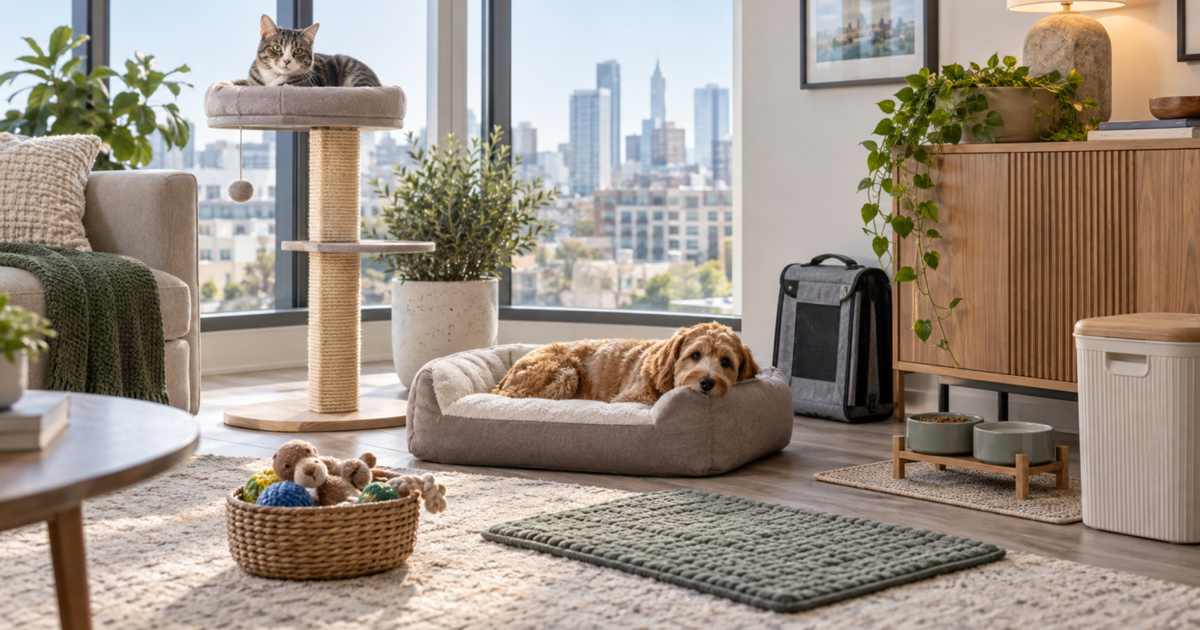
An effective range of apartment-friendly pet products saves household space without shrinking the animal's essential resources. Urban retailers should prioritize stable vertical products, quiet enrichment, washable surfaces, controlled storage, foldable transport items and clear in-use dimensions. The range still has to support normal resting, feeding, toileting, scratching, movement and exercise.
Build the assortment around apartment problems rather than a wall of miniature SKUs. Score products for footprint while open, safe usable capacity, noise and vibration, cleaning access, storage mode, doorway or lift handling and replacement-part availability. Then merchandise complete solutions for entryways, feeding zones, rest, enrichment and cleanup. “Compact” should describe efficient design—not an undersized bed, litter tray, habitat or carrier.
Range rule: Reduce wasted footprint and storage friction, never the space an animal needs to use the product correctly.
Apartment-Friendly Pet Products Need a Welfare Floor
Start with non-negotiable use requirements for each species. A space-saving design passes only when the pet can still enter, turn, stretch, rest, eat, drink, toilet or play as intended.
For cats, vertical space adds usable territory but does not remove the need to separate resources. The AAFP and ISFM feline environmental needs guidelines recommend safe places, elevated areas and separate locations for food, water, toileting, scratching, play and rest. That supports stable towers, perches and vertical scratchers—not crowding every function into one unit.
PDSA's dog-friendly home guidance identifies a quiet bed, clean water, exercise, entertainment and a safe retreat as core requirements. A compact bed must still fit the dog, and indoor enrichment does not replace appropriate outdoor activity.
Small animals expose the biggest “compact” risk. RSPCA guidance for indoor rabbits calls for a large enclosure, exercise area, hides and non-slip flooring. Its hamster housing guidance emphasizes deep bedding and burrowing. A habitat is not apartment-friendly if it removes normal behavior opportunities.
Score the Range for Real Apartment Use
Use one scorecard across categories so supplier claims become comparable.
| Dimension | Buyer question | Evidence to request |
|---|---|---|
| In-use footprint | How much floor or wall area does the product occupy when fully used? | Open dimensions, clearance diagram and installed photos |
| Welfare capacity | Can the intended pet use it in a normal posture and complete the activity? | Pet-size guidance, usable internal dimensions and use video |
| Noise and vibration | What happens on tile, laminate and shared walls? | Hard-floor sample test and motor sound information |
| Cleaning | Can hair, litter, food and moisture be reached and removed? | Disassembly steps, care label and replacement schedule |
| Storage mode | Does it fold, nest, hang or stand safely when not used? | Folded dimensions, closure test and storage instructions |
| Building access | Can one person carry it through doors, corridors, stairs or a lift? | Packed size, product weight, handles and assembly plan |
| Durability | Does compact hardware survive repeated folding or daily loading? | Cycle, stability and load-test plan |
| Serviceability | Can worn filters, covers, gaskets or scratch surfaces be replaced? | Part numbers, availability and compatibility list |
Score the product as shipped and as used. A small carton can hide a large permanent footprint; folding helps only when operation and storage are safe.
Build the Core Range Around Household Jobs
Organize the range around daily missions that customers recognize.
Entry and outdoor transition
Offer compact leash storage, reflective walking gear, paw-cleaning supplies, waste bags, absorbent mats and foldable carriers. Check that hooks, gates and organizers do not create snag hazards or block exits. Packaging should show open dimensions and the correct pet-size range, not only the folded product.
Feeding and water
Prioritize stable bowls, washable mats, dedicated scoops and traceable food storage. Narrow stations should not place food and water where they are easily kicked or contaminated. For cats, support resource separation instead of treating one all-in-one station as universal.
Rest and safe retreat
Stock beds by usable sleeping surface, not outside width. Add low-profile beds, washable covers and carriers that can remain open as familiar retreats.
Toileting and cleanup
Treat odor control as a cleaning and containment job, not a fragrance claim. Compare litter trays by usable internal size, entry height, scatter control and cleaning access. Add litter mats, sealed waste storage, compact cleaning tools and washable replacement parts.
CDC's pet-supply cleaning guidance distinguishes cleaning from disinfecting and recommends following product instructions. Products for small homes should make routine cleaning easier; hidden seams, non-removable fabric and inaccessible water channels create more work in a shared living area.
Quiet enrichment and vertical use
Build a mix of sniffing, foraging, chewing, scratching, climbing and interactive play products. Favor stable bases, non-slip contact points, repairable scratch surfaces and toys that do not create uncontrolled rolling or repeated impact against shared walls. “Quiet” is a use claim that deserves a hard-floor sample check.
Storage and reconfiguration
Use stackable bins, toy baskets, grooming caddies and foldable pens to return floor area after use. Folding does not justify an undersized deployed exercise area.
Create Species-Specific Guardrails
Specifications must remain species-specific.
- Cats: prioritize height, stability, scratch-surface replacement, hiding choices and separate resource placement. Avoid unstable narrow towers and litter furniture that sacrifices tray size or ventilation.
- Dogs: size beds and carriers to the dog and support walking, drying, cleanup and quiet enrichment. A balcony or indoor toy does not replace exercise.
- Rabbits: sell large modular enclosures, non-slip floor protection, cable guards, hides and foraging equipment, preserving room for normal movement.
- Hamsters: protect habitat depth and floor area. A taller decorative cage is not a substitute for deep substrate and an appropriate base.
- Guinea pigs: plan for social housing, solid flooring, shelters and exercise space. RSPCA guinea pig housing guidance stresses secure space, a solid floor and quiet refuge; a single-animal “micro habitat” is not an urban solution.
If the store cannot explain a species-specific housing product accurately, keep it out of the core range until staff training, data and supplier evidence are ready.
Design a Three-Layer Urban Assortment
Core layer
Give most space to repeatable apartment jobs: walking, feeding, rest, litter and waste control, grooming, quiet enrichment, travel and storage. Carry clear size steps without duplicating colors or near-identical forms.
Problem-solving layer
Add products for senior access, multi-pet resource separation, hard-floor stability, fold-flat transport, washable replacements and controlled shedding or scatter. Each SKU should solve a named constraint that the core item does not.
Conditional layer
Pilot wall systems, powered feeders, litter furniture and modular habitats. They need stronger installation, cleaning, replacement-part or delivery support, so keep them conditional until service needs are understood.
This structure complements the broader ShineePets guide to building a balanced pet product range. Use the pet product category map for taxonomy, while this article applies an apartment-use filter across that map.
Test Samples in a Mock Apartment Zone
Create a small hard-floor test bay with a doorway, wall edge and storage cabinet. Evaluate samples in sequence:
1. Record packed, assembled, open and folded dimensions.
2. Carry the carton and assembled product through the doorway.
3. Assemble it using only the supplied instructions and hardware.
4. Check tipping, sliding, trapped paws, exposed edges and pinch points.
5. Use normal loads and repeat any folding, latching or height adjustment.
6. Listen for impact, wheel, motor and vibration noise on hard flooring.
7. Add representative hair, crumbs or clean litter, then follow the care instructions.
8. Confirm that all washed parts drain and dry.
9. Repack or store the product as the customer would.
10. Compare the sample, carton claims and online product data for consistency.
The sample pass should freeze dimensions, materials, components, replacement parts and packaging. A later supplier substitution can change noise, stability, odor or cleanability even when the main silhouette looks unchanged.
Make Product Data Part of the Range
Urban shoppers need decision information before delivery. Every listing should state:
- assembled, usable and folded dimensions;
- product and packed weight;
- pet-size limits based on usable space;
- required wall, floor or door clearance;
- noise or motor information where relevant;
- cleaning, drying and replacement-part instructions;
- assembly tools and estimated complexity;
- materials and contact-surface details;
- included and optional components; and
- installation or building-permission considerations.
Do not hide critical dimensions inside an image or call a product “space-saving” without explaining how. The pet product packaging label guide can help teams align packaging and online claims.
Review the Range With Apartment-Specific Metrics
Track why an item was bought and returned: size mismatch, assembly difficulty, noise, cleaning, missing parts, damage, mission attach rate and repeat consumable purchases.
Do not reward a SKU only because its carton is small. Remove products whose compact claim repeatedly produces size returns, unstable use or unclear expectations.
Final Buyer Checklist
- Every compact claim is supported by open and folded dimensions.
- Usable pet space is measured separately from outside dimensions.
- Species welfare requirements define the minimum acceptable size.
- Vertical products have appropriate stability and access.
- Powered and moving items have been checked for noise and vibration.
- Food, water, litter and rest resources can be placed appropriately.
- Surfaces, seams and removable parts can be cleaned and dried.
- Large items can move through typical apartment access routes.
- Replacement parts and covers have clear compatibility data.
- Packaging protects the product without hiding assembly complexity.
- Staff can explain who the product is and is not suitable for.
- Pilot metrics include real use problems, not only sales velocity.
Urban pet retail succeeds when it edits out wasted bulk, confusing duplication and maintenance friction. The result should help customers use limited space intelligently while preserving the animal's room, resources and daily routine.
Sources and Further Reading
- AAFP and ISFM Feline Environmental Needs Guidelines — Journal of Feline Medicine and Surgery
- Making Your Home Dog Friendly — PDSA
- Keeping Rabbits in Your Home — RSPCA
- Creating a Good Home for Hamsters — RSPCA
- Creating a Good Home for Guinea Pigs — RSPCA
- About Cleaning and Disinfecting Pet Supplies — Centers for Disease Control and Prevention
Frequently Asked Questions
What makes a pet product apartment-friendly?
It should use space efficiently while remaining correctly sized, stable, quiet, cleanable and easy to move or store. Open dimensions and usable pet space matter more than carton size.
Should urban pet stores stock only small pet products?
No. Small external dimensions can create welfare or usability problems. Stock appropriate size steps and reduce wasted structure, duplicate SKUs and storage friction instead.
Which apartment pet categories belong in the core range?
Walking and cleanup, feeding, rest, litter or toileting, grooming, quiet enrichment, travel and storage usually form the core. Species-specific housing needs separate guardrails.
How can retailers evaluate noise before listing a product?
Test motors, wheels, rolling toys, latches and moving parts on hard flooring near a wall. Record the use condition and compare production units with the approved sample.
Are foldable products always better for small homes?
No. They help only when safe to fold, durable through repeated cycles, stable when open and compact enough to store without loose or protruding parts.
Sources and References
- AAFP and ISFM Feline Environmental Needs Guidelines — Journal of Feline Medicine and Surgery
- Making Your Home Dog Friendly — PDSA
- Keeping Rabbits in Your Home — RSPCA
- Creating a Good Home for Hamsters — RSPCA
- Creating a Good Home for Guinea Pigs — RSPCA
- About Cleaning and Disinfecting Pet Supplies — Centers for Disease Control and Prevention
About this article
ShineePets publishes practical, source-checked guidance for pet owners and pet-product professionals.
ShineePets is a commercial B2B pet-supply sourcing brand. Read our editorial standards and commercial disclosure.